

B2b customer segmentation approaches powerpoint presentation slides




Try Before you Buy Download Free Sample Product
 Impress Your
 Audience
 100%
100% Editable
 Save Hours
 of Time


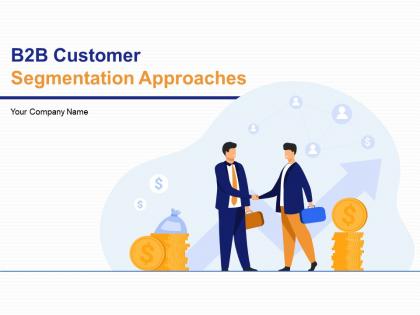
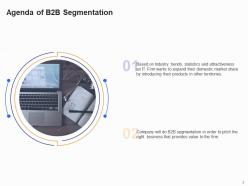
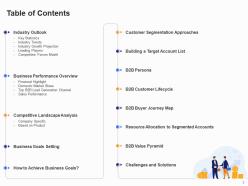
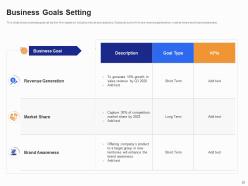
Unveil a captivating presentation with our B2B customer segmentation approaches PowerPoint presentation slides. This e-commerce PowerPoint design provides you with an agenda which includes- industry outlook, business performance overview, competitive landscape analysis, business goal setting, along with different types of sales strategies. In order to present a clear image of the numbers and facts to the audience, this PPT layout gives an insight into the length of sales cycle and revenues earned by the company. This e-business PowerPoint set showcases the emerging trends in the industry as well as current challenges being faced in order for you to take corrective and timely measures. Furthermore, this B2B PowerPoint slide assists you with information regarding potential and target customers to step up your work-game. This e-commerce PPT layout also helps you in adopting a customer centric sales approach for better and brighter future of the company. Download it right now to make a lasting impression on your peers.
People who downloaded this PowerPoint presentation also viewed the following :
B2b customer segmentation approaches powerpoint presentation slides with all 54 slides:
Use our B2b Customer Segmentation Approaches Powerpoint Presentation Slides to effectively help you save your valuable time. They are readymade to fit into any presentation structure.






FAQs for B2b customer segmentation approaches
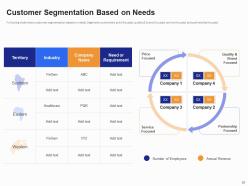
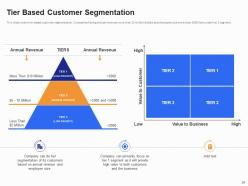
B2B customer segmentation requires analyzing company size, industry vertical, geographic location, purchasing behavior, and decision-making processes. These factors enable businesses to streamline marketing efforts, enhance customer experiences, and optimize resource allocation by targeting specific segments with tailored approaches, with many organizations finding that strategic segmentation ultimately delivers higher conversion rates and improved customer lifetime value.
Industry verticals significantly influence B2B segmentation by dictating specific compliance requirements, operational challenges, purchasing cycles, and decision-making hierarchies unique to each sector. Healthcare organizations prioritize patient safety and regulatory compliance, while manufacturing focuses on supply chain efficiency and production optimization, requiring tailored messaging, solution positioning, and sales approaches that address sector-specific pain points.
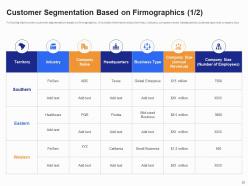
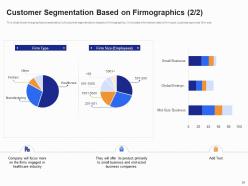
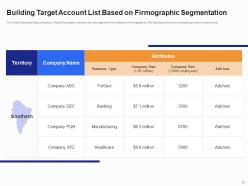
Firmographics serve as the foundational layer for B2B segmentation, providing essential criteria like company size, industry sector, revenue, geographic location, and organizational structure to create meaningful customer groups. These demographic markers enable businesses to identify high-value prospects, tailor messaging for specific industries like manufacturing or financial services, and allocate resources strategically, ultimately delivering more personalized experiences and improved conversion rates.
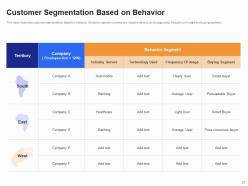
Behavioral data enhances B2B segmentation by revealing actual customer interactions, purchase patterns, engagement frequency, product usage depth, and decision-making timelines rather than relying solely on firmographic assumptions. Through advanced analytics, organizations can identify high-value prospects, predict churn risks, and personalize outreach strategies, with many finding that behavioral insights deliver significantly more accurate targeting and improved conversion rates.
B2B segmentation focuses on company characteristics like industry, revenue, decision-making processes, and organizational structure, while B2C targets individual demographics, psychographics, and personal behaviors. B2B approaches emphasize relationship-building, longer sales cycles, and multiple stakeholders, with companies like enterprise software providers segmenting by company size and technology needs, ultimately delivering more targeted solutions and stronger business partnerships.
Technology adoption levels segment B2B customers by categorizing them as innovators, early adopters, mainstream users, or laggards based on their digital transformation maturity and implementation speed. This segmentation enables companies to tailor product offerings, support services, and communication strategies accordingly, with tech-forward clients receiving advanced solutions while traditional adopters get foundational tools, ultimately improving customer satisfaction and retention rates.
B2B customer segmentation data collection methods include CRM analytics, website behavioral tracking, survey research, sales team insights, and third-party databases. These approaches streamline segmentation by capturing transaction patterns, engagement metrics, and firmographic details, with many organizations finding that combining multiple data sources delivers enhanced targeting accuracy and competitive advantage.
Geographic location significantly impacts B2B segmentation through regional market conditions, regulatory environments, cultural preferences, distribution networks, and local competition dynamics. Companies like manufacturing firms adjust pricing strategies for emerging markets while financial services customize compliance approaches by jurisdiction, with many organizations finding that location-based segmentation enables more targeted resource allocation and ultimately delivers higher conversion rates.
Psychographic segmentation in B2B reveals customer motivations, values, decision-making styles, and business priorities, enabling more targeted messaging and personalized solutions. Through understanding psychological drivers, companies enhance lead qualification, improve sales conversion rates, and develop stronger client relationships, with many organizations finding that psychographic insights deliver more effective account-based marketing strategies.
Predictive analytics enhances B2B customer segmentation by analyzing historical data patterns, purchasing behaviors, engagement metrics, and market trends to identify high-value prospects and retention risks. Through machine learning algorithms, organizations can predict customer lifetime value, churn probability, and buying propensity, while automatically updating segments based on real-time data, ultimately delivering more targeted marketing campaigns and improved conversion rates.
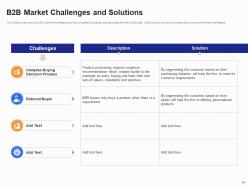
B2B customer segmentation faces challenges including complex organizational structures, lengthy decision-making processes, limited data availability, multiple stakeholders, and evolving business needs across diverse industries. These obstacles can be overcome through advanced analytics platforms, comprehensive data integration from multiple touchpoints, account-based segmentation strategies, and regular reassessment processes, with many organizations finding that combining firmographic, behavioral, and technographic data ultimately delivers more accurate targeting and enhanced customer experiences.
Sales and marketing alignment is crucial for B2B customer segmentation, ensuring consistent messaging, unified customer profiles, and coordinated targeting strategies across all touchpoints. This strategic collaboration enables organizations to streamline lead qualification, enhance customer experiences, and accelerate conversion rates, with many companies finding that aligned teams deliver significantly higher revenue growth and improved customer retention.
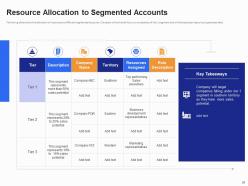
B2B segmentation success metrics include customer acquisition cost, lifetime value, conversion rates, segment-specific revenue growth, and engagement levels across different touchpoints. These measurements enable organizations to optimize resource allocation, refine targeting strategies, and enhance customer experiences, with many companies finding that tracking cross-segment performance ultimately delivers improved ROI and competitive advantage.
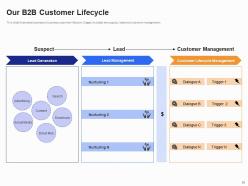
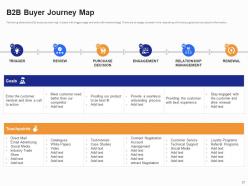
B2B segmentation approaches evolve significantly across customer journey stages, shifting from broad demographic and firmographic criteria during awareness to behavioral and engagement-based segmentation in consideration phases. Advanced organizations increasingly utilize intent data, purchase history, and interaction patterns to create dynamic segments, with many financial services and manufacturing companies finding that journey-stage-specific segmentation delivers more personalized experiences and accelerated sales cycles.
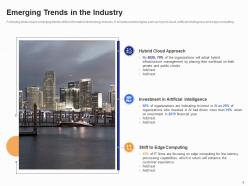
Emerging trends include AI-driven behavioral analytics, intent data analysis, account-based segmentation models, real-time engagement tracking, and cross-channel journey mapping. These technologies enhance segmentation precision by identifying buying signals, predicting customer needs, and enabling dynamic groupings, with many organizations finding that data-driven approaches deliver significantly improved targeting accuracy and higher conversion rates.
-
Very unique, user-friendly presentation interface.
-
Excellent Designs.
-
Unique design & color.