


Battery charging discharging condition flat powerpoint design




Try Before you Buy Download Free Sample Product
 Impress Your
 Audience
 100%
100% Editable
 Save Hours
 of Time


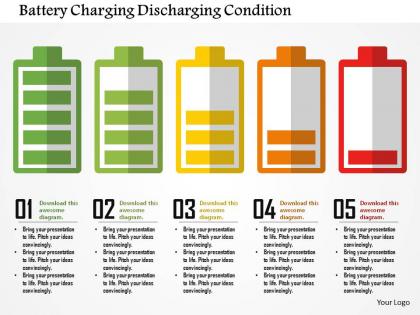
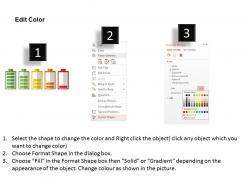
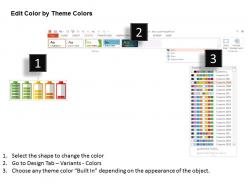
Share our battery charging discharging condition flat PPT slide and attract the attention of your audience. This slide has been created by our team of efficient designers for showcasing the amount of battery consumed during a business process. This exclusive battery charging discharging condition PowerPoint template has been crafted with the graphic of five batteries in a row. Use this battery charging discharging condition presentation slideshow and build high-class presentation for your viewers. You can easily highlight the amount of battery involved in the processing of data applications and its storage in the computers with the help of this PPT slide. This battery PPT visual composes of graphics and PowerPoint images for a valuable interpretation of the relevant topic. Apart from this, the astonishing patterns will surely impress the viewers with their appearance. Therefore, simply click download and be a self-evident of the numerous benefits that these illustrations will provide you and your organization. Our Battery Charging Discharging Condition Flat Powerpoint Design help foster enduring agreement. They ensure hatchets get buried forever.
People who downloaded this PowerPoint presentation also viewed the following :
Battery charging discharging condition flat powerpoint design with all 5 slides:
Our Battery Charging Discharging Condition Flat Powerpoint Design help build an emotional bond. They will display great affection.
FAQs for Battery charging discharging condition
You'll need voltage monitoring and current sensing for sure. Temperature management too - batteries hate getting too hot. Cell balancing is huge though, probably the most critical part because when cells get out of sync your whole pack goes to hell. Also grab some overcurrent/overvoltage protection and throw in communication interfaces so you can actually see what's happening. Oh and state-of-charge algorithms, almost forgot that one. I'd map out your voltage/current needs first, then buy components rated at least 20% higher. Trust me on the safety margin thing - I learned that the hard way.
Yeah, so keeping your battery between 20-80% is definitely the way to go. Your phone's performance stays way more consistent in that range, plus the battery will last longer overall. I used to be obsessed with charging to 100% every night - huge mistake. Those extreme highs and lows actually stress out the cells and mess with capacity over time. Most newer phones let you set charging limits now, which is pretty sweet. Or just unplug around 80% if you remember. Trust me, your future self will thank you when your battery isn't totally shot after two years.
Look, thermal management is like the bodyguard for your batteries - stops them from overheating and catching fire. Nobody talks about it but it's huge for safety. Hot batteries perform like garbage and die way too fast. These systems use liquid cooling, fans, whatever to keep temps just right. My buddy learned this the hard way on his EV project lol. Good thermal management can boost battery life by 30-50% easy. Don't skimp on it when you're buying - trust me, the extra cost upfront beats dealing with dead batteries or worse later.
So basically, you can catch battery failures way before they actually die by tracking voltage, temp, and how often they're charged. The patterns are nuts - stuff we'd never notice ourselves. I'd start by just collecting data on what you've got now, then build some alerts for the sketchy ones. Real-time dashboards showing your whole fleet's health are actually pretty satisfying to watch. These systems figure out what's "normal" for each battery and call out anything weird. You'll also discover better charging schedules that make them last longer. Honestly beats waiting for things to randomly fail.
Yeah, battery production is honestly pretty brutal - all that lithium and cobalt mining uses tons of water and wrecks ecosystems. Plus the whole manufacturing process eats up crazy amounts of energy. If people just toss old batteries instead of recycling them properly, you get toxic stuff leaking everywhere. But here's the weird part - they're still miles better than fossil fuels when you look at the big picture. My advice? Don't kill your battery by constantly draining it to zero, and definitely find a proper recycling spot when it dies.
Dude, battery chemistries are like completely different animals. Your lithium-ions are super picky about voltage and temperature - they'll throw a tantrum if you overcharge them or let them get too hot. Lead-acid? Way more chill, but they still hate sulfation so you gotta charge them fully. NiMH batteries are the weird ones though - they actually don't want to sit around fully charged (makes no sense but whatever). Each type has different charging curves and limits. Honestly, just grab the datasheet first before you mess with BMS settings. Trust me on this one.
Honestly, the biggest pain points are gonna be capacity dropping over time and keeping temps under control. Temperature management is such a headache. You're always walking this tightrope between performance and longevity - run them hard and they die faster, but go too easy and you're leaving power on the table. Monitoring helps but it's not foolproof, so half the time you're just guessing when they actually need swapping. Oh and don't get me started on disposal rules getting more complicated everywhere. Get decent monitoring set up early though. Define your replacement triggers from day one - trust me, future you will thank you when you're juggling hundreds of these things.
So basically, these newer algorithms pull data from way more sources than just voltage - they're looking at current, temperature, usage history, all that stuff. Machine learning models actually learn how YOU use your device, which is honestly pretty neat. Your phone starts figuring out your charging habits over time. The old methods totally miss things like how cold weather kills batteries or how they degrade as they age. End result? You get way better predictions about battery life and fewer random shutdowns. If you're building anything battery-powered, definitely worth checking out.
Multi-stage charging is your friend here - start with constant current when the battery's low, then switch to constant voltage as it fills up. Temperature makes a huge difference too (cold batteries are basically stubborn children when it comes to fast charging). Cell balancing is crucial so one weak cell doesn't drag down your whole pack. Kalman filters help with state estimation - they're weirdly good at tracking real capacity vs what your BMS thinks is happening. Honestly, I'd go with the tried-and-true three-stage CC-CV method first, then layer on temperature compensation and balancing. Don't overcomplicate it right away.
Basically, EV battery systems are insanely more complex than your phone. Your phone just has a simple controller that stops overcharging and keeps temps in check. EVs though? They're monitoring hundreds of individual cells, balancing everything, predicting how far you can drive, talking to the car's computer, managing cooling systems - the whole works. It's like comparing a basic thermostat to mission control honestly. Oh and if you're ever working on battery projects, this stuff matters for figuring out what level of management you actually need. The complexity difference is pretty wild when you think about it.
Dude, IoT sensors on your batteries are seriously worth it. You get live data on voltage, temp, charge cycles - way better than walking around checking everything manually. The predictive stuff is clutch too, warns you before things actually crap out. All the data hits your dashboard so you can see patterns and plan replacements instead of dealing with random failures. Honestly saved my ass so many times. I'd start with whatever equipment you absolutely can't afford to have die first - throw some sensors on those and you'll probably pay for the whole system just from avoiding one major outage.
So it depends on what you're building this for. Automotive stuff needs ISO 26262 for safety and ISO 14040 for environmental - pretty standard. Consumer electronics are trickier though. You'll need IEC 62133 and UL standards, and honestly UL can be such a headache but you can't skip it. Industrial apps usually want IEC 61508. Then there's all the regional stuff like CE marking in Europe or FCC here. My advice? Figure out where you're selling first, then work backwards from there to see what applies.
So predictive maintenance is basically like a fitness tracker but for your batteries - it watches voltage, temperature, charge cycles, all that stuff in real time. Way better than just replacing them on some random schedule or waiting till they die on you. You'll catch issues early and apparently extend battery life by like 20-30%, which honestly seems almost too good to be true but whatever. No more surprise downtime either. The system just pings you when things start going downhill so you can actually do something about it. I'd start with whatever batteries are most critical to your setup first.
Predictive analytics is honestly the coolest thing happening in battery management right now. These systems can tell you when batteries will crap out before they actually do - pretty crazy stuff. Solid-state batteries are also getting way better, lasting longer and handling heat/cold better than regular lithium-ion ones. Oh, and smart inverters are getting smarter too, figuring out optimal charging based on weather and grid needs. If you're doing any solar installs, go for systems with machine learning built in. The predictive maintenance pays for itself - my buddy saved like 30% on replacement costs last year just from catching issues early.
Dude, just teach your people the basics and you'll be amazed. Show them to keep batteries between 20-80%, don't leave stuff in hot cars, that kind of thing. We did a quick 20-minute session at my old job - nothing fancy, just practical stuff. Made it about their daily routine, not some tech lecture. Suddenly everyone stopped having dead laptops constantly. The trick is explaining why it matters instead of just saying "do this." People actually listen when they get it. Trust me, you'll cut those annoying support tickets in half.
-
Presentation Design is very nice, good work with the content as well.
-
Easily Editable.