


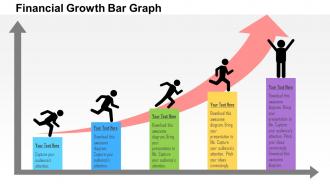
Financial growth bar graph flat powerpoint design





Try Before you Buy Download Free Sample Product
 Impress Your
Audience
 100%
Editable
 Save Hours
of Time


Analysing the financial performance in Business is essential to avoid any crisis or unfortunate circumstances that could be loss-making for the organisation. Our team being completely aware of the vitality of this concept in the business front has crafted a tool which not only will keep the organisation informed about the financial progress but will also help them to make future decisions accordingly. Also, these financial growth bar chart flat PPT diagrams will provide an insight about the financial status of the organisation to the audience. Apart from this, these presentation slides are also great for making comparisons and finding opportunities to enhance the monetary growth and profit in the business. Moreover, the company’s relative strength can be accessed with the use of these informative layouts. Further, the user will be able to display all the aspects such as financial statements, income, investments and much more on these illustrations. Hence, manage your finances effectively with these backgrounds and you will never miss a penny. Our Financial Growth Bar Graph Flat Powerpoint Design bring the data to your fingertips. They enable convenient access.
People who downloaded this PowerPoint presentation also viewed the following :
Financial growth bar graph flat powerpoint design with all 5 slides:
Get them to discard all falsehood with our Financial Growth Bar Graph Flat Powerpoint Design. They help get it out of their heads.


FAQs for Financial growth bar graph
Honestly, focus on three big ones: revenue growth, profit margins, and cash flow. Those will tell you everything. Also track how much it costs to get customers vs how much they're worth long-term - that ratio is clutch. Watch how fast people actually pay their invoices too (accounts receivable turnover). Even tiny month-over-month revenue bumps get me pumped when they're consistent. Oh, and if you're borrowing money, keep an eye on working capital and debt ratios. Just throw these into a simple monthly dashboard so you can catch problems before they bite you.
Look, budgeting is honestly just about knowing where your money goes so you can actually build wealth. Track your spending for a month first - you'll probably be shocked at some random stuff you're buying. Once you see the patterns, you can redirect that cash toward investments and savings that actually grow. I used to wonder why I was always broke until I started giving every dollar a purpose. Short sentences work better for goals. The real game-changer happens when it becomes habit - suddenly you're crushing financial milestones without feeling like you're missing out on life.
Honestly, innovation is what separates companies that grow from ones that just survive. It creates new ways to make money and cuts your costs through better efficiency. Look at how fintech totally changed banking by just making things easier to use. You don't need some crazy breakthrough either - small tweaks to your processes can add up to real growth over time. I'd start by picking one thing in your business that feels outdated and figure out how to update it. Could be adopting new tech or just improving what you're already doing. The point is staying ahead of competitors who aren't adapting.
Honestly? Start with Google or Facebook ads - you'll see results fast and can tweak things on the fly. Social media targeting is insane now, like you can literally find people based on what they bought last week. Email marketing's huge too but takes more time to build up. Track everything though - conversion rates, how much each customer costs you, what they're worth long-term. That stuff's boring but super important. Pick one thing first instead of spreading yourself thin. SEO's great but takes forever (learned that the hard way). Once you nail one channel, then expand. Way better ROI than old-school advertising.
Dude, cash flow is everything - literally the difference between making it or going broke. Track it weekly, not monthly, trust me on this. Good cash flow means you can jump on opportunities, handle surprise expenses, and avoid those brutal emergency loans that'll eat your profits alive. I've seen profitable companies still tank because their cash flow was garbage - weird but it happens constantly. Weekly tracking catches problems early instead of scrambling later. Plus you get actual flexibility to make smart moves rather than just putting out fires all day.
Look, the economy basically controls how your money grows, so you can't ignore it when planning ahead. Inflation, interest rates, GDP - all that stuff directly affects your investments. Like, high inflation might help real estate but destroy your bonds. Interest rate hikes? Suddenly bonds look decent again while growth stocks tank. Consumer spending gets wonky too when people feel uncertain about their jobs. I learned this the hard way in 2022 honestly. Don't just assume past performance will repeat - check what's actually happening with economic indicators and adjust your expectations accordingly.
Honestly, three things matter most: rock-solid financials, real traction you can prove, and a growth plan that actually makes sense. Don't inflate your revenue projections - investors see right through that BS and it kills your credibility instantly. Start networking way before you need the money (wish someone told me that earlier). Hit up industry events, get warm intros through mutual connections. Angel investors might be better than VCs depending on where you're at. Oh, and look into revenue-based financing too - it's underrated. Building those relationships early is everything, even if fundraising feels forever away.
Honestly, profit margins don't tell the whole story. Revenue growth rate matters way more, plus customer acquisition costs and lifetime value ratios. I'd track market share expansion too - that's where you see real momentum. Cash flow trends are obvious but working capital efficiency? Super underrated. Employee productivity metrics sound boring but they're actually solid predictors of whether growth will stick. Oh, and debt-to-equity plus return on assets give you the financial health picture. Run these quarterly against your profit numbers and you'll know if you're building something real or just burning cash prettily.
Look, having multiple income streams is like having backup plans for your money. Your main job could disappear tomorrow (scary but true), so you want other stuff bringing in cash. Side gigs, rental properties, investments, freelancing - whatever fits your situation. Start small with something you're already good at or interested in. I mean, an extra $500 monthly doesn't sound like much, but it adds up crazy fast. The cool thing is these different income sources usually grow way quicker than waiting around for your boss to give you a decent raise.
Look, investing in training really does pay off. Your team gets way more productive when they actually know what they're doing. Turnover drops too - and honestly, replacing people costs a fortune between recruiting and getting newbies up to speed. Skilled employees can handle the premium work, which means you can charge more or break into better markets. Most companies see ROI within like 6-12 months, sometimes faster. My advice? Figure out where your biggest skill gaps are first. Don't try to fix everything at once - just tackle the stuff that'll move the needle most.
Dude, our brains are basically wired to mess up money decisions. You know how you get super careful about investing because losing money feels terrible? That's loss aversion. Then there's confirmation bias - you'll only read stuff that backs up what you already think about some stock. FOMO is the worst though, makes you jump into crypto at the peak like an idiot. I've done it. Overconfidence tricks you into thinking you can predict market timing better than Wall Street pros. Best thing? Set up automatic investing and write down your rules before you get emotional about trades.
Honestly, just start by automating your invoicing and bookkeeping - I can't tell you how much time that'll save you. The cash flow improvement is instant too. After that, dig into some data analytics to figure out which customers actually make you money (you'd be surprised how many don't). E-commerce platforms are great for expanding without crazy overhead costs. Oh, and cloud-based financial tools give you real-time numbers instead of guessing where you stand. Pick whatever's driving you nuts right now and fix that first. Don't try to do everything at once.
Honestly, the biggest traps are lifestyle inflation and high-interest debt. When you get that raise, don't immediately upgrade your car or apartment - I learned this the hard way lol. Instead, bump up your savings automatically before you can spend it. Credit card debt above 6-7% interest? Kill it aggressively. You also need that 3-6 month emergency fund, even though it's boring as hell to build. Don't try timing the market or chasing whatever's trending on Reddit either. Start by looking at your last few months of spending - you'll probably be shocked where your money actually goes.
Honestly, going green is probably one of the smartest business moves right now. Your costs drop immediately - like, energy bills and waste disposal fees just shrink. Customers actually care about this stuff now, so you're pulling in more conscious buyers. The talent thing is real too - good people want to work somewhere that's not just chasing profit. Oh, and investors? They're obsessed with ESG scores these days. It's wild how much that matters in funding. Start with an energy audit or check your supply chain - you'll find wins that pay for themselves within a year. Plus you're covered when new regulations hit.
Think of customer feedback as your cheat sheet for spending money smart. People literally tell you what they want more of and what sucks - that's gold for figuring out where to put your budget. Way better than throwing cash at random ideas and hoping something sticks. Survey your best customers every few months. Their complaints show you what to fix first, and their compliments reveal what's actually making you money. Honestly, it's saved me from so many expensive mistakes. You'll spot new opportunities too, stuff you never would've thought of otherwise. Skip the guesswork - just ask them directly.
-
Innovative and Colorful designs.
-
Much better than the original! Thanks for the quick turnaround.