

Financial Projection PowerPoint Presentation Slides





Try Before you Buy Download Free Sample Product
 Impress Your
 Audience
 100%
100% Editable
 Save Hours
 of Time


Our Financial Projection PowerPoint Presentation Slides are topically designed to provide an attractive backdrop to any subject. Use them to look like a presentation pro.
People who downloaded this PowerPoint presentation also viewed the following :
Content of this Powerpoint Presentation
Slide 1: This slide introduces Financial Projection. State Your Company Name and begin.
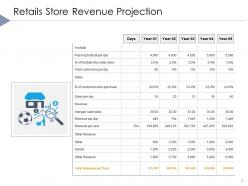
Slide 2: This slide shows Retails Store Revenue Projection describing- customers per day, sales, revenue, etc.
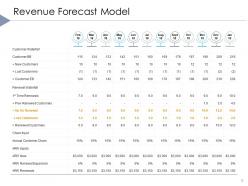
Slide 3: This slide presents Revenue Forecast Model describing- Customer waterfall, renewal waterfall, churn input, annual customer churn etc.
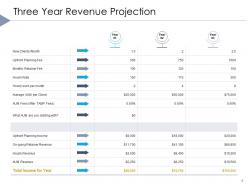
Slide 4: This slide displays Three Year Revenue Projection describing- New clients, upfront planning fee, monthly retainer fee, upfront planning income etc.
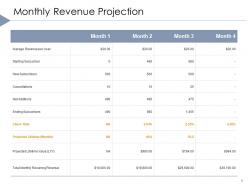
Slide 5: This slide represents Monthly Revenue Projection describing- average revenue per user, starting subscriber, new subscribers, Net additions,churn rate etc.
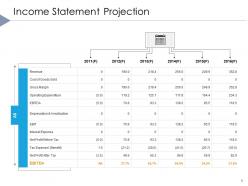
Slide 6: This slide showcases Income Statement Projection describing- Revenue, cost of goods sold, gross margin, operating expenditure etc.
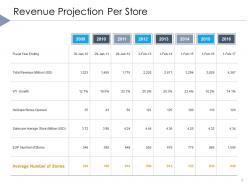
Slide 7: This slide shows Revenue Projection Per Store describing- Total revenue, net new stores opened, sales per average store etc.
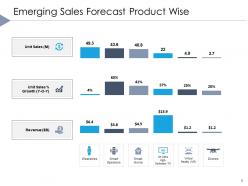
Slide 8: This slide presents Emerging Sales Forecast Product Wise describing- Unit Sales % Growth, Revenue, Unit Sales.
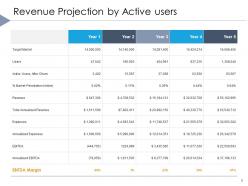
Slide 9: This slide displays Revenue Projection by Active users describing- Target market, users, Revenue, expenses etc.
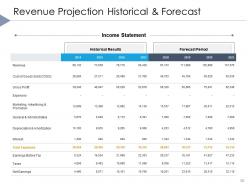
Slide 10: This slide represents Revenue Projection Historical & Forecast with Income statement, Historical results and forecast period.
Slide 11: This slide is titled as Additional Slides for moving forward.
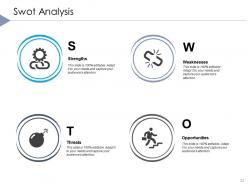
Slide 12: This slide shows SWOT analysis describing- Strengths, weaknesses, opportunities and threats.
Slide 13: This slide shows newspaper with additional text boxes.
Slide 14: This slide displays Puzzle with text boxes to show information.
Slide 15: This slide shows Circular diagram with text boxes.
Slide 16: This slide shows combo chart with three products comparison.
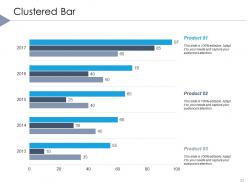
Slide 17: This slide presents clustered bar graph with three products comparison.
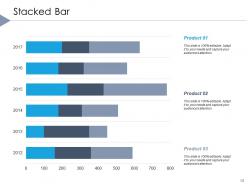
Slide 18: This slide displays stacked bar graph chart with three products comparison.
Slide 19: This is a Thank you slide with address, contact numbers and email address.
Financial Projection PowerPoint Presentation Slides with all 19 slides:
Use our Financial Projection PowerPoint Presentation Slides to effectively help you save your valuable time. They are readymade to fit into any presentation structure.




FAQs for Financial Projection
You need revenue forecasts, expense breakdowns, cash flow statements, and P&L projections - usually 3-5 years out. Balance sheet stuff too like assets and liabilities. The assumptions section is honestly where everyone screws up though. They either get way too optimistic or can't explain their numbers when investors ask. Document your growth rates, market conditions, pricing - whatever you're basing things on. I always tell people to start conservative. Build out best case, worst case, and realistic scenarios. Oh and make sure you can actually defend every number with real data, not just gut feelings.
Look, don't just wing it with wishful thinking - you need actual historical data and realistic market assumptions. Cross-check everything with multiple forecasting methods. Get sales, operations, and finance involved since they all know different pieces. I've watched so many projections crash because people assumed last year's growth would just continue forever (spoiler: it won't). Run sensitivity analysis for different scenarios. Update regularly when new data comes in. Oh, and document your assumptions! You'll thank yourself later when reality hits and you need to figure out what went wrong.
So basically, short-term projections are like 1-2 years out - all your quarterly numbers, cash flow, that kind of stuff. Way more detailed because you can actually predict what'll happen next quarter without totally guessing. Long-term ones go 3-5+ years and are honestly just educated guesses about where you're headed strategically. Market trends, growth plans, whatever. Much broader strokes since who really knows what'll happen in 5 years, right? Update short-term monthly for sure. Long-term? Once a year unless something big changes in your business. That's been working for most people I know anyway.
Yeah, external stuff will completely screw up your projections if you ignore it. Interest rates, inflation, unemployment - they all mess with your revenue assumptions and costs. Supply chain issues too, obviously. COVID taught me that lesson the expensive way lol. What I do now is run different scenarios - best case, worst case, realistic case. Check economic indicators regularly and tweak your assumptions every quarter or so. Otherwise you're just making decisions based on fantasy numbers, which is... not ideal.
Look, investors see tons of pitches where founders just wave their hands and say "we'll make millions!" Your projections prove you actually get your market and aren't totally delusional about revenue. Show them real numbers - customer acquisition costs, pricing strategy, when you'll be profitable. VCs want to see you can think like a business owner, not just a dreamer. Honestly, most decks I've seen have these ridiculous hockey stick graphs that mean nothing. Good projections make you memorable. Plus they give investors something concrete to judge your progress against later. Just make sure your numbers actually make sense when you dig into them.
Look, you can't just guess at numbers and hope they work out. Market analysis tells you what's actually possible - like how big your audience is, what they'll pay, who you're competing against. Without doing this homework first, your financial projections are basically fantasy. I learned this the hard way on my first startup attempt, honestly. You need to know if there are seasonal dips coming, how much market share is realistic to grab, and whether customers will actually buy at your price point. Do the research upfront or your whole financial model falls apart.
Look at your past sales first - that's gold if you've got it. No history? Then dig into what similar companies are doing and find industry stats. Don't just guess one big number though. Break it down by customer types, products, whatever makes sense. Seasonality matters too, plus any marketing stuff you're planning. Honestly, investors always want the breakdown anyway so save yourself the awkward explanation later. Make three versions - conservative, optimistic, and worst-case scenario. Write down how you got each number because you'll definitely forget otherwise.
Honestly? Most people are way too optimistic about revenue and totally lowball their costs. Like, everyone thinks they'll grow 20% every month forever - which is nuts. Cash flow gets messy too, especially with big clients who take forever to pay (looking at you, enterprise customers with your 60-day payment terms). Seasonal stuff will bite you if you're not careful. Random expenses always pop up when you least expect them. My advice? Make three versions - conservative, realistic, and dream scenario. That way you're not completely screwed when reality hits.
Start with multiple scenarios - best case, worst case, most likely. That's your foundation. 2020 taught me this lesson brutally when supply chains went totally sideways and nobody predicted it. Update your assumptions quarterly, not annually. Customer demand changes, pricing shifts, costs go up - roll with it. Rolling forecasts work better than static ones anyway. Stretch them 12-18 months out and track whatever leading indicators matter in your space. The goal? Pivot before you're scrambling to catch up.
Honestly, just stick with Excel for now. Everyone already knows it and you can build whatever you need. Google Sheets is solid too if you're working with other people - the real-time editing is pretty nice. There are fancier tools like PlanGuru or LivePlan, but they're probably overkill unless you're doing something really complex. PowerBI and Tableau make beautiful charts once you've got your numbers figured out, though they're more for showing off your work than building it. My take? Don't overthink it. Start with whatever you already have access to, then worry about upgrading later if you actually need bells and whistles.
Quarterly updates are the bare minimum, but monthly is way better if you can manage it. I know, I know - more work. But your projections become useless fast when they don't match what's actually happening. Sales swing wildly, costs creep up, market stuff changes constantly. Monthly feels like overkill until you realize how off-track things get otherwise. Start quarterly though - see how it goes. Just set those calendar reminders right now or you'll definitely forget when deadlines hit. Trust me on that one.
Honestly, just nail the big three: revenue, expenses, and cash flow. Break revenue down by what you're actually selling so you know what's working. For expenses, detailed enough to catch trends but don't go crazy with every little thing - learned that the hard way lol. Cash flow's where people mess up though. Track your AR, inventory, and payables because they'll bite you. Throw in gross margin and burn rate too. Monthly for the first year, then quarterly. Oh and working capital changes - super boring but critical.
Dude, scenario analysis is a game changer for projections. Instead of betting everything on one forecast, you build out best-case, worst-case, and realistic scenarios. Each one tests different assumptions - like what happens if revenue tanks or costs spike. Honestly saved my butt so many times when reality didn't match the plan (spoiler: it never does). Your stakeholders will actually trust your numbers more because they can see you've thought things through. Just start with three basic scenarios and tweak the big variables. Way better than crossing your fingers on a single projection.
Ugh, regulatory changes are the worst - they can totally wreck your financial projections overnight. Suddenly you're dealing with new compliance costs, different tax rules, whatever. Last quarter's numbers? Useless. I always tell people to run multiple scenarios when this stuff happens - like what if regulations get stricter, what if they don't, what's realistic. The smart move is building some wiggle room into your projections early on. Stay on top of what's brewing in your industry too, otherwise you'll be frantically rewriting everything when new rules drop. It's just part of the game unfortunately.
So it totally depends on your industry, right? SaaS companies are all about monthly recurring revenue and churn - that's their whole world. Manufacturing? They're tracking inventory turnover and how much they can actually produce. Retail gets tricky because everything revolves around seasons and same-store growth. Honestly, if retailers mess up their holiday projections, they're basically screwed for the year. Healthcare has to deal with all the regulatory nonsense and reimbursement changes. Construction builds around project timelines and crazy material costs. Bottom line - figure out what actually drives value in your specific industry and build from there.
-
Good research work and creative work done on every template.
-
Great product with effective design. Helped a lot in our corporate presentations. Easy to edit and stunning visuals.
-
Easily Understandable slides.
-
Graphics are very appealing to eyes.
-
Easy to edit slides with easy to understand instructions.