

Financial Forecast PowerPoint Presentation Slides





Try Before you Buy Download Free Sample Product
 Impress Your
 Audience
 100%
100% Editable
 Save Hours
 of Time


Our Financial Forecast PowerPoint Presentation Slides are topically designed to provide an attractive backdrop to any subject. Use them to look like a presentation pro.
People who downloaded this PowerPoint presentation also viewed the following :
Content of this Powerpoint Presentation
Slide 1: This slide introduces Financial Forecast. State Your Company Name and begin.
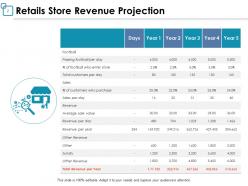
Slide 2: This slide shows Retails Store Revenue Projection describing- customers per day, sales, revenue, etc.
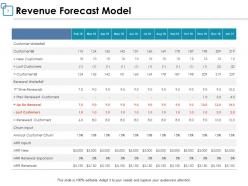
Slide 3: This slide presents Revenue Forecast Model describing- Customer waterfall, renewal waterfall, churn input, annual customer churn etc.
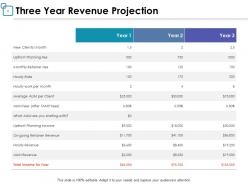
Slide 4: This slide displays Three Year Revenue Projection describing- New clients, upfront planning fee, monthly retainer fee, upfront planning income etc.
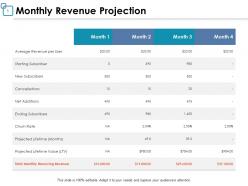
Slide 5: This slide represents Monthly Revenue Projection describing- average revenue per user, starting subscriber, new subscribers, Net additions,churn rate etc.
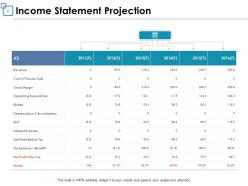
Slide 6: This slide showcases Income Statement Projection describing- Revenue, cost of goods sold, gross margin, operating expenditure etc.
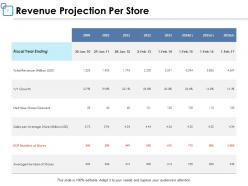
Slide 7: This slide shows Revenue Projection Per Store describing- Total revenue, net new stores opened, sales per average store etc.
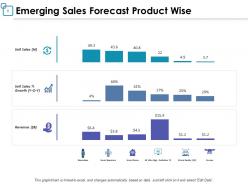
Slide 8: This slide presents Emerging Sales Forecast Product Wise describing- Unit Sales % Growth, Revenue, Unit Sales.
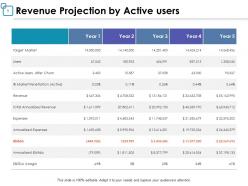
Slide 9: This slide displays Revenue Projection by Active users describing- Target market, users, Revenue, expenses etc.
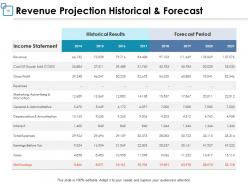
Slide 10: This slide represents Revenue Projection Historical & Forecast with Income statement, Historical results and forecast period.
Slide 11: This slide is titled as Additional Slides for moving forward.
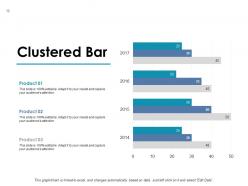
Slide 12: This slide shows Clustered Bar chart with three products comparison.
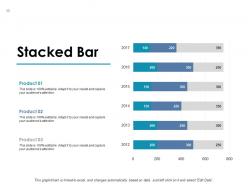
Slide 13: This slide shows Stacked Bar chart with three products comparison.
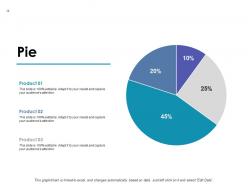
Slide 14: This slide displays Pie chart with four products comparison.
Slide 15: This slide shows Circular diagram with text boxes.
Slide 16: This is a Venn slide with text boxes to show information.
Slide 17: This is a Matrix slide with additional text boxes.
Slide 18: This is a Lego slide with additional text boxes to go.
Slide 19: This is a Thank you slide with address, contact numbers and email address.
Financial Forecast PowerPoint Presentation Slides with all 16 slides:
Use our Financial Forecast PowerPoint Presentation Slides to effectively help you save your valuable time. They are readymade to fit into any presentation structure.


FAQs for Financial Forecast
You'll want to start with revenue projections - honestly the hardest part since you're basically guessing what'll happen. Then figure out your fixed costs, variable expenses, and any big purchases coming down the line. Cash flow and balance sheet projections come next. Oh, and definitely run a few scenarios - like what happens if things go amazing vs. totally sideways vs. somewhere in between. The trick is being honest with your numbers and writing down how you calculated stuff. Trust me, future you will thank you when it's time to update everything and you can't remember why you thought you'd make $50K in month two.
Look at your last 3-5 years of data first - that's where you'll see the patterns that actually matter. Revenue growth, seasonal dips, spending cycles. They tend to repeat themselves, which is honestly pretty helpful for planning ahead. Don't just copy those growth rates though. Things change - new competitors pop up, markets shift, your company pivots. I learned this the hard way during COVID when everything went sideways. Plot your key metrics on a timeline and see what's been consistent. Then adjust for whatever's different now. Historical trends are super useful, but they're more like guidelines than rules.
So market analysis is basically your financial forecasting compass - it shows you what external stuff will mess with your numbers. You're digging into industry trends, how competitors are doing, economic signals, customer habits. All to predict revenue and cost impacts. It's like checking weather before a picnic, but way messier and involves way too many spreadsheets (honestly, why are there always so many spreadsheets?). Without decent market research, you're just making educated guesses from internal data. Find 3-5 key market drivers that actually correlate with your business performance historically.
Your spreadsheets won't catch everything - that's where qualitative stuff comes in. Management quality, market vibes, regulatory shifts, competitive threats. Numbers might look solid, but what if the new CEO is trash? I've watched so many "perfect" models completely whiff on industry disruptions or changing consumer habits. Honestly, people get way too confident in their projections sometimes. Use those insights to reality-check your assumptions and widen your confidence ranges. Next time you're forecasting, just write down 3-5 major qualitative risks first.
Honestly, I'd start simple with linear regression and scenario planning - way easier to sell to your boss. Time series stuff like moving averages and ARIMA models are super common for forecasting. Regression helps you figure out which variables actually matter. Monte Carlo simulations are pretty cool too, basically running thousands of probability scenarios at once. Machine learning is trendy right now, especially if you've got messy data. But seriously, don't jump into the fancy stuff first. Get people comfortable with basic "what if" modeling, then you can introduce the more complex methods once everyone's on board.
So basically, economic indicators are what feed into your forecast assumptions - they're the outside stuff that shapes your internal numbers. GDP growth hits your revenue projections. Inflation messes with costs. Interest rates affect financing and discount rates. Employment data shows consumer spending trends, which is massive for B2C companies. Here's the thing though - you can't just dump these indicators straight into your models. There are lag effects, plus each industry reacts differently. Honestly, I'd start by figuring out which 3-4 indicators have historically moved with your business performance.
Here's the thing - startups have zero data while big companies are sitting on years of sales history. You're basically guessing based on market research and what similar companies did, which can feel pretty sketchy tbh. Established businesses? They've got seasonal patterns, customer trends, all that good stuff to actually predict what's coming. Your forecasts will definitely be wrong at first (mine always were), so just plan to update them every month as real numbers roll in. Build in wiggle room from day one.
Honestly, the difference is night and day. Machine learning picks up on patterns in your data that you'd never catch manually - market trends, seasonal stuff, weird correlations between factors. No more staying up late making spreadsheet errors either (we've all been there). The software runs multiple scenarios at once and updates everything as new info comes in, which is pretty sweet. I'd start with forecasting tools that plug into whatever financial systems you're already using. Way less time spent on number crunching, way better accuracy.
Yeah, seasonality and cyclical stuff will mess up your projections big time if you ignore them. Like retail always spikes in Q4, tourism goes crazy in summer - those seasonal patterns are pretty predictable once you spot them. Cyclical trends are more annoying though, they stretch over years and tie into broader economic cycles. I totally whiffed on this once with a construction project because I didn't think about how cyclical that industry is! Honestly, you need at least 3-5 years of historical data to catch these patterns. Way better than just assuming everything grows in a straight line, which never happens anyway.
Honestly, don't wait around for those quarterly reviews when the market's shifting under your feet. Jump on updates right away. Set up alerts for stuff like customer demand changes, what competitors are doing, economic weirdness - whatever actually moves your numbers. Trust me, we got burned last year sitting on stale forecasts way too long. Focus on your biggest 2-3 revenue and cost drivers instead of fiddling with every tiny line item (that's just busy work anyway). Make it a monthly thing so you're not constantly scrambling to catch up with reality.
Oh man, don't get too rosy with your numbers - that's like the
-
Editable templates with innovative design and color combination.
-
Helpful product design for delivering presentation.
-
Very well designed and informative templates.
-
Easily Editable.
-
Colors used are bright and distinctive.