


Financing Forecasting Process And Methods Powerpoint Presentation Slides




Try Before you Buy Download Free Sample Product
 Impress Your
 Audience
 100%
100% Editable
 Save Hours
 of Time


Company’s investors will expect to see your financial forecast, profit, and loss statement and cash flow, etc. Therefore, we present our financing forecasting process and methods PowerPoint presentation slides. This budget forecasting PPT presentation will assess the effectiveness with which funds are employed and the profitability of its operations. We have included required templates like fiscal KPI’s like balance sheet, cash flow statements, financial projections, key funding ratios. It also covers ratio analysis, P&L overview, funding updates, etc., in this complete PowerPoint presentation. Using these financial prediction PPT slides, a middle-level manager can depict the company’s budget to top management. If you are planning to create a presentation on the financial forecast, demand forecast, cash flow prediction, economic forecasting, fiscal modeling, qualitative forecasting methods, etc., in future our demand forecast PowerPoint templates will be useful for you. The best thing about our financial prediction PPT designs is that they can be customized as per your needs. What are you waiting for? Download this amazing financing forecasting process and methods PowerPoint presentation template. Facilitate better coordination with our Financing Forecasting Process And Methods Powerpoint Presentation Slides. Create the desire to act cohesively.
People who downloaded this PowerPoint presentation also viewed the following :
Content of this Powerpoint Presentation
Slide 1: This slide introduces Financing Forecasting Process and Methods. State the name of your company here and get started.
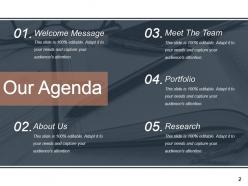
Slide 2: This slide shows Our Agenda which consists of the following points- Welcome Message, About Us, Meet The Team, Research, Portfolio.
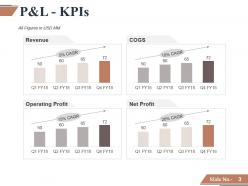
Slide 3: This slide presents P&L - KPIs graphically showing- Revenue, COGS, Operating Profit, Net Profit.
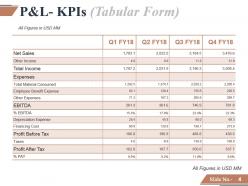
Slide 4: This slide shows P&L- KPIs (Tabular Form).
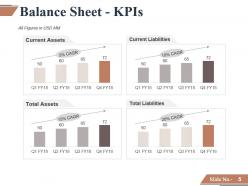
Slide 5: This is a Balance Sheet - KPIs slide showing- Current Assets, Current Liabilities, Total Assets, Total Liabilities.
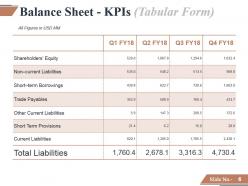
Slide 6: This slide shows Balance Sheet - KPIs (Tabular Form).
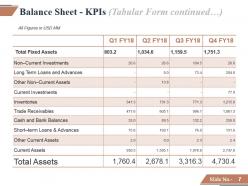
Slide 7: This is another slide showing Balance Sheet - KPIs (Tabular Form continued…).
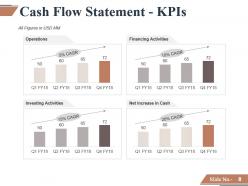
Slide 8: This is a Cash Flow Statement - KPIs slide showing- Operation, Financing Activities, Investing Activities, Net Increase in Cash.
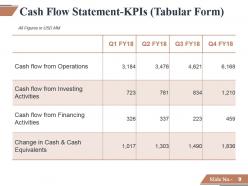
Slide 9: This slide shows Cash Flow Statement-KPIs (Tabular Form).
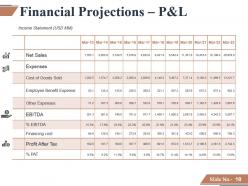
Slide 10: This slide shows Financial Projections – P&L table.
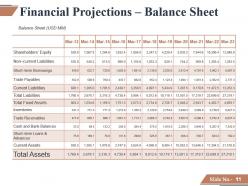
Slide 11: This slide shows Financial Projections – Balance Sheet.
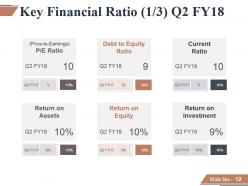
Slide 12: This slide shows Key Financial Ratio (1/3) Q2 FY18 which include- Debt to Equity Ratio, Return on Equity, Return on Assets, Current Ratio, Return on Investment, P/E Ratio (Price-to-Earnings).
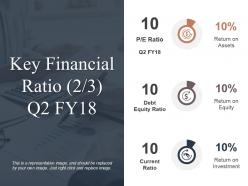
Slide 13: This slide also shows Key Financial Ratio (2/3) Q2 FY18.
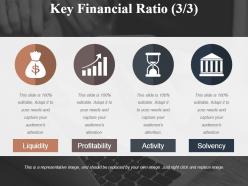
Slide 14: This is another slide showing Key Financial Ratio (3/3) involving- Liquidity, Solvency, Activity, Profitability.
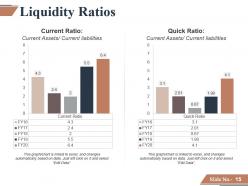
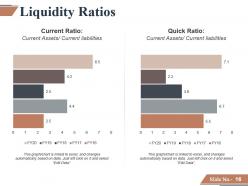
Slide 15: This slide presents Liquidity Ratios- Current Ratio and Quick Ratio in a bar chart/ graph form.
Slide 16: This slide also shows Liquidity Ratios graphically.
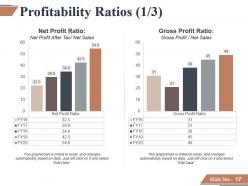
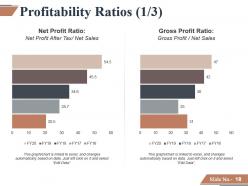
Slide 17: This is first slide showing Profitability Ratios (1/3) further divided into- Net Profit Ratio, Gross Profit Ratio.
Slide 18: This slide also shows a graphical representation of Profitability Ratios (1/3).
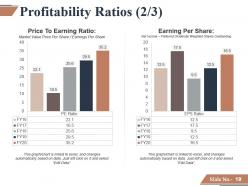
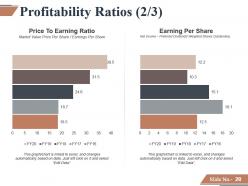
Slide 19: This is second Profitability Ratios (2/3) slide showing- Price To Earning Ratio- Market Value Price Per Share / Earnings Per Share, Earning Per Share- Net Income – Preferred Dividends/ Weighted Shares Outstanding.
Slide 20: This is third slide showing Profitability Ratios (2/3).
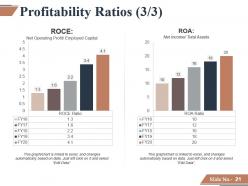
Slide 21: This is fourth slide showing Profitability Ratios (3/3).
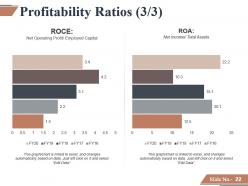
Slide 22: This is fifth slide showing Profitability Ratios (3/3).
Slide 23: This is a Coffee Break image slide to halt. Edit as per need.
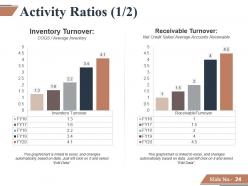
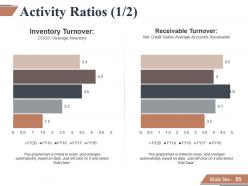
Slide 24: This is the first slide showing Activity Ratios (1/2) graphically.
Slide 25: This is the second slide showing Activity Ratios (1/2).
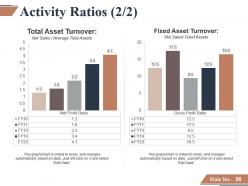
Slide 26: This is third slide showing Activity Ratios (2/2).
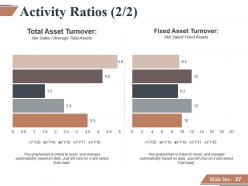
Slide 27: This is fourth slide showing Activity Ratios (2/2).
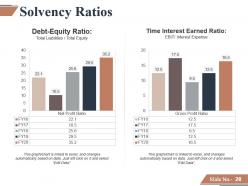
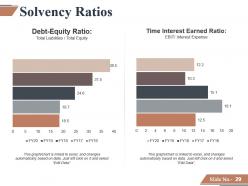
Slide 28: This slide shows Solvency Ratios- Debt-Equity Ratio, Time Interest Earned Ratio.
Slide 29: This slide also shows a graphical representation of Solvency Ratios.
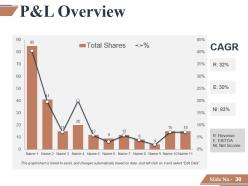
Slide 30: This slide presents P&L Overview graph.
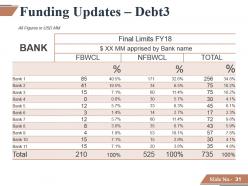
Slide 31: This slide presents Funding Updates - Debt in a tabular form.
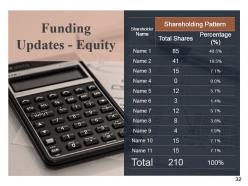
Slide 32: This slide also presents Funding Updates - Equity table.
Slide 33: This slide shows Icons for Financial Forecasting Process and Methods. Alter the icons as per your requirement.
Slide 34: This slide is titled Additional Slides to move forward. Alter as per need.
Slide 35: This slide shows Mission Statement-Vision-Values. State your mission, vision and values here.
Slide 36: This slide helps show- About Our Company with Target Audiences, Preferred by Many and Values Client as examples.
Slide 37: This is WE ARE THE CREATIVE TEAM slide with name and designation to fill.
Slide 38: This is Our Goal slide. State your goals here.
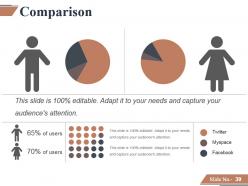
Slide 39: This is a Comparison slide to show comparison of two entities/ products etc.
Slide 40: This is a Quotes slide to convey company/ organization message, beliefs etc. You may change the slide content as per need.
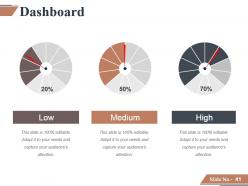
Slide 41: This is a Dashboard slide to state Low, Medium and High aspects, kpis, metrics etc.
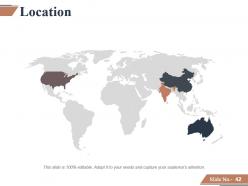
Slide 42: This is a Location slide to show global segregation, presence etc. on a world map image and text boxes to make it explicit.
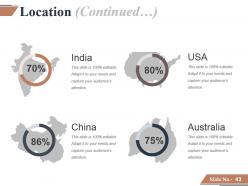
Slide 43: This is also a Location slide to show global segregation, presence etc. on map images and text boxes to make it explicit.
Slide 44: This is a Puzzle pieces image slide to show information, specifications etc.
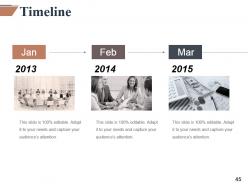
Slide 45: This is a Timeline slide to present important dates, journey, evolution, milestones etc.
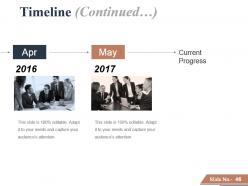
Slide 46: This is a Timeline slide to present important dates, journey, evolution, milestones etc.
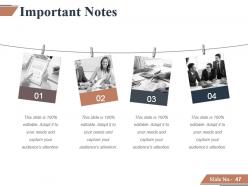
Slide 47: This slide showcases Important Notes to be displayed. Show events, important piece of information, events etc. here.
Slide 48: This is a Newspaper image slide. Show events, important piece of information, events etc. here.
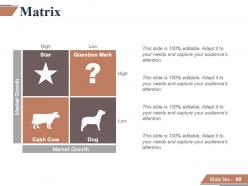
Slide 49: This slide shows a Matrix in terms of High and Low.
Slide 50: This is a Target slide. State your targets here.
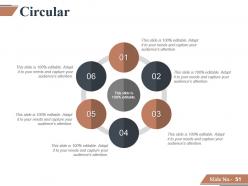
Slide 51: This is a Circular slide to show information, specification etc.
Slide 52: This is an Innovation & Creativity slide with creative bulb imagery to state a new idea or highlight specifications/ information etc.
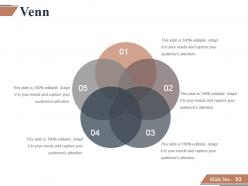
Slide 53: This is a Venn diagram image slide to show information, specifications etc.
Slide 54: This is a Financial slide showing- Maximum Earning, Normal Earning.
Slide 55: This slide presents SWOT Analysis. State your strengths, weaknesses, threats and oppotunities here.
Slide 56: This is a Lego box image slide to show information, specifications etc.
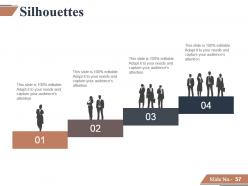
Slide 57: This is a Silhouettes slide to show people related information, specifications etc.
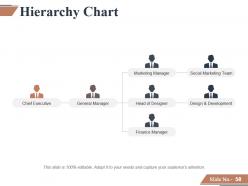
Slide 58: This is a Hierarchy Chart slide to show information, organization structural specifications etc.
Slide 59: This is a Mind map image slide to show information, specifications etc.
Slide 60: This is a Magnifying glass image slide to show information, specifications etc.
Slide 61: This is a Funnel image slide to show information, specifications etc.
Slide 62: This slide is titled Our Charts & Graphs to move forward. You can change the slide content as per need.
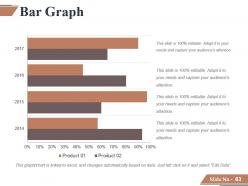
Slide 63: This slide presents a Bar Graph for product growth etc.
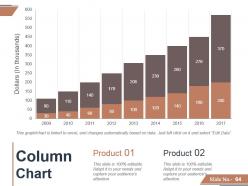
Slide 64: This is a Column Chart for showing product/ entity comparison, information etc.
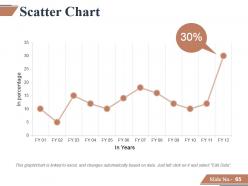
Slide 65: This is a Scatter Chart slide to present product/ entity comparison, specifications etc.
Slide 66: This is a Line Chart to present product/ entity comparison, specifications etc.
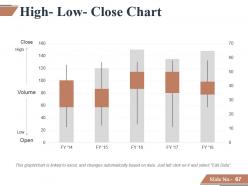
Slide 67: This slide shows High- Low- Close Chart to present product/ entity comparison, specifications etc.
Slide 68: This slide presents a Donut Pie Chart. Add text as per need.
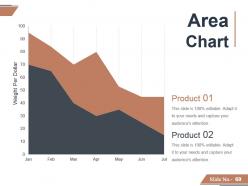
Slide 69: This is an Area Chart slide to present product/ entity comparison, information etc.
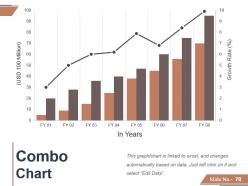
Slide 70: This slide presents Combo Chart to show product/ entity growth, comparison etc.
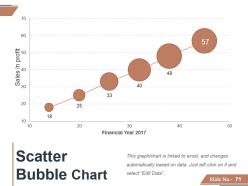
Slide 71: This slide showcases Scatter Bubble Chart. You can analyze and compare products using this chart.
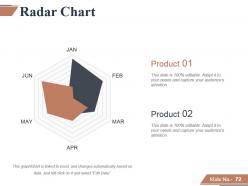
Slide 72: This slide presents a Radar Chart. Compare Product 01, Product 02 and use as per required.
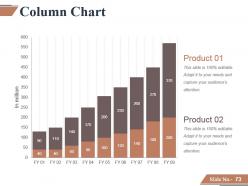
Slide 73: This slide presents a Column Chart for showcasing product/ company growth, comparison etc.
Slide 74: This is a Thank You image slide with Address, Email and Contact number.
Financing Forecasting Process And Methods Powerpoint Presentation Slides with all 74 slides:
Everyone in the hall will feel excited. Our Financing Forecasting Process And Methods Powerpoint Presentation Slides will generate a buzz.














FAQs for Financing Forecasting Process And Methods
Start with revenue projections, cash flow timing, and working capital - that's your base. Historical data is super valuable, but don't just copy last year's numbers. Seasonal swings matter too, plus any big equipment purchases coming up. I'd honestly start with a simple 13-week rolling forecast first. Way less overwhelming. Build in three scenarios - best case, worst case, and realistic. The whole point is showing when you'll need cash and how much. Growth assumptions are key too, but you can add more complexity once you nail the basics down.
Honestly, just dig into your cash flow history first - like 2-3 years of monthly numbers if you've got them. Your gut feeling is probably right about most stuff, but you'll catch patterns you missed. When do you always need extra working capital? How long do customers actually take to pay (not what they promise)? What's your real burn rate been? I spent way too much time guessing at this stuff early on. Now I just look for the cycles that keep repeating. Once you see those baseline patterns, you can build out different scenarios for growth or when things get weird. The data doesn't lie about this stuff.
Honestly, you really need market research if you want your financial forecasts to actually mean something. Your internal data is fine, but it's not the whole picture. What about industry trends? Competitor moves? Customer behavior changes? All that stuff directly hits your revenue projections. I learned this the hard way when I missed a major market shift once - my numbers were completely wrong. Try doing quarterly market check-ins. It sounds like extra work, but trust me, your forecasts will be way more solid when you're pitching to investors or whoever.
So macro indicators basically control your whole financing forecast - they're what drive the economic environment you're dealing with. Interest rates hit your borrowing costs hard. GDP growth changes your revenue projections and what customers actually want to buy. Inflation messes with your costs and pricing power (god, it's been crazy volatile lately). Look at unemployment for spending patterns, currency stuff if you're international. Don't use static assumptions though - build scenarios around these variables instead. Figure out which 2-3 indicators matter most for your industry, then model best/worst case for cash flow.
Honestly, most finance teams still live in Excel because it's flexible and everyone gets it. For fancier stuff though, check out Adaptive Insights, Anaplan, or Prophix. You'll want scenario modeling for what-if analysis, rolling forecasts, and solid integration with whatever systems you're already using. Driver-based modeling is clutch - way better than just looking at historical data. Oh, and decent visualization helps too. My advice? Go with whatever plays nicest with your current setup. Trust me, spending weeks wrestling with data imports will make you want to throw your laptop out the window.
So basically you create multiple forecasts for different "what-if" situations - best case, worst case, most likely. Instead of one revenue projection, model what happens if sales drop 20%, stay flat, or jump 15%. Gives you a range of financing needs, not just one number. Honestly learned this the hard way during COVID when our forecasts completely fell apart! First step is figuring out your biggest uncertainties, then build models around those. Three scenarios is usually enough to start. Oh and definitely make sure your financing strategy can handle the worst-case scenario - that's where most people mess up.
Dude, the worst mistake is being way too optimistic about how much money you'll make. Seriously happens all the time. Also people totally lowball their expenses - like things always cost more than you think, right? Don't use old data either, that'll screw you over. Oh and seasonal stuff - if your business has ups and downs throughout the year, factor that in. Never assume everything goes smoothly because it won't lol. Try different forecasting methods too, don't just stick with one. My take? Underestimate income, overestimate costs, have backup plans.
Definitely do it monthly - quarterly is way too slow for how fast things change now. Monthly catches problems before they snowball into real issues. Your projections will be wrong anyway (they always are), so you need to spot those gaps quickly. It's like... imagine only checking your bank account every three months? Bad idea. Short bursts work better than long ones for staying focused during the review. Set up a calendar reminder and actually stick to it. Trust me, future you will thank present you when cash flow gets tight.
MAPE and forecast bias are your best friends here - they'll show you how far off you are and if you're always high or low. Short-term forecasts beat long-term ones every time, so track accuracy by timeframe. I always look at what percentage hit within +/- 10% of target. Honestly, directional accuracy can matter more than exact numbers sometimes. Are you at least getting the trend right? Monthly dashboards help you catch patterns. Oh, and 12-month predictions are basically educated guesses anyway, but you probably knew that already.
Honestly, it depends where your company's at. Startups are basically just trying to figure out when they'll run out of money - like, when do I need to start panicking about the next funding round? Established companies have it easier since they're planning growth moves and acquisitions instead of just surviving. The data situation is totally different too. You've got years of patterns to work with vs. startups flying blind with maybe six months of actual numbers. Either way, start conservative with your cash flow projections. Then run through some worst-case scenarios because things always cost more than you think.
Honestly, mix a few different methods - don't rely on just one. Percentage-of-sales is super easy and works great when you're scaling up. But here's the thing that bit me before: even profitable growth can totally wreck your cash flow, so definitely run those projections. I'd also do scenario planning with different growth rates because who knows what'll actually happen, right? Rolling forecasts are clutch too - way better than being stuck with some annual prediction that's already outdated. Oh, and always pad your assumptions because growth is expensive as hell and costs more than you think.
Look, management experience can totally make or break your financing forecasts. Has your leadership team dealt with this stuff before? Experienced managers usually execute more predictably. Newer teams though - they hit learning curves that mess with timelines and cash flow. I've watched rock-solid financial models completely implode because nobody thought about execution risk. Build in buffer scenarios based on who's actually capable of what. Weight your projections around that reality. Oh and definitely stress-test your assumptions - like, really beat them up based on who's running things day-to-day.
Honestly, cash flow projections are what really matter for financing decisions. They show exactly when money hits your account versus when bills are due. Revenue forecasts look pretty but won't save you from running out of cash - and trust me, you can be "profitable" while your bank account hits zero if the timing's wrong. These projections help you spot funding gaps before they become emergencies. Way better than scrambling for loans at the last minute. Focus on actual cash needs, not just what your P&L says you'll make.
Keep it visual - charts beat spreadsheets every time. Different audiences want different metrics, so tailor what you show investors vs your internal team. Put your assumptions right up front so people get the reasoning behind your numbers. I can't tell you how many forecasts I've watched tank because someone hid their methodology somewhere nobody could find it. Present three scenarios: best case, worst case, and what'll probably happen. Oh, and set a clear timeline for updates - then actually stick to it. People hate when you go radio silent on them.
Honestly, you'll want to loop in your key departments from the start - sales, ops, HR, marketing at minimum. Monthly cross-functional meetings work well where everyone shares their plans and resource needs. Sales guys are always way too optimistic though, so take those numbers with a grain of salt! Create standardized templates so you're not comparing random data formats. That's what really killed us last quarter. Make sure each team understands how their input affects the bigger financial picture. Once everyone's accountable and using the same framework, your forecasts get so much more reliable.
-
Unique research projects to present in meeting.
-
Awesomely designed templates, Easy to understand.