


Financial Tools Powerpoint Presentation Slides




Try Before you Buy Download Free Sample Product
 Impress Your
 Audience
 100%
100% Editable
 Save Hours
 of Time


In order to grow the business and to survive in the market, finances play a very important role. This content ready financial tools complete PPT deck covers important topics such as bonds, shares, and funds. Represent the financing instruments of your company using this content ready financial tools PowerPoint presentation. You can edit and add your own text in the financial tools PPT template, and you are ready with an engaging and visually appealing PowerPoint presentation within no time. This trading instrument PPT deck contains many slides like types of financial instruments we trade in, debentures, rights issue, financial instruments types, foreign exchange market, bond market, bond market components, derivatives market options, derivative market types, other market forms, etc. All slides are completely editable and you can make changes as per your needs and requirements. Additionally, you can also show various other concepts like derivatives and money market options by using this financial instruments PPT template. Give a compelling account with our Financial Tools Powerpoint Presentation Slides. Everyone's eyes will be glued to you.
People who downloaded this PowerPoint presentation also viewed the following :
Content of this Powerpoint Presentation
Slide 1: This slide introduces Financial Tools. State Your Company Name and begin.
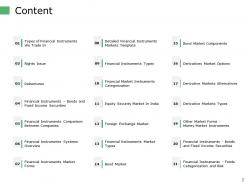
Slide 2: This slide shows Content of the presentation.
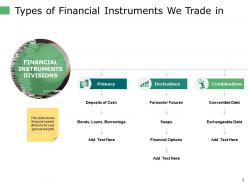
Slide 3: This slide presents Types of Financial Instruments We Trade In.
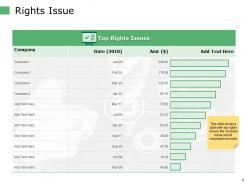
Slide 4: This slide displays Rights Issue in tabular form with the company name and its respective amounts.
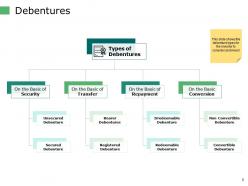
Slide 5: This slide shows the debenture types for the investor to consider and invest
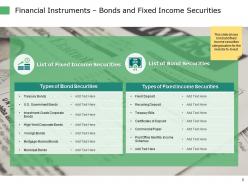
Slide 6: This slide shows bond and fixed income securities categorization for the investor to invest in.
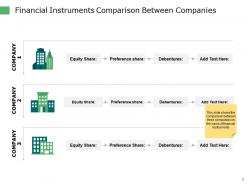
Slide 7: This slide shows the comparison between three companies on the basis of financial instruments.
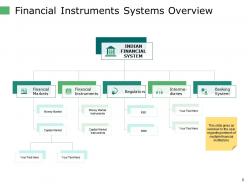
Slide 8: This slide represents Financial Instruments Systems Overview describing- Financial Instruments, Intermediaries, Banking System, Financial Markets, Regulators.
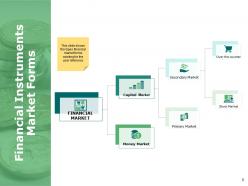
Slide 9: This slide showcases Financial Instruments Market Forms.
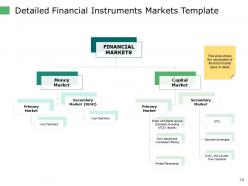
Slide 10: This slide presents Detailed Financial Instrument Markets Template.
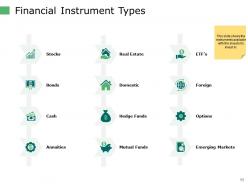
Slide 11: This slide shows the instruments available with the investor to invest in.
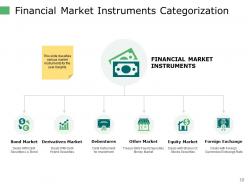
Slide 12: This slide displays Financial Market Instrument Categorization describing- Bond Market, Derivatives Market, Debentures, Other Market, Equity Market, Foreign Exchange.
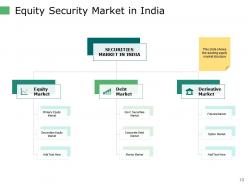
Slide 13: This slide showcases The Equity Security Market in India.
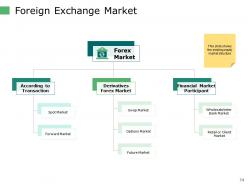
Slide 14: This slide shows the Foreign Exchange Market.
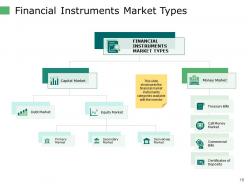
Slide 15: This slide showcases the financial market instrument categories available with the investor.
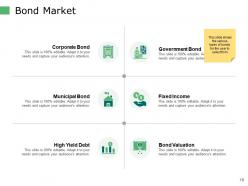
Slide 16: This slide shows Bond Market describing- High Yield Debt, Government Bond, Fixed Income, Bond Valuation, Municipal Bond, Corporate Bond.
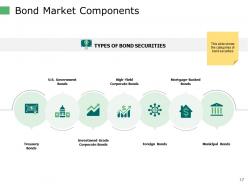
Slide 17: This slide shows Bond Market Components including- Treasury Bonds, U.S. Government Bonds, Investment-Grade Corporate Bonds, High-Yield Corporate Bonds, Foreign Bonds, Mortgage-Backed Bonds, Municipal Bonds.
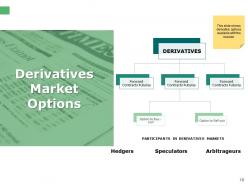
Slide 18: This slide presents Derivatives Market Options available with the investor.
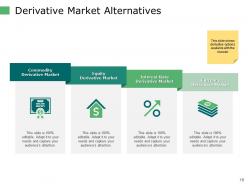
Slide 19: This slide displays Derivative Market Alternatives describing- Commodity Derivative Market, Equity Derivative Market, Interest Rate Derivative Market, Currency Derivative Market.
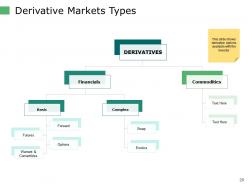
Slide 20: This slide represents Derivative Markets Types with related flow chart.
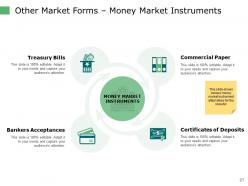
Slide 21: This slide showcases Other Market Forms – Money Market Instruments describing- Treasury Bills, Certificates of Deposits, Bankers Acceptances, Commercial Paper.
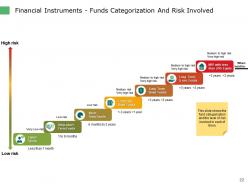
Slide 22: This slide shows Financial Instruments - Funds Categorization And Risk Involved.
Slide 23: This is Our Mission slide with related imagery and text.
Slide 24: This is Our Team slide with names and designation.
Slide 25: This is About us slide to show company specifications etc.
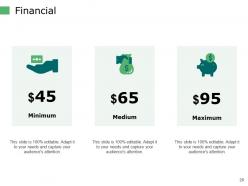
Slide 26: This is a Financial slide. Show your finance related stuff here.
Slide 27: This is a Venn slide with text boxes.
Slide 28: This is Our Target slide. State your targets here.
Slide 29: This is a Quotes slide to convey message, beliefs etc.
Slide 30: This is Our Goal slide. Show your firm's goals here.
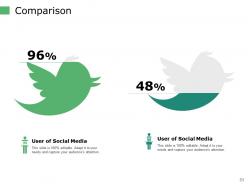
Slide 31: This is a Comparison slide to state comparison between commodities, entities etc.
Slide 32: This slide is titled as Post it. Post your important notes here.
Slide 33: This is a Thank You slide with address, contact numbers and email address.
Financial Tools Powerpoint Presentation Slides with all 33 slides:
Use our Financial Tools Powerpoint Presentation Slides to effectively help you save your valuable time. They are readymade to fit into any presentation structure.



FAQs for Financial Tools
QuickBooks or Xero should be your first move - trust me, you'll thank yourself later when tax season hits. Separate business bank account is non-negotiable (learned that one the hard way). For invoicing and expenses, there's tons of apps out there. Honestly? Sometimes a basic spreadsheet does the job just fine for tracking cash flow. Square or Stripe if you're taking card payments, obviously. Oh, and if you end up hiring people, payroll software becomes a lifesaver. But don't go crazy buying everything upfront - start simple and add stuff as you actually need it.
Honestly, forecasting tools are like having a crystal ball for your money decisions. You can mess around with different scenarios - what happens if we raise prices? New market? More employees? Super helpful for avoiding those "oops, we're broke" moments. Cash flow projections are probably the easiest place to start if you're just getting into this stuff. The whole point is getting actual data instead of just winging it with budgets and sales targets. I mean, nobody wants to blow their investment budget on a hunch, right? Way better than flying blind.
Think of budgeting tools like a GPS for your money - they show you exactly where it's going and help you redirect it. Mine tracks spending automatically and breaks everything into categories. I had no clue how much I was dropping on coffee until I saw it all laid out (honestly embarrassing). The best part though? You can set spending limits and get warnings before you go overboard. Just grab something simple like Mint or throw together a basic spreadsheet. Whatever you pick, you've gotta actually stick with it or it's pointless.
Dude, you should totally try those investment calculators - they're actually pretty cool. Plug in different amounts you could save each month and see what happens over like 20-30 years. The compound interest thing is wild when you actually see the numbers. I was messing around with one last week and realized bumping my 401k up by just $100/month makes a huge difference long-term. They're perfect for figuring out retirement stuff or just setting goals that aren't completely unrealistic. Run a few scenarios comparing your current savings to maxing out your 401k - might surprise you how much it matters.
Honestly, just make sure it connects to your bank accounts automatically - saves so much time. Good invoicing is a must, plus real-time reports so you're not flying blind. Tax prep tools are clutch too. If you've got employees, multi-user access is obvious. Everything's gotta be cloud-based now (I mean, who wants to deal with desktop software in 2024?). Check if it plays nice with whatever payroll or CRM stuff you're using. The interface can't be rocket science - you should be able to pull a P&L without wanting to throw your laptop. Try the free trials first though.
Dude, these tools are actually pretty solid - they show you exactly what's coming in and going out in real time. You'll spot cash problems way before they become disasters. The forecasting part is clutch too, like seeing weeks ahead if you're gonna be tight. Plus you can track which clients are dragging their feet on payments (always someone, right?). Best part? You can time your own payments better - hold off when cash is low, push collections when you need money fast. Just set up alerts so you don't get blindsided.
Look, financial analysis tools are a game changer for investing - way better than just winging it with hunches. They let you spot trends, check risk levels, and actually compare different investments properly. It's night and day compared to flying blind. You'll catch undervalued stocks easier and time your moves better too. Plus building a solid portfolio becomes way more systematic when you're working with real data instead of gut feelings. I'd start with basic stuff like ratio analysis and simple charts - nothing too fancy at first. Trust me, once you get the hang of it you won't want to invest any other way.
Honestly, just getting everything in one place makes such a difference - like a spreadsheet or debt app. You'll finally see what you actually owe instead of that vague panic feeling. The interest amounts might surprise you (not in a good way lol). But these tools show you realistic timelines for paying stuff off, which is weirdly motivating. You can try the snowball method or avalanche approach to see what works better. I swear just organizing it all removes like 80% of the stress immediately.
Honestly, tax software is a game changer - it catches deductions I'd never think of and helps time when to take certain income or expenses. You can run scenarios too, like "what if I max out my 401k this year?" Super helpful for stuff like quarterly payments and tax-loss harvesting. My accountant friend swears by it (though she's probably biased lol). The software stays current with tax law changes which is clutch. Here's the thing though - put your info in early! Don't wait until April when it's too late to actually do anything with the suggestions.
Dude, financial dashboards are seriously helpful - they put all your important numbers in one spot so you don't have to hunt through a million spreadsheets. You'll see your revenue, expenses, cash flow, all that stuff in real time instead of waiting around for monthly reports. Honestly, the visual setup makes everything way less overwhelming than staring at rows of data. They're great for catching problems early and spotting trends you might miss otherwise. I'd probably start with like 3-5 metrics that actually matter to your specific goals. Way better than flying blind, trust me.
Honestly, you really need these tools if you're serious about investing. They show you what could go wrong before you lose money - like measuring how volatile your stocks are or how much you might lose in a bad scenario. Flying blind with real cash is just stupid, trust me on that one. Value at Risk and standard deviation are good starting points, though the names sound fancier than they are. Once you get the hang of those basics, you can try stress testing your portfolio. It's all about building something that won't crash when markets get ugly but still makes decent returns.
Honestly, BI tools are a lifesaver for financial reporting. They grab data from all your systems automatically - no more building spreadsheets by hand every month. Way fewer mistakes that way. You'll get alerts when something looks weird, plus you can dig into details right away. Those executive reports that used to take forever? Now they're done in minutes. I'd say pick one important report to start with, then add more later. Oh, and once you set up templates, they just fill themselves going forward. Total game changer, trust me.
So these tools basically let you see how you're doing versus your competitors and industry standards. Way better than being stuck in your own little bubble, you know? You'll spot trends and ratios that would totally fly under the radar otherwise. Honestly, beats the hell out of building endless spreadsheets - ain't nobody got time for that anymore. The cool part is you can actually make smarter calls on pricing and where to invest your money. I'd start simple though. Just pick your top 5 ratios and compare against your main competitors first.
So basically these apps just force you to see where your cash is actually going instead of living in denial lol. They'll auto-sort your purchases and ping you when you're about to blow your budget. The visual charts are surprisingly helpful - like seeing $200 on coffee hits different than just swiping your card. Yeah, some have those weird point systems for saving but they kinda work? Main thing is connecting it to your bank account and turning notifications on. Otherwise you'll just ignore it. Way better than that monthly panic of "where did my money go."
Honestly, AI tools are probably the biggest shift right now - they're doing fraud detection, investment advice, all that stuff. Blockchain and DeFi are creating totally new financial products that bypass banks entirely. Then there's embedded finance, which is everywhere now. Like you can get a loan right at checkout or send money through Instagram or whatever. Open banking APIs are pretty sweet too since they let startups build on existing bank systems. Everything's moving so fast it's kind of wild. Just make sure whatever you're using plays nice with your current setup.
-
Excellent Designs.