


Plano de viagem de negócios com reuniões e eventos




Try Before you Buy Download Free Sample Product
 Impress Your
 Audience
 100%
100% Editable
 Save Hours
 of Time


Nosso Plano de Viagem de Negócios com Reuniões e Eventos é topicamente projetado para fornecer um pano de fundo atraente para qualquer assunto. Use-os para parecer um profissional de apresentação.
People who downloaded this PowerPoint presentation also viewed the following :
Conteúdo desta apresentação em PowerPoint
Embora o Zoom e outras tecnologias online sejam facilmente acessíveis e ótimas ferramentas para comunicação virtual, as viagens de negócios ainda são uma parte necessária da vida de um executivo de alto nível. As viagens de negócios sempre foram parte integrante do sucesso de uma empresa, e embora a indústria de viagens tenha enfrentado desafios sem precedentes nos últimos cinco anos, viajar a negócios está de volta e mais forte do que nunca. As empresas que percebem o importante propósito das viagens de negócios colhem os muitos benefícios que elas trazem. De acordo com a Oxford Economics, o retorno de vendas para cada dólar investido em viagens de negócios varia entre US$ 10 e US$ 14,99.
As despesas com viagens de negócios são o segundo maior fator de custo para uma empresa. Portanto, em algum momento, toda empresa luta para gerenciá-lo. Confira nosso plano de despesas e viagens de negócios com este modelo pronto para conteúdo.
Cada viagem de negócios oferece seus próprios benefícios e pode se tornar ainda mais econômica com viagens gerenciadas. Se você precisa gerenciar viagens de negócios, saberá que um plano de viagem é absolutamente necessário.
Para garantir que os funcionários viajantes estejam bem preparados para o evento de negócios e tenham se preparado bem para as reuniões presenciais, use este Modelo de Detalhes do Evento.
Enquanto você estiver ocupado planejando o conteúdo e os detalhes de sua apresentação de negócios, nós o cobrimos com este Modelo de PPT. Este modelo de Plano de Viagem de Negócios pronto para uso lhe fornecerá uma base para planejar sua viagem. A natureza 100% personalizável dos modelos lhe fornece a flexibilidade desejada para editar seu itinerário.
Vamos explorar os recursos deste modelo
Modelo 1: Modelo de PPT de Plano de Viagem de Negócios com Reuniões e Eventos
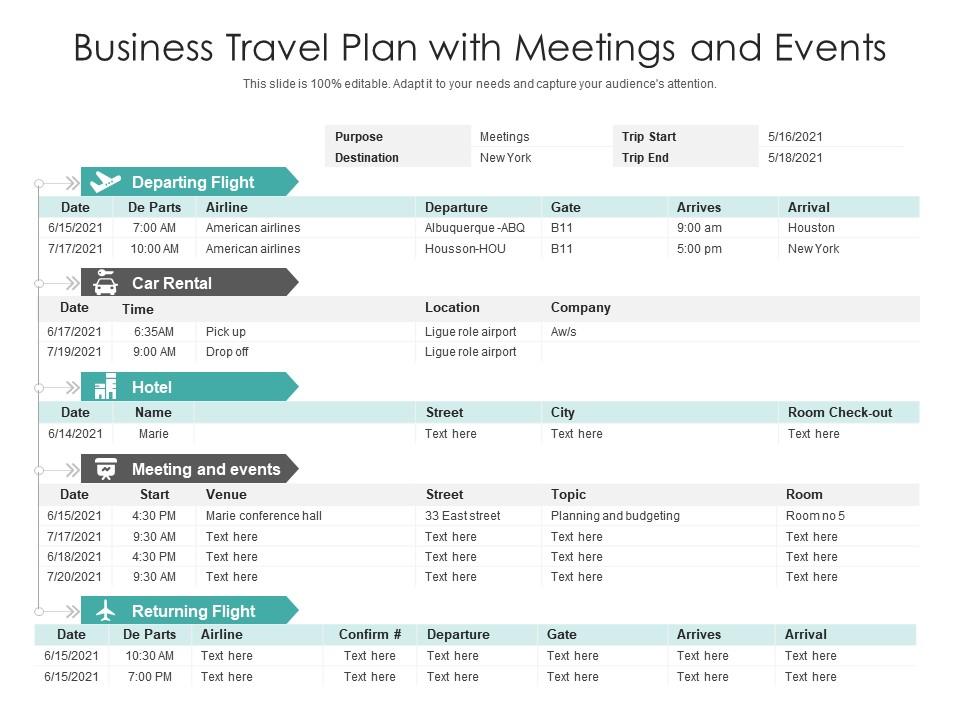
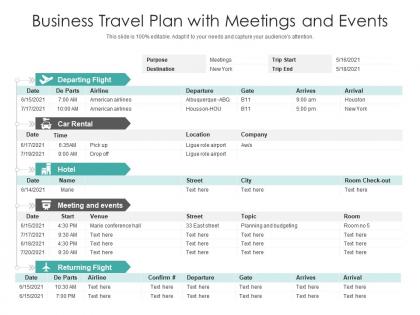
Este Modelo de PPT permitirá que você organize sua próxima viagem de negócios com facilidade. Ele tem colunas para definir o propósito da viagem de negócios, o destino da viagem, datas da viagem, horários de voo, aluguel de carro, hospedagem em hotel, reuniões e notas adicionais. Se você é um viajante de negócios frequente ou até mesmo planejando sua primeira viagem, este modelo amigável ajudará você a garantir que fique organizado e preparado a cada passo do caminho. Diga adeus ao estresse relacionado a viagens e olá ao planejamento eficiente de viagens com esta ferramenta essencial.
Boa viagem!
Os funcionários que viajam a trabalho enfrentam desafios operacionais complexos que podem ser extremamente desafiadores. As viagens de negócios destinam-se a ser produtivas. Elas aceleram a curva de aprendizado de seus funcionários, oferecendo mais exposição a eles e à empresa. No entanto, os gargalos associados a isso tornam um incômodo. Este Modelo de PPT tenta simplificar todos esses aspectos das viagens de negócios para permitir que todas as empresas as vejam como uma oportunidade.
Para acompanhar o progresso de todas as atividades envolvidas em viagens de negócios, adquira nossa Lista de Verificação do Plano de Viagem da Empresa e garanta que você não perca nenhum item essencial.
Plano de viagem de negócios com reuniões e eventos com todos os 2 slides.
Utilize nosso Plano de Viagens de Negócios com Reuniões e Eventos para economizar seu tempo valioso de maneira eficaz. Eles são prontos para se encaixar em qualquer estrutura de apresentação.
FAQs for Business travel plan with
Okay so first - pick your flights and hotel, but actually check where your meetings are before booking. I learned this the hard way and burned like $200 on rideshares because I stayed downtown when everything was in the suburbs. Stupid move. Give yourself real travel time between appointments, especially if you're dealing with time zones. Download all your confirmation stuff to your phone beforehand. Oh and build in an extra hour each day because something always goes wrong - traffic, delayed flights, whatever. Having backup plans for your biggest meetings will save your ass too.
Honestly, just set different spending limits based on how long they're traveling and what kind of trip it is. Get corporate rates with hotels and airlines first - that's your foundation. Book flights 3-4 weeks ahead if you can swing it, because last-minute stuff will wreck your budget every time. Don't go crazy restricting things that actually matter for comfort. Like, economy for short domestic flights? Sure. But international travel deserves an upgrade. Oh, and here's what works best - give people a daily budget and let them figure out how to split it between food, transport, whatever. Way less headache for everyone.
Look, travel policies are basically your company's way of covering everyone's ass when business trips go wrong. You get clear rules on which hotels to book, spending limits, that sort of thing. Plus they spell out what to do if you're stuck somewhere because of flight delays or - god forbid - there's some kind of emergency. Honestly, most people ignore them until something actually happens. But they're pretty crucial for keeping the company from getting sued and making sure you don't end up paying for stuff out of pocket. Just know where to find yours before you travel.
Honestly, just get your company to set you up with one of those travel booking platforms - they're game changers. Most integrate with expense policies so you can't accidentally book something crazy expensive. Concur and TripActions are solid options that handle the whole thing from flights to hotels, plus they automatically sort your expense reports (no more shoebox of receipts). Everything goes straight to your phone too - boarding passes, check-ins, the works. Half the time people don't even realize their company already pays for this stuff, so definitely ask HR what's available first.
Honestly, don't mess around with crappy WiFi and those tiny hotel desks - learned that lesson the hard way during a disaster video call! Find somewhere with actual workspaces and 24/7 business centers. Staying close to your meetings is clutch too, saves you from exhausting commutes. I always check reviews specifically for work stuff, not just how comfy the beds are. Good lighting matters more than you'd think, especially for calls. Oh, and decent soundproofing if you can swing it. Just pick somewhere that actually feels like you could get work done, you know?
Start with a basic travel policy - safe hotels, reliable transport, emergency contacts. Your people need the company hotline and embassy info in their phones. GPS tracking apps are controversial but honestly worth it for emergencies. Register international travelers with State Department first. Brief everyone on local risks and cultural stuff beforehand - saves headaches later. Oh, and set up regular check-ins so you always know where your team is. Some companies get lazy with this but it's literally the most important part.
Expensify and Concur are probably your best bets - both scan receipts and sync with accounting software. Expensify's scanning works great most of the time, though it occasionally thinks your lunch receipt is office supplies lol. QuickBooks is decent too if you want something simpler. Even a Google Sheet works if your company's pretty basic about tracking. The main thing is finding something that plays nice with your corporate card so you're not manually entering every stupid coffee purchase. I'd honestly just ask your finance team what they prefer first - saves you the headache of switching later.
Honestly, start with what pisses off your frequent travelers the most - just ask them. Direct flights save everyone's sanity when possible. Pick hotels close to where they're actually meeting (seems obvious but you'd be surprised). Mobile itineraries are clutch, especially ones that work offline when their phone service craps out. For long flights? Don't go cheap on seats - miserable employees won't perform well anyway. Set up round-the-clock support because flights get delayed at 2am, not during business hours. Think about what you'd want as the traveler, not just what looks good on the budget spreadsheet.
Honestly, TMCs are worth it. You'll save hours not having to hunt for flights yourself - and they get way better corporate rates than Expedia or whatever. The 24/7 support is clutch when you're stranded somewhere with a cancelled flight. Your finance people will be happy too since everything gets tracked in one system instead of random receipts everywhere. Only downside is the setup process can be a bit of a pain, but once it's running it's smooth. I'd definitely get quotes from like 2-3 companies first though.
Honestly, you need a crisis plan before anything goes wrong. I got stuck in Denver once with zero clue who to call - total nightmare. Give your travelers direct contact info for whoever handles bookings, plus backup options. Hotel cancellation policies are all over the place, so figure those out early. Budget for changes because they WILL happen, not if but when. Oh and definitely tell people right away when meetings get moved - sounds obvious but you'd be surprised how often that gets forgotten in the chaos.
Oh man, I feel you on this one. First thing - actually block out personal time on your calendar like it's a real meeting. Seriously works. Pack whatever keeps you sane (workout stuff, books, whatever). Don't make my mistake of working literally every waking hour on trips - you'll burn out fast. Keep some piece of your normal routine going, like that morning coffee thing or evening walks. Here's the big one though: stop checking emails constantly. You're allowed to disconnect! And yeah, definitely try booking an extra day off when you get back if you can swing it.
Honestly, cultural training is huge for international deals. You don't want to be the person who bows wrong or brings the totally inappropriate gift - I've watched people torpedo entire contracts that way. It's actually painful. Learning the basics helps you read the room better and figure out communication styles. Like, some cultures are super direct while others talk in circles for twenty minutes before making their point. When you're not accidentally stepping on cultural landmines, trust builds way faster. Start with simple dos and don'ts, then get into the deeper stuff about how they actually communicate.
Honestly, just track four things: cost per trip, how happy your travelers are, whether they're actually following your policy, and booking lead times. Cost is pretty self-explanatory - compare your average spend to industry benchmarks. Send out satisfaction surveys because unhappy travelers will make your life hell. Compliance rates show if people are booking within policy or just doing whatever they want. Last-minute bookings will absolutely destroy your budget, so lead times matter more than you'd think. Don't try measuring everything right away though - pick two metrics and actually stick with them first.
So remote work totally flips the script on business travel. Your team's already used to virtual stuff, right? Now you'll probably only fly out for the big deals - client pitches, major meetings, team bonding that actually requires being in the same room. Companies want better reasons for trips since everyone got decent at video calls. We've all been in those meetings that should've just been a Slack message anyway. Budget-wise, you might see fewer routine trips but maybe better hotels when you do go. I'd start by looking at your usual travel and figuring out what actually needs to happen in person.
Hey! So for business travel - direct flights are your best bet, way fewer emissions than connections. Hotels with green certs help too. Skip rental cars if you can, public transit or rideshares work great. Pack light since that actually affects fuel use (who knew?). Try bunching meetings into one trip instead of multiple visits - saves you sanity points too. Honestly, half these meetings could probably be calls anyway. Oh, and push for a rule requiring justification for flights under 4 hours. Trains are often faster once you factor in all that airport nonsense.
-
Professional and unique presentations.
-
Colors used are bright and distinctive.