


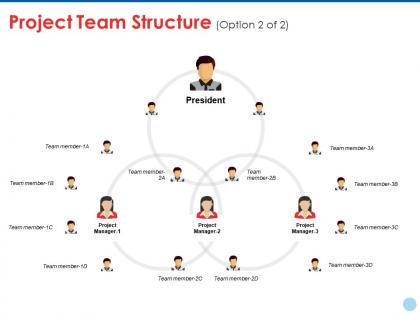
27929264 style cluster venn 3 piece powerpoint presentation diagram infographic slide




Try Before you Buy Download Free Sample Product
 Impress Your
 Audience
 100%
100% Editable
 Save Hours
 of Time


Explain what you intend to do with our Project Team Structure Ppt Styles Structure. Give folks an insight into your expectations.
27929264 style cluster venn 3 piece powerpoint presentation diagram infographic slide with all 5 slides:
Highlight the high degree of erudition existing with our Project Team Structure Ppt Styles Structure. Indulge in intelligent displays.


FAQs for 27929264 style cluster venn 3 piece powerpoint presentation
You'll want a project manager to coordinate everything and keep blockers off your back. Product owner translates what the business actually wants into stuff developers can work with. Tech lead - honestly this person saves your ass on architecture decisions and keeps code from turning into spaghetti. Then obviously your dev team. Communication flows like this: everyone updates the PM on progress, but devs work directly with the tech lead day-to-day and bug the product owner when requirements don't make sense. Get these reporting lines straight from the start or you'll waste so much time in meetings trying to figure out who does what.
Honestly, there's totally a sweet spot with team size. Like 3-7 people is magic - you can just spin around in your chair and get an answer instead of scheduling yet another meeting. Bigger teams bring more skills to the table, sure, but coordinating 12+ people? Pure chaos. I've been there and it's brutal. Quick decisions become impossible when everyone needs to weigh in. Match your team size to how complex the project actually is. If it feels like too many voices are talking over each other, split into smaller groups with clear ownership. Way less headache that way.
Honestly, start with what skills you actually need for the project - that's step one. Then think about personalities because trust me, one difficult person can wreck everything. You want a mix of senior people and junior folks, plus both big-picture thinkers and the detail people who actually get stuff done. Also check if people are already swamped with other work - no point asking someone who's drowning in three projects already. Map out your must-haves first. After that, focus on finding people who communicate well and can actually show up when you need them.
Honestly, it's all about being super intentional with communication when everyone's scattered. Daily standups help, but don't make them a drag. We do weekly team meetings and monthly check-ins too. Tools like Slack or Teams become your lifeline - and yeah, document everything because someone's always in a different timezone. I'm probably annoying about this, but overcommunicating beats having people feel lost. Your project management setup matters a ton, whether that's Asana or whatever works for your crew. The trick is picking these rhythms early and actually sticking to them, even when it feels repetitive.
Start with regular check-ins - daily standups work great, or weekly if things move slower. Don't dump urgent messages in the same Slack channel as random updates (learned that the hard way). Keep notes and decisions somewhere everyone can actually find them later. Response times matter too - tell people if you need replies within hours vs days. Oh, and pick one main communication method per project instead of bouncing between email, Slack, and texts. Consistency's everything here. Once you set the rhythm, people stop wondering when they'll hear back from you.
Figure out what each person's actually good at first - and I mean really good at, not just what's on their resume. Don't dump your boring tasks on them (we both know that never works anyway). Give them real ownership over something meaningful. Be super clear about deadlines and what decisions they can make without checking with you. Then comes the hard part: back off. Seriously, resist hovering over their shoulder every five minutes. Check in regularly but let them handle it their way. When things go sideways, coach them through it instead of just taking everything back.
Honestly, you've gotta define roles upfront or you'll regret it later. I've watched so many projects blow up because everyone's standing around like "wait, wasn't that your job?" It's painful to watch. Clear roles help people see how their piece fits with everyone else's work. You can catch gaps early instead of scrambling at the last minute. Short sentences work better sometimes. A RACI matrix sounds fancy but it's just a simple chart - totally worth doing though. Saves you from those super awkward meetings where nobody knows who dropped the ball.
Oh man, cultural differences will definitely mess with your team dynamics. Different communication styles are the worst - like when some people give super direct feedback and others hint around issues. Honestly, decision-making processes vary so much between cultures too. Time zones already suck without adding different work-life balance expectations on top. But diverse perspectives do make your solutions way better when you don't screw it up. Just set communication norms early, be super clear about what you expect, and let people explain how they work best from day one.
Honestly, just grab a good project management tool like Asana or Monday - they're lifesavers for seeing who's doing what and when stuff's due. Dashboards are clutch too, though I might be biased because I love a good visual overview. Regular check-ins through Slack keep people talking, and something like Toggl for time tracking shows if your estimates are actually realistic (spoiler: they're usually not). Don't go crazy with too many tools though - pick 2 or 3 max. Otherwise your team will spend more time switching between apps than actually working.
Honestly, just do quick check-ins instead of waiting for those dreaded quarterly reviews. Set up your KPIs at the start, then hit the team with weekly pulse surveys or 15-minute health checks - way less painful and you actually catch stuff early. Track delivery speed, quality, team happiness, the usual suspects. The real trick though? Make people feel safe enough to tell you what's actually broken. I swear, psychological safety is everything. Soon as you spot problems, fix them immediately. Those tiny tweaks beat massive restructures every single time.
Ugh, team drama is the worst. I'd start by talking to each person separately first - you'll get way more honest answers that way. People act totally different in groups vs one-on-one. Once you understand what's really going on, bring everyone together but keep it focused on the project itself, not who said what to who. Sometimes people get so caught up in the BS they forget you're all trying to reach the same goal. Try structured problem-solving: what's the actual issue, how can we fix it, what's our plan. If they're still being impossible, maybe loop in your manager? Just don't let it drag on forever.
Dude, agile completely changes how teams work. You'll have these small mixed groups - maybe 5-9 people with developers, testers, designers all mashed together instead of separate departments. Way more collaboration happens since everyone's working side by side daily. Teams basically run themselves and make decisions without waiting for manager approval on every little thing. Oh, and your PM becomes more like a "scrum master" who just clears roadblocks rather than micromanaging. It's honestly pretty refreshing once you get used to it. Expect way flatter structure and much faster decisions.
So here's the thing - your stakeholders basically dictate what kind of team you need. Got tech-heavy people? You'll want experts who can actually talk their language and break down the complex stuff. Regulatory folks usually mean adding compliance or legal people (which honestly gets expensive fast). Community stakeholders are where it gets tricky though - suddenly you need comms people, and teams never see that coming. The more mixed your stakeholder group, the more random skills you'll need just to keep everyone happy. My take? Map out who your key players are first, then figure out your team based on how they actually communicate.
Honestly, volunteers can be game-changers - they're passionate and bring skills you might not have on your team. But here's the thing: they'll vanish on you sometimes. Life happens, priorities shift, whatever. You can't manage them like employees since they don't actually owe you anything. I learned this the hard way on a project last year. Make their roles actually meaningful, not just busy work. Be flexible with timing and always have a backup plan for anything important they're doing. Treat them well and most will stick around longer than you'd expect.
Your leadership style totally affects whether your team stays motivated or just goes through the motions. Micromanage too much and people mentally check out - been there, seen that mess. But go too hands-off and they'll feel abandoned. What works is setting clear expectations then letting them figure out how to get there. Way easier said than done though. Leaders who adjust their approach based on what each person actually needs? They get better results and way less burnout. Oh, and just ask your team what kind of support they want instead of guessing. You'll probably be surprised by their answers.
-
Appreciate the research and its presentable format.
-
Very unique, user-friendly presentation interface.