


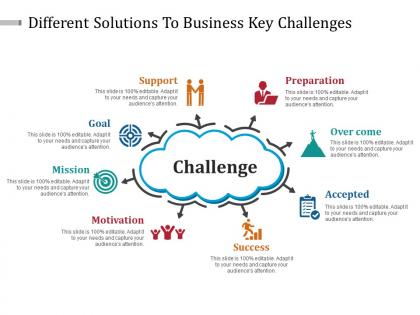
Different solutions to business key challenges powerpoint show





Try Before you Buy Download Free Sample Product
 Impress Your
 Audience
 100%
100% Editable
 Save Hours
 of Time


Employ our Different Solutions To Business Key Challenges Powerpoint Show in your endeavour. They ensure you get to your destination.
People who downloaded this PowerPoint presentation also viewed the following :
Different solutions to business key challenges powerpoint show with all 5 slides:
Handle innuendos with our Different Solutions To Business Key Challenges Powerpoint Show. Be forthright and direct with your answers.




FAQs for Different solutions to business key
Honestly, the hiring thing will crush you if you're not ready. Everyone's fighting for decent people right now. Quality control gets messy too - way easier to mess up than you think when you're scaling fast. Cash flow is probably the worst though. You're dumping money into everything upfront and just... waiting. It's stressful. Start building your hiring network now, like seriously document everything (boring but saves your ass later), and figure out your money situation before you're panicking about it. Oh and maybe find a good accountant early - wish someone told me that.
Honestly, just automate the boring stuff first - that's what saved my sanity. QuickBooks or Xero handle invoicing and expense tracking without you lifting a finger. The AI prediction tools are getting scary good at spotting cash flow problems before they happen (kinda freaky but super helpful). Bigger companies usually need ERP systems to connect payroll, procurement, all that jazz in one place. Just make sure whatever tools you pick actually work together - I've seen too many people create a bigger mess with software that doesn't talk to each other. Start with whatever eats up most of your time.
Honestly, communication is everything here. Don't leave people guessing what's going on - they'd rather hear bad news than no news at all. Get them involved somehow, like feedback sessions or maybe pilot programs where they can actually contribute. Oh, and training is huge because nobody wants to feel like they're drowning. I'd definitely start with whoever has the most influence on your team first. The whole thing works way better when people feel like they're part of the solution instead of just having change thrown at them. Makes sense?
Honestly, customer feedback is like having a cheat code for business. You'll see exactly where you're screwing up and what people actually care about. Sometimes you discover competitors are crushing you in areas you didn't even think about. Other times you realize you're already doing something amazing that nobody else is. People genuinely love when you ask their opinion - makes them feel important or whatever. But here's the thing: don't just collect it and let it sit there. Actually do something with what they tell you, then circle back and let them know you made changes because of their input. Even something simple works. Just pick one piece of feedback each month and run with it.
Honestly, start with AI demand forecasting and IoT sensors - they'll actually show you what you need and where your stuff is. Cross-docking is worth checking out too since it cuts warehousing costs by moving goods straight from incoming to outgoing trucks. Digital twins sound fancy but they're basically just virtual copies of your operations where you can test things without screwing up the real deal. Blockchain gets a bad rap for being hyped up, but the transparency is legit. My advice? Pick whatever area is costing you the most money right now and test one of these solutions there first.
Look, branding is what stops you from being just another generic option when customers are scrolling through a million choices. You need to figure out what actually makes you different - not just "quality service" because literally everyone says that. Once you know your thing, stick to it religiously. Your website, social posts, how you answer the phone, all of it should feel like the same personality. Think of brands you actually remember - they're consistent but not boring. It's honestly the difference between people choosing you or just picking whoever's cheapest.
Think of data analytics like being a detective for your own business. You'll spot exactly where money's getting wasted or processes are dragging. Maybe your sales team is stuck somewhere weird, or inventory keeps piling up in random places. The numbers don't lie - they show you what's actually broken instead of just guessing. Honestly, I wish more people realized how much time this saves. Track one annoying process for a week, then measure again after you fix it. That way you'll know if your changes actually did anything or if you're still spinning your wheels.
Honestly, your team's watching every move you make right now. Be straight with them about what's happening - no sugarcoating, but don't forget to remind everyone what you actually stand for. I'd still put money into training people even when cash is tight (yeah, I know that sounds crazy). Mix up your teams so people work across departments more. That builds relationships and gets problems solved faster. Here's the thing though - you've got to celebrate every tiny win like it's the Super Bowl. First step? Figure out which values your people actually care about, not just whatever's hanging in the break room.
Honestly, I'd start with mapping out your workflows - that's where you'll spot the biggest time wasters. Automate what makes sense, but don't get sucked into buying every shiny tool out there (learned that one the hard way). Try negotiating with your current vendors first instead of jumping ship to cheaper options that might bite you later. Cross-training is huge too. You won't be stuck with too many people doing one thing while everyone's panicking about something else. Oh, and track your results with actual numbers so you're not just guessing what works.
Honestly, stop trying to beat the big guys at their own game - you'll lose every time. Instead, get obsessed with what makes you different and lean into it hard. Social media is clutch here since it won't break your budget. Actually respond to comments, remember people's names, genuinely give a damn about helping them. Pick 2-3 things you do better than anyone else and hammer those points in everything you say. Partner up with other local spots for some cross-promotion action. Word-of-mouth is still king, especially in smaller markets. Find your specific corner and dominate it completely.
Dude, get local compliance experts in each market - they'll save you from so many headaches. Law firms know all the weird local stuff that'll trip you up. There's software like Thomson Reuters that handles the boring paperwork automatically, which is honestly a lifesaver. Don't wing it though - I've seen that blow up in people's faces way too often. Industry associations are clutch for staying updated on new rules. Oh, and start with just one market first. Perfect your process there, then copy it everywhere else with tweaks for local quirks. Way less stressful than trying to tackle everything at once.
Dude, communication during a crisis is everything - I can't stress this enough. When things go sideways, people get anxious fast if they don't hear from you. Radio silence is basically asking for rumors and panic to take over. I've watched companies bounce back from disasters purely because they kept talking to everyone consistently. Others? They clammed up and never got their reputation back, which is honestly just stupid. You've gotta stay ahead of it instead of playing catch-up. Oh, and set up those communication channels before you actually need them - trust me on this one.
Honestly, the biggest thing that helped me was getting more voices in the room - like people from different teams or even someone totally outside the company when it's a big call. Also, figure out your criteria before you start debating, otherwise you'll just keep changing what "success" looks like halfway through (been there, done that). Use frameworks too - SWOT analysis, decision trees, whatever keeps you from just going with your gut every time. Set actual deadlines because you can overthink this stuff forever. Oh and write down why you made each choice. Sounds nerdy but you'll thank yourself later when you're trying to figure out what worked and what didn't.
Honestly, clear goals are a game-changer for productivity. Your team stops wandering around wondering what they should actually be working on. When goals are specific and measurable, people ditch the busy work and focus on stuff that matters. I've seen teams waste SO much time just because nobody knew what the priorities were - it's wild. Plus you'll spot problems way earlier since you're tracking real progress, not just crossing your fingers. Oh, and break those big goals into weekly chunks. Trust me, your team will love having that roadmap.
Honestly, training your team is way smarter than constantly hiring new people. You can close skill gaps by just upskilling who you already have. Everything's changing so fast right now - AI stuff is literally everywhere. When you invest in people's growth, they'll actually want to stay. Plus they feel more confident tackling new challenges. Don't make it a one-off workshop thing though, that never works. Figure out where your biggest gaps are first, then build programs around those specific areas. It's like... preventative maintenance but for your workforce, if that makes sense.
-
Good research work and creative work done on every template.
-
Commendable slides with attractive designs. Extremely pleased with the fact that they are easy to modify. Great work!