


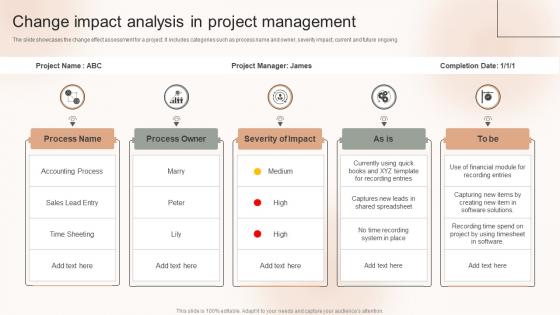
Change Impact Analysis In Project Management




Try Before you Buy Download Free Sample Product
 Impress Your
 Audience
 100%
100% Editable
 Save Hours
 of Time


The slide showcases the change effect assessment for a project. It includes categories such as process name and owner, severity impact, current and future ongoing.
People who downloaded this PowerPoint presentation also viewed the following :
Change Impact Analysis In Project Management with all 6 slides:
Use our Change Impact Analysis In Project Management to effectively help you save your valuable time. They are readymade to fit into any presentation structure.





FAQs for Change Impact Analysis
Okay so three main things you gotta focus on. Communication is huge - explain WHY you're making changes before diving into the how. People freak out when they're left guessing. Get your key players on board early too, like the ones with actual influence who can help sell it to everyone else. Then map out your timeline with realistic milestones (I always add buffer time because stuff goes wrong). Oh and expect pushback - it's gonna happen no matter what. The worst thing you can do is assume people will just roll with it. I'd start by talking to whoever's getting hit hardest by the changes first. Those conversations are awkward but they're gold.
Start with a quick pulse survey - ask people how they feel about change in general and their confidence levels. That gives you a baseline to work with. Past initiatives are super telling too; teams that rolled with changes before usually do it again. Honestly, I'd spend time finding your change champions first since they're the ones who'll actually sell it to everyone else. Check current workload and stress levels because timing can make or break everything. Also worth looking at whether leadership has credibility and if your communication channels actually work. Focus groups help too, but surveys are faster to get that initial read on whether people are anxious or excited.
Honestly, communication can make or break the whole thing. People hate being left in the dark - they'll just make up their own stories about what's happening, and those are usually way worse than reality. The "why" matters more than the "what" if that makes sense. One email definitely won't cut it (learned that the hard way). You need to keep talking to them through different ways and actually listen when they push back. Regular check-ins are huge. I've watched so many good changes completely tank just because leadership thought everyone would magically understand without explanation.
Honestly, most resistance happens when people feel blindsided or powerless. So get them involved from the start instead of just dropping news on them. Explain why you're making changes - confusion breeds pushback every time. Actually listen when they voice concerns too, because sometimes they catch stuff you totally missed. Be upfront about timelines and what'll actually impact them. Let your team help figure out how to roll things out in their areas. That sense of ownership makes a huge difference. Oh, and work with your early adopters first - they'll do half the convincing for you.
Honestly, get people involved from day one instead of just announcing stuff to them. Coffee chats might sound super cheesy, but they actually work better than formal surveys sometimes. Create feedback channels - could be focus groups, surveys, whatever fits your culture. The key thing is showing them WHY changes are happening and giving people actual roles, like being change champions in their departments. Don't just collect feedback though - you've got to visibly act on what you hear or people will tune out. Start simple with one feedback loop and build from there.
Honestly, culture can totally make or break any change you're trying to push through. Some places are just naturally open to new ideas - those are the lucky ones. But I've watched amazing strategies completely crash because nobody bothered checking if people were actually ready for change first. The "we've always done it this way" crowd? They'll fight you on everything, even tiny tweaks. What works is finding those people who are already bought in and getting them on your side. Then tackle the fears directly instead of pretending they don't exist. Oh, and frame everything around what they already care about.
Honestly, Kotter's 8-Step Process works great for the big picture stuff. ADKAR's solid for getting individuals on board. Don't sleep on stakeholder mapping either - you need to know who's gonna fight you on this. Real talk though, people won't use whatever framework you pick if it doesn't click with them. That's like... most of the battle right there. Change impact assessments help you spot what'll actually blow up. Oh, and pulse surveys are clutch for tracking if everyone's losing their minds mid-process. Pick one framework that vibes with your team first, then add the rest later.
Honestly, just treat it like any other part of your project - don't overcomplicate it. During kickoff, figure out who's gonna resist the changes and who's on board. Then bake your communication and training stuff right into your timeline. I always add change readiness to my weekly status meetings, keeps it front of mind. Map everything to whatever methodology you're using - so if it's Agile, get your change champions involved in sprint planning. Waterfall? Build user adoption into your gate reviews. The trick is making change deliverables as real as your tech ones. Most PMs I work with just run it like another workstream, which honestly works pretty well.
Track the obvious stuff first - adoption rates, how fast people get up to speed, cost savings. But here's the thing: employee satisfaction and retention rates matter way more than most people realize. Nobody talks about this enough, but support tickets spike when changes suck. Also check feedback quality and training requests. Set your baselines before you start or you'll have nothing to compare against (learned that the hard way). Don't go crazy with metrics though. Pick maybe 4-5 that actually matter for your specific situation. Numbers tell you what's happening, but the soft stuff tells you why.
Look, people watch what you do way more than they listen to your speeches. Show them the behavior you want - don't just preach it. And honestly? Be real about your own struggles with the change. Nobody buys the "everything's amazing" act from leadership. Ask questions when you're confused. Admit you're figuring it out too. I'd pick one specific thing you want to model and really focus on nailing that this week. Oh, and celebrate the small wins out loud - like actually call people out when they're doing the new stuff right. That goes way further than you'd think.
Don't rush the timeline - that's the big one. Also, talk to your team way more than you think you need to. Nobody likes getting blindsided at work. Leadership loves doing this thing where they announce some big change then just vanish for weeks. Super annoying. Get your key people on board early because they'll either champion your idea or torpedo it. Oh, and here's what most companies totally miss - change is emotional. Find out who's gonna push back and spend time with them upfront addressing their concerns.
Tech is totally changing how we handle change management. The pace is crazy fast now - business models get disrupted overnight basically. But honestly, the tools we get are pretty incredible. Real-time analytics show you exactly how people are adapting, and collaboration platforms make communication so much easier. People actually expect constant updates now since they're used to apps changing all the time. You just need to build digital skills into your change plans. Oh, and use technology to smooth things out, not just speed everything up. Makes a huge difference in adoption rates.
Honestly, people freak out the most when they don't know how to do their job anymore. Training fixes that fear right away. Nobody wants to look stupid at work, you know? So if you skip the training part, even people who were excited about the change will start pushing back once they realize they're drowning. And don't just do a one-day workshop and call it good - that's basically useless. You need ongoing support because questions always come up later. I'd set up multiple ways for people to get help when they're confused or stuck.
Honestly, chunk that massive change into smaller wins your team can actually celebrate. Otherwise everyone burns out staring at some finish line that feels years away. Monthly check-ins work great - celebrate what's clicking and call out what's dragging (people appreciate the honesty). Keep connecting their daily grind back to why this whole thing matters. Short sentences help sometimes. But also remind them regularly how their work fits the bigger puzzle. Don't pretend the struggle isn't real either - acknowledging it openly actually helps way more than staying fake-positive all the time.
Ugh, remote change management is honestly such a pain. You can't just pop by someone's desk to see how they're handling the new process, right? Some people are crushing it on Slack while others need actual video calls to wrap their heads around changes. Everyone's got different home setups too - kids screaming, crappy wifi, you name it. I've found you really have to overcommunicate and create way more feedback loops than before. Those random coffee conversations where real change happens? Gone. Now you're basically flying blind unless you're super deliberate about checking in.
-
SlideTeam’s pool of 2Million+ PPTs has really benefited my team, everyone from the IT department to HR. We are lucky to have crossed ways with them.
-
Very unique, user-friendly presentation interface.