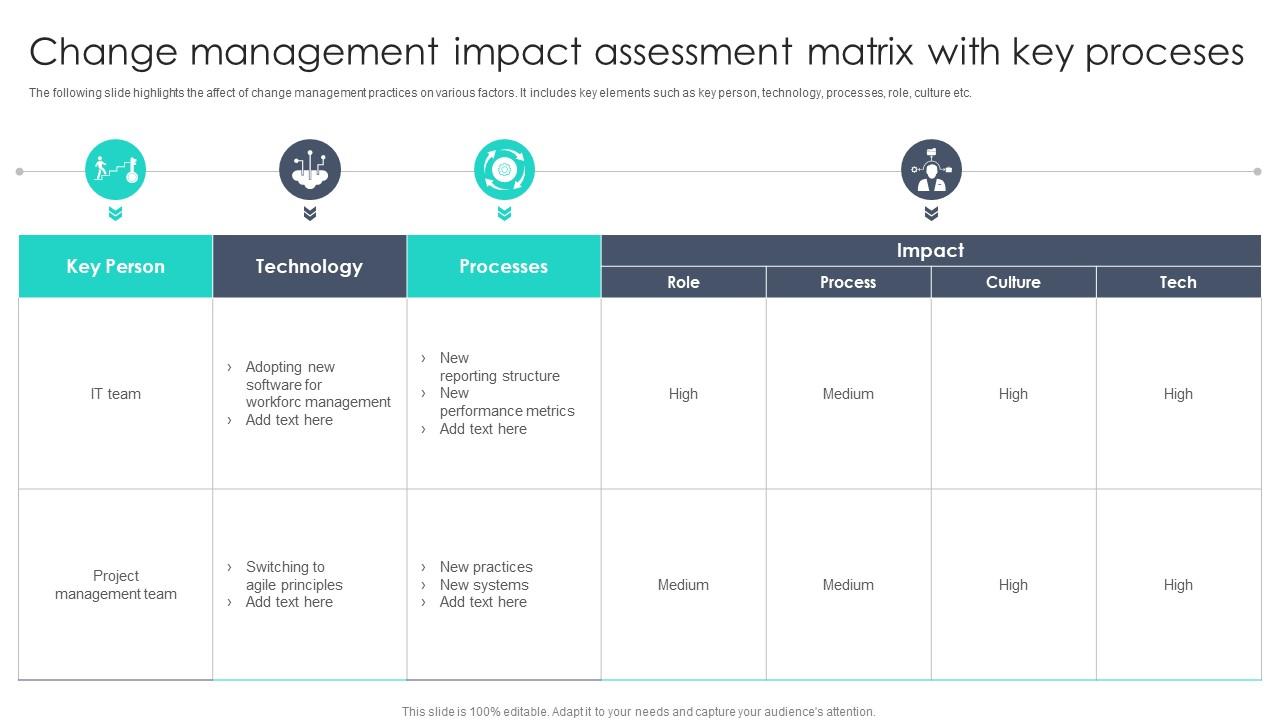
Change Management Impact Assessment Matrix With Key Proceses
Try Before you Buy Download Free Sample Product
Audience
Editable
of Time
The following slide highlights the affect of change management practices on various factors.It includes key elements such as key person, technology, processes, role, culture etc.
People who downloaded this PowerPoint presentation also viewed the following :
Change Management Impact Assessment Matrix With Key Proceses with all 6 slides:
Use our Change Management Impact Assessment Matrix With Key Proceses to effectively help you save your valuable time. They are readymade to fit into any presentation structure.
FAQs for Change Management Impact Assessment Matrix
Honestly, it breaks down into three main things: prep work (getting your team and plan sorted), rolling it out, and then making sure it actually sticks afterward. Communication is huge though - like annoyingly huge. You'll feel like you're overcommunicating but trust me, people get weird when they don't know what's happening to their jobs. Oh, and figure out who your key players are early on. Those change champions or whatever you want to call them? They're gold for getting everyone on board. Some frameworks get way more detailed but those basics will cover you.
Honestly, you've gotta explain the "why" first or people will just resist everything. Don't sugarcoat it either - tell them the good AND the messy parts because they'll figure it out anyway. I learned this the hard way lol. One email won't cut it. You need meetings, follow-ups, maybe some Q&A sessions where people can actually voice their concerns. The thing is, half the time they're not even worried about the logistics - they're scared about what it means for them personally. So really listen to that stuff. Just keep talking to them honestly over weeks, not one big announcement and done.
Honestly, stakeholder engagement can make or break your whole project. I've seen too many good ideas die because someone didn't loop in the right people early enough. Map out who's actually affected by this change - not just the obvious ones, but think about those side players too. People get defensive when they feel blindsided, so you want them feeling like they're part of building the solution. Their pushback usually comes from real concerns you haven't considered yet. Set up regular check-ins from day one. Trust me, those conversations will save you headaches later when you're trying to actually implement everything.
Honestly, you need both the hard numbers and the softer stuff to really know what's going on. Track your usual metrics - productivity, turnover, customer satisfaction scores, how long processes take. But here's the thing: surveys and focus groups tell you way more about what people actually think. Also pay attention to adoption rates when you roll out new systems - that's like a crystal ball for whether changes will stick. Oh, and set up those pulse checks every month or two. Way easier to fix things early than wait for your quarterly review and realize everything's gone sideways.
Honestly? Most change fails because people hate it and leadership doesn't actually commit. Employees will resist - that's just normal human behavior, so don't take it personally. Your company probably thinks they're communicating well but they're not (happens everywhere). Get people involved early, explain why you're doing this constantly, and make sure your leaders aren't just talking but actually showing up. Quick wins help a ton. Oh, and don't pretend resistance won't happen - address it head-on instead of acting like everything's sunshine and rainbows.
So honestly, just pick what fits your situation. Big company-wide changes? Kotter's 8-step thing is solid for stuff like new systems or restructuring. ADKAR though - that's my go-to when you need people to actually adopt something new. Works every time. Smaller changes are different. Bridges' model helps with the emotional side, which people forget about but it matters. Oh, and don't overthink it. Figure out what kind of change you're dealing with first, then match it to the right approach. Each one's built for different scenarios.
Honestly, the biggest thing is making change feel normal instead of terrifying. Celebrate when people try stuff, even if it flops - that safety net matters so much. I always share stories about times we pivoted successfully so the team sees it as being smart, not giving up. Leaders gotta model this too by owning when they're switching directions. Oh, and create little low-stakes experiments where people can mess around without pressure. Give them actual tools to handle change when it hits. Sounds obvious but you'd be surprised how many places skip that part.
Dude, training makes or breaks everything. I can't tell you how many projects I've watched completely tank because nobody bothered teaching people the new stuff. When folks don't get it, they'll fight you every step of the way - and honestly, who can blame them? You can't just throw new processes at your team and expect magic to happen. Start planning how you'll train everyone way before you actually roll things out. People need to feel like they actually know what they're doing, not like they're drowning. Trust me on this one - skipping proper training is basically asking for disaster.
Honestly, you need both the numbers stuff and the touchy-feely metrics. Track engagement scores, training completion rates, turnover in those departments. Survey people about change fatigue - that's huge and often gets overlooked. Leadership buy-in is critical too. Communication effectiveness, cultural fit with the changes. Oh, and resource availability because that always screws teams over later if you don't check it upfront. The key thing is getting baseline measurements before you announce anything. Otherwise you're just guessing if things are actually improving. Start there and you'll have real data to work with.
Honestly, tech makes change management so much less painful. Slack or Teams keeps everyone updated without those annoying email chains. Project management tools let you see who's actually adopting changes and who's dragging their feet. Digital surveys beat paper forms any day - people actually fill them out! Analytics dashboards show you real-time data on what's working. Though I've seen too many companies buy expensive software that nobody touches. Pick something your team will actually want to use, not just what looks impressive in demos.
Honestly? Just don't be shady about it. People can handle bad news way better than being lied to or kept in the dark. I've watched so many managers try to sugarcoat layoffs and it always backfires spectacularly. Be upfront about what's changing and why. Also watch out that you're not screwing over certain people unfairly - change hits everyone different. The stress factor is real too, even good changes mess with people's heads. Get folks involved in decisions when you can. Transparency beats convenience every single time, trust me on this one.
Honestly, feedback loops are huge for change management. They let you catch problems early instead of discovering everything's broken six months down the road. Weekly pulse surveys work great, or just grab coffee with people - whatever feels natural for your team. People will tell you what's actually happening versus what you think should be happening (spoiler: there's always some weird curveball you didn't see coming). The trick is making it genuinely safe for folks to share the messy truth. You'll course-correct way faster this way.
So basically, incremental change is like tweaking stuff bit by bit - small process improvements, minor updates, nothing crazy. Transformational change? That's when you blow everything up and start over. New strategy, different culture, totally new way of doing business. Incremental is way easier because people adjust gradually. But transformational change - oof, that's rough. You're asking everyone to completely shift gears, which honestly can be pretty chaotic. I've seen companies struggle with this big time. For your project, just think: are we fixing what's already there, or building something completely different from scratch?
Honestly, you can't do one without the other - they're totally connected. Your project might check every box and come in under budget, but if people hate the new system? You're screwed. Change management is all about the human side: getting people on board, training them, communicating what's happening. Meanwhile you're also juggling timelines and deliverables. Here's what I learned the hard way - bake those change activities right into your project plan from the start. Don't treat it like some bonus thing you'll figure out later. Trust me on this one.
Ugh, the classic mistake is just announcing change and expecting everyone to magically get it. People need to actually understand WHY you're doing this stuff first. Leadership always assumes everyone's pumped about the new direction without checking - or they rush everything because they're excited (guilty of this myself lol). Another killer? No clear ownership or trying to change literally everything at once. Honestly, most companies are terrible at this. Start small instead. Communicate way more than feels necessary. Find people at different levels who actually believe in it and can convince their teams it's worth doing.
-
I loved the hassle-free signup process. A few minutes and, I had this giant collection of beautiful designs.
-
Unique design & color.