


Change impact risk ultimate change management guide with process frameworks




Try Before you Buy Download Free Sample Product
 Impress Your
 Audience
 100%
100% Editable
 Save Hours
 of Time


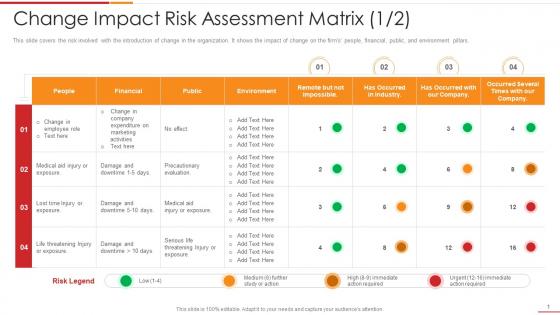
This slide covers the risk involved with the introduction of change in the organization. It shows the impact of change on the firms people, financial, public, and environment pillars.
People who downloaded this PowerPoint presentation also viewed the following :
Change impact risk ultimate change management guide with process frameworks with all 6 slides:
Use our Change Impact Risk Ultimate Change Management Guide With Process Frameworks to effectively help you save your valuable time. They are readymade to fit into any presentation structure.





FAQs for Change impact risk ultimate change management guide
Look, start by making people actually feel why things need to change - urgency matters. Get some allies on board who'll push for it with you. Then figure out your vision and strategy (honestly, don't get paralyzed here overthinking every detail). Communication is huge - this is where most people screw up by rushing. Take time to really sell the vision. Empower others to run with it and celebrate quick wins along the way. Those small victories keep everyone motivated. Finally, bake the changes into how you actually operate so they stick around. The whole thing falls apart if you skip the communication step.
Dude, start talking to people way before everything's set in stone - trust me, gossip spreads faster than actual facts. Mix up how you communicate too: some town halls, emails, quick team huddles, whatever works. The key thing is being honest about what you actually know vs. what's still up in the air. People want the "why" behind changes, not just what's happening. Oh, and make it a real conversation! Let them ask questions and actually listen. I learned this the hard way - regular check-ins save you from bigger headaches later.
Honestly, you're gonna be the one setting the whole vibe for this change. People need to hear WHY this matters - not just that it's happening. When folks push back (and they will), don't dodge it. Address their concerns directly. Your team's watching how you handle the uncertainty, so stay visible and be real about the challenges. I've seen good changes completely tank because leadership wasn't actually invested. Celebrate the small stuff too - it keeps momentum going. Start by explaining what's changing and how it actually affects them specifically. Makes a huge difference.
Oh man, cultural stuff is HUGE for change management - I can't stress this enough. Your team's communication style matters a ton (are they super direct or more subtle?). Also think about how they handle authority, risk, and deadlines. Some groups are totally cool with change, others need you to build relationships first or they'll shut down. I had this project in Germany that went nothing like my Brazil one - completely different game plans needed. Honestly? Figure out your cultural landscape early and adjust everything - your messaging, timeline, how you work with people. The cookie-cutter approach just doesn't cut it.
Biggest thing? Fear of losing their jobs. Also people get super comfortable with how things work now and don't trust why leadership suddenly wants change. When employees feel left out of decisions or don't get the reasoning, they'll push back hard. And honestly - if they've been through a bunch of failed changes before, who can blame them for being skeptical? Skills gaps make it worse too. Plus rushing timeline never helps. Best bet is being upfront about everything and actually including them in planning instead of just dumping change on them.
Honestly, data beats guessing every time when you're trying to change stuff at work. Track employee surveys to see how people actually feel, not what they tell you in meetings. Monitor adoption rates too - you'll spot bottlenecks way before they blow up your whole initiative. Politics are gonna happen regardless, but numbers give you solid ground to stand on. I'd look at historical patterns to figure out which teams might push back (there's always that one department, right?). Pick 2-3 metrics that actually matter for your situation and check them weekly. Don't overcomplicate it.
There's a bunch of good options honestly. Kotter's 8-Step is the classic one - takes you from building urgency all the way to making it stick in company culture. ADKAR's pretty straightforward too, focuses on individual stuff like Awareness, Desire, Knowledge, all that. McKinsey 7-S works well for bigger org changes. Lean Change Management lets you pivot more as things come up. But here's the thing - I've watched so many teams get stuck endlessly comparing frameworks instead of just picking one and running with it. They all work if you actually stick to them. Just grab whichever feels right for how your team operates.
Honestly, treat the people stuff like any other project deliverable - don't just bolt it on at the end. If you're doing Agile, throw change activities right into your sprints (stakeholder mapping, comms, training bits). Waterfall? Map those change milestones to your gates. Start this work early though - I totally bombed a rollout once by waiting too long. Your PM and change person need to actually plan together, not just coordinate. Oh and track adoption metrics the same way you'd obsess over timeline and budget. People forget that part but it's kinda the whole point, right?
You gotta measure the obvious stuff first - adoption rates, cost savings, how fast things are moving. But here's the thing: the people metrics matter way more than most folks realize. Check employee engagement, feedback tone, who's pushing back hardest. Training completion and support tickets tell you a lot too. Oh, and definitely set your baseline numbers before you change anything - learned that one the hard way. Pick maybe 4-5 things that actually matter for your specific situation. More than that and you'll drown in data. Just stay consistent with whatever you choose to track.
Honestly, training can make or break your whole change management thing. People need to understand WHY stuff is changing, not just what's different. Without that context, you'll get pushback on everything. Make sure you cover both the technical skills AND the emotional stuff - change is weird for people and they need support. Don't do some lame one-day workshop either. Start early and keep it going throughout the process. I've seen too many companies just dump changes on employees without proper prep. That's how you end up with confused, frustrated teams who resist everything.
Look, change actually triggers the same grief stages people go through when someone dies - denial, anger, all that stuff. Pretty crazy when you think about it. Your team's gonna resist because nobody likes losing control or facing the unknown. Here's what works: explain the "why" behind everything, over and over. Let people have input on decisions when you can. Some pushback is inevitable, so don't take it personally. Oh, and celebrate those tiny wins - builds momentum way faster than you'd expect. Give everyone space to process, honestly.
Honestly, celebrating small wins is huge - people need to feel like they're making progress instead of just grinding forever. I'd break everything into bite-sized milestones so folks can actually see movement happening. Communication-wise, don't just blast emails constantly (nobody reads those anyway). Mix it up with different formats and keep stakeholders in the loop even during slow weeks. Oh, and this part's crucial - get some change champions scattered around who can keep the energy up when leadership gets distracted by other shiny objects.
Honestly, getting stakeholders on board is all about making them feel heard from day one. Figure out who's actually impacted and what they'll get out of it - nobody cares about changes that don't benefit them somehow. Don't just send boring update emails; actually ask for their thoughts and use their feedback. Find a few enthusiastic people in each department who can sell the idea to their colleagues (way more effective than some executive mandate). Oh, and celebrate the small stuff! People need to see wins happening or they'll lose interest fast. Regular check-ins help too.
Honestly, you need feedback loops everywhere - pulse surveys, check-ins after milestones, anonymous suggestion boxes, the works. Walking around and just asking "how's this actually going for you?" works better than fancy tools half the time. But here's the thing that trips everyone up: you HAVE to act on what people tell you. Otherwise they'll just stop bothering to give feedback at all. Close the loop by telling them what you heard and what you're changing because of it. Super simple but most people forget this part.
Dude, communication breakdown is the
-
Presentation Design is very nice, good work with the content as well.
-
Graphics are very appealing to eyes.