


Channel Partner Engagement Plan In 30 60 90 Days




Try Before you Buy Download Free Sample Product
 Impress Your
 Audience
 100%
100% Editable
 Save Hours
 of Time


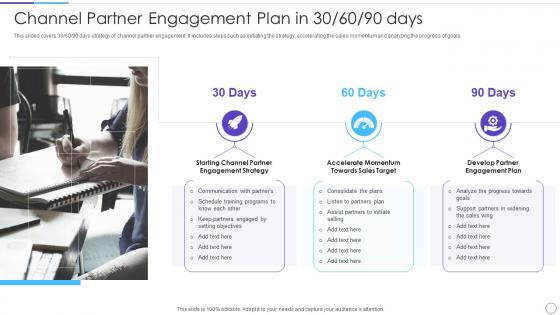
This slides covers 30 60 90 days strategy of channel partner engagement. It includes steps such as initiating the strategy, accelerating the sales momentum and analyzing the progress of goals.
People who downloaded this PowerPoint presentation also viewed the following :
Channel Partner Engagement Plan In 30 60 90 Days with all 6 slides:
Use our Channel Partner Engagement Plan In 30 60 90 Days to effectively help you save your valuable time. They are readymade to fit into any presentation structure.





FAQs for Channel Partner Engagement Plan In 30
Look, when your channel partners actually give a damn about your business, everything just works better. You'll hit higher sales numbers and get way better market coverage. New products launch faster too. The real magic happens when they stop seeing you as just another vendor - suddenly they're not bouncing to your competitors every five minutes. Plus you get fewer headaches with channel conflicts, which honestly saves so much time. It's basically like having a sales team that's not on your payroll but still fights for your brand. Just don't treat them like they're disposable.
Track the obvious stuff first - revenue from partners, how fast you're onboarding them, deal registrations. But honestly? Those numbers don't tell you if partners actually like working with you. I'd add partner satisfaction surveys, training completion rates, and whether they're actively pushing your stuff or just going through the motions. Partner retention matters too - are they sticking around and hitting targets? Set up regular check-ins so problems don't blindside you later. Oh, and don't go crazy tracking 20 different things. Pick 3-5 metrics that actually matter and focus there.
Talk to your partners regularly and actually give them stuff they need - that's honestly the secret sauce. Schedule those check-ins, share market intel, build tools that don't suck. Joint planning sessions are clutch, plus you can do co-marketing where everyone wins. Most companies way overcomplicate this when partners really just want clear expectations and solid support. Oh, and training programs help too - early product access makes them feel special. I'd start with nailing one relationship first, then copy that playbook for the rest. Way easier than trying to perfect everything at once.
Honestly, communication makes or breaks everything with channel partners. Keep them in the loop constantly - product updates, market stuff, training, feedback on how they're doing. Partners hate being left in the dark about what's going on. But here's the thing - don't just talk AT them all the time. Actually listen to what they're saying back to you. I'd set up regular check-ins and mix it up with emails, calls, maybe a partner portal if you're fancy. Two-way conversations are where the real magic happens though.
Dude, get a partner portal set up - it's a game changer. All your sales data, marketing stuff, and training materials live in one spot instead of scattered across random email threads (which is honestly the worst). Your CRM can sync up so you're both tracking the same opportunities without confusion. The automated workflows are clutch too - they handle boring tasks like routing leads and calculating commissions. Oh, and create dedicated Slack channels for partner updates. I swear once you stop playing email tag for basic info, everything flows so much better. Even a simple shared dashboard will make a huge difference.
Honestly, most partner issues come down to bad communication and people feeling left in the dark. Your partners don't know what you actually expect from them, and they're frustrated because they feel like you dumped them with zero support. Schedule regular check-ins (and actually do them - I know, revolutionary concept). Set clear expectations early about targets, what marketing help they'll get, training stuff. Give them real resources they can use. Oh, and respond when they reach out for help. Treat them like actual partners instead of some afterthought you remember exists every three months.
Dude, training is honestly everything when it comes to keeping partners loyal. Your partners won't push products they don't understand - they'll just default to whatever competitor they know better. Makes total sense, right? Good training means they actually close deals faster and make better margins. Plus confident partners stick around way longer than confused ones fumbling through sales calls. I'd start by figuring out where your current partners are struggling most. Oh, and don't forget ongoing education - one-time onboarding isn't enough anymore.
Track participation rates first - who's actually showing up to training and getting certified? Revenue stuff is obvious but necessary: deal registrations, sales speed, revenue per partner. I'd also run surveys to see if partners are genuinely happy or just going through the motions. Pipeline contribution matters too, plus whether they're joining your co-marketing efforts. Honestly, pick maybe 5-6 metrics tops and check them monthly. More than that and you'll get buried in spreadsheets instead of actually improving things.
Honestly, three things matter most: clear expectations, solid training, and early support. Set up 30/60/90 day checkpoints so they know what's expected. Don't just dump a pile of PDFs on them - actually walk through your products, pricing, and sales process. Give them a dedicated partner manager for questions (trust me, they'll have tons). The big thing is getting them their first win fast. Maybe start with easier deals or give extra help initially. Oh, and schedule those first touchpoints within week one - it makes a huge difference in how confident they feel jumping in.
Dude, brand alignment makes such a difference with partners. Nobody wants to push products they don't actually believe in - it just feels fake when they're talking to customers. Partners who really get your brand values? They'll stick around longer and actually hustle for you instead of just going through the motions. Plus they're way less likely to jump ship when competitors start waving money around. You should definitely keep sharing your brand story with them, not just the boring product details and pricing stuff. I mean, specs matter too obviously, but the story is what gets them fired up about selling for you.
Honestly, the gamification stuff like leaderboards sounds dumb but it actually works. You could try exclusive early access to new products, or help co-market their business - that's huge for smaller partners. Tiered partnerships with better margins are solid too. Experience rewards work well - training trips, fancy dinners, that kind of thing. Mix the money stuff with recognition and growth opportunities. But here's the thing - just ask your best partners what they'd actually want first. Might save you from building something nobody cares about.
Honestly, surveys are pretty useless - nobody fills them out anyway. What actually works? Hop on quarterly calls with your partners or do those virtual roundtable things where you can just talk. People will tell you way more in conversation than on some form. Oh, and set up anonymous feedback too because partners won't always be brutally honest to your face (totally get that). Ask specific stuff about your processes and what tools they're missing, not generic "how's it going?" questions. Pick one approach and try it next month - but here's the thing, you've gotta actually do something with their feedback or it's pointless.
Dude, co-marketing is honestly a game changer for building real partnerships. You pool resources and audiences, so everyone gets bigger reach without spending as much. Shows your partners you actually care about their success too, not just your own stuff. We had this one co-branded webinar that totally blew up - way better than we thought it'd be. Actually started one of our best partnerships from that. The trick is finding campaigns that work for both your goals and actually make sense to customers. Oh, and make sure the partnership value is obvious to the end users or it'll just feel weird.
Look, good conflict resolution is honestly a game-changer for partnerships. Handle disputes fairly and your partners will actually trust you - kind of like being that friend who doesn't pick sides but helps everyone figure it out. Quick response time matters too; don't let problems sit there getting worse. I've seen too many good partnerships tank over stupid miscommunications that could've been solved with one honest conversation. Focus on what you both want to achieve business-wise instead of getting stuck on who messed up. Clear communication from the start prevents half the drama anyway.
Honestly, webinars and workshops are total game-changers for partner stuff. Way better than firing off another email that'll just get ignored, right? You can actually train people on new products, share what's working, and build real relationships. Perfect for onboarding newbies or going deep on technical things. I'd say regular check-ins work great too - keeps everyone connected. The trick is making them worth people's time. Focus on practical stuff they can use right away to boost sales. If it's not immediately useful, they won't show up twice.
-
Thank you SlideTeam for such an excellent service.
-
Use of icon with content is very relateable, informative and appealing.