

Channel partner go to market strategy framework




Try Before you Buy Download Free Sample Product
 Impress Your
 Audience
 100%
100% Editable
 Save Hours
 of Time


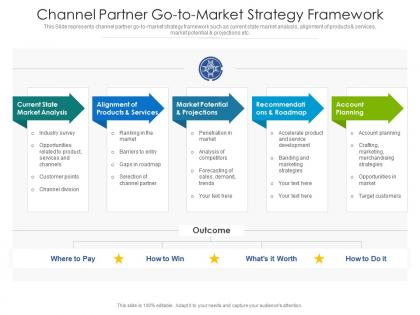
This Slide represents channel partner go to market strategy framework such as current state market analysis, alignment of products and services, market potential and projections etc.
People who downloaded this PowerPoint presentation also viewed the following :
Channel partner go to market strategy framework with all 2 slides:
Use our Channel Partner Go To Market Strategy Framework to effectively help you save your valuable time. They are readymade to fit into any presentation structure.
FAQs for Channel partner go to
Pick partners who actually fit what you're missing, not just whoever's eager to sign up. That's where most people mess up honestly. You want solid training programs and fair pay structures - basically make sure they don't feel left out of the loop when you roll out updates or shift strategy. Map out what your ideal partner looks like first, then work backwards from there. Clear value props are crucial too. Oh and communication can't be an afterthought - I've seen partnerships tank because partners felt ignored. Focus on mutual benefits rather than just what you'll get out of it.
Start by figuring out where your customers actually hang out - that's your goldmine for finding partners. Hunt for businesses serving your exact audience but not competing directly with you. Do some digging on their rep and whether they can actually sell your stuff properly. Bigger isn't always better, btw - smaller partners sometimes hustle way harder for you. The technical know-how piece is huge too, especially if your product's complex. Goals and values need to match up before you commit to anything. I learned this the hard way with a partnership that looked great on paper but was a total nightmare.
Dude, tech is everything for partner relationships these days. Partner portals are clutch - your partners get training materials and support docs whenever they need them. CRM systems show you who's crushing it and who needs help, which honestly saves so much time on prioritization. Marketing automation handles personalized campaigns for different partner levels. The data visibility is probably the biggest win though - you'll catch problems way before they blow up. We use Slack but there are partner-specific platforms too that keep everyone on the same page. I'd start by figuring out what tech issues are driving your partners crazy right now.
Definitely track the money stuff first - revenue from partners, how fast you're closing deals, acquisition rates. But honestly? The relationship metrics matter just as much, maybe more. Look at satisfaction scores, whether they're actually completing training, how much they're pushing your products. Partner retention is huge too - losing good partners sucks and costs way more than keeping them happy. Quality of their leads tells you everything about whether they really get your product or they're just throwing garbage your way. Do quarterly check-ins with your best partners to really dig into what's working.
Oh man, partner selection will probably make you want to pull your hair out. Don't just go with whoever looks good on paper - half of them won't actually get your product or know how to sell it. Managing everyone becomes this weird juggling act since they all have different priorities and timelines. Channel conflict is brutal too, especially when partners start stepping on each other's toes or competing with your own sales team. And good luck keeping your messaging consistent across the board! My advice? Be picky as hell upfront and spend serious time on onboarding. Communication is everything with this stuff.
Look, partner training is where most companies totally drop the ball. Get them solid product knowledge first - not just features but how to handle objections and beat competitors. Build certification programs that don't suck (nobody wants another boring course). Webinars keep everyone in the loop on updates. Battle cards and demo scripts are clutch for sales enablement. Honestly, confident partners will always crush it compared to ones left hanging. Oh and set up a decent partner portal so they're not constantly bugging you for materials. It's really that simple.
So first thing - do they actually reach customers you can't get to yourself? That's huge. Financial stability matters too, plus you'll want to see if they really understand your product well enough to sell it. Their reputation is everything because one sketchy partner can totally wreck your brand image. Are they thinking long-term or just trying to make fast money? I'd also check if they're already working with your competitors - awkward situation there. Oh, and make sure they've got decent support staff. Honestly, start small with like a trial run before you go all-in.
Communication literally makes or breaks these partnerships. I learned this the hard way when partners started ghosting us for vendors who actually stayed in touch. Monthly check-ins are a must. Shared dashboards help too - nobody likes being left in the dark about performance. Your best performers will always be the ones getting consistent communication from you. Make sure they know exactly who to call when shit hits the fan. Even something simple works better than radio silence. Oh, and don't overthink the cadence initially - you can always adjust as you go.
Mix up your incentives - don't just throw money at them. Sure, tiered commissions and volume bonuses work, but partners also love exclusive territories and early product access. Co-marketing funds are clutch too. Training programs boost performance while keeping them loyal (win-win). Recognition stuff matters more than you'd think. Here's what I'd do: survey your best partners first about what actually drives them. Then build tiers around that feedback. Each partner's different - some want cash, others want perks or status. Match the incentive to the person and you'll see way better results.
Honestly, you've gotta stay flexible and check on your partners way more often than you probably are right now. Figure out which channels are actually killing it vs the ones that are dead weight - I swear some companies stick with old partners just because they've always been there. Quick quarterly check-ins with real performance numbers will save you so much headache. If your customers are going digital, shift your resources there too. Don't be scared to change up incentives or dump partners who aren't pulling their weight anymore.
Your brand strength totally changes how well your channel partners can sell. Strong brands? Partners close deals way faster and get better prices because customers already know and trust you. It's honestly like giving them a massive advantage right from the start. Weak branding though - now your partners are stuck doing all the heavy lifting, explaining who you are and why prospects should care. That's exhausting for them. Good brands also attract the caliber of partners you actually want working with you. Just make sure you're hooking them up with solid brand materials and messaging since they're out there representing you every day.
Honestly, most partnerships crash because people just assume they're on the same page without actually checking. First thing - write down what winning looks like for both of you. Revenue numbers, customer goals, whatever matters. Then do quarterly check-ins religiously (I know, sounds boring but trust me). During those meetings, review how you're tracking and tweak things if needed. Oh, and make sure your incentives actually push people toward the right behaviors - can't tell you how many times I've seen that screwed up. Draft a solid partner agreement upfront, then actually follow it instead of letting it collect dust.
Honestly, build a solid 30-60-90 day plan but don't overthink it. Start with basic product training and your sales process first. Then tackle marketing support and how you'll share leads. Here's the thing though - dumping everything on them day one is a recipe for disaster. Get them a quick win in the first 30 days because nothing beats early momentum. Oh, and assign them one dedicated contact, not some poor guy managing 50 partners who never responds to emails. Be super clear upfront about quotas and what support they can expect. Saves you headaches later.
Customer feedback is basically your GPS for tweaking partner strategy. Complaints about slow support? Those partners need more training. Customers love a particular partner? Figure out what they're doing and copy it everywhere else. The feedback loop is seriously everything - without it you're just guessing. I'd make it a monthly thing to review patterns and spot gaps in your network. Plus it helps you decide which partners deserve more investment. Honestly, some partners just get it naturally while others need constant hand-holding, but the data will tell you which is which.
So the big thing right now is partners wanting full transparency - like real-time sales data, marketing stuff, performance metrics, all of it. Co-selling is everywhere too instead of just tossing leads over the fence. Most successful partners aren't trying to do everything anymore, they're picking specific industries or solutions to focus on. Companies that treat their partners like actual team members instead of outsiders are crushing it. Oh and definitely audit your current partner experience - find spots where you can throw in better collaboration tools. Makes a huge difference.
-
Wonderful templates design to use in business meetings.
-
Editable templates with innovative design and color combination.
-
Great product with highly impressive and engaging designs.