


Kreislaufprozess 4 Stufen kostenlose PowerPoint-Vorlagen Folien
You must be logged in to download this presentation.




Try Before you Buy Download Free Sample Product
 Impress Your
 Audience
 100%
100% Editable
 Save Hours
 of Time


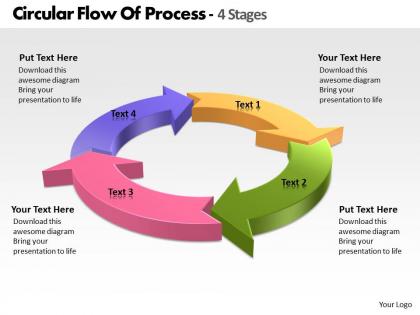
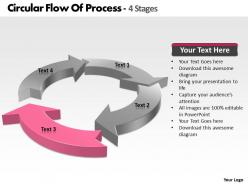
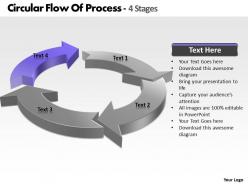
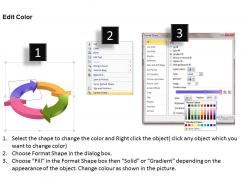
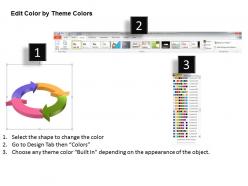
Sind Sie an der vollständigen Betriebsverfahrensweise interessiert? Um Ihnen zu helfen, haben wir eine vierstufige kreisförmige Prozessfreie PowerPoint-Präsentation entwickelt. Unsere PPT-Folien erklären miteinander verbundene Probleme, Methoden und Ansätze. Darüber hinaus erklären unsere schönen Präsentationsgrafiken die Abfolge der Aktivitäten, die typischerweise darauf abzielen, Werte für die Kunden zu schaffen. Das Beste daran ist, dass die PowerPoint-Designs den Ansatz zum Erstellen eines Flussdiagramms aller Prozesse und Nebenaktivitäten auf verständliche Weise erklären. Kurzum, unsere PPT-Vorlagen konzentrieren sich auf den kreisförmigen Prozessablauf, der die Gesamtreihenfolge der Vorgänge bestimmt, die erforderlich sind, um das gewünschte Ziel zu erreichen. Darüber hinaus können Sie die Präsentationsfolien herunterladen, die die Kernkonzepte des Prozesses wie Periodizität, Sequenz und Alternativen und vieles andere erklären. Unsere Experten stehen Ihnen zur Verfügung. Sie müssen nur auf die PPT-Vorlagen klicken und Ihr Wissen erweitern und einen bleibenden Eindruck bei der Zielgruppe hinterlassen. Unsere Kreislaufprozess-4-Stufen-PowerPoint-Folienvorlagen sind leicht zu entschlüsseln. Sie projizieren Ihre Gedanken hell und klar.
People who downloaded this PowerPoint presentation also viewed the following :
Kreislaufprozess 4 Stufen kostenlose PowerPoint-Vorlagen mit allen 9 Folien
Werfen Sie Vorsicht in den Wind mit Ihren Ansichten. Wagen Sie Ihr Glück mit unseren PowerPoint-Folienvorlagen für den Kreislaufprozess in 4 Stufen.
FAQs for Circular flow of process 4 stages free
So there's three main players: households, firms, and government. Households work for companies and spend their paychecks on stuff. Companies pay wages but collect all that revenue back when people buy things - it's actually pretty clever how that works. Government swoops in taking taxes from everyone and spending it on roads, schools, whatever. Financial markets are where it gets cool though - people's savings get funneled into business investments. The whole thing's just money spinning in circles. Whenever you're looking at some new policy, just follow the money trail and you'll see who actually gets hit.
So basically, the circular flow model is just households and businesses trading back and forth. Households give labor and resources to companies, then get paid wages and profits. With that money, they buy stuff from those same businesses. It's this whole loop thing - my spending becomes your income, your spending becomes mine. What's cool is you can actually see how problems spread through the economy this way. Like if people stop buying cars, car companies lay off workers, then those workers buy less groceries, and it just keeps going. Makes sense when you think about it.
Okay so basically the government can mess with the economy's circular flow in two ways. They inject money through stuff like infrastructure spending or those stimulus checks we all got. Then they pull money out through taxes and regulations - that's the leakage part. Honestly, it's kind of like adjusting a thermostat. When the government spends money, it creates this multiplier effect that ripples through everything. Like, one dollar spent becomes way more as it moves around. So whenever you're looking at economic policies, just follow the money trail and see if it's adding cash or taking it away.
Honestly, just think about your own paycheck. You work somewhere, get paid, then spend that money at places that use your purchases to pay their workers - who might even be you! Small towns show this perfectly - factory employs everyone, workers shop locally, stores bank at the community bank, bank loans back to the factory. It's kinda wild when you realize how connected it all is. Try tracing your next $5 coffee purchase sometime and see where that money actually goes. You'll be surprised how quickly it circles back around your community.
So imports are basically money leaving your country to buy stuff from other places - that's a leakage, same as people saving money or paying taxes. Exports do the reverse and bring foreign cash in. Think of it like your economy inhaling and exhaling with the global market, which sounds kinda weird but makes sense once you get it. The real number that matters is net exports - just exports minus imports. That tells you if you're winning or losing overall in international trade. Trade surplus good, trade deficit... well, not always bad but worth keeping an eye on.
So basically, financial markets are like matchmakers for money. Your savings get funneled to businesses that need cash for growth stuff - new equipment, expansions, whatever. Banks don't just hoard your deposits, they loan them out. Same with stocks you buy - that money flows to companies. It's pretty clever actually, because businesses can invest even when they're not rolling in profits at the moment. Oh, and if you ever want to gauge how the economy's doing, just look at lending rates and investment numbers. Those two things tell you way more than most people realize.
So basically, when people save money instead of spending it, that's a "leakage" - less cash flowing back to businesses. Investment does the opposite though, it's an "injection" that pumps money back when companies buy new equipment or whatever. Banks help connect the dots between your savings and business investments. But here's what's kinda wild - these things rarely balance out perfectly in real life! That's actually why you see those weird economic growth patterns. Makes way more sense once you think about it this way.
Yeah totally! The circular flow model is great for this stuff. When recession hits, everything just shrinks - people spend less, companies make less money and fire workers, then those workers can't spend... it's like dominoes but depressing. What's cool though is you can see exactly where the government might jump in with stimulus money or whatever to try breaking the cycle. I had to use this model for my econ final last year and honestly it made recessions way easier to understand. Each part of the economy affects every other part, so one breakdown screws everything up.
Look, the circular flow model is pretty basic - it pretends all households and firms are the same, which is obviously not true. Government intervention? International trade? Financial markets? None of that shows up properly. It assumes money moves around perfectly smoothly (yeah right lol). Income inequality gets completely ignored too. Plus you're missing all the messy stuff that actually matters - tech disruption, environmental damage, why people make weird financial decisions. It's fine for learning the basics, but don't rely on it for understanding real policy or market situations.
So basically when you add foreign economies, you're creating two new flows - imports and exports. Money flows out when we buy foreign stuff (imports). Foreign money comes in when we sell our goods abroad (exports). Think of it like adding new pipes to your economic system, except some leak money out and others pump it in. A trade surplus means more money's coming in than going out, which is obviously better for domestic jobs and income. Trade deficits do the opposite - honestly, tracking these flows is pretty crucial for understanding how connected your economy is globally.
So the circular flow model is basically this visual that shows how money moves around the economy. Households spend money on stuff, businesses pay wages and profits back to people, and each business adds value during production. What's cool is these three flows match up perfectly with the three ways economists calculate GDP - expenditure, income, and output methods. Makes way more sense than just memorizing formulas, honestly. The whole point is that all three approaches should give you the same GDP number since they're measuring the same money flows, just from different perspectives. It's like looking at the same room from three different windows.
So you'll want to add digital platforms like Amazon and Uber as middlemen between households and businesses - they're basically new connection points that take their cut. Data becomes another factor of production flowing around with labor and capital. The tricky part? These platforms cross borders constantly, which makes your diagram look like spaghetti compared to those clean textbook ones. Oh, and don't forget network effects where more users = more value for everyone. The big thing traditional models miss is how data creates totally separate revenue streams that weren't there before.
So basically leakages drain money out - savings, taxes, imports. Injections pump it back through investment, government spending, exports. Compare the two and you'll know where the economy's headed. More injections than leakages? Growth. Other way around? Contraction. Pretty straightforward once you think about it. I always picture it like a bathtub filling and draining at the same time (weird analogy but it works). When you're looking at economic data, just ask what's pulling money out vs pushing it back in. That balance tells you everything about whether things are expanding or shrinking.
So the circular flow model is basically your cheat sheet for tracking money movement in the economy. Policy makers use it to see how government spending or tax tweaks will affect households and businesses. Pretty clever, right? You can run different scenarios through it - like what if people spend 10% less or the government boosts investment. It's honestly way better than flying blind on major economic decisions. The whole point is mapping out those cause-and-effect chains before you actually pull any policy levers. Makes forecasting way less of a guessing game too.
Yeah for sure! The basic circular flow model is pretty outdated honestly - it just shows money and stuff moving between households, businesses, and government. But you can totally add environmental layers to it. Natural resources go in as inputs, waste and pollution come out as outputs. Shows how the whole economy actually depends on nature instead of just pretending it doesn't exist. Some economists go crazy with these diagrams and add like 15 different arrows everywhere. Look up "ecological economics" models - there's some solid examples there that'll give you ideas.
-
good
-
good
-
I like this
-
Very helpful presentation! Thank you
-
good
-
Well designed
-
Thanks for all your great templates they have saved me lots of time and accelerate my presentations. Great product, keep them up!
-
Appreciate the research and its presentable format.