


Client And Consultant Engagement Process Flow Diagram




Try Before you Buy Download Free Sample Product
 Impress Your
 Audience
 100%
100% Editable
 Save Hours
 of Time


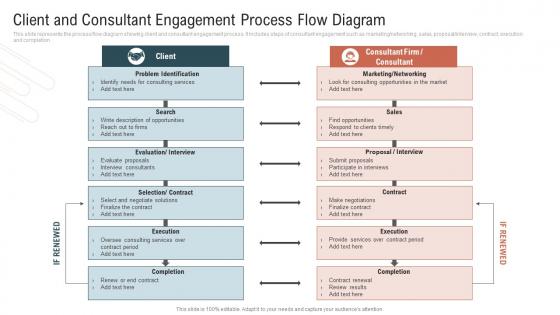
This slide represents the process flow diagram showing client and consultant engagement process. It includes steps of consultant engagement such as marketing or networking, sales, proposal or interview, contract, execution and completion
People who downloaded this PowerPoint presentation also viewed the following :
Client And Consultant Engagement Process Flow Diagram with all 6 slides:
Use our Client And Consultant Engagement Process Flow Diagram to effectively help you save your valuable time. They are readymade to fit into any presentation structure.





FAQs for Client And Consultant Engagement
Trust comes from showing up consistently, not flashy moves. Be honest upfront about what you can actually deliver, then do it. In early meetings? Listen way more than you pitch - people can tell when you're just waiting to sell them something. Here's what feels weird but works: mention the potential problems you see coming. Sounds backwards, right? But it proves you're focused on their win, not just your paycheck. Ask them what success looks like specifically, then keep checking back against those goals. Small stuff adds up faster than you'd think.
Honestly, just talk about what actually moves the needle for them - money saved, revenue up, time back in their day. Forget all that consultant-speak nonsense. I learned this the hard way when I was overcomplicating everything with process charts nobody cared about. Show them quick wins first, then connect everything back to what they originally wanted. Those weekly check-ins? Keep them super short and focus on their goals, not your methodology. The whole thing comes down to proving your worth in terms they actually give a damn about. Make it impossible for them to question whether you're delivering.
Track the obvious stuff first - project completion rates, staying on budget, timeline performance. Client satisfaction surveys are clutch too. But honestly? The relationship stuff matters just as much. Are they actually engaging with you, reaching out regularly, bringing you back for more work? Repeat clients are basically the gold standard. ROI measurements show real business impact from your recommendations (though sometimes that takes forever to surface). Set up a basic dashboard with maybe 3-4 key metrics and check in monthly. Don't overcomplicate it at the start.
Dude, cultural fit is everything. Seriously. When you click with a client's vibe - like how they communicate, their work style, values - projects just flow. Trust builds faster. Less awkward moments over random stuff. I've watched partnerships crash because one team was all buttoned-up corporate while the other was super laid-back. Nobody did anything wrong, just different wavelengths. But nail that cultural match? You're basically part of their crew instead of some outsider pushing ideas they don't get. Take time upfront to really understand how they operate, then be real with yourself about whether you can actually vibe with that long-term.
Honestly, most consultants suck at asking for feedback regularly, so you'll already stand out just by doing it. Set up quick check-ins - even 15 minutes works. Catch problems early before they blow up. Show clients you're actually listening to what they need, not just pushing your agenda. Make it a real conversation though. Don't just ask "how am I doing?" - share your own observations about what's clicking and what feels off. I know it sounds obvious, but feedback loops are basically how you avoid those awkward "this isn't what we wanted" moments later.
Do your homework first - check out their industry, what's keeping them up at night, how they define winning. Then flip your whole pitch to match their vibe. Scrappy startup? Skip the corporate buzzwords. Use their language instead. Your slides should tackle their specific headaches, not be some generic dog-and-pony show of all your services. I always throw in questions early to make sure I'm not totally off base. Honestly, presentations where you can tell someone just swapped out the company name are the worst. Make it feel custom-built for them, because it should be.
Dude, get everything in writing first - scope, timeline, deliverables, the works. Can't tell you how many projects I've watched crash because everyone assumed they were on the same page. Define success metrics upfront and who's doing what. Oh, and list what you WON'T do too - clients love asking for random extras later. Don't just email this stuff around either. Have a real kickoff meeting where people actually say "yes, this looks right" out loud. Sounds weird but that conversation will save you so much drama later.
Honestly, the game-changer for me has been shared project dashboards - clients can see exactly where things stand without constantly bugging you. Video calls beat email back-and-forth every single time. Cloud docs where you both can edit and leave comments? Chef's kiss. When I'm explaining something complicated, screen sharing saves so much confusion. Oh, and those project management tools give clients access to timelines whenever they want to check in (which they will, trust me). Just don't go overboard - pick maybe 2-3 tools tops and actually teach your clients how to use them. Otherwise you'll be doing tech support instead of your actual work.
Honestly, you've gotta be super clear from day one about what's included and what's not. Get everything in writing and make them sign off on the scope. When they hit you with "oh just one tiny addition" (and trust me, they will), point back to your original agreement. I learned this the hard way - catch it before you're already doing the extra work. Say no or suggest it as phase two. Always send follow-up emails after any scope talks so you have proof later. Documentation is your best friend here.
First thing - just acknowledge what they're saying. People need to feel heard, you know? Then try that "feel, felt, found" thing where you go "I get how you feel, other people have felt the same way, here's what usually works." Ask questions to figure out what's actually bugging them. Half the time they're just having a rough day and taking it out on whatever's in front of them. Stay calm even if they're being ridiculous. Focus on fixing stuff instead of rehashing the problem forever. Write down what you agreed on afterwards - trust me on this one, people forget conversations differently than you'd expect.
Dude, skip the boring spreadsheets and tell stories instead. When I start with "another client had this exact same problem," people actually lean in. Case studies work way better than bullet points - clients can picture themselves in the situation, you know? Keep them short though, like 2-3 minutes max. I learned this the hard way after watching eyes glaze over during a 45-minute data dump last year. Stories just hit different emotionally. Your recommendations will stick so much better when wrapped in a real example they can relate to.
Honestly, most consulting gigs blow up because nobody gets specific enough at the start. Like, clients will say "make our process better" instead of actual measurable goals. Communication is huge too - if you're not doing regular check-ins, things go sideways fast. Scope creep kills me though, where they keep adding tasks but don't want to adjust the timeline or pay more. Super annoying. Document literally everything and don't be scared to say no when they try expanding the project. Oh, and consultants oversell what they can deliver all the time. Weekly calls help catch problems early.
Dude, this can totally make or break your client relationships. Clients notice immediately when you're just recycling your usual pitch instead of actually listening to what they need. I've watched consultants lose deals even when their work was good - just because they missed the mark on understanding the company's real priorities. Before you jump into solutions, dig deep into their culture and long-term goals first. That discovery phase? Don't skip it, even if you're tempted to rush ahead. When you nail the alignment piece, you stop being just another vendor and become someone they actually trust for strategic stuff.
Honestly, quarterly check-ins saved my butt after I totally ghosted a client and lost them. Now I set reminders every 6-8 weeks to send something useful - maybe an article about their industry or just asking how that big project went. The trick is adding real value, not just "hey, still need help?" Nobody wants that. I'll reference their old wins when we talk because people love feeling remembered. Short calls work too. Ask what's keeping them up at night business-wise. Stay visible but don't be annoying about it - there's definitely a fine line there.
Honestly, you've gotta mirror how your clients communicate back to them. Some want all the data and detailed plans - those analytical types live for spreadsheets. But relationship people? They'd rather brainstorm together and have regular check-ins. I bombed hard with this one CEO who absolutely hated my massive slide decks lol. The direct personalities just want the bottom line and clear next steps. Creative clients are totally different though - they love visuals and open discussions. Watch how they write emails or talk in meetings. Formal or casual? Big picture or nitty-gritty details? Then match their vibe.
-
SlideTeam, Please don’t stop sharing discount coupons! I love your occasional discounts and tend to buy your products around that corner.
-
“One of the best experiences with SlideTeam for my presentation.Everything on time, communication is efficient and price is reasonable. All good in one place.”