

Company Employee Benefits Powerpoint Presentation Slides




Try Before you Buy Download Free Sample Product
 Impress Your
 Audience
 100%
100% Editable
 Save Hours
 of Time


Benefits can help employees to achieve a better work-life balance which is also an important factor for employee retention. Select our content ready Company Employee Benefits Powerpoint Presentation Slides to improve the performance of your employees. Showcase perks to your staff such as health insurance, paid vacations, meal breaks, social security, pay raise, achievement awards, perks, and bonuses, etc using ready to use benefits and perks presentation deck. Furthermore, the professionally designed employee perks Powerpoint template contains various fringe benefits slides. These PPT slides are completely customizable, users can edit the color, size, font style as per their needs. The staff benefits and perks PPT slides are useful for HR managers, they can educate team members about various benefits that the company provides. Demonstrate effective ways to reward your employees with the help of staff benefits PowerPoint presentation. Download fringe benefits presentation design to work towards employee satisfaction and retention. Initiate action to circumvent blockages with our Company Employee Benefits Powerpoint Presentation Slides. Be able to identify future constraints.
People who downloaded this PowerPoint presentation also viewed the following :
Content of this Powerpoint Presentation
Slide 1: This slide introduces Company Employee Benefits. State your company name and begin.
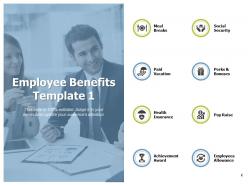
Slide 2: This slide shows Employee Benefits Template 1 describing- Social Security, Meal Breaks, Perks & Bonuses, Paid Vacation, Pay Raise, Health Insurance, Employees Allowance, Achievement Award.
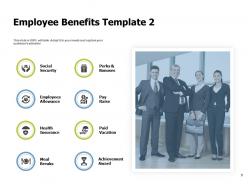
Slide 3: This slide presents Employee Benefits Template 2. You can add or edit data as per requirements.
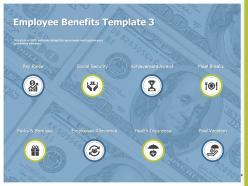
Slide 4: This slide represents Employee Benefits Template 3 with related imagery and text.
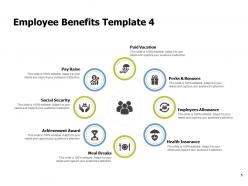
Slide 5: This slide displays Employee Benefits Template 4 with related icons and imagery. You can modify the template as per requirements.
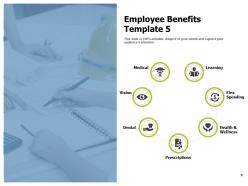
Slide 6: This slide showcases Employee Benefits Template 5 describing- Medical, Vision, Dental, Prescriptions, Health & Wellness, Flex Spending, Learning.
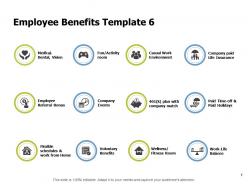
Slide 7: This slide shows Employee Benefits Template 6 describing- Fun/ Activity Room, Medical, Dental, Vision, Casual Work Environment, Company Paid, Life Insurance, Company Events, Employee Referral Bonus, 401(k) Plan With Company Match, Paid Time-off & Paid Holidays, Voluntary Benefits, Flexible Schedules & Work From Home, Wellness/ Fitness Room, Work- Life Balance.
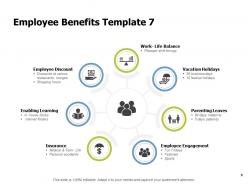
Slide 8: This slide presents Employee Benefits Template 7 describing- Employee Discount, Enabling Learning, Insurance, Employee Engagement, Vacation Holidays, Parenting Leaves, Work- Life Balance.
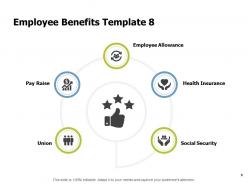
Slide 9: This slide displays Employee Benefits Template 8 describing- Union, Pay Raise, Employee Allowance, Health Insurance, Social Security.
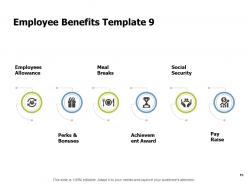
Slide 10: This slide represents Employee Benefits Template 9.
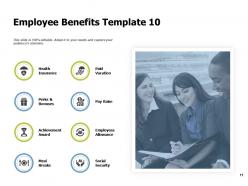
Slide 11: This slide showcases Employee Benefits Template 10 describing- Health Insurance, Perks & Bonuses, Achievement Award, Meal Breaks, Social Security, Employees Allowance, Pay Raise, Paid Vacation.
Slide 12: This slide displays Company Employee Benefits for Icons.
Slide 13: This slide is titled as Additional Slides for moving forward.
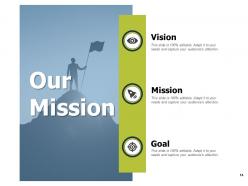
Slide 14: This is Our Mission slide with related imagery and text.
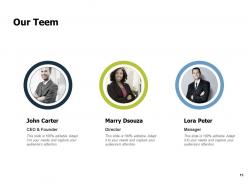
Slide 15: This is Our Team slide with names and designation.
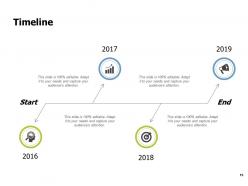
Slide 16: This is a Timeline slide to show information related with time period.
Slide 17: This slide is titled as Post It. Post your important notes here.
Slide 18: This is a Puzzle slide to show information.
Slide 19: This is a Thank you slide with address, contact numbers and email address.
Company Employee Benefits Powerpoint Presentation Slides with all 19 slides:
Heighten the degree of interaction in the group with our Company Employee Benefits Powerpoint Presentation Slides. Establish a close involvement.
FAQs for Company Employee Benefits
The most sought-after employee benefits include flexible work arrangements, comprehensive health insurance, retirement savings plans, professional development opportunities, and mental health support. These benefits enhance employee satisfaction by addressing work-life balance, financial security, and career growth, with many organizations finding that competitive benefit packages significantly reduce turnover while attracting top talent in an increasingly competitive marketplace.
Employee benefits significantly enhance retention and satisfaction by reducing financial stress, demonstrating organizational investment in workforce wellbeing, and creating competitive compensation packages beyond base salary. Companies offering comprehensive healthcare, retirement planning, flexible work arrangements, and professional development opportunities typically experience lower turnover rates, higher engagement scores, and improved productivity, with many organizations finding that strategic benefits programs ultimately deliver cost savings through reduced recruitment expenses.
Small businesses can offer competitive benefits through strategic combinations like flexible work arrangements, professional development stipends, health savings accounts, group insurance plans, and wellness programs. These cost-effective approaches enhance employee satisfaction and retention by delivering meaningful value without massive overhead, with many small companies finding that creativity and personalization often outweigh expensive traditional packages.
Companies can assess employee needs through surveys, focus groups, demographic analysis, exit interviews, and benefits utilization data review. These methods enable organizations to identify preferences across different employee segments, with many finding that regular pulse surveys and anonymous feedback platforms deliver the most actionable insights, ultimately enhancing employee satisfaction and retention rates.
Flexibility in benefits plays a crucial role in attracting diverse talent by accommodating varying life stages, cultural backgrounds, family structures, and personal priorities across different demographic groups. Organizations offering customizable benefit packages, flexible work arrangements, and diverse wellness options find they can recruit from broader talent pools, with many companies discovering that adaptable benefits significantly enhance their employer brand and competitive positioning in increasingly diverse markets.
Organizations can effectively communicate employee benefits through multi-channel approaches including personalized benefits portals, interactive workshops, regular email campaigns, mobile apps, and peer testimonials. These strategies enhance engagement by providing clear, accessible information tailored to diverse employee needs, with many companies finding that consistent, targeted communication increases benefits utilization by 40-60%, ultimately improving employee satisfaction and retention.
Employee benefits present both tax advantages and obligations, with common implications including payroll tax exemptions for health insurance, taxable income status for certain perks, deductible business expenses for employers, and varying treatment for retirement contributions. While employers typically deduct benefit costs as business expenses, employees may face taxable income on benefits like company cars or gym memberships, with many organizations finding that strategic benefit structuring optimizes tax efficiency while enhancing employee satisfaction.
Remote work has fundamentally transformed employee benefits by shifting focus from traditional office perks to digital wellness, home office stipends, flexible health coverage, and enhanced work-life balance programs. Organizations increasingly offer virtual mental health support, technology allowances, and location-independent benefits, with many companies finding that these strategic adaptations improve retention while reducing overhead costs, ultimately delivering competitive advantage in talent acquisition.
Flexible work arrangements, mental health support, professional development stipends, childcare assistance, and wellness programs are increasingly popular non-traditional benefits. These offerings enhance employee satisfaction, retention, and productivity by addressing work-life balance concerns, career growth aspirations, and personal wellbeing, with many organizations finding that comprehensive benefit packages deliver significant competitive advantages in talent acquisition.
Wellness programs enhance employee health by reducing stress, promoting physical activity, and encouraging preventive care, while simultaneously boosting productivity through decreased absenteeism and improved focus. Companies implementing comprehensive wellness initiatives, particularly in healthcare and financial services sectors, report significantly lower insurance costs, reduced sick days, and enhanced employee engagement, ultimately delivering competitive advantage through healthier, more motivated workforces.
Companies face challenges including rising healthcare costs, complex regulatory compliance, diverse workforce expectations, administrative burden, and technology integration difficulties. These obstacles can strain HR resources and budgets, while creating gaps in employee satisfaction and retention, with many organizations finding that strategic benefits management ultimately delivers competitive advantage and enhanced workforce engagement.
Technology streamlines employee benefits administration through automated enrollment systems, self-service portals, integrated payroll platforms, real-time data analytics, and mobile accessibility features. These digital solutions enhance operational efficiency by reducing manual paperwork, minimizing processing errors, and enabling instant benefit modifications, while delivering faster employee services and significantly lower administrative costs for organizations.
Organizations measure employee benefits ROI through retention rates, recruitment cost reduction, productivity metrics, healthcare cost analysis, and employee satisfaction surveys. These measurement strategies enable companies to track reduced turnover expenses, faster hiring cycles, and improved performance outcomes, with many finding that comprehensive benefits packages deliver significant cost savings while enhancing competitive advantage in talent acquisition.
Companies can continuously improve benefits packages through regular employee surveys, competitive benchmarking, data analytics on utilization rates, flexible benefit options, and staying current with emerging trends like mental health support. Many organizations find that implementing quarterly feedback sessions, partnering with benefits consultants, and offering personalized benefit selections significantly enhances employee satisfaction while optimizing costs and improving retention rates.
Employee benefits can be tailored through flexible programs offering traditional pensions for Baby Boomers, comprehensive healthcare for Gen X, student loan assistance for Millennials, and mental health resources for Gen Z. Organizations increasingly implement cafeteria-style benefit plans, allowing employees to customize packages based on life stages and priorities, ultimately enhancing retention and satisfaction across generational lines.
No Reviews