


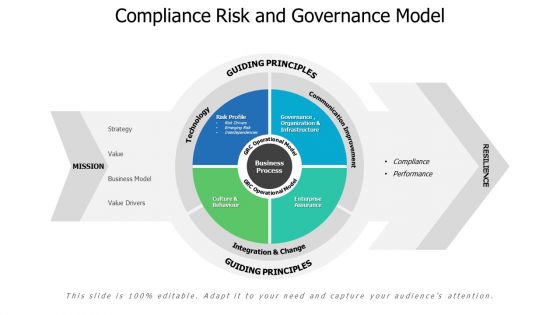
Compliance risk and governance model





Try Before you Buy Download Free Sample Product
 Impress Your
 Audience
 100%
100% Editable
 Save Hours
 of Time


Ensure important information is available to all with our Compliance Risk And Governance Model. Be able to generate the desired inputs.
People who downloaded this PowerPoint presentation also viewed the following :
Compliance risk and governance model with all 5 slides:
Decide on the inputs with our Compliance Risk And Governance Model. Figure out the best information to give.



FAQs for Compliance risk
Honestly, you need solid governance first - like who's actually responsible for what. Risk assessment is huge too, but make it real, not some checkbox exercise. Board oversight can't just be delegated down and forgotten about. Your monitoring systems better actually catch problems early. Oh, and policies that people can understand without a law degree - revolutionary concept, right? Training shouldn't bore everyone to death either. When stuff hits the fan (and it will), you'll need proper incident procedures. The trick is connecting all these pieces instead of letting them work in isolation. I'd start by figuring out your current ownership structure.
Start with mapping out all your current policies and procedures - basically audit everything you've got. Get someone from outside to look at it though, because you can't see your own blind spots. Check your incident history and any regulatory stuff that's come up. Here's the thing - there's always a gap between what's written down and what actually happens day-to-day, so dig into that. Your monitoring systems matter too. Be totally honest about where things suck right now. Otherwise you're just shooting in the dark trying to fix problems you haven't even identified yet.
Honestly, tech makes compliance way less of a headache. Start with AI tools that scan for regulatory changes automatically - saves you from missing stuff. Real-time monitoring catches violations before they blow up into actual problems. Those dashboard analytics beat the hell out of tracking everything in spreadsheets (trust me on this one). RegTech handles your reporting and documentation too, which cuts down on mistakes. My advice? Figure out what's driving you crazy first, then find specific tools for those issues. Don't try to automate everything at once - that's just asking for trouble.
Dude, culture is everything when it comes to compliance stuff. If your leadership team actually follows the rules instead of just preaching about them, people notice. They'll actually speak up when something's sketchy instead of staying quiet. The whole thing falls apart when employees see compliance as just bureaucratic nonsense - but when they feel like it's protecting something they actually care about? Totally different story. Oh, and definitely celebrate the people who raise red flags instead of making them feel like troublemakers. That's probably the biggest mistake I see companies make.
Honestly, mix hard numbers with the softer stuff. Track incident rates, audit results, training completions - you know, the obvious metrics. Penalty costs and exam scores matter too, even though they're kinda depressing to watch. But here's what people miss: employee surveys about whether they actually *get* the rules, not just whether they clicked through some training module. I'd set up dashboards so you're not scrambling during reviews. Pick maybe 4-5 metrics that actually mean something for your company and stick with those. Oh, and compare yourself to competitors if you can get that data.
Oh man, the department buy-in thing is brutal - everyone thinks it's someone else's job until suddenly it's an emergency. Regulations change constantly too, which is honestly exhausting. Plus compliance teams are always stretched thin but somehow supposed to handle everything. The trick that's worked for me? Don't try to tackle everything at once. Map out your biggest risks first and build policies around those. Way better than drowning yourself trying to cover every possible scenario right off the bat. Oh, and make sure your policies actually work in real life, not just sound impressive in meetings.
Oh man, regulatory changes are such a pain - you're constantly having to update your compliance frameworks. There's no setting it once and walking away. New regs come out? Time to reassess risk appetite, update policies, maybe even restructure your oversight committees. I swear the pace is getting worse lately. Build flexibility into your framework upfront though - that's your lifesaver. You'll adapt way faster instead of doing massive overhauls every time. Set up solid regulatory monitoring and clear escalation paths. Quarterly framework reviews are clutch rather than waiting for big shifts to blindside you.
Honestly, role-based training is where you want to start - sales people don't need the same compliance stuff as your finance team. Skip the boring PowerPoint marathons though, nobody remembers those. Real scenarios work way better, especially if you can dig up actual case studies of companies that screwed up. I learned this the hard way at my last job. Quick assessments help you figure out if people actually get it, and please do refreshers throughout the year instead of cramming everything into one annual session. The whole point is making it relevant to what they're doing every day, otherwise they'll forget it by lunch.
Look, compliance risk governance basically becomes your company's foundation for everything else. You get transparency and accountability baked right in. It's honestly like having those highway barriers - not exciting, but they'll save your ass down the road. Your board can actually see problems coming, stakeholders don't side-eye your operations, and you're proving ethics matter beyond just talk. Here's what works: map your compliance risks directly to business strategy first. That way you can show the board how this stuff literally protects what the company's worth. Trust me on this one.
Track both your leading and lagging indicators - stuff like breach frequency, control testing results, training completion rates. Mean time to remediation is honestly one of my favorites because it shows how fast your team actually moves when shit hits the fan. Also watch audit findings closure times and how long it takes to implement new regulatory changes. Cost tracking against budget is pretty crucial too. But here's the thing - don't get buried in spreadsheets. Pick maybe 5-7 metrics that'll actually make people change how they work and review them monthly with leadership.
Honestly, you've got to nail down who owns what at every single level. Pick specific people for specific risks - no wiggle room. Document it all because otherwise you'll get that "wasn't my department" crap later. Board meetings? They need to actually push back on what they're hearing instead of just sitting there. I swear, accountability just vanishes somewhere in middle management at most places. Set up real consequences that people actually care about. Works for wins and losses. If you can't immediately name who's responsible for something, then nobody really is.
Dude, bad compliance governance will absolutely wreck your company. Regulators hit you with fines and legal penalties - sometimes even criminal charges if it's really bad. Your reputation gets destroyed, which honestly sticks around longer than the money problems. Operations get completely disrupted when they start investigating everything. Customers bail, investors lose trust, and suddenly you're behind competitors who had their act together. The whole thing snowballs fast. I know it sounds boring, but setting up proper frameworks now saves you from a nightmare later. Trust me, prevention beats cleanup every single time.
Okay so basically you've gotta treat vendors like they're part of your company - because legally speaking, they kinda are. Do your homework before bringing anyone on board. Then bake those compliance rules right into the contracts. Here's the thing though - most companies just check once and call it good. Big mistake. You need ongoing monitoring, regular check-ins, maybe quarterly assessments or whatever makes sense. Make sure they're actually keeping up with certifications too. Oh and document literally everything. Sounds boring but it'll save your butt if things go south, plus auditors eat that stuff up.
Look, the board is basically your compliance backstop when everything hits the fan. They set the risk appetite for the whole organization and approve all your major policies. Management reports to them, so they're the ones making sure you actually get budget and resources to handle compliance stuff properly. Stay on top of briefing them regularly - honestly, boards hate surprises more than anything. Give them clear metrics and flag any issues early. They also need to know about new regulations that might mess with your business model. Bottom line: they can't do their job if you keep them in the dark about what's happening.
Honestly, people won't say anything if they're terrified of getting axed. Your leadership needs to go first - have them share their own screwups and what went wrong. Sounds weird but it totally works. Anonymous reporting helps, plus maybe do casual "compliance coffee chats" where folks can ask dumb questions without looking stupid. Oh, and celebrate the people who actually flag problems early instead of hiding them. When someone brings up an issue, get curious about it rather than getting all defensive. We tried a "no blame" thing for honest questions and suddenly everyone started talking way more.
No Reviews