


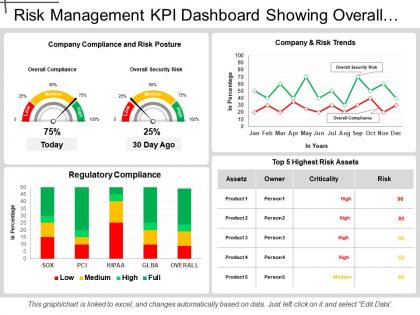
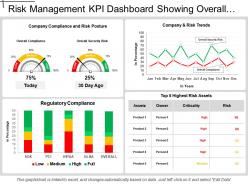
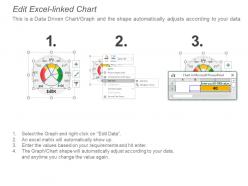
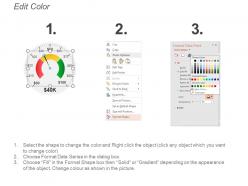
Compliance and legal kpi dashboard showing regulatory compliance





Try Before you Buy Download Free Sample Product
 Impress Your
 Audience
 100%
100% Editable
 Save Hours
 of Time


Increase the impetus with our Compliance And Legal Kpi Dashboard Showing Regulatory Compliance. Heighten the desire for faster development.
People who downloaded this PowerPoint presentation also viewed the following :
Compliance and legal kpi dashboard showing regulatory compliance with all 6 slides:
Acquire a bigger dimension with our Compliance And Legal Kpi Dashboard Showing Regulatory Compliance. Function effectively on a broader canvas.
FAQs for Compliance and legal kpi dashboard
So for your compliance dashboard, definitely track compliance percentage rates across different regs and the number of open violations with their severity levels. Time to resolution is huge too. I'd add employee training completion rates - honestly, that's where most companies screw up first. Real-time risk scores help a ton, plus breaking things down by department so you can quickly spot which teams are struggling. Oh, and audit findings trends over time. The trick is giving executives that high-level view while still letting them dig into specifics when something looks off.
Honestly, compliance dashboards are game-changers because you can see all your risk stuff in one place without wanting to pull your hair out. When deadlines are creeping up or audit issues start stacking, you'll get visual alerts instead of missing things buried in random emails. Way better than those soul-crushing spreadsheet marathons we've all suffered through. The pattern recognition thing is clutch too - you start seeing what's actually urgent versus busy work. Oh, and definitely set up automated alerts for your major risks. Otherwise you'll be refreshing that thing every five minutes like it's Instagram.
Honestly, real-time dashboards are a game changer for catching compliance problems right when they happen. No more finding out about issues weeks later buried in some random report - which is the worst. You'll actually see patterns and problem spots before they blow up on your team. When audit season rolls around (ugh), everything's already laid out visually instead of you frantically digging through spreadsheets. Stakeholders get it immediately too. Just set up alerts for your main metrics so you're not glued to your screen all day like some kind of monitoring zombie.
So compliance dashboards are basically your real-time snapshot of how you're doing against all those regulatory requirements. Think health check for your compliance stuff. You can track the important metrics and catch potential violations before they turn into those nightmare expensive problems. Honestly, they're lifesavers when audit season rolls around - no more scrambling through spreadsheets like a crazy person. The automation handles most of the monitoring that used to eat up so much time, plus auditors actually get the reports they want. I'd start with your biggest 3-5 regulatory headaches and build from there.
Think of automated alerts as your safety net for compliance stuff. You set up triggers that ping you when deadlines are coming up or when something hits a bad threshold. Way better than trying to manually track everything - honestly, who even has bandwidth for that anymore? Just don't go crazy with the notifications or you'll end up ignoring them all. I'd focus on your riskiest areas first when you're setting things up. It's all about catching issues early instead of scrambling to fix disasters later.
Look, if people can't figure out your compliance dashboard, they just won't use it. Period. When everything's intuitive - clear buttons, stuff grouped logically, obvious visual cues - your team actually spots problems fast and fixes them right away. Nobody has time to learn complicated software when compliance deadlines are breathing down their neck. Simple filters and one-click reports are lifesavers. Oh, and make sure it works on phones too because people check this stuff everywhere. The key functions need to jump out immediately or you'll end up fielding a million "how do I..." questions.
Start with regulatory data feeds and your internal audit stuff - that's the foundation. Compliance monitoring systems are obviously key too. Policy management platforms will save your sanity, trust me. The data integration piece always turns into a nightmare though, just warning you now. You'll also want employee training records, incident reports, and any third-party assessments. Financial systems need to plug in for SOX requirements. Oh, and map out which regulations you're actually tracking first. Then figure out what specific data points each source needs to provide. Way easier than doing it backwards.
Automated validation rules in your dashboard will save your life - seriously, biggest difference maker. Don't pull from manual spreadsheets, I've watched that go horribly wrong so many times. Single source systems only. Run weekly reconciliation checks between your dashboard and wherever the data's coming from. Oh and make sure someone actually owns each metric - can't have everyone pointing fingers when numbers don't match. Build those checkpoints right into your process so you catch problems before audits do. Start with whatever metrics would get you fired if they're wrong.
Honestly, AI is where everything's headed right now - it's catching risks automatically and predicting compliance stuff way better than the old methods. Real-time data integration is becoming the norm too, so you get instant dashboard updates instead of waiting around for those overnight batch processes (which were the worst). Natural language processing helps interpret new regulations without someone manually reading through everything. Cloud solutions make team collaboration actually work. Oh, and the really cool part? These dashboards are starting to learn your patterns and suggest what to do before problems even show up. I'd start looking into AI-powered features soon if I were you.
So basically you want to pick the stuff that actually matters for your industry. Healthcare folks obsess over HIPAA and patient data. Financial companies? They're all about SOX controls and catching fraud. Most platforms are pretty flexible - you can drag widgets around, set up alerts, change colors based on how paranoid your company is about risk. Some even do predictive stuff which is kind of cool. I'd honestly just figure out your top 3-5 compliance things that keep you up at night, then build everything around those. Way easier than trying to track everything at once.
Honestly, your biggest headache will be all that compliance data sitting in different systems - what a mess to connect everything. People won't ditch their beloved spreadsheets either unless your dashboard is actually easier to use. Different teams want totally different metrics too, which makes picking the right KPIs tricky. Oh, and good luck getting everyone on board - stakeholders love to resist change. Start with just one department though. Figure out exactly what they need, make it work perfectly for them first. Then you can expand to other areas once you've proven it's worth the switch.
So basically these dashboards let everyone see the same compliance stuff instead of working with totally different info. Your legal team won't be looking at one thing while finance is stuck with outdated numbers - everyone gets real-time updates. Role-based access is pretty clutch since different teams only need to see what matters to them. But honestly, the biggest thing is actually getting people trained on it. I've seen too many companies drop money on these tools and then nobody uses them because they don't know how. Short sentences work. When problems come up, at least everyone's starting from the same place instead of playing phone tag about audit statuses.
Make your compliance dashboard super intuitive first - that's the whole game. Put the important stuff right up front: compliance percentages, overdue items, anything critical that needs fixing ASAP. I've honestly seen way too many dashboards that look amazing but are completely useless when you actually need info! Red/yellow/green indicators work great so people can spot issues fast. You'll want drill-down capabilities too. Oh, and design for whoever's actually using it - executives need high-level summaries, but compliance folks need all the detailed filtering options.
So analytics basically transforms your compliance dashboard into something that actually helps you make smart decisions instead of just showing green/red lights. You'll get trend analysis to catch violation patterns, risk scoring to know what to tackle first, plus automated reports (seriously saves so much time vs pulling data manually every month). The predictive stuff is where it gets cool though - you can spot potential issues before they blow up. Makes audits way less painful too since everything's already documented and pretty. I'd start with automated weekly reports for your biggest compliance headaches first.
So user roles are basically your main defense against data breaches - you control who sees what. HR gets PII access, accounting sees financial stuff, that's it. Without this setup? Random junior employees could stumble across executive salaries or contractors viewing confidential reports. Yikes. Give people only what they absolutely need to do their job (least privilege principle). I learned this the hard way - setting up roles from the start saves you massive headaches later. Trust me, retrofitting permissions is the worst. You can get super detailed with it too, which honestly makes the control freak in me happy.
-
Nice and innovative design.
-
I discovered this website through a google search, the services matched my needs perfectly and the pricing was very reasonable. I was thrilled with the product and the customer service. I will definitely use their slides again for my presentations and recommend them to other colleagues.