

Compromising As A Conflict Management Style Training Ppt




Try Before you Buy Download Free Sample Product
 Impress Your
 Audience
 100%
100% Editable
 Save Hours
 of Time


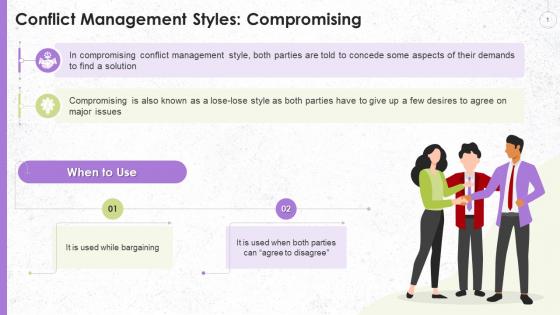
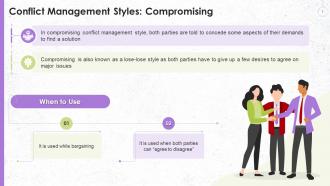
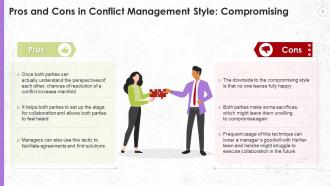
These slides cover the usability, pros, and cons of composing, a conflict management style to resolve disputes at the workplace.
People who downloaded this PowerPoint presentation also viewed the following :
Compromising As A Conflict Management Style Training Ppt with all 17 slides:
Use our Compromising As A Conflict Management Style Training Ppt to effectively help you save your valuable time. They are readymade to fit into any presentation structure.










FAQs for Compromising As A Conflict Management
Compromise enables effective team collaboration by balancing diverse perspectives, facilitating consensus-building, and ensuring all voices are heard in decision-making processes. Through strategic compromise, teams streamline conflict resolution, enhance creative problem-solving, and maintain project momentum, with many organizations finding that collaborative compromise ultimately delivers stronger solutions and improved team cohesion.
Understanding differing viewpoints enhances compromise by revealing underlying interests, identifying common ground, and uncovering creative solution pathways that satisfy multiple stakeholders. This approach enables organizations to transform potential conflicts into strategic opportunities, with many businesses finding that perspective-taking accelerates negotiations, reduces implementation resistance, and ultimately delivers more sustainable agreements across diverse teams.
Compromise in negotiations can create mixed psychological effects, including relief from resolution, potential regret over concessions, and varying satisfaction levels depending on perceived fairness. While some negotiators experience reduced stress and enhanced relationships through collaborative problem-solving, others may feel diminished confidence or question their negotiating effectiveness, ultimately affecting future negotiation approaches and organizational dynamics.
Cultural background significantly shapes compromise perceptions through varying communication styles, power distance expectations, individual versus collective orientations, and relationship priorities in conflict resolution. While Western cultures often emphasize direct negotiation and balanced concessions, many Asian and Middle Eastern societies prioritize face-saving, consensus-building, and long-term relationship preservation, ultimately requiring culturally adapted approaches for effective resolution.
High-stakes compromise strategies include identifying mutual interests, creating value through trade-offs, using neutral mediators, establishing clear timelines, and separating people from positions. These approaches streamline negotiations by focusing on shared outcomes rather than individual demands, with many corporate mergers and international trade agreements finding that structured compromise frameworks ultimately deliver sustainable partnerships and competitive advantages.
Visual aids like presentation templates facilitate compromise discussions by organizing complex information clearly, highlighting common ground visually, and enabling structured comparison of different viewpoints and solutions. These tools streamline negotiations in boardrooms, project planning meetings, and stakeholder discussions, with many organizations finding that visual frameworks reduce misunderstandings and accelerate consensus-building processes.
Common pitfalls include avoiding the issue entirely, making unilateral concessions without reciprocity, focusing on winning rather than mutual understanding, and compromising core values or boundaries. These approaches often create resentment, power imbalances, and temporary solutions, with many couples finding that successful compromise requires open communication, shared sacrifice, and respect for individual needs while building stronger relationship foundations.
Win-win solutions represent the pinnacle of effective compromise, where all parties achieve meaningful benefits rather than simply conceding losses. This approach transforms traditional negotiation dynamics by focusing on shared value creation, expanded resource allocation, and collaborative problem-solving, with many organizations finding that win-win frameworks ultimately deliver stronger partnerships and sustainable competitive advantages.
Success measurements for compromise include stakeholder satisfaction levels, implementation timeline adherence, resource allocation efficiency, goal achievement percentages, and long-term relationship quality metrics. These assessments work by tracking mutual benefit realization, monitoring ongoing compliance rates, and evaluating strategic outcomes, with many organizations finding that balanced scorecards ultimately deliver sustainable partnerships and competitive advantage.
Leaders foster compromise culture by modeling collaborative decision-making, establishing clear communication channels, rewarding win-win solutions, and creating structured conflict resolution processes that prioritize mutual understanding over individual positions. Through regular cross-departmental workshops and transparent feedback mechanisms, organizations streamline collaboration, enhance team cohesion, and ultimately deliver stronger strategic outcomes, with many companies finding that compromise-centered cultures significantly improve employee engagement and operational efficiency.
Compromise demonstrates strategic leadership by enabling sustainable solutions, building stakeholder trust, fostering collaborative innovation, and creating win-win outcomes that strengthen relationships. In business negotiations, project management, and team dynamics, organizations find that strategic compromise accelerates decision-making, reduces conflict costs, and ultimately delivers competitive advantage through enhanced partnerships and operational efficiency.
Storytelling techniques enhance compromise-focused presentations by creating emotional connections through character-driven narratives, demonstrating real-world negotiation scenarios, and illustrating win-win outcomes through compelling case studies. These approaches enable presenters to showcase successful compromise strategies across industries like healthcare negotiations, corporate mergers, and diplomatic resolutions, ultimately delivering more persuasive and memorable presentations that inspire collaborative decision-making.
Emotional intelligence enables effective compromise by helping individuals recognize their own emotions, understand others' perspectives, and manage reactions during negotiations. Through self-awareness and empathy, professionals can identify common ground, communicate needs clearly, and find mutually beneficial solutions, with many organizations finding that emotionally intelligent leaders facilitate faster conflict resolution and stronger collaborative outcomes.
Compromise can be effectively integrated into strategic planning presentations by acknowledging stakeholder concerns, presenting alternative scenarios with trade-offs, and using visual frameworks that show balanced decision-making processes. These approaches enable presenters to demonstrate flexibility while maintaining strategic focus, with many organizations finding that transparent compromise discussions build stronger consensus and ultimately deliver more sustainable strategic outcomes across diverse stakeholder groups.
Technology revolutionizes compromise methods through virtual negotiations, real-time collaboration platforms, data-driven analysis, and automated conflict resolution systems. These tools streamline negotiations by enabling faster information sharing, transparent documentation, and broader stakeholder participation, with many organizations finding that digital platforms ultimately deliver more efficient resolutions and better long-term agreements.
-
The best collection of PPT templates!! Totally worth the money.
-
One-stop solution for all presentation needs. Great products with easy customization.