


Principles Of Harvard Negotiation Model Training Ppt




Try Before you Buy Download Free Sample Product
 Impress Your
 Audience
 100%
100% Editable
 Save Hours
 of Time


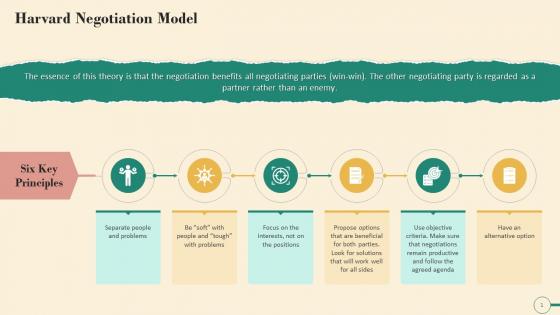
This slide contains information about the Harvard Negotiation Model. The essence of this theory is that all negotiating parties benefit from the negotiation win-win, and the other negotiating party is viewed as a collaborator rather than an opponent.
People who downloaded this PowerPoint presentation also viewed the following :
Principles Of Harvard Negotiation Model Training Ppt with all 16 slides:
Use our Principles Of Harvard Negotiation Model Training Ppt to effectively help you save your valuable time. They are readymade to fit into any presentation structure.







FAQs for Principles Of Harvard Negotiation
Oh right, the Harvard thing! So there are four main parts: don't let personal stuff mess up the actual problem, figure out what people really need (not just what they're demanding), brainstorm win-win solutions, and use fair standards to decide. Most negotiations get stuck because everyone's just yelling their position at each other. But if you ask why they need something - like what's the real deadline pressure - you can usually find creative solutions. I swear this actually works. Next time try "what would make this work for you?" instead of just saying no.
So there's this thing called principled negotiation that's actually pretty smart. Instead of just stubbornly demanding what you want, you dig into WHY everyone wants their stuff. Like, what's really driving their position? The Harvard folks who came up with this say you should separate the actual problem from personality clashes - which honestly makes sense because people get weirdly emotional about negotiations. Generate a bunch of creative solutions together rather than just trading counteroffers back and forth. Oh, and use objective standards to judge ideas instead of just gut feelings. Way less hostile than traditional bargaining. Before your next negotiation, spend time figuring out what they actually need underneath all their demands.
So basically, objective criteria is like having a neutral referee for your negotiation. Instead of going back and forth with "I want this" and "well I want that" (which honestly just turns into a pissing contest), you bring actual data to back up your position. Market rates, expert opinions, industry standards - whatever makes sense for your situation. It completely changes the vibe from adversarial to collaborative because you're both looking at the same facts. I learned this the hard way after way too many pointless arguments. Next time, just come armed with 2-3 solid standards that support what you're asking for.
Honestly, the biggest thing is going after the problem, not the person. I've watched so many discussions just completely implode when people get defensive - it's wild how fast it happens. Try using "we" instead of "you" whenever you can. Like "how do we solve this?" vs "you're totally wrong." Listen to what they actually care about underneath all the surface stuff. Sometimes their real concern is completely different than what they're saying. Frame everything around what you both want to accomplish. Treat them like you're teammates working on the same puzzle, even when you disagree on the answer.
So Harvard breaks this down into four moves that actually work. Start by brainstorming without judging anything - just throw ideas out there first. Look for trades where you give up stuff you don't really care about for things you actually want. This sounds obvious but people miss it constantly. Find shared interests too - there's usually more overlap than you'd think once you really dig in. Then give them choices by proposing multiple options that all work for you. It's about ditching that "one winner" mentality and figuring out how to make the pie bigger for everyone.
So Harvard's approach is way smarter than I thought - they actually want you to deal with emotions head-on. It's called "separating people from the problem." Instead of ignoring how everyone feels, you acknowledge it first. Like you'd say "I can see this is really frustrating" before jumping into the actual issues. Honestly, it works because people just want to feel heard, you know? Once you validate their emotions, they're way more willing to focus on actually solving things together. It sounds obvious but most people skip this step completely.
So the Harvard thing is pretty cool - it makes you separate people from the actual problem, which changes everything from fighting to working together. You dig into what people really want instead of just their surface demands. Honestly, it's kind of brilliant how that shifts things. Then you brainstorm solutions together before picking one, so everyone's bought in. The objective criteria part is clutch too - you're not just arguing opinions but using standards both sides think are fair. Next time you're stuck, try asking "help me understand what you're really worried about here." Works way better than I expected.
Listen more than you talk, honestly. Ask questions about what they actually want underneath all the drama. Don't take their emotions personally - just acknowledge that yeah, this sucks for them too. I always repeat back what I'm hearing so they know I get it. When you need to express something, stick to "I feel..." instead of "You always..." because that just makes people defensive. Maybe set some basic rules upfront? Like no interrupting or whatever. The whole point is making space where you can both throw out ideas without someone getting their feelings hurt.
Honestly, the biggest mistake is being TOO nice when you separate people from the problem - you'll lose track of what you actually want. Most people also suck at brainstorming because they immediately judge every idea instead of just throwing stuff out there first. Not knowing your BATNA is huge too. Like, if you don't know your backup plan, you'll either take terrible deals or reject decent ones. Oh and "objective criteria" doesn't mean there's one perfect answer - just find standards you both can live with. Practice this stuff on small things first, trust me.
Think of your BATNA as your backup plan - it's what gives you real power when negotiating. Got a solid alternative? You can walk away easier and push for what you deserve. Like when you're negotiating salary but already have another offer lined up - totally changes the game, honestly. Always figure out your BATNA first, then try to guess theirs too if you can. Weak backup plan means you gotta bend more. Strong one? You can be way pickier about terms.
So the Harvard approach is basically about treating people like actual humans, not obstacles. Ask what they really want, not just what they're saying they want. Listen to their concerns for real. Show up on time, do what you say you'll do - boring stuff but it works. Here's the thing though: admitting when you don't know something actually helps more than pretending you do. Weird but true. Start by asking what success looks like to them. Find something you both want. Honestly, just showing you get that they have real needs goes pretty far.
Yeah, the Harvard Model totally works across cultures! It's all about focusing on what people actually want instead of what they're saying they want. Honestly, the prep work is where you'll make or break it - you gotta research their cultural norms around decision-making and stuff beforehand. Spend way more time understanding their perspective since culture shapes everything. Oh, and ask lots of open-ended questions about their real needs first. Don't jump straight to solutions like I always do. Different communication styles mean you'll need to dig deeper to figure out what's really driving them.
Yeah, I actually use that Harvard negotiation stuff all the time - works way better than you'd think. So instead of getting stuck on positions like "you never do dishes," try figuring out what's really bugging each person underneath. Maybe they feel disrespected or overwhelmed, you know? The whole "separate people from the problem" thing sounds cheesy but honestly helps. I always ask "what matters to you here?" when things get heated. Then you can brainstorm together instead of just arguing past each other. Game changer for roommate drama and family stuff.
Active listening and emotional intelligence are your starting points - honestly can't stress that enough. Practice separating people from the actual problems, which sounds easier than it is. You'll want to get good at spotting the real interests behind what people are saying out loud. Communication skills matter big time too, especially those open-ended questions. Oh, and managing your emotions when things get heated. Start with basic conflict resolution workshops, then try out the four principles stuff in situations that aren't super high-stakes first. Role-playing helped me tons.
Yeah, the Harvard method totally works over video - just gotta tweak a few things. Building rapport is way harder when you're staring at screens, so I'd definitely push for video calls over phone. Shared docs are clutch for the brainstorming part. You'll need to be super clear about separating people from positions too, since everyone sounds flat online. Oh, and prep becomes everything - like, really everything. I always make actual agendas now instead of winging it. Breakout rooms work great if you need to caucus. Honestly? It's not that different once you get the hang of it.
-
Fantastic collection of visually appealing PowerPoint templates. They certainly uplift the look of the presentation.
-
Huge collection of high-quality templates. Worth each penny.