


Understanding Five Stages Of Negotiation Process Training Ppt




Try Before you Buy Download Free Sample Product
 Impress Your
 Audience
 100%
100% Editable
 Save Hours
 of Time


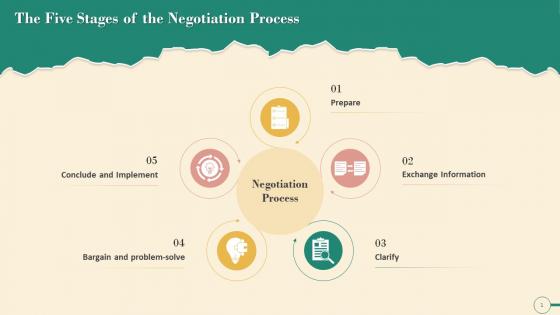
This set of slides illustrates the Five Stages of the Negotiation Process and their importance. The stages are Prepare, Exchange information, Clarify, Bargain and problem-solve, and Conclude and implement.
People who downloaded this PowerPoint presentation also viewed the following :
Content of this Powerpoint Presentation
Slide 1
This slide illustrates the Five Stages of the Negotiation Process. The stages are: Prepare, Exchange Information, Clarify, Bargain and Problem-solve, and Conclude & Implement.
Instructor’s Notes:
Five Stages of Negotiation Process are:
- Prepare: Negotiation preparation is easy to overlook, but it is a crucial first step. To prepare, research both sides of the debate, identify any potential trade-offs, and determine your preferred and least preferred outcomes. Then, make a list of the concessions you're willing to make on the bargaining table, determine the relationship you want to build or maintain with the other party, and prepare your BATNA (“Best Alternative to a Negotiated Agreement"). Preparation can also include establishing ground rules, such as where, when, with whom, and under what time constraints the negotiations will occur
- Exchange Information: This is the negotiation stage in which both parties exchange their initial positions. Each side should be free to express their underlying interests and concerns, including what they hope to achieve at the end of the negotiation and why they feel the way they do
- Clarify: In this step, both parties continue the discussion while exchanging information to justify and support their claims. If one side disagrees with something the other side is saying, they should discuss it calmly to reach an understanding
- Bargain and problem-solve: This stage is the heart of the negotiation process, in which both parties begin a give-and-take. Following the initial offer, each negotiating party should make and manage their concessions while creating and managing counter-offers. Keep your emotions in check during the bargaining process; the best negotiators use strong verbal communication skills. This step aims to arrive at a win-win situation—a positive course of action
- Conclude and implement: Once an acceptable solution has been reached, both parties should thank each other for the discussion. Successful negotiations are all about building and maintaining long-term relationships, and then they should outline each party's expectations and ensure that the compromise is implemented. This step is frequently accompanied by a written contract and a follow-up to ensure that the implementation is proceeding smoothly
Slide 2
This slide explains the first stage of negotiation process that is Preparation. It mentions that negotiation preparation is easy to overlook, but it is a crucial first step. It also highlights that preparation also include establishing ground rules, such as where, when, with whom, and under what time constraints the negotiations will occur.
Slide 3
This slide explains the second stage of negotiation process which is exchanging information. It highlights that exchanging information is stage of negotiation in which both parties exchange their initial positions.
Slide 4
This slide describes the third stage of negotiation process that is clarification. It highlights that in this stage, both parties continue the discussion while exchanging information by justifying and supporting their claims. At this stage if one side disagrees with something the other side is saying, they should discuss it calmly to reach an understanding.
Slide 5
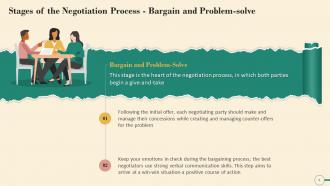
This slide explains the fourth stage of negotiation process that is Bargaining and Problem-Solving. It mentions that this stage is the heart of the negotiation process, in which both parties have to give-and-take. It also highlights that emotions must be in check during the bargaining process. Here, the best negotiators use strong verbal communication skills. This step aims to arrive at a win-win situation.
Slide 6
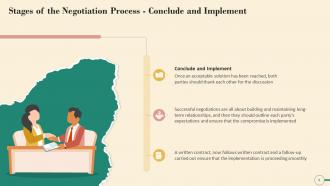
This slide depicts the fifth stage of negotiation process that is conclusion and implementation. In this stage, once an acceptable solution has been reached, both parties should thank each other. This stage is frequently accompanied by a written contract and a follow-up to ensure that the implementation proceeds smoothly.
Understanding Five Stages Of Negotiation Process Training Ppt with all 22 slides:
Use our Understanding Five Stages Of Negotiation Process Training Ppt to effectively help you save your valuable time. They are readymade to fit into any presentation structure.
















FAQs for Understanding Five Stages Of Negotiation
Honestly, prep work is where you'll win or lose this thing - don't skip it. Research their position, know your limits, and have a backup plan ready. Opening matters too (seriously, aggressive lowballing just pisses people off). Then comes the actual back-and-forth bargaining phase where you'll spend most of your time. I always forget this part, but closing is huge - confirm everything and nail down next steps. Oh, and map out your talking points before you even book the meeting. Four main stages: prep, opening, bargaining, closing. Preparation's honestly the most critical one though.
Oh man, culture stuff can totally make or break negotiations! Like, Americans love being direct and making fast decisions, but try that in Japan and you'll probably tank the whole thing. You've gotta build relationships first in a lot of Asian cultures and give people ways to save face. Here's something weird I learned - silence means totally different things depending where you're from. Some cultures use it to think, others see it as a hard no. My advice? Do your homework on their communication style and hierarchy expectations beforehand. And honestly, when you're unsure just ask them what they prefer rather than guessing wrong.
Honestly, mirroring how they talk works really well. Use their name but don't overdo it - sounds weird otherwise. I usually share something kinda personal first to get things rolling. Ask questions about what they think instead of yes/no stuff. Here's the thing though - actually listen and repeat back what they said so they know you heard them. Even if you totally disagree, acknowledge their concerns first. Shows you're not just waiting for your turn to talk, you know? Oh and get there early if you can. Those few minutes of random chat before you dive into business? Game changer.
Honestly, emotional intelligence is like having superpowers in negotiations. You can tell when someone's getting frustrated or excited, which helps you figure out whether to push or pull back. Managing your own emotions is huge too - nobody makes smart decisions when they're pissed off (learned that one the hard way). The best part? Using empathy to understand what they really need versus what they're actually saying. Those are usually two different things. Work on reading body language and tone - seriously makes a massive difference when you're trying to close a deal.
Honestly, prep work is like 70% of getting what you want. I bombed a negotiation early on because I winged it - never again! Figure out what they actually care about first. Then know your absolute bottom line before walking in. Make a list of your must-haves vs things that'd be nice but whatever. Research what they usually go for in these deals. The more homework you do upfront, the less they can catch you off guard with weird requests. Having backup options ready makes you way more confident too.
Ugh, difficult negotiators are the worst. First thing - don't take their bullshit personally. They're usually just testing you or stressed about something else entirely. Stay calm and try to figure out what they actually want (not what they're saying they want). Active listening helps here, even though it's annoying when someone's being a jerk. I always try to throw them a small bone early on - something that doesn't hurt me but makes them feel heard. Set your boundaries right away. Document the whole thing afterward because people conveniently "forget" what was agreed on.
Honestly, just sit down and write out every single backup plan you'd have if this whole thing goes sideways. Other vendors, doing it in-house, waiting until next quarter - whatever makes sense. Then figure out which one's actually your best bet based on what it'll cost you and how long it takes. That becomes your BATNA. Most people think they can just wing this part but you really can't. Once you've got that locked down, you'll feel so much more chill going into the actual negotiation. You know what you'd walk away to, so there's less pressure to say yes to garbage.
Listen, active listening is a game-changer in negotiations. People say one thing but actually want something totally different - you gotta tune into their real concerns and priorities. When someone feels genuinely heard, they drop their guard. It's wild how much the vibe shifts just from that. You'll catch hints about their bottom line too, which is gold. Here's what works for me: repeat back what they said before jumping in with your response. Shows you're locked in and usually exposes where you're not on the same page. Trust me on this one.
Whoever has more power usually wins in negotiations - that's just reality. Your power might come from having other options, controlling key resources, or knowing stuff the other person doesn't. But here's what's wild: how powerful you *seem* matters as much as your actual position. Act desperate and you're screwed, even with great alternatives. I always try to figure out where both sides stand before jumping in. Sometimes you can't match their power directly, but good timing and prep work can definitely help you compete better.
Look, don't lie about facts or make promises you can't deliver on - that always backfires eventually. Be fair and actually consider what they need too. I know negotiation involves some positioning, but there's a line between being strategic and being a total snake. Even when someone's desperate or clueless, don't exploit that (karma's real, trust me). Try creating wins for both sides instead of just grabbing everything you can. Your reputation outlasts any single deal, so ask yourself: would I cringe if this conversation went public tomorrow?
Honestly, start with digitizing your research - data tools help you figure out market rates before you walk in there. Video calls are obvious for remote stuff, but shared docs are clutch for tracking who offered what in real-time. CRM systems are a lifesaver too since nobody remembers what happened three meetings back (guilty as charged). AI practice tools are decent for running scenarios, though they're still pretty robotic compared to actual people. The research part makes the biggest difference though. Once you've got solid data backing you up, the rest flows way easier.
Honestly, the worst thing you can do is get all heated and stop actually listening to what they're saying. I used to jump at the first counteroffer way too fast - rookie mistake. Don't lowball them crazy hard right off the bat either. Oh and prep work! Can't stress this enough. Know your backup plan before you walk in there, otherwise you're just improvising and missing obvious opportunities. When things get tense, take a breather. Ask them questions about what they actually need instead of just pushing your own agenda. Stay curious, not defensive - that's probably the best mindset shift you can make.
Honestly, how you follow up after a deal can totally make or break your next negotiation with those same people. I've watched deals crash years later just because someone had a crappy reputation for disappearing after signing papers. Trust me, people remember who actually does what they say they'll do. When you consistently check in and follow through, you're building real credibility. That pays off huge when you need flexibility or creativity in future talks. Both sides become way more willing to work with you. Oh, and set up some basic system to track your commitments - doesn't have to be fancy, just something that works.
Okay so there are a few ways to close deals that actually work. Try the assumptive close - just start planning next steps like they already said yes. Works more often than you'd think. Or do a summary close where you go through everything you both agreed on, then ask for commitment. I'm probably guilty of overusing the alternative close lol - basically give them two options that both work for you. Sometimes though? Just be direct and ask "do we have a deal?" The trick is reading the vibe and matching your approach to how things have been going. Definitely practice these beforehand so you're not fumbling around when it matters.
Your industry totally shapes how you should negotiate. Tech moves fast and people actually want to work together since they'll probably partner again later. Finance? Way more formal and everything's about the numbers - like comparing an investment bank meeting to some startup pitch, completely different energy. Healthcare gets messy with all the stakeholders and regulations involved. Retail and manufacturing are obsessed with volume deals and shipping terms. Honestly, just figure out how deals usually happen in your space first. Do some digging on the typical process, then match that vibe when you're negotiating.
-
Placing an order on SlideTeam is very simple and convenient, saves you a lot of your time.
-
They guys always go the extra mile to meet the expectations of their customers. Almost a year has been associated with them.