


A Guide To Procurement Negotiation Training Ppt





Try Before you Buy Download Free Sample Product
 Impress Your
 Audience
 100%
100% Editable
 Save Hours
 of Time


These slides give an overview of procurement negotiation. They tell us about procurement contracts and why we need to negotiate them. Finally, they also mention how buyers negotiate the price.
People who downloaded this PowerPoint presentation also viewed the following :
Content of this Powerpoint Presentation
Slide 1
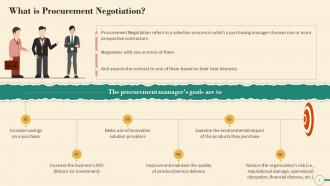
This slide depicts information about procurement negotiations. It emphasizes that procurement negotiation refers to a process in which a purchasing manager selects one or more prospective contractors, negotiates with one or more of them, and awards the contract to one of them based on their best interests. It also mentions the managers' goals, such as increasing purchase savings, increasing the business's ROI (Return on Investment), and lowering the organization's risk (i.e., reputational damage, operational disruption, financial distress, etc.).
Slide 2
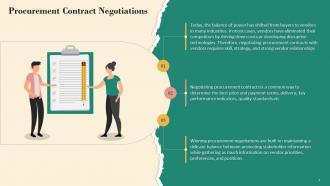
This slide depicts information about contract negotiations for procurement. It emphasizes that negotiating procurement contracts is a standard method for determining the best price and payment terms, delivery, key performance indicators, quality standards, etc. Winning procurement negotiations are built on the delicate balance of safeguarding stakeholder information while gathering as much information as possible on vendor priorities, preferences, and positions. It also states that negotiating procurement contracts with vendors necessitates skill, strategy, and strong vendor relationships.
Slide 3
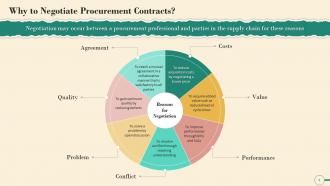
This slide depicts information regarding the reasons for procurement contract negotiation. The reasons are: Agreement, costs, value, performance, conflict, problem, and quality.
Slide 4
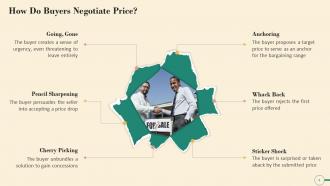
This slide depicts information regarding how buyers negotiate. Some of the tactics are: Anchoring, whack back, sticker shock, cherry picking, pencil sharpening, and going gone.
A Guide To Procurement Negotiation Training Ppt with all 20 slides:
Use our A Guide To Procurement Negotiation Training Ppt to effectively help you save your valuable time. They are readymade to fit into any presentation structure.










FAQs for A Guide To Procurement
Honestly, it's all about doing your homework first. Research their costs and constraints - what do they actually need from this deal? Build some rapport early because nobody gives good terms to someone they can't stand. I've watched people torpedo negotiations by coming in way too hot from the start. Try creating scenarios where you both win instead of just beating them down on price. Know your walk-away point beforehand and don't budge on it. Oh, and listen more than you talk - most people miss obvious solutions because they're too busy running their mouth.
Oh dude, behavioral economics is a game-changer for procurement stuff. So like, anchoring works - throw out your first offer strategically and watch what happens. Creating urgency through scarcity actually works on experienced buyers too, which honestly surprised me at first. Here's the thing though - frame everything around what they'll lose, not gain. Loss aversion is powerful. I've watched people get crazy better results once they figured out these mental patterns. You gotta recognize when you're doing it to yourself while using it on others. Study how you negotiate first.
Okay so market research is like your secret weapon when you're negotiating. You need to know what suppliers are actually charging other people, who the main players are, and what's realistic price-wise. I probably go overboard on this step honestly, but it pays off! Going in blind is the worst - suppliers can smell that from a mile away. Get quotes from multiple vendors first, check industry reports if you can find them, and definitely talk to other buyers in your network. That intel gives you the confidence to call BS on crazy high prices and actually know what you're shooting for.
Do your homework first - research their business challenges and what's happening in their industry. Suppliers can tell when you actually get their world. Ask open-ended questions about how they operate, then actually listen instead of just waiting to jump in with your pitch. I always share relevant market insights or acknowledge their expertise - works way better than you'd think. Look for common ground beyond the contract stuff. Maybe you're both dealing with supply chain nightmares or similar regulatory headaches. Be genuinely curious about their perspective rather than just pushing what you want. That foundation matters. Then you can negotiate from a real place.
Honestly, prep work is everything with these nightmare vendors. Get your market research together, find backup suppliers, and document every sketchy thing they've done. When you're in there negotiating, stay cool even when they're being complete asses - getting heated never works out. Here's a trick: after you make your point, just shut up. Those awkward silences? They'll scramble to fill them and usually give you something. Always let them save face when they cave to your terms. Oh, and write everything down afterward because they'll 100% try to backtrack later if you don't.
Honestly, e-procurement tools are game changers for negotiations. They handle all the boring stuff automatically - bid comparisons, sending out RFPs, digital contracts (thank god no more hunting people down for signatures). The data side is pretty sweet too since you'll catch patterns you'd totally miss doing it manually. Everything gets tracked without you thinking about it, which saves your butt during audits. Oh and definitely start with whatever you spend the most money on first. Once your team figures it out there, you can roll it out everywhere else.
Don't go in blind without knowing your backup plan - that's huge. Also skip making the first offer if you can help it. I made that mistake so many times when I started out lol. Price isn't everything either, think about the whole package. Do your homework on suppliers beforehand or you'll get burned. When they push back hard, don't take it personally (easier said than done). Email negotiations are terrible for anything important - too much gets lost. Oh and never rush just because of some arbitrary deadline. Figure out your walk-away point first and prep a few different scenarios.
Dude, cultural differences will absolutely wreck your procurement deals if you don't see them coming. What feels efficient to you might seem super rude to them. I bombed a negotiation in Japan once because I kept rushing them for quick answers - terrible move. Some cultures want to build relationships first before talking money, others jump straight into pricing. Communication styles are all over the place too. Decision timelines? Forget everything you think you know. Do yourself a favor and research their business customs beforehand. Oh, and definitely pad your timeline expectations or you'll be frustrated as hell.
Honestly, you gotta track way more than just the dollar amount you saved. Sure, compare your final price to what they started with or market rates - that's the easy part. But payment terms matter too, plus delivery times and quality guarantees. I've watched people get screwed by focusing only on price while ignoring everything else. Also keep an eye on how long negotiations actually take from start to finish. Maybe track if your suppliers are happy working with you - sounds weird but angry vendors cause problems later. Just throw together a basic scorecard so you can see what's actually working across different deals.
Look, when you really listen to what suppliers are saying - like actually *hear* them - you'll pick up on stuff beyond just the basic numbers. Maybe they're stressed about cash flow or dealing with some production nightmare. Once you get that, you can work around it instead of just going back and forth on price forever. I learned this the hard way honestly - watched a great deal completely blow up because neither side was listening. Try repeating back what they told you before you counter. Sounds obvious but it works! They'll open up more and you might find ways to negotiate that you didn't even think of.
Honestly, start by figuring out what your supplier actually cares about - yeah price matters, but what about their capacity issues or when they get paid? Most people just beat them up on cost which never works that well. Try trading stuff like longer contracts for better rates, or pay them faster for discounts. Share your forecasts too so they can suggest things you didn't think of. Don't just focus on price - throw in delivery schedules, quality stuff, maybe even innovation partnerships. Come with a few different scenarios ready. Let them help solve it with you instead of just demanding lower numbers.
Dude, flexibility is huge in procurement negotiations - maybe your best tool tbh. Different vendors need totally different approaches. Some love the collaborative thing, others you gotta be more direct with (reading people is literally half the game). Don't get married to your first strategy though. I always prep like 2-3 backup tactics so I can switch gears without looking obvious about it. Actually had a negotiation last month where my whole approach flopped in the first 10 minutes - thank god I had other options ready. Never walk in with just plan A.
Okay so procurement contracts can get messy fast. Watch your deliverables and payment terms - fuzzy wording always comes back to haunt you. Compliance stuff is critical too, like data protection and whatever certifications your industry needs. IP rights matter big time if you're building custom anything together. Honestly, termination clauses are probably the most overlooked thing. You'll want solid exit language when (not if) things get weird. Also random tip - don't try fixing contract language after it's drafted. Get legal involved from the start or you'll be kicking yourself later.
Look, fair negotiation is honestly the best way to build solid supplier relationships. Don't just hammer them on price every time - that's so shortsighted. Ask "how can we both win here?" instead. Suppliers will actually prioritize your orders when they see you as a real partner, not just another pain-in-the-ass client. They'll share money-saving ideas too. I've seen this work so many times. Yeah, you might leave a few bucks on the table upfront, but you'll get way better service and flexibility when things get messy later.
Honestly, collaborative negotiation is a game-changer for supplier relationships. You're basically working together instead of that typical adversarial stuff nobody enjoys. Both sides win, which sounds cheesy but actually works. Suppliers become way more helpful when you're in trouble (and trust me, that happens constantly). Plus you get better innovation and quality since they're invested in your success. Be upfront about what you need and actually listen to their constraints too. Fewer contract headaches later on. Maybe try it first on something low-stakes to see how it goes?
-
Wide collection of templates available. SlideTeam has made it easier to create presentations in just a few minutes.
-
Satisfied with the way SlideTeam resolved my query regarding the right business PPTs that I was having difficulty finding. I found the perfect match with their assistance.