


Conflict Management With Communication Training Module On Business Communication Edu Ppt




Try Before you Buy Download Free Sample Product
 Impress Your
 Audience
 100%
100% Editable
 Save Hours
 of Time


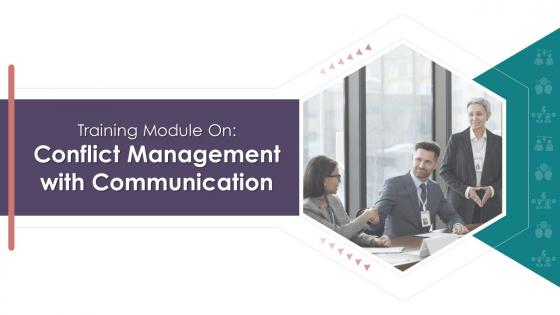
This PowerPoint training deck covers the concept of Conflict Management with Communication. It includes the definition and sources of workplace conflict. It also covers the significance of effective communication in managing workplace conflict and conflict management with good business etiquette. The PPT module also contains key takeaways, discussion questions, MCQs, case studies, and memes to make the training session interactive. Further, it includes additional slides on about us, vision, mission, goal, 30-60-90 days plan, timeline, roadmap, training completion certificate, energizer activities, detailed client proposal, and training assessment form.
People who downloaded this PowerPoint presentation also viewed the following :
Content of this Powerpoint Presentation
Slide 4
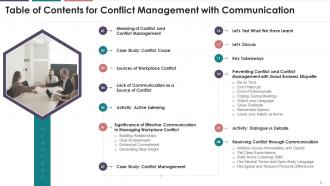
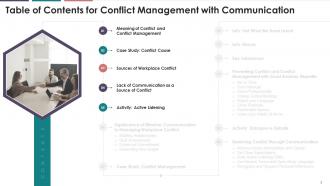
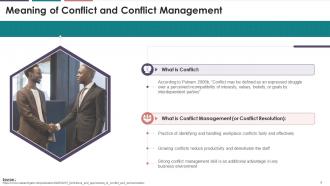
This slide covers the meaning of conflict and conflict
management.
Slide 5
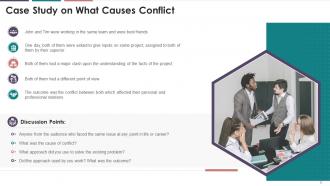
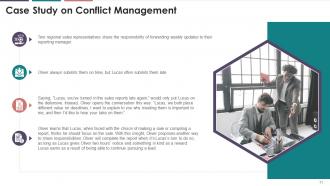
This slide covers a case study explaining what conflict
is and how it arises in an organization. The trainer can also use this case
study to conduct an activity with the target audience to gain more insights
into their thought process using the discussion questions mentioned above.
Slide 6
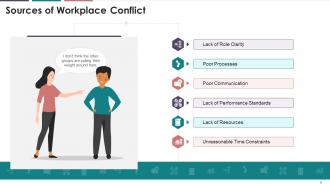
This slide illustrates how and from where the conflict
arises in workplace communication.
Slide 7
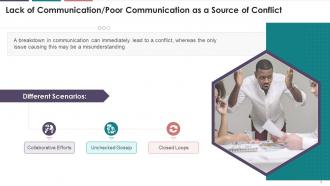
This slide explains how reduced or poor communication
in an organization leads to increasing conflicts.
Instructor’s Notes:
·
Collaborative Efforts:
If an individual is working on a team project, but the team leader has not
defined clear roles, then conflicts, missed deadlines, finger-pointing and
blame are the results. The management can train all the team leaders to use the
same set of metrics for assigning projects, establishing clear timelines, and
following up regularly to ensure that deadlines are met and the issues get resolved
automatically
·
Unchecked Gossip: It
is only natural that when some rumors spread in an office, individuals start to
panic about jobs and lose confidence in the company. Instead, if management
gets to know of any kind of workplace, they should make an effort to put a stop
to it with a companywide email or announcement. If the rumors are true, the
company should settle the issue at the earliest
·
Closed Loops: When
a particular department fails to coordinate with other departments, the result
can be increased levels of conflict and poor communication. Poor communication
will not only affect productivity and progress, but also lead to infighting. A
company engaging in cross-departmental projects should assign responsible
people from each division to be the lead communicators. This will not allow any
kind of gossip and help meet deadlines
Slide 8
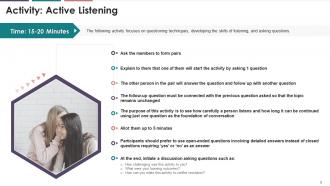
This slide mentions an activity to be conducted by the
trainer as an initiative to improve active listening skills.
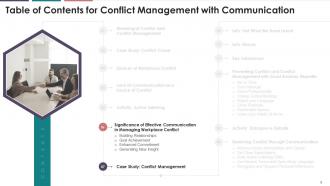
Slide 10
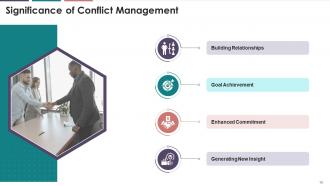
This slide covers the importance of conflict
management. It explains how resolving conflicts leads to reduced friction at
the workplace, better collaboration amongst workers, strong relationships, and
reduced disruptions.
Instructor’s Notes:
·
Building Relationships: Crucial
elements of conflict resolution are communication, emotional awareness, and
empathy. These elements lead to higher productivity and more satisfying
relationships in all aspects of life. Rather than simply dismissing a
relationship after a rough patch or argument, conflict resolution techniques
help you strengthen the connections and prevent any issues in the future
·
Goal Achievement: In
business relationships, ongoing conflicts act as a hindrance in completing and
achieving the goals. When arguments take place at the workplace, productivity
gets affected negatively. That makes it difficult to focus on work or focus on
a project. Working on resolving these issues at the root can lead to greater
efficiency and goal achievement
·
Enhanced Commitment: Conflict
resolution brings people together once the prevailing issue gets resolved.
Preferring to tackle problems as a team rather than fighting with each other is
crucial for conflict resolution. This technique will help enhance each person’s
commitment to the process and avoid feeling of defensiveness.
·
Generating New Insight: Resolution
is essential, but so is conflict in itself. When people have different
opinions, it can bring new ideas, innovations, and ways to solve problems.
Proper conflict resolution skills are designed to keep disagreements from
intensifying by discussing each point of view and reaching a collaborative
conclusion. Using conflict resolution skills will make an individual better
equipped to learn from and teach others professionally and personally
Slide 11
This slide explains how the conflict can be managed
positively by finding out the best possible solution, which benefits all the
parties involved.
Slide 13
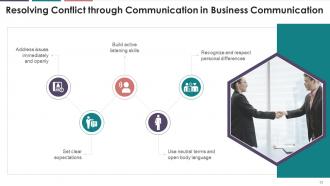
This slide explains how conflicts can be resolved in an
organization using effective and transparent communication.
Instructor’s Notes:
·
Address issues immediately and openly:
When
a conflict arises among the team members, the management should immediately
take action to resolve it. Instead of avoiding conflict, accepting it openly
and work to address it immediately
·
Set clear expectations: Managing
expectations in terms of both what you expect from others and what they expect
of you is essential for better communication. Your and your colleague’s
expectations from each other should be clearly defined and expressed. Talking
in business terms, knowing what is expected of them can help the employees feel
more comfortable, reducing conflict
·
Build active listening skills: “Active Listening is one of the undervalued
skills in conflict resolution. People's minds often get off track when others
speak, especially in groups, and they find it difficult to absorb what was
said. An individual should not only hear what their colleagues say but also
carefully listen. With the application of good and active listening skills,
conflicts can be reduced and avoided
·
Use neutral terms and open body
language: Neutral terms are words that do not indicate approval
or disapproval of something
For example,
the word ‘Arrogant’ is considered a negative term when used in a sentence, so a
person can replace it with ‘Confident” to make it look positive or
‘Self-assured’ to make it a neutral term. Another example of a neutral term is
“Thin.” The term ‘thin’ is also expressed as ‘Skinny,’ which is interpreted as
unfavorable, and ‘Fit,’ reflected positively.
When engaged in managing a conflict, an individual
should speak calmly using neutral terms and in an agreeable manner. In addition
to choosing your words carefully while communicating, an individual should also
give equal importance to body language and the tone of voice. It is not always
what is being said that propels the conflict further, but how it is said. A
person should use open body language to reflect the willingness to resolve
conflict
·
Recognize and respect personal
differences: Opposing opinions, interests, behavior, and
working styles can cause a lot of arguments and misunderstandings among
individuals. In most cases, this is the root cause of your team's problems.
Every person perceives the world differently because of their own experiences,
values, individual preferences, and culture. They interpret situations
differently, giving them different meanings and drawing conclusions based on
them. Therefore, recognizing and accepting differences make it easier to have
discussions and resolve workplace conflicts
Slide 14
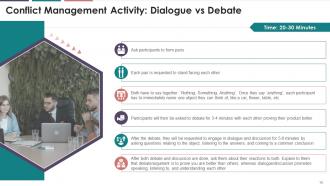
This slide mentions a conflict management activity to
be conducted by the trainer with the target audience. This activity will make
the audience distinguish between debate and discussion.
Slide 15
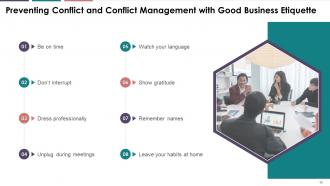
This slide mentions a few self-explanatory points
indicating conflict prevention and conflict management using good business
etiquette. To prevent conflict at the workplace, a person should be on time,
avoid interrupting, dress professionally, watch language and words while
speaking, show gratitude, remember the names, and leave habits like
nail-biting, chewing gum, etc. at home.
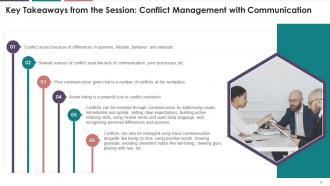
Slide 17
This slide illustrates the key takeaways from the
conflict management section of business communication.
Slide 38 to 49
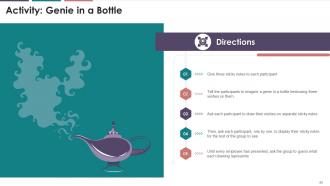
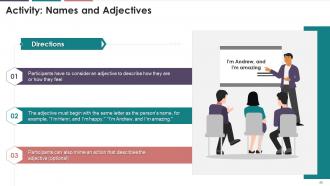
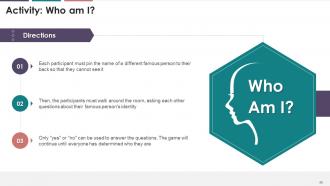
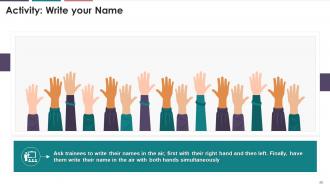
These slides depict energizer activities to engage the
audience of the training session.
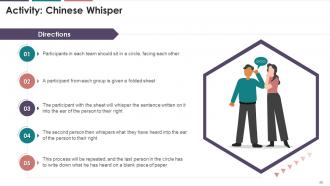
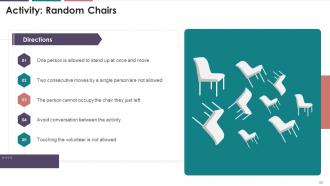
Slide 52
The above slide displays the activity for the team
members found less energetic and enthusiastic. It will ensure an increase in
energy levels and the productivity of employees at the workplace.
Instructor's Notes:
·
Multiple chairs are to be adjusted in the
empty and spacious room in a random order
·
The chairs should be put in a manner that
every chair points in a different direction and all the chairs are occupied
Now,
·
Ask for a volunteer from the batch. (Batch
may include a maximum of 15 people for a regular size room)
·
The volunteer is supposed to walk slowly
and approach his/her empty chair and sit down. If the chair is already
occupied, then he/she is expected to occupy the other/next alternative empty
chair available
·
All other members will try to stop the
person from approaching the relevant chair
Strategy Formulation:
·
Multiple teams can be made to conduct the
activity
·
Each team can be allotted 2 minutes for
planning
·
Each round is to be reviewed for the
outcomes achieved from the activity
·
Each team should have a different
volunteer, preferably the person with the lowest energy levels from the batch
·
The volunteer should move cautiously so as
to not bump into any of the props or persons in the room
Activity Review/Outcomes:
·
How did the activity influence the teamwork
and engagement skills of all the participants?
·
How was the experience while planning and
working with 15-20 members at a time?
·
Was everybody clear about the purpose and
conduct of the respective activity?
·
Did you observe any flaws that you wish to
improve? Or any other instructions you want to include to make the activity
conduct easier?
Slide 54
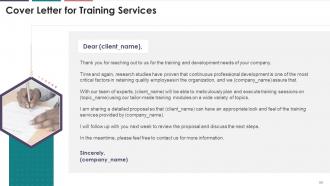
This slide highlights the cover letter for the training
proposal. It includes details regarding what the company providing corporate
training can accomplish for the client.
Slide 57
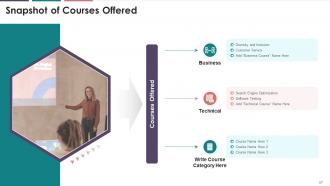
The purpose of this slide is to showcase the multiple
types of courses offered by the training company.
Slide 59
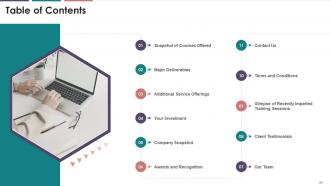
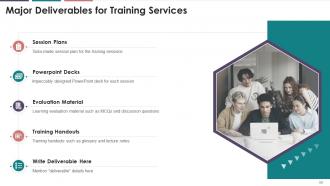
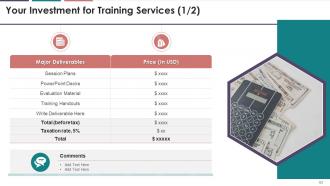
This slide indicates the major deliverables that the
corporate training firm will provide to the client. The key deliverables
highlighted are session plans, PowerPoint deck, evaluation material, and
training handouts.
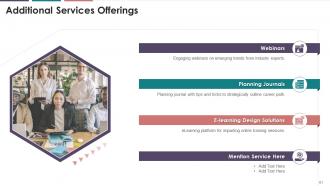
Slide 61
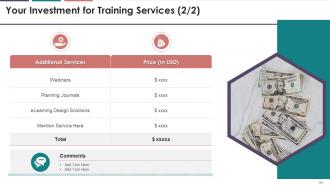
This slide represents the multiple additional services
offered by the training firm to the client, such as webinars, planning
journals, and e-learning design solutions.
Slide 63
This slide tabulates the major deliverables offered by
the training company to the client along with their associated costs.
Slide 64
The purpose of this slide is to highlight the multiple
additional services offered by the training firm along with their cost details.
Slide 66
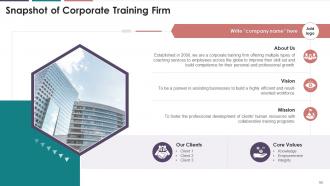
This slide provides an overview of the corporate
training firm's vision and mission statements, core values, and key clients.
Slide 68
This slide highlights the major awards and recognition
won by the training firm for their exceptional service to clients.
Slide 70
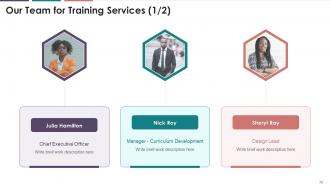
The slide provides information regarding the team
members that would be providing the training services to the client. It
includes details of the trainer and their respective designations
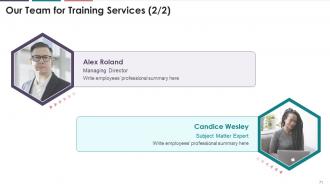
Slide 71
The slide provides information regarding the team
members that would be providing the training services to the client. It includes
details of the employees names and their respective designations.
Slide 73
This slide provides information pertaining to
testimonials given by satisfied clients of the training firm.
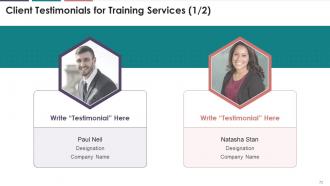
Slide 74
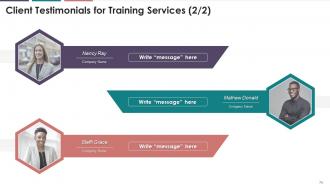
This slide highlights the testimonials from multiple
satisfied clients of the training firm providing information regarding
congratulatory messages, client name, and company details.
Slide 76
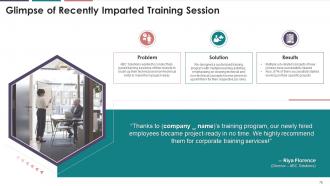
This slide showcases the case study for the training
proposal. It includes information regarding the problem faced by the client and
solutions offered by the training firm. It also covers details of the results
and client testimonial.
Slide 78
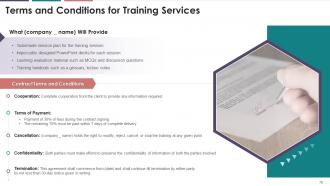
This slide provides information regarding the contract
terms and conditions of the training proposal. It also includes details of
deliverables that the training company will provide to the client.
Slide 80
The purpose of this slide is to provide the contact
information of the corporate training firm. It includes the firm’s official
address, contact number, and email address.
Slide 81
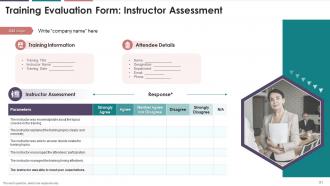
This slide highlights the training evaluation form for
instructor assessment. It also includes sections to fill details of training
information and attendee details.
Slide 82
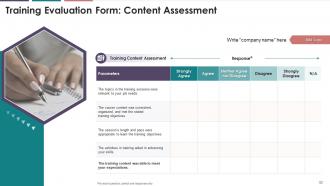
This slide showcases the questions for the assessment
of the training content by the attendees.
Slide 83
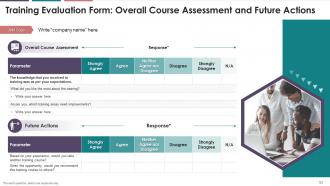
The slide indicates the evaluation form for course
assessment. It also includes questions pertaining to the future actions of the
attendees.
Conflict Management With Communication Training Module On Business Communication Edu Ppt with all 88 slides:
Use our Conflict Management With Communication Training Module On Business Communication Edu Ppt to effectively help you save your valuable time. They are readymade to fit into any presentation structure.











FAQs for Conflict Management With Communication Training Module On Business
Jump on it fast - workplace drama spreads like wildfire if you let it sit. Listen to everyone's side first, don't assume you know what's happening. Usually there's some deeper issue underneath all the surface nonsense. Stay neutral and call out specific behaviors, not personalities. Nobody wants to be labeled the "difficult" one. Write everything down though, especially if this might end up with HR later. Honestly? You're not trying to make them besties. Just get everyone functional again so work doesn't suck for the whole team. Check back in a week to see if your fix actually worked.
Honestly, active listening is like a cheat code for conflicts. When you actually paraphrase what someone said instead of planning your comeback, they get way less defensive. People just want to feel heard, you know? I've noticed that asking clarifying questions helps you figure out what's really bothering them under all the drama. The trick is genuinely focusing on their perspective rather than waiting for your turn to speak. Try reflecting back what you heard before jumping in with your thoughts - it's weirdly effective. Makes the whole thing less of a battle.
Honestly, emotional intelligence is a game-changer for handling conflict. You know when someone's losing it over a deadline but they're actually mad about something totally different? That's where reading people comes in handy. I've watched so many arguments blow up because nobody caught those signals. Staying aware of your own triggers matters too - helps you think before you snap back. Like, sometimes I'll literally pause mid-conversation to check what's really going on with both of us. Sounds cheesy but it works way better than just bulldozing through tense moments.
Yeah, cultural stuff really changes how people handle conflict. Some cultures are super direct - they'll just tell you straight up what's wrong. Others are way more about saving face and being indirect about it. What you think is just honest feedback might actually seem rude as hell to someone from a different background. I found that out the awkward way once, trust me. Also, some cultures expect you to go through the proper chain of command with conflicts, while others are more like "just work it out between yourselves." Honestly? Just ask people how they prefer to handle this stuff instead of guessing.
Honestly, mediation is amazing for stopping fights before they blow up completely. A neutral person helps you both see what's really going on underneath all the anger. Way cheaper and faster than dealing with HR drama or lawyers - trust me on that one. I've watched people go from screaming at each other to actually solving problems together. Pretty wild transformation. But here's the thing: both people have to actually want it fixed. If someone's just being stubborn, it won't work. Definitely bring it up sooner rather than later though.
Honestly, it all comes down to your team's vibe. Good teams with solid trust? Conflicts actually turn into useful conversations where everyone feels okay disagreeing. But if communication sucks or there's weird power stuff happening - ugh, even tiny issues blow up into unnecessary drama. I've seen it happen so many times. The trick is watching how your team talks during normal times. That's what decides whether disagreements become something you learn from or just a mess nobody wants to touch. Short answer: work on the relationship stuff when things are chill, not when everything's on fire.
Start by actually doing it yourself - don't dodge tough conversations. When people speak up (even messily), reward that behavior or they'll clam up again. I've watched so many managers say they want honesty then get all weird when someone actually disagrees with them! Set some ground rules about attacking ideas, not people. Give your team basic conflict skills training. Short bursts work better than long workshops, honestly. Here's the key part: when disagreements lead to better decisions, make a big deal about it. Share those wins. People need to see that conflict isn't just drama - it's how you get smarter outcomes.
Knowing your conflict style is a game changer, honestly. Like, I used to avoid everything - worst idea ever. You might bulldoze through arguments or shut down completely. Once you spot your patterns, you can actually choose different moves. Naturally competitive? Try collaborating for once. Hate confrontation? Force yourself to speak up. But here's the thing - figuring out the other person's style matters way more. Then you can adapt instead of just doing whatever feels safe. Makes such a difference when you stop defaulting to your comfort zone.
Dude, your communication style totally determines whether fights blow up or fizzle out. Like, if you're interrupting or getting all defensive, you're just making everything worse. But when you actually listen and say "I feel..." instead of "you always..." - it's crazy how fast things calm down. I've literally watched meetings go from people yelling to actually solving stuff just because someone changed their tone. Oh, and your body language has to match what you're saying or people pick up on that weird vibe. Next time things get heated, just pause for a sec. Ask questions instead of firing back immediately - works way better than you'd think.
Oh man, feedback stuff is a game-changer for getting better at handling drama. Do quick debriefs after messy situations or send surveys to everyone involved. I'm terrible at remembering this part btw, but it actually helps tons. Look for patterns - same triggers popping up? Which techniques work best? Just ask "what would you do differently?" after each conflict. Honestly, that one question gives you so much to work with. Start simple though - you don't need some fancy system. Track what worked and what bombed, then you'll actually improve instead of making the same mistakes forever.
Honestly, people think all conflict is terrible and you should avoid it completely. That's so wrong though! Good disagreements actually lead to better ideas when you handle them right. Most workplace drama isn't even about difficult people - it's usually unclear expectations or everyone fighting over the same resources. Also that whole "confront everything immediately" thing? Sometimes you gotta let people chill out first. I've learned conflict isn't the actual problem. How you deal with it is what counts. Next time things get tense, figure out what's really causing it before trying to fix anything.
So conflict management training is actually pretty solid - it teaches people to deal with disagreements before they blow up. The role-playing stuff feels super awkward at first (not gonna lie), but it works. Your team starts communicating more directly instead of bottling things up, and they actually listen instead of just waiting to jump in. Plus decisions happen way faster when people aren't dancing around touchy subjects. I'd start with whoever on your team avoids difficult conversations the most - they'll get the biggest boost from it.
So basically, whoever has more power gets to control how conflicts play out. The person lower on the food chain? They usually just shut up, even when they're totally right. It's wild how different peer fights are compared to when your boss is involved. Here's the thing though - powerful people often have no clue they're steamrolling others. Before jumping into any conflict resolution, figure out if both people can actually speak up freely. Sometimes you gotta balance things out first, or it's just pointless.
Honestly, empathy is such a game-changer when you're dealing with conflict. People get way less defensive once they feel like you actually get where they're coming from - not just their complaints, but what's really bothering them underneath. I've seen this work so many times. When you acknowledge their feelings first, it totally changes the vibe. They stop being so guarded. Plus you'll often find common ground you completely missed before. Oh, and here's a weird trick that works - try reflecting back what you think they're feeling before jumping into fixing mode. Sounds cheesy but it really does help.
Honestly, video calls are game-changers for this stuff. You catch tone and body language that emails totally miss - I swear most workplace drama could be solved with a 5-minute video chat instead of those passive-aggressive email chains. Project management tools help too since everyone can see what's happening and who's responsible for what. Oh, and those anonymous feedback things? Super useful for catching problems early before someone has a meltdown. Don't go crazy though - just pick whatever fixes your biggest headache first. I made the mistake of trying to implement like 4 new systems at once and it was chaos.
-
Great designs, really helpful.
-
SlideTeam is the best in the business. Their templates are engaging and customizable. You can rely on them.