


Construction Company Business Model With Cost Structure And Revenue Stream




Try Before you Buy Download Free Sample Product
 Impress Your
 Audience
 100%
100% Editable
 Save Hours
 of Time


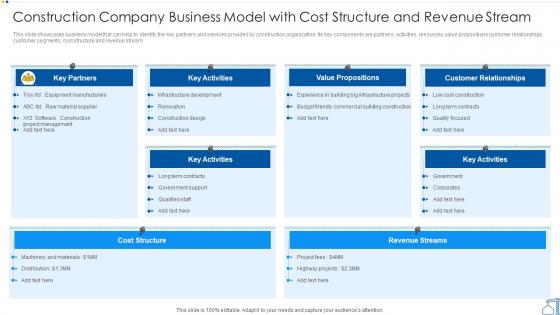
This slide showcases business model that can help to identify the key partners and services provided by construction organization. Its key components are partners, activities, resources, value propositions customer relationships, customer segments, cost structure and revenue stream.
People who downloaded this PowerPoint presentation also viewed the following :
Construction Company Business Model With Cost Structure And Revenue Stream with all 6 slides:
Use our Construction Company Business Model With Cost Structure And Revenue Stream to effectively help you save your valuable time. They are readymade to fit into any presentation structure.





FAQs for Construction Company Business Model With Cost Structure
Four things will make or break you: solid project management, reliable subs, accurate bidding, and cash flow control. Cash flow's the real killer though - I've seen profitable companies go under because clients drag their feet on payments. One terrible bid estimate can literally erase profits from your next three good jobs, so get that process locked down tight. Build solid relationships with your subcontractors and suppliers since they're basically part of your crew. Oh, and don't try perfecting everything at once. Pick one area first and nail it completely before moving on to the next.
Honestly, start with project management software - it'll keep everyone on the same page with timelines. Drones are pretty cool for spotting problems early, and 3D modeling catches stuff before it gets expensive. BIM software is incredible for visualization (seriously, once you see it in action you'll wonder how you managed without it). IoT sensors can track your equipment and materials in real-time, which is super helpful. Oh, and mobile apps let field teams update progress instantly instead of those end-of-day reports nobody likes writing. Pick whatever's driving you crazy right now and tackle that first.
Dude, project management is literally what makes or breaks construction businesses. Without it, you're juggling timelines, budgets, and resources while everything goes to hell. I've watched so many projects crash and burn because nobody was actually managing anything - it's wild how fast things spiral. Good PM keeps clients happy since you'll actually hit deadlines and stay on budget. That means repeat business and decent profits. My buddy swears by PM software but honestly, even basic training helps tons. The upfront cost sucks but you'll make it back pretty quick when projects stop going over budget every damn time.
Honestly, pricing is where most people shoot themselves in the foot. First thing - figure out your actual costs: materials, labor, equipment, plus all that overhead stuff you forget about. Then see what competitors are charging, but don't just copy them. You've got different skills, maybe faster turnaround times? Price that in. I always tell people to add a buffer for when things go sideways (and they will). Oh, and create different pricing for different types of clients - a Fortune 500 company can pay more than a startup. Review everything quarterly so you're not stuck with outdated numbers.
Dude, start with gross profit margin per project - that's what keeps the lights on. Cash flow will kill you way before low margins do, especially when you're floating payroll for 30-90 days waiting on payments. Get your job costing dialed in because construction has a million ways to bleed money if you're not watching. I'd honestly rather have accurate books than perfect marketing any day. Keep an eye on receivables aging too - seen plenty of "profitable" contractors tank because they couldn't collect. Weekly cash flow forecasts are a must. Monthly margin breakdowns by project type will show you where the real money is.
Honestly, going green actually saves you cash in the long run. Start with energy-efficient equipment and eco-friendly materials - your wallet will thank you later. LEED certifications are where the money's at though. Clients are throwing premiums at contractors who can deliver those projects. Train your crews on sustainable stuff and find suppliers who aren't just talking the talk. Oh, and waste reduction programs are easier than you'd think. I'd say pick one green thing per project first, then build from there. Marketing this to clients is key since everyone's expecting it now anyway.
Dude, modular construction is honestly a game-changer. You build everything off-site in factories, then just assemble on location - way faster and cheaper than traditional builds. Weather can't mess with your timeline anymore, which is huge. Quality control gets way better too since it's all happening indoors. Here's the thing though - you can actually juggle multiple projects at once instead of being stuck at one site forever. Labor costs drop because factory work is just more efficient. I'd say start with something small first to see how it meshes with your client base. My buddy tried it last year and hasn't looked back since.
Dude, working with subcontractors completely changes how you run things. Instead of hiring everyone full-time, you basically become the guy coordinating everything. Way easier to take on those massive projects without keeping a huge payroll year-round. Your cash flow gets way more predictable too - no paying salaries when work's slow. Plus you can bid lower since you're bringing in people who actually specialize in their stuff. I learned this the hard way honestly. The trick is finding subs you can actually rely on and sticking with them.
Dude, cash flow's gonna be your biggest nightmare - those razor-thin margins are brutal. Material costs are all over the place right now, like seriously unpredictable. Project delays will screw up everything downstream too. Finding skilled workers? Good luck with that mess. Plus there's endless regulatory stuff to deal with, and your tech systems probably don't play nice together (mine never did). Oh and the forecasting headaches... ugh. Start with nailing down your cash flow predictions first. That'll save you so much stress later. Then maybe tackle getting your systems to actually talk to each other.
Don't treat risk management like some side project - it needs to be baked into everything you do from day one. Weather delays, material costs going crazy, labor issues, regulatory stuff - figure out your biggest risks first, then build your mitigation strategies right into planning and pricing. I've watched way too many contractors get absolutely wrecked thinking they could just figure it out as they go. Build standard risk templates for every single bid. Keep tight relationships with multiple suppliers and subs (learned this the hard way). Always pad your timelines and budgets with contingency buffers. Make risk assessment as automatic as reviewing blueprints.
Honestly, there's a bunch of ways to shake things up. Design-build cuts down your timeline since you're dealing with fewer people - way less headache. Modular construction is huge right now. You get better quality control in the factory and everything goes faster on-site. BIM and digital twins help you spot problems early, which saves tons of money later. The 3D visualization stuff really impresses clients too. Oh, and public-private partnerships can get you into bigger projects. I'd say try one method on something smaller first to see how your team handles it.
Honestly, market demand controls pretty much everything in construction. Hot market? You get to be picky, charge more, take the good jobs. When things slow down you're bidding on anything that moves just to keep the lights on - been there, it sucks. You've gotta adjust your whole approach based on what's happening. Good times mean you can invest in better equipment or specialize. Slow times? Focus on cutting costs and maybe branch out a bit. I always tell guys to watch their local market like a hawk so they can shift gears before they're scrambling.
Yeah so compliance is basically this hidden cost monster that eats your budget. You'll need people handling permits and paperwork, plus you're always waiting around for approvals - sometimes weeks longer than planned. Super annoying tbh. But the companies that actually master this stuff? They end up crushing their competition because they can quote realistic timelines while everyone else is panicking about delays. Oh and definitely track compliance as its own cost category. Trust me on that one. Makes pricing way less of a guessing game when you know what you're actually dealing with upfront.
Honestly, client feedback is a game-changer for construction projects. Don't wait until the end to ask what they think - grab input throughout each phase while you can actually do something about it. Their complaints about communication or timeline confusion? That's gold. Shows you exactly what's broken in your process. I've watched contractors completely flip their approach just by actually listening to what clients need (not what they assume clients need). Quick surveys, regular check-ins, post-project calls - whatever works. Then actually change things based on what you hear. Better apps, clearer contracts, more updates.
Honestly, the labor shortage thing is getting wild - skilled workers are super expensive now and hard to find. Most companies I know are just using way more subcontractors instead of keeping big crews on payroll. Makes sense financially but man, coordination gets tricky. All the project management apps are helping though, especially for scheduling and tracking time digitally. Oh and remote oversight is becoming huge too. Start tracking your labor costs by project type if you're not already - that data will help you figure out when it's worth hiring vs just subbing everything out. The flexible workforce model isn't going anywhere.
-
A beautiful, professional design paired with high-quality images and content that is sure to impress. It is a must-use PPT template in my opinion.
-
Fantastic collection of visually appealing PowerPoint templates. They certainly uplift the look of the presentation.