


Consumer decision journey powerpoint presentation slides




Try Before you Buy Download Free Sample Product
 Impress Your
 Audience
 100%
100% Editable
 Save Hours
 of Time


Create effective customer maps using these Consumer Decision Journey PowerPoint Presentation Slides. Take the assistance of these customer mapping PPT templates to showcase the need to measure the perceptions of customers. Further, you can depict the stages of consumer experience including touchpoints, actions, motivations, questions, and pain points using these consumer experience PPT slides. Demonstrate the four types of journey maps namely current state, future state, day in the life, and blueprint diagram with these customer relationship management PPT infographics. Portray the need for a customer journey map such as shifting the company’s perspective, assigning ownership of key touchpoints, etc. with this decision-making PowerPoint slideshow. Unveil the steps to build a customer map such as planning, data gathering, map creation, analyzing key findings, investigation issues, and presenting findings. Uncover the advantages of consumer journey maps including visibility, empowerment amongst others using these customer experience PPT layouts. Download these customer experience PPT visuals to provide seamless and uninterrupted services to clients.
People who downloaded this PowerPoint presentation also viewed the following :
Content of this Powerpoint Presentation
Slide 1: This slide introduces Consumer Decision Journey. State your Company name and begin.
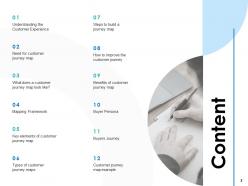
Slide 2: This slide displays the Content of the presentation.
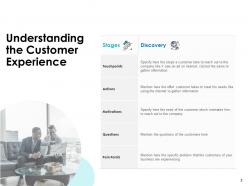
Slide 3: This slide describes about Understanding the Customer Experience.
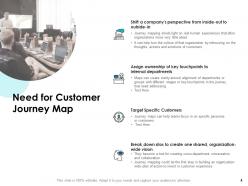
Slide 4: This slide showcases the Need for Customer Journey Map.
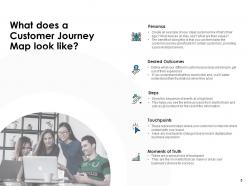
Slide 5: This slide showcases What does a Customer Journey Map look like?. Create an example of your ideal customer like What’s their age? What devices do they use? What are their values?
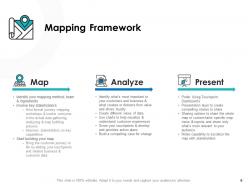
Slide 6: This slide depicts the Mapping Framework.
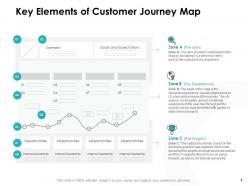
Slide 7: This slide displays Key Elements of Customer Journey Map.
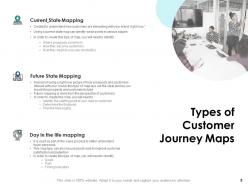
Slide 8: This slide describes Types of Customer Journey Maps.
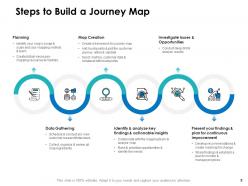
Slide 9: This slide presents Steps to Build a Journey Map.
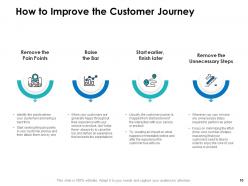
Slide 10: This slide showcases How to Improve the Customer Journey.
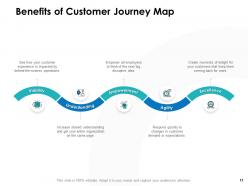
Slide 11: This slide describes the Benefits of Customer Journey Map.
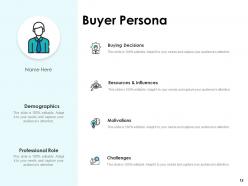
Slide 12: This slide depicts Buyer Persona with- Buying Decisions, Resources & Influences, Motivations, Challenges.
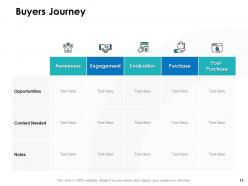
Slide 13: This slide describes the Buyers Journey.
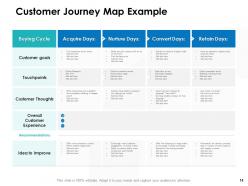
Slide 14: This is Customer Journey Map Example slide.
Slide 15: This is Consumer Decision Journey Icons Slide.
Slide 16: This slide is titled as Additional Slides for moving forward.
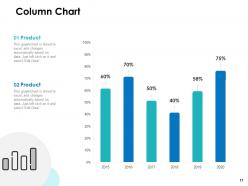
Slide 17: This slide displays Column Chart with product comparison.
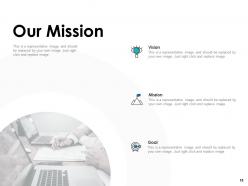
Slide 18: This is Our Mission slide with Vision, Mission and Goal.
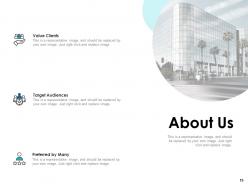
Slide 19: This is About Us slide with company specifications.
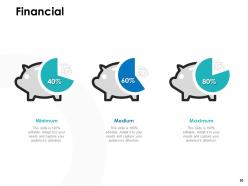
Slide 20: This is Financial slide. Showcase the financial related stuff here.
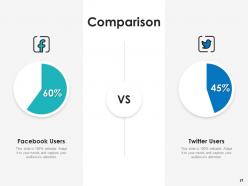
Slide 21: This is Comparison slide showcasing comparison between facebook users and Twitter users.
Slide 22: This is Idea Generation slide to highlight information, ideas and facts.
Slide 23: This is Thank You slide with address, email address and contact number.
Consumer decision journey powerpoint presentation slides with all 23 slides:
Our Consumer Decision Journey Powerpoint Presentation Slides are more colourful than a rainbow. They will lead you to the proverbial pot of gold.

FAQs for Consumer decision journey
So basically there are four main stages: awareness, consideration, purchase, and advocacy. But honestly? It's way messier than those neat little funnel diagrams make it look. People jump around constantly now with social media and reviews everywhere. Awareness is when they first realize they need something. Then consideration - that's the research phase where they're comparing options. Purchase speaks for itself, but here's the thing most people miss: the post-purchase experience is huge. That's what turns them into repeat customers or gets them telling their friends about you. My advice? Map out every single touchpoint for your specific audience first.
Honestly, emotions totally hijack how people make decisions - way before logic even shows up. Fear, excitement, wanting to fit in, trust... all that hits first. You know how you'll buy something random and then make up reasons why it was "smart" later? That's exactly what I'm talking about. These feelings create mental shortcuts and shape which brands people even bother considering. Features and price matter, sure, but emotional connections drive real loyalty. My advice? Figure out what emotions your customers actually crave, not just the practical stuff they tell you in surveys.
Dude, social media totally shapes how people see brands now. Your customers are scrolling through reviews, watching unboxing videos, seeing influencer posts - all before they even visit your site. It's crazy how much people trust some random person's TikTok review over traditional ads. The tricky part? Bad experiences go viral just as fast as good ones. You've gotta stay on top of what people are saying about you. Find out which platforms your audience actually uses (spoiler: it's probably not where you think) and engage there. Don't just post and ghost - actually respond to people.
Start by collecting data from everywhere - surveys, support tickets, website analytics, social media stuff. Map it all out chronologically from when people first hear about you through buying and after. Honestly, have your team walk through the process themselves first (super eye-opening). Customer interviews help fill gaps where the data gets weird, especially around emotional stuff and frustrations. Look for drop-off points. That's where the magic happens. Once you've got your map, test it with actual customers and keep tweaking it. Consumer behavior changes all the time, so your map needs to change too.
Honestly, the biggest pain is that different age groups shop completely differently. Boomers will research for weeks using traditional sources while Gen Z sees one TikTok and buys instantly. Your data gets super messy because strategies that crush it with one group totally bomb with another. I learned this the hard way trying to create one universal journey map - what a disaster that was. You'll end up with these incomplete, confusing analytics. Better to segment by demographics first, then create separate journey maps for each group. Way more work upfront but you'll actually understand what's happening.
Honestly, it depends completely on what people are buying. Cars or expensive software? They'll research for weeks - comparing every feature, reading tons of reviews, maybe even doing free trials. But something like toothpaste or grabbing lunch? We're talking seconds here. It's basically just habit kicking in. Services are weird though - they sit somewhere in the middle since you can't really "test drive" them beforehand. Here's the thing: you've gotta match your marketing to however long customers actually spend thinking about it. Don't spam the quick buyers or leave the researchers hanging.
So many ways to figure out what makes customers tick! Google Analytics is your best friend for seeing actual behavior patterns. Surveys work great too, but I'd honestly skip focus groups - people act way too fake when they know they're being watched. Heat maps are clutch for spotting where users bail on your site. Customer interviews though? Pure gold. People tell you stuff in one-on-ones they'd never put in a survey. Social listening tools help you catch what they're saying when they think you're not listening. Just don't go crazy - pick maybe 2 tools tops or you'll drown in data.
Track where people bail on your customer journey and fix those spots first. Your website clicks, email opens, social engagement - all that stuff shows what actually converts vs what you think does. Honestly, the real magic happens in those tiny split-second moments where someone decides to buy or bounce. You can personalize each step too, like better product recs or timing your follow-ups right. Oh and start with your biggest money-making customer paths before you get all crazy expanding everywhere. The data's probably already there, you just gotta look at it differently.
Okay so reviews are basically social proof that totally affects how confident people feel about buying stuff. Like, you probably scroll through Amazon reviews before getting anything, right? Positive ratings make people feel way less risky about a purchase and they'll buy faster. But bad reviews? They'll send customers running to your competitors - I've definitely done that myself. Here's the thing though - reviews don't just matter at the end. They actually help people decide what to even consider in the first place. So yeah, bug your happy customers for reviews and always respond to the crappy ones.
Your cultural background basically controls how you shop - what catches your attention, which brands feel trustworthy, where you go for info. Like in collectivist cultures, people really care about what their family thinks when researching stuff. Individualist cultures? More about personal wants. Risk tolerance is huge too - some cultures are way more careful with money than others. Even after buying something, culture affects whether you'll leave reviews or not. I learned this in my marketing class and honestly it was pretty eye-opening. Always think about who you're actually selling to.
You gotta match your marketing to where people actually are mentally, you know? Early on, hit them with content and social posts just to get noticed. Once they're considering you, that's when you throw detailed comparisons and demos at them - help them figure out if you're worth it. Make buying easy as hell, obviously. Here's where most companies mess up though: they completely ignore customers after the sale. That's actually your golden opportunity for onboarding emails and building real loyalty. Stop blasting the same message everywhere and start thinking about what they need at each step.
Brand loyalty is like a cheat code for customer retention. Your loyal customers don't waste time researching competitors or scrolling through endless reviews – they just buy your stuff again. They skip right past that whole "let me compare 15 different options" phase we all do sometimes. Honestly, it's way easier to keep existing customers happy than chase new ones all the time. The smart move? Pour your energy into making the post-purchase experience amazing. That's where you actually build the loyalty that keeps people coming back without all the drama.
Honestly, personalization is a game-changer for getting people to actually engage with your stuff. Think about it - when someone sees content that feels like it was made just for them, they're way more likely to click, buy, whatever. It's the difference between feeling like a real person versus just another email address in some database. You reduce that overwhelming "too many choices" feeling and people start trusting you more. I'd start small though - maybe segment your email list based on what people actually do on your site, then work on personalizing your product recommendations from there.
Look at where people are dropping off and figure out what's bugging them. Could be your pricing is confusing, checkout's a nightmare, or you've got way too many choices. Just pick the worst pain points first. Most of the time it's simpler than you think - add some reviews, clean up your forms, make your navigation less of a maze. I swear, companies love to overcomplicate this when usually it's pretty obvious stuff. Send out surveys or actually watch people use your site. Your support team probably knows exactly what people complain about most. Fix those big conversion killers before worrying about the small stuff.
So basically you need different metrics for each part of the funnel. Brand recall and consideration rates for awareness stuff. Then engagement things like time on content and social shares when people are actually looking into you. Obviously conversion rates and acquisition costs matter too - that's the money part lol. Here's what most people mess up though: they totally ignore post-purchase tracking. Retention rates, lifetime value, referrals, reviews - all that matters just as much. Map maybe 3-5 key metrics to each stage first, don't go crazy trying to track everything at once. You can always add more later when you've got the basics figured out.
No Reviews