


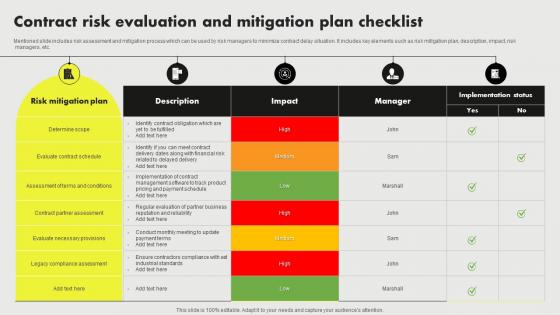
Contract Risk Evaluation And Mitigation Plan Checklist




Try Before you Buy Download Free Sample Product
 Impress Your
 Audience
 100%
100% Editable
 Save Hours
 of Time


Mentioned slide includes risk assessment and mitigation process which can be used by risk managers to minimize contract delay situation. It includes key elements such as risk mitigation plan, description, impact, risk managers, etc.
People who downloaded this PowerPoint presentation also viewed the following :
Contract Risk Evaluation And Mitigation Plan Checklist with all 6 slides:
Use our Contract Risk Evaluation And Mitigation Plan Checklist to effectively help you save your valuable time. They are readymade to fit into any presentation structure.





FAQs for Contract Risk Evaluation And
Okay so basically you've got four things to focus on. First, figure out which contracts are actually risky versus the boring routine ones. Set up clear workflows for who approves what - saves headaches later. Here's the thing though: most people totally blow it on the monitoring part. They sign stuff and then... crickets. Don't be that person. Track your key dates, how things are performing, any changes that come up. Oh and document everything, even the weird stuff. I know it's annoying but trust me, when something goes sideways you'll be so glad you did. Just scale how deep you go based on your risk tolerance.
Go through each section methodically - liability, termination, payments, scope stuff. Watch for fuzzy language like "reasonable efforts" because that's where they get you. Have your lawyer check indemnification clauses and auto-renewals. Honestly, penalties that heavily favor one side are usually a bad sign. If you're reviewing tons of contracts, software helps spot things you'd miss otherwise. Create a red flag checklist for your specific field and run everything through it first. Don't let anyone sign until you've caught the gotchas.
Getting stakeholders involved in contract risk management is honestly a game-changer. Legal will catch compliance stuff, finance spots budget problems, and operations knows what'll actually break in the real world. Each team sees totally different risks you'd miss flying solo. The key is mapping out everyone who touches contracts and pulling them in early - not after you've already decided everything. When people help identify the risks upfront, they're way more invested in following whatever fixes you come up with later. I learned this the hard way on a project last year.
Honestly, automation makes this way easier than doing it by hand. AI can scan through contracts and catch stuff you'd totally miss - weird clauses, terms that don't match up, compliance issues. It's actually pretty impressive how good these tools have gotten. You can build dashboards that show risk patterns across all your contracts, plus get alerts before renewals sneak up on you. Some even predict which agreements might blow up later. I'd start with contract analytics software first. You'll probably find patterns in your current deals that'll surprise you - I know I did when we first ran ours through one.
Honestly, most people rush through the boring stuff and miss the liability caps - that's where you get screwed later. Indemnification clauses too. Oh, and termination rights are huge. Vague scope definitions will kill you - I watched one team argue for literally months over "reasonable efforts." What does that even mean? Payment terms are tricky because everyone focuses on the dollar amounts but ignores late payment penalties. IP ownership is another big one, especially if you're building something custom. Before signing anything, just walk through what happens if everything goes wrong with each clause.
So basically, figure out who can actually handle each risk best - that's your starting point. Your vendor knows cybersecurity? Let them own those headaches. But if you're controlling the timeline, delivery delays are your problem. Here's the thing though - don't just shove everything onto them because they'll either jack up their prices or bail completely. I'd map out the big risks first, then ask yourself who's really got control over what. Sometimes you both need to share the risk anyway, keeps everyone honest. Makes for way better partnerships honestly.
So you'll want to hit the basics - GDPR compliance, industry regs, licensing stuff. Regulatory changes are honestly the worst part because they shift all the time and can screw you over months later. IP protections are huge, plus solid termination clauses that actually favor you. International contracts get messy with jurisdictional issues, which is such a headache. Healthcare and finance have their own special rules too. Oh, and dispute resolution - don't skip that part. I'd make a checklist of your usual requirements so you're not scrambling during reviews every time.
Track the obvious stuff first - how often contracts get breached, dispute resolution times, cost overruns vs your baseline. The real test though? Whether you're catching problems early instead of scrambling when everything's already on fire. Monitor compliance rates and vendor scores too. Honestly, quarterly reviews work better than monthly ones (less meeting fatigue). Survey your stakeholders about day-to-day operations - their feedback tells you more than spreadsheets sometimes. You'll know it's working when your team stops firefighting and starts actually preventing issues.
Honestly, get a proper CLM platform like Icertis or Agiloft if you can swing it. They're made for this exact thing - automated alerts, compliance tracking, the works. I've watched teams try to cobble something together with regular project tools and it always falls apart eventually. ContractWorks is solid too. Budget tight? Monday.com works in a pinch, or you could do SharePoint if you set it up right (though that's kind of a pain). Main thing is getting those alerts before stuff expires. Trust me, manually tracking renewal dates is a nightmare waiting to happen.
Cultural differences will absolutely screw you over on contracts - what's obvious to you might mean something totally different to them. Some cultures treat contracts like gospel, others see them as rough guidelines to negotiate from later. Deadlines, directness, relationship stuff - it all varies wildly. When disputes hit (and they will), things get expensive fast. My advice? Define your key terms super clearly upfront, maybe build in some consultation time, and honestly just get local legal help early. I know it costs more initially but trust me, it's way cheaper than dealing with a massive misunderstanding later.
Honestly, most people totally screw this up by not doing their homework first. Check their finances, insurance, past work - the whole deal. Your contract needs flow-down clauses so all your main terms (deadlines, quality stuff, compliance) automatically hit their subs too. That's where the biggest gaps happen. Don't let them bring in random people without approval either - I've seen that go sideways fast. The thing is, you can't treat sub management like it's separate from your main contract oversight. It's all connected, and if you miss that you're basically asking for headaches later.
At minimum, check them yearly. But honestly? That's barely scratching the surface. Big contracts or complicated deals need quarterly reviews - maybe more if you're dealing with crazy market swings or regulatory stuff. The "set it and forget it" approach has screwed over so many companies I've worked with. Your schedule really depends on contract value and how much risk you're taking on. Oh, and how fast your industry changes matters too. Set those calendar reminders now and treat reviews like any other critical process. Trust me on this one.
Start with whoever deals with contracts daily - they're your guinea pigs basically. Get them trained on legal basics first so they actually understand what those clauses mean. Risk assessment workshops are huge too, helps people catch problems before they become disasters. Your contract software training should be hands-on, not some boring demo. Negotiation skills matter more than people think - I've seen teams save serious money just from knowing how to push back properly. Oh, and make internal guides with real examples from your field, way more useful than generic templates. Regulatory stuff changes constantly so you'll need regular updates on that front.
Dude, market shifts can totally screw with your contracts. That "safe" deal from six months ago? Could be hemorrhaging cash now. Supply chain chaos makes fixed-price deals brutal, inflation kills your margins, and rate hikes mess with financing terms. Plus counterparties are more likely to default when the economy tanks. Regulatory changes can even make some clauses useless - which is honestly terrifying if you think about it. You've got to stress-test your existing stuff regularly. Going forward, build in escalation clauses or force majeure language. Trust me, that flexibility will save your ass.
Dude, you're basically gambling with your company's future if you don't manage contract risks. I've watched businesses get absolutely wrecked by this - missed renewals, compliance fines, liability issues they never saw coming. Your negotiating power gets weaker when every deal has different terms too. Plus you'll miss chances to fix bad pricing or spot problem clauses early. Actually happened to my old company once - cost us like 200K. Start simple though. Just make a list of your biggest contracts and what could go wrong with each one. Better than nothing.
-
These stunning templates can help you create a presentation like a pro.
-
Loved the collection. Editing the presentation was seamless with their templates.