


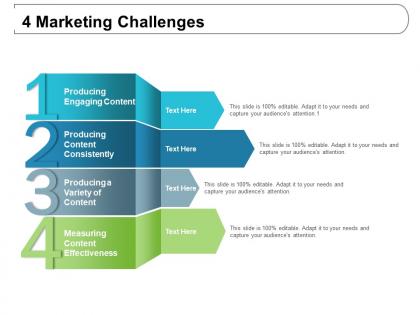
4 marketing challenges





Try Before you Buy Download Free Sample Product
 Impress Your
 Audience
 100%
100% Editable
 Save Hours
 of Time


Our 4 Marketing Challenges ensure folks around feel comfortable. They enable a cosy chat.
People who downloaded this PowerPoint presentation also viewed the following :
4 marketing challenges with all 5 slides:
You don't have to blame the software if you make a poor presentation. Blame yourself for not heeding to advice and make use of our 4 Marketing Challenges.

FAQs for
Ugh, honestly the big three that kill me are budget issues, finding your actual audience, and then having to prove to your boss that any of this marketing stuff actually works. Customer acquisition costs are through the roof right now - like, genuinely insane compared to a few years ago. Then there's all the privacy changes making targeting way harder than it used to be. Everyone's competing for the same people scrolling their phones for 3 seconds. Oh, and good luck getting leadership to see ROI on anything that isn't immediately obvious. My take? Don't try fixing everything. Pick one thing and actually make progress there first.
Okay so first thing - get your attribution tracking set up properly or you'll be flying blind. Most people screw this up by only looking at immediate sales instead of lifetime customer value, which is honestly pretty dumb. Use UTM parameters and conversion pixels to actually see what's working. ROI is just revenue divided by costs, but track both quick wins (like click-through rates) and long-term stuff like retention. Oh and pick maybe 3-5 metrics that actually matter to your business - don't go crazy tracking everything. Stay consistent with whatever you choose.
Honestly, understanding your customers is like having a cheat code for marketing. Figure out how they actually think and shop, then your campaigns will hit different - way better than just throwing stuff at the wall. So many brands tank because they never bothered asking what people actually want (which is crazy to me). Survey your current customers about their buying process first. Use those insights to time your campaigns better and pick the right channels. Also helps you spot messaging that's flopping. It's basically your GPS for fixing most marketing problems.
Honestly, you've got way better odds than you think. Big companies are stuck in this endless approval cycle - everything has to go through like 5 different teams before they can even tweet something. Meanwhile, you can wake up, see a trending topic, and have content out in an hour. That's huge. Focus hard on local SEO first (way easier to rank for "best pizza downtown" than compete with Domino's nationally). Pick whatever platform your actual customers use - don't spread yourself thin trying to be everywhere. And here's the thing big brands can't fake: genuine personality. People can smell corporate BS from miles away, but they'll trust a real person behind a business.
Honestly, you've gotta meet people where they're already scrolling. Short videos work crazy well - like under 30 seconds. Interactive stuff too - polls, challenges, anything where they can actually DO something instead of just watching. Long-form content is basically dead unless it's so good people can't stop (which is rare). User-generated challenges are gold because everyone wants to participate, not just consume. Oh, and gamified experiences with instant rewards hit different. Check where your audience actually hangs out first, then test bite-sized content there. Trust me, snackable beats lengthy every time.
Yeah, privacy laws totally flip how you handle customer data. No more sneaky email collection or cross-site tracking - everything needs explicit consent now. Super annoying but honestly it's pushed us toward better first-party data strategies. You'll have to get consent management tools and probably redo your attribution models (ugh). I'd start with auditing your current campaigns to see where you're most exposed. The transparency thing is actually kind of nice though - customers seem to trust brands more when they're upfront about data use. Just budget time for rebuilding stuff.
Start with your brand's personality and voice - figure out what you actually stand for first. Then just tweak how you say things on different platforms. Instagram can be way more casual than LinkedIn, but people should still recognize it's you. I see brands mess this up constantly by trying to be everything to everyone. Write down some basic guidelines (what you'd never say, what sounds like you) and trust your gut. If something feels weird before posting, it probably is. Your brand voice is basically like your personality - it adapts to the room but doesn't completely change who you are.
Honestly, social media can fix most of your marketing headaches if you're smart about it. When organic reach sucks, run targeted ads to hit your exact audience. Trust issues? Get customers posting about you - that stuff works way better than you bragging about yourself. For reputation damage, jump in those conversations fast and handle it directly. Oh, and social listening is huge - you'll see exactly what people think about your brand. Don't just post random stuff though. Figure out your biggest problem first, then pick the tactics that actually solve it.
Honestly, AI and machine learning are totally changing the game right now. Everything's getting automated - ad targeting, content creation, customer segmentation, you name it. Marketing automation platforms can basically handle your entire customer journey now. Then there's all these analytics tools that actually make sense of the data you've been hoarding (finally!). AR/VR stuff is getting pretty cool too, especially for product demos. It's honestly overwhelming trying to keep up with it all. My advice? Pick one or two things that'll solve your biggest headaches first. Don't try to do everything at once or you'll go crazy.
Honestly, just be upfront about what you're grabbing and let people control it. Only collect stuff you'll actually use - I see too many companies hoarding data for no reason. Make opting out dead simple, not buried in some menu nightmare. Focus on first-party data since customers gave that to you directly anyway. Here's the thing though - if your personalization actually rocks and makes their experience better, people won't mind sharing. They just want to see the payoff. Oh, and get explicit consent upfront. Sounds obvious but you'd be surprised how many mess this up.
Honestly, personalized stuff is where it's at. Segment your emails based on what people actually buy - way more effective than blasting everyone the same message. Those boring point programs? Skip 'em. Give customers early access to new products instead, or invite them to exclusive events. Post-purchase emails are clutch too - just a casual "how's everything working out?" can make people feel like you actually care. Map out where customers interact with your brand and sprinkle in some personal touches. Makes them feel valued instead of just another sale, you know?
Honestly, tracking market trends is like having insider info before everyone else catches on. You'll spot when consumers start acting weird or competitors make moves, so you can adjust instead of panicking later. Way better than getting blindsided! I spend maybe 30 minutes each week just scrolling through industry stuff and checking social listening tools - sounds boring but it's actually pretty eye-opening. Your campaigns end up being smarter because you're anticipating things like budget squeezes or new platforms blowing up. Plus you won't be that marketer scrambling when audience behavior shifts overnight.
Honestly, content marketing is just about proving you actually understand what your customers deal with day-to-day. Create stuff that helps them - guides, case studies, blog posts about their real problems. Way better than ads because people hate being sold to, but they love getting useful info. Once they see you get their struggles and can help fix them, they'll naturally want to work with you. I'd start by figuring out what keeps your customers up at night, then make content that actually solves those headaches. Trust me, it works way better than just pushing your products constantly.
You really need to get other departments involved - it makes such a huge difference. Sales talks to customers daily, so they know what actually works. Product understands all the technical stuff you're probably missing. Customer service? They hear every complaint that could fix your messaging. I've watched so many campaigns crash because marketing just did their own thing. Bad idea. Monthly check-ins work great - doesn't have to be formal meetings either. Even grabbing coffee with the sales team helps. You'll get better targeting and way fewer "oh crap" moments when you launch.
Honestly, forget about likes and followers - that stuff doesn't actually make you money. You want to watch conversion rates, how much it costs to get a customer (CAC), and what they're worth over time (LTV). Those numbers tell you if you're actually profitable or just burning cash. Most people buy after seeing you multiple times, so track how different channels work together. If you're selling products, definitely watch repeat purchases too - that's where the real money is. Pick maybe 3-5 metrics that actually matter for your business and stick with those. Way better than drowning in data you don't need.
No Reviews