


Cross functional team structure ppt examples




Try Before you Buy Download Free Sample Product
 Impress Your
 Audience
 100%
100% Editable
 Save Hours
 of Time


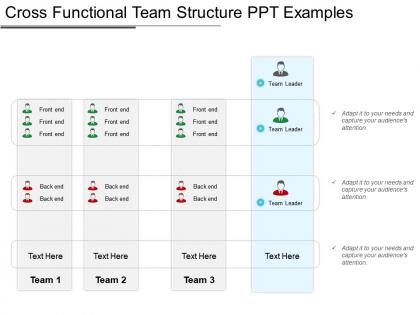
The cross-functional team structure PPT examples is a business as well as educational slide design. The cross-functional team framework presentation template helps to focus on the different aspects of the topic. By making use of this CFT PowerPoint PPT slides, you can explain your audience how and why a cross-functional team is created, the different ways to manage this CFT, what makes it so efficient, and much more. Besides this, you can also compare other kinds of team building statistics with the help of this effective model of the cross-functional team. There is the use of different kinds of human vectors and icons that represent the team and so will help you assign work. With so much to offer, this is a must have highly effective PPT template that every related individual should download. Once you have downloaded this PPT slide, you can use it as many times as you want to come up with a visually appealing and informative presentation in less time. Find heightened clarity in your thoughts with our Cross Functional Team Structure Ppt Examples. You will discover that extra dimension.
People who downloaded this PowerPoint presentation also viewed the following :
Cross functional team structure ppt examples with all 5 slides:
Act in their interest with our Cross Functional Team Structure Ppt Examples. Intercede on their behalf to improve conditions.

FAQs for Cross functional team
Oh man, cross-functional teams are honestly a game changer. Decision-making gets so much faster when you don't have to ping-pong between departments constantly. The innovation boost is crazy too – throw different perspectives together and they clash in the best way, creating solutions nobody saw coming. Your people end up learning way more skills outside their usual bubble, which makes them more valuable down the road. Communication gets better since everyone starts understanding what the other teams actually need (shocking, I know). One thing though – nail down the roles early or you'll have chaos with everyone stepping on each other's toes.
Dude, cross-functional teams are where the real magic happens. You get designers, engineers, marketers all in one room? They'll call out each other's blind spots instantly. The engineer fixes problems the designer didn't even see coming. Meanwhile the marketer's like "but what about actual users though" and suddenly you're rethinking everything. It's way faster too since you're not playing telephone with different departments. Honestly, I used to think it was just corporate buzzword stuff but it actually works. Mix up your next project team - the solutions will be totally different than what you'd expect.
So basically you grab people from different departments - devs, designers, product managers, QA folks, sometimes sales people too. Each person handles their specialty but everyone's working toward the same end goal. Daily standups and shared tools keep everyone talking instead of just passing stuff along like a relay race. Not gonna lie, it gets chaotic when you first start doing it this way. Way better than the old school approach though where departments barely talked to each other. Just make sure everyone knows their role upfront and schedule regular check-ins so nothing falls through the cracks.
Track the obvious stuff first - delivery speed, hitting milestones, quality of work. But honestly? The real tell is whether people are actually talking to each other or just going through the motions. I'd survey teams about decision-making speed and if they feel heard across departments. Monthly pulse checks help catch problems early. The golden indicator though - teams reaching out proactively instead of waiting for scheduled meetings. That's when you know it's working. Oh, and don't ignore communication flow feedback, that stuff reveals everything.
Ugh, cross-functional projects are rough. Different departments literally speak different languages - engineering obsesses over perfection while marketing just wants things shipped yesterday. Nobody knows who's supposed to do what half the time. Communication falls apart constantly. But here's what actually works: get everyone in a room early and hash out roles upfront. Set up regular check-ins so things don't go sideways. Create goals that everyone can rally behind instead of competing priorities. Oh, and this sounds cheesy but grab drinks or coffee with people beforehand. Makes a huge difference when you need favors later.
Honestly, cross-functional teams fall apart without good communication. You've got marketing speaking in campaigns, engineers in code, finance in spreadsheets - it's like everyone's from different planets. Most project disasters? They start with someone misunderstanding what someone else actually meant. Weekly check-ins help a ton, plus having shared docs everyone can actually find and use. Otherwise you end up with departments just tossing stuff over the wall to each other instead of working together. Set up regular syncs and make sure people aren't afraid to ask "wait, what do you mean by that?" Game changer.
Honestly, Slack or Teams are your best bet for daily chat. Asana's solid for project tracking too - seriously, I've watched teams spiral just trying to figure out who owns what task. Google Workspace is clutch for shared docs, and you'll probably need Zoom for face-to-face stuff. Miro's pretty sweet if your team does a lot of visual brainstorming together. Oh, and don't go overboard with like 10 different tools right away - pick one communication app and one project tracker first. You can always add more later once people actually use what you've got.
Honestly, you've gotta lead by example here - show them how to work together instead of just telling them. Weekly cross-functional standups work wonders where everyone shares what they're doing and what help they need. Celebrate wins that happened because teams collaborated (this part's huge). Create that safe space where people aren't scared to throw out ideas to other departments. Address conflicts fast before they turn into weird office drama. Set goals everyone actually gets, not just their own department's stuff. Oh, and make those check-ins truly regular - not just crisis meetings when everything's on fire. Breaking down silos takes real effort but it's doable.
Honestly, you need everyone understanding the "why" first - like what are you actually trying to accomplish here? Get clear metrics that each team cares about, not just generic KPIs. Those coffee chat moments are where real alignment happens, way more than formal meetings tbh. Engineering gets motivated by totally different stuff than marketing does, so translate your goals accordingly. Do some cross-team projects and celebrate together when things go well. Oh and maybe run a workshop where people can actually say what they think success looks like? You'd be surprised how different everyone's definitions are.
So with cross-functional teams, you're basically getting everyone at the table - engineers, marketers, designers, whoever. Decisions happen sideways across departments instead of the usual top-down thing. Honestly? It feels chaotic at first because suddenly the designer has opinions about your timeline (which, fair). But you catch way more problems early since everyone's bringing their own perspective. The trick is figuring out who actually makes the final call on different stuff before you start. Otherwise you'll have five people thinking they're in charge. Way more consensus-building than I expected, but the buy-in is so much better.
Honestly, cross-functional teams are game-changers for speed. You get all the expertise in one place instead of waiting forever for other departments to respond. The work comes out way more polished too since everyone's collaborating from the start - none of that "hope it works when we put it together" mess. There's usually some awkwardness at first while people figure out their groove, but once they do? Decisions happen fast and quality jumps. Oh, and definitely nail down who does what upfront. Otherwise you'll have people accidentally doing the same work or worse, assuming someone else handled it.
Honestly, you've gotta build that trust first where people can actually speak up without getting shut down. Make sure everyone knows how decisions work and who's responsible for what - sounds basic but you'd be shocked how many teams skip this. I always tell people to do regular check-ins so problems don't fester. When stuff does blow up, attack the issue, not the person. Maybe get some conflict training if you can swing it? The whole point of these mixed teams is getting different viewpoints, so lean into that instead of trying to avoid disagreement.
You know what's crazy? Those annoying handoffs between departments are killing your customer satisfaction scores. Cross-functional teams fix this by putting marketing, product, support, and engineering in the same room. Customers get faster solutions because nobody's playing hot potato with their problems anymore. The messaging stays consistent too - no more contradictory responses from different teams. Here's the thing though: when everyone actually talks to each other, they build stuff customers genuinely want instead of guessing. I'd start by looking at your biggest customer complaints and build teams around fixing those specific issues.
Honestly, start with communication training - it's a total game changer. Get everyone on the same page with basic project management stuff so you're not constantly explaining timelines and deadlines. Cross-training sessions are gold too, where people teach each other what they actually do (way more fun than it sounds). Oh, and definitely do some conflict resolution workshops because different departments working together can get messy fast. I'd kick off with communication first, then see what other issues pop up. Trust me, once people can actually talk to each other properly, half your problems disappear.
Yeah, workspace design totally affects how cross-functional teams work together. Open layouts help people bump into each other and share ideas spontaneously - same with shared virtual spaces. But people also need quiet spots to actually get stuff done without interruptions. Mix collaborative areas with focus zones, whether that's physical breakout rooms or separate Slack channels. Without easy cross-department interaction, you'll get those annoying silos. Oh, and try creating "collision points" where different teams naturally run into each other. Works better than you'd think.
-
Designs have enough space to add content.
-
Easily Understandable slides.