

Dashboard For Real Time Credit Card Fraud Detection




Try Before you Buy Download Free Sample Product
 Impress Your
 Audience
 100%
100% Editable
 Save Hours
 of Time


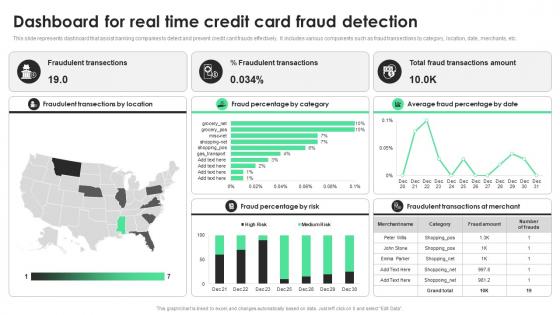
This slide represents dashboard that assist banking companies to detect and prevent credit card frauds effectively. It includes various components such as fraud transections by category, location, date, merchants, etc.
People who downloaded this PowerPoint presentation also viewed the following :
Dashboard For Real Time Credit Card Fraud Detection with all 10 slides:
Use our Dashboard For Real Time Credit Card Fraud Detection to effectively help you save your valuable time. They are readymade to fit into any presentation structure.








FAQs for Dashboard For Real Time Credit
Look out for transaction velocity - like multiple purchases happening super fast. Geographic stuff is huge too, especially when someone's buying from two different cities within an impossible timeframe. I'd also watch for way higher amounts than their usual spending. Failed CVV checks and AVS mismatches are obvious red flags. Card-not-present transactions are basically fraud magnets, so definitely monitor those closely. Weird timing matters too - purchases at 3am from someone who normally shops during lunch. Honestly, the key is setting up real-time alerts so you catch this stuff immediately instead of finding out days later when it's already a mess.
Honestly, ML is a game-changer for fraud detection. It spots patterns in transaction data that would take humans forever to catch - like weird spending habits, location jumps, timing stuff. What's really nice is it learns as it goes, so when scammers switch up their methods, your system keeps up. You'll get way fewer false positives than those old rule-based systems that flag everything. Random forests are solid to start with since they're reliable and you can actually see what they're thinking (helpful for explaining to your boss later). The algorithm looks at hundreds of variables at once - something we obviously can't do manually.
Start with your transaction processing system - that's where the real-time gold is. Card network feeds from Visa/Mastercard give you solid merchant data too. Your core banking system has all the account history stuff you need. If you've got a fraud management platform already, definitely tap into that first - way better than starting from scratch. Third-party risk scoring can be useful but honestly I'd focus on internal sources initially since you actually control that data quality. Oh, and layer everything gradually - transaction data first, then build up from there. Makes the whole thing less overwhelming.
So you're basically playing defense in real-time instead of cleaning up the mess later. Your system flags weird stuff instantly - like someone buying expensive things in three different states within an hour, which is obviously sketchy. I actually find those alerts kind of addictive to watch, not gonna lie. You can auto-block the super obvious scams and send the questionable ones to your team. Just don't make your settings so strict that you're declining your regular customers left and right - that pisses people off fast.
Time series charts are your best friend for spotting transaction patterns - honestly can't stress that enough. Scatter plots will help you catch the weird outliers that scream fraud. Heat maps are perfect for showing when and where transactions cluster (nothing says suspicious like a bunch of 3am activity). If location matters, definitely throw in some geographic maps. Oh, and stick to consistent colors - red for sketchy stuff, green for normal. Start simple with these basics before getting fancy with network diagrams or whatever. Your stakeholders won't appreciate complex visuals right off the bat anyway.
So track their spending habits, where they shop, and when they usually buy stuff - this builds profiles for each user. Then flag weird deviations. Like if someone normally drops $50 at Target but suddenly they're buying a $2000 laptop at 3am? Red flag. Machine learning models can pick up on these patterns over time, which is honestly pretty cool. I'd start simple though - pick maybe 5-10 key behaviors to watch for first, then build your visual alerts around those. Way easier than trying to track everything at once.
So anomaly detection is like having a smart watchdog for fraud - you train it on normal spending habits and it barks when something's off. Could be a spending spike, weird merchant, or transactions from sketchy locations. Your dashboard turns these into alerts and risk scores so you're not hunting through endless data. The tricky part is tuning sensitivity right. Set it too high and you'll get buried in false alarms (learned that one the hard way). Too low and actual fraud slips through. Start conservative then adjust based on what you're seeing.
First things first - grab at least 6-12 months of transaction data with fraud cases labeled. Super important because your model needs patterns to work with. Since fraud's usually only like 1-2% of transactions, you'll need to balance things out or it'll just predict "everything's fine" constantly. Focus on building features from stuff like transaction amounts, how often people buy things, merchant types, timing patterns. Oh and definitely clean up messy data first - you know how that goes. Start simple with logistic regression to see what happens, then try fancier stuff once you've got a baseline.
Executives want the big picture stuff - total fraud losses, trend lines, ROI from detection tools. Basically anything that hits the bottom line. Your ops teams though? They're drowning in the day-to-day chaos and need different data: alert volumes, false positive rates, how long cases take to close, model accuracy stats. Think about it - C-suite asks "are we bleeding money?" while operations asks "how many fires am I putting out today?" Set up different dashboard views so nobody gets overwhelmed with irrelevant metrics. Honestly, just ask each team what decisions they're making daily and build from there.
Build in adjustable confidence thresholds so your team can tweak sensitivity levels. Most false positives happen because systems freak out over one weird thing - you need multiple signals working together instead. Set up clear visuals showing transaction patterns, customer history, location data, spending habits. Include quick override controls so analysts can whitelist legit transactions and teach the system what's normal. Oh, and make sure false positive rates are super visible on your dashboard. That's honestly the only way you'll nail the balance between catching actual fraud and not pissing off customers.
Visual hierarchy is everything here - you want analysts catching high-risk stuff immediately without drowning in data. Red for urgent alerts, amber for medium risk, that kind of thing. Put your most critical metrics right at the top and add solid filtering options. Dashboard fatigue hits hard when you're hunting fraud patterns for 8 hours straight! Navigation should feel obvious with breadcrumbs. Oh, and contextual alert notifications - not just random pings that annoy everyone. Start by wireframing what your users do most often, then build around that workflow.
Show different views based on what people actually need for their jobs. Fraud analysts want the detailed stuff - real-time alerts, transaction data, case tools to dig into sketchy patterns. Managers care about big picture metrics like fraud rates and trends they can show upstairs. Trust me, analysts will roll their eyes at executive dashboards because they're way too basic. Set up role-based access so analysts get their detailed workspace while execs get clean summary views. Oh, and ask each team what decisions they're making every day - that's your roadmap for what data matters most.
Ugh, the data formatting is brutal - online transactions look completely different from ATM or in-store stuff, so you're constantly fighting to standardize everything. Timing's weird too since some channels batch while others are real-time. Volume differences will mess with you, plus each source has different API limits and security hoops to jump through. Honestly, I'd tackle your two biggest channels first and get those working smoothly. Then add the others one by one - trust me, trying to do everything at once is a nightmare.
Honestly, dashboards are a lifesaver for compliance stuff. They'll auto-generate whatever reports regulators want to see, plus you can set alerts for sketchy patterns. Everything gets timestamped automatically - no more scrambling during audits. Response times, audit trails, team actions... it all gets tracked without you doing anything. Most platforms let you customize reports for PCI DSS or whatever banking standards you need. Pro tip: start setting up monthly compliance snapshots now. Don't wait until you actually need them because that's when things get messy.
Start with data masking - show ****-****-****-1234 instead of full card numbers. Tokenization works great too. Only give analysts access to what they actually need for their role. Your legal team will thank you later, trust me. Aggregate the data when you can - transaction patterns and anomaly scores beat showing individual purchases. Oh, and set up audit logs so you know who's looking at what. Makes regulators happy and honestly just good practice anyway.
-
Topic best represented with attractive design.
-
World-class PowerPoint designs that are fully customizable!