


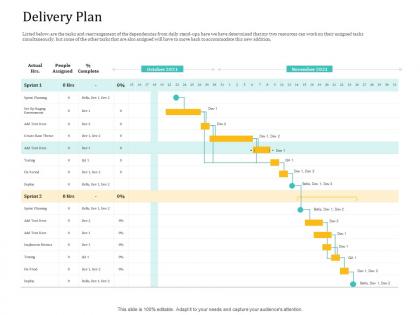
Delivery plan agile delivery model




Try Before you Buy Download Free Sample Product
 Impress Your
 Audience
 100%
100% Editable
 Save Hours
 of Time


Our Delivery Plan Agile Delivery Model are topically designed to provide an attractive backdrop to any subject. Use them to look like a presentation pro.
People who downloaded this PowerPoint presentation also viewed the following :
Delivery plan agile delivery model with all 2 slides:
Use our Delivery Plan Agile Delivery Model to effectively help you save your valuable time. They are readymade to fit into any presentation structure.
FAQs for Delivery plan
Okay so you need your product vision and release roadmap with the big milestones mapped out. Team capacity stuff and velocity metrics are crucial too. Don't forget stakeholder communication - that's where things usually fall apart in my experience. Clear acceptance criteria for each epic, plus some kind of risk plan. Honestly though, I've watched so many teams overcomplicate this whole thing. Keep your backlog prioritized and make sure sprint goals actually connect to the bigger picture. Oh and build in flexibility because priorities will shift - they always do. Just start with these basics and tweak as you go.
Your delivery plan has to actually connect to what leadership wants - sounds basic but teams miss this constantly. Set up regular check-ins with stakeholders because priorities shift way more than people think. When writing acceptance criteria, tie them back to real business results instead of just "feature works." Get your product owners involved in backlog sessions too - they're usually better at spotting what delivers actual value. Oh, and don't treat alignment like a one-and-done thing. It's more like... an ongoing conversation that never really ends. Kind of annoying but that's how it works.
Track delivery stuff like velocity consistency and whether you're actually hitting sprint goals. Also measure cycle time from story to production. But here's the thing - don't get obsessed with velocity numbers because teams will just game them. Value metrics matter more honestly. Customer satisfaction, how much people actually use your features, business outcomes that tie to your goals. Pick maybe 3-4 metrics your stakeholders care about and review them in retros. Start simple, then tweak based on what actually helps your team make better decisions.
So basically, Agile plans are meant to flex and change as you go. Traditional planning? You're stuck mapping out every tiny detail months ahead of time - which honestly never works out anyway. With Agile, you work in short 2-week bursts instead of those crazy 6-month timelines. You'll actually deliver working stuff regularly rather than crossing your fingers at the end hoping it all fits together. The whole mindset shifts from "stick to the original plan no matter what" to "hey, we learned something new, let's pivot." Way less stressful once you get the hang of it!
Dude, stakeholder engagement is everything. They're the ones who decide what "done" actually looks like, so you need them involved from day one. Get their input constantly - I'm talking every sprint, not just when you feel like it. They'll help you figure out which features matter most and spot problems before they blow up. I made the mistake once of going radio silent for like a month... total disaster. You end up building random stuff nobody wants. Short bursts of feedback work way better than those painful quarterly meetings where everyone pretends to care.
Honestly, just treat your Agile plan like it's meant to change - because it is! Set up checkpoints every 2-3 sprints where you and your stakeholders can look at what's actually happening vs what you planned. Maybe priorities shifted, maybe the market did something weird. That's fine. Reprioritize your backlog, tweak sprint goals, or pivot completely if you need to. The whole point of agile is that you won't break everything by changing direction. Just keep talking with your product owner regularly so you're not making decisions in a vacuum. Schedule those review sessions ASAP if you haven't already.
Jira's probably your best bet - handles sprints, backlogs, all that stuff. If you're already using Microsoft things, Azure DevOps is decent. For roadmapping with stakeholders, Miro or Mural are lifesavers (way better than those endless PowerPoint sessions). Smaller teams can get away with Trello. Monday.com and ClickUp sit somewhere in the middle if you need more features. Honestly, I'd just pick whatever your team already knows how to use. You can always switch later when things get messier. Don't stress too much about finding the "perfect" tool right away.
Honestly? Every 2-4 weeks works best, usually matching your sprint schedule. I get it - another review meeting sounds awful. But here's the thing: agile is all about rolling with changes, so your plan can't just sit there gathering dust. Monthly works for most teams, though some do bi-weekly if things move fast. Start monthly and see how it goes. Oh, and actually update the damn thing during these reviews - don't just chat about it and call it done. The whole point falls apart if you're not keeping it current with new priorities and feedback.
Honestly, just throw risks right onto your sprint board so everyone sees them daily. Categorize by impact and likelihood, then give each one an owner - otherwise they'll just sit there forever. We always discuss ours in standups alongside regular work items. Every few sprints, do a quick review to see what's changed. The teams that skip this step? They're the ones panicking when stuff actually goes wrong. Oh, and definitely have backup plans ready for your big scary risks. Trust me, you don't want to be figuring that out in the moment when everything's on fire.
Honestly, just get everyone in the same room (or Zoom) for your agile ceremonies - that's like half the battle right there. Mix up your standups with devs, designers, testers, product people all talking together. I swear some of my best breakthrough moments happen when someone from a totally different team drops a random insight. Build your Definition of Done so it actually needs input from multiple people, not just engineering. Oh and use retros to call out where collaboration worked well and where it totally didn't. The big thing is stopping those annoying handoffs that slow everything down - figure out what's breaking first, then redesign your meetings around fixing those specific pain points.
Honestly, the worst mistake is trying to plan everything upfront. You'll burn hours mapping out stuff that's gonna change anyway - trust me on this one. Never lock in both scope AND deadlines at once, that's just asking for trouble. Get your team involved instead of planning solo in some conference room. Oh, and don't jam-pack your sprints to 100% because something always comes up. Actually update the damn thing regularly or it'll just collect dust. Keep things simple, leave room for surprises, and remember that flexibility beats perfection every time.
Build feedback straight into your sprint ceremonies - reviews, retros, stakeholder demos, all of it. Honestly, more is better even when it feels overwhelming at first. Get input from users, stakeholders, and your team on a regular schedule. Here's the thing though - don't just collect it and move on. Actually dedicate time in sprint planning to tackle what you learned, otherwise what's the point? Set up something simple to track which feedback gets prioritized and why. The predictable intervals are what make this work.
Visuals are your best friend here - roadmaps, burn-down charts, dashboards that show progress instantly. Nobody wants to dig through dense docs. Set up regular touchpoints so they stop pestering you with "how's it going?" every five minutes. Different people need different info though. Executives want the big picture stuff and what might go wrong. Product owners actually care about sprint details. I made the mistake once of sending velocity metrics to our CEO - awkward. Always talk about business value first, not just when things will be done. Oh, and create some shared workspace where they can obsessively check status whenever they want.
Honestly, treat your Agile plan like a GPS - it'll recalculate when you hit traffic, but you're still heading to the same destination. Set up regular check-ins where you can shift priorities based on what's actually happening. Short sprints are your friend here because pivoting feels way less painful when you're not scrapping months of work. Keep your big-picture goals locked in, but stay flexible on the details and timing. The trick is giving stakeholders a heads up whenever things change so nobody freaks out about the shifts.
Look, continuous improvement is what stops your Agile plan from turning into garbage. Every sprint, you're getting fresh data - retrospectives, stakeholder feedback, velocity numbers. Use that stuff! I learned this the hard way on a project last year. Small tweaks work better than massive quarterly changes. Your team's hitting blockers? Adjust timelines. Requirements shifting? Reshuffle priorities. It's like tuning a guitar - never really ends. Pick 2-3 metrics that actually matter and check them weekly. Don't overthink it, just keep refining based on what you're seeing.
-
Attractive design and informative presentation.
-
Best way of representation of the topic.
-
Use of icon with content is very relateable, informative and appealing.
-
Unique design & color.
-
Excellent Designs.
-
Much better than the original! Thanks for the quick turnaround.
-
The Designed Graphic are very professional and classic.
-
Informative design.