


Demand forecast graph ppt image




Try Before you Buy Download Free Sample Product
 Impress Your
 Audience
 100%
100% Editable
 Save Hours
 of Time


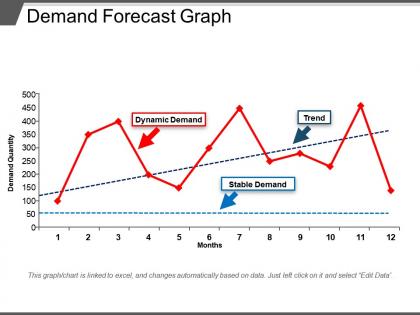
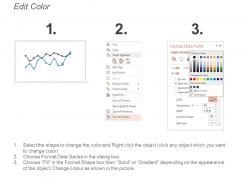
Introducing demand forecast graph PPT image for the prediction of demand. The stages in this process are setting objectives, determination of time perspective, selection of forecasting method, etc. You can use this demand estimation PowerPoint template to present the type of demand for your product viz., static demand or dynamic demand. You can take advantage of this demand prediction slide to predict future demand for your product. Moreover, this demand analysis slide can also be used to frame a market survey or consumer survey for research of your product segment. Further, this demand chain PPT template will assist you in supporting your business strategy, controlling costs and tracking the overall performance of your marketing methods in the organization. Also, you can add new data to this demand modeling graph and present the demand trend in a simple manner. Thus, use this amazing demand prediction model to predict accurate demand and make your product a success in the market.
People who downloaded this PowerPoint presentation also viewed the following :
Demand forecast graph ppt image with all 5 slides:
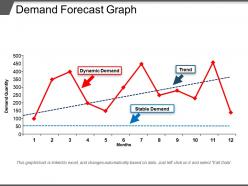
Introducing demand forecast graph PPT image for the prediction of demand. The stages in this process are setting objectives, determination of time perspective, selection of forecasting method, etc. You can use this demand estimation PowerPoint template to present the type of demand for your product viz., static demand or dynamic demand. You can take advantage of this demand prediction slide to predict future demand for your product. Moreover, this demand analysis slide can also be used to frame a market survey or consumer survey for research of your product segment. Further, this demand chain PPT template will assist you in supporting your business strategy, controlling costs and tracking the overall performance of your marketing methods in the organization. Also, you can add new data to this demand modeling graph and present the demand trend in a simple manner. Thus, use this amazing demand prediction model to predict accurate demand and make your product a success in the market.
FAQs for Demand forecast
So you've got a few solid options here. Time series analysis is your go-to - basically just studying historical patterns. Works great for steady products. Causal modeling connects demand to stuff like pricing or promotions, which is super useful. Don't sleep on qualitative methods either - expert opinions and market research can save you sometimes. Machine learning's trendy now, especially when you're dealing with messy datasets. Honestly though? Start basic with moving averages or exponential smoothing. You can always level up later if you need more precision. Match whatever method fits your data quality best.
Your sales history is like the foundation for everything else - it shows you patterns you'd never notice otherwise. Look for seasonal spikes, weather impacts, reorder cycles. More quality data means better predictions, obviously. You're teaching the system what normal looks like for your business. But seriously, clean that data first! One weird promotional month will throw off your whole model. I'd say grab 2-3 years minimum if you've got it. Short bursts work too though. The key is spotting those trends that actually matter for planning ahead.
So seasonality is those predictable demand patterns that happen every year - holiday rushes, summer ice cream sales, that kind of thing. You've gotta spot these in your historical data or your forecasts will be way off. I made this mistake once ignoring back-to-school trends and it was brutal! What you want to do is separate the seasonal stuff from your actual underlying trends. Plot your data across several years and hunt for those recurring patterns. Trust me, when Q4 hits you'll be glad you did this groundwork. Short sentences help too. Makes the patterns pop out more clearly.
So economic indicators are pretty solid for figuring out demand patterns. GDP growth, low unemployment, rising consumer confidence - all that stuff usually means people will spend more. Inflation's weird though, it can mess with buying power even when everything else looks rosy. I'd say pick 2-3 indicators that actually match your product type. Like, luxury goods probably track different than groceries, you know? Pull some historical data and see what correlates best. Then just work those into your model as your main predictors. Way better than guessing.
Honestly, the worst part is when your data is just complete trash - like customers behaving totally randomly or your historical numbers being way off. Economic changes and seasonal stuff throw everything off too. New products are a nightmare since you're basically guessing with zero past data to reference. Sometimes your forecasting method is just too basic for what you're dealing with. I'd start by fixing your data sources first (that's usually half the battle right there). Then maybe try a few different forecasting approaches instead of putting all your eggs in one basket. Way more reliable that way.
Honestly, AI is a total game-changer for demand forecasting. It crunches way more data than you could ever handle manually - customer patterns, seasonal stuff, economic indicators, even social media vibes. The cool part? Machine learning actually gets better over time by learning from mistakes. What really blows my mind is how it catches weird connections you'd never see coming, like how rain affects certain product sales. Though I'd definitely start small first - maybe test it on just one product line before going all-in across everything.
-
Innovative and attractive designs.
-
Much better than the original! Thanks for the quick turnaround.