Demand forecasting powerpoint images

Rating:
90%
Demand forecasting powerpoint images
Slide 1 of 5

or

Favourites Favourites

Try Before you Buy Download Free Sample Product

Audience Impress Your
Audience
Editable 100%
Editable
Time Save Hours
of Time
The Biggest Sale is ending soon in
0
0
:
0
0
:
0
0
Rating:
90%
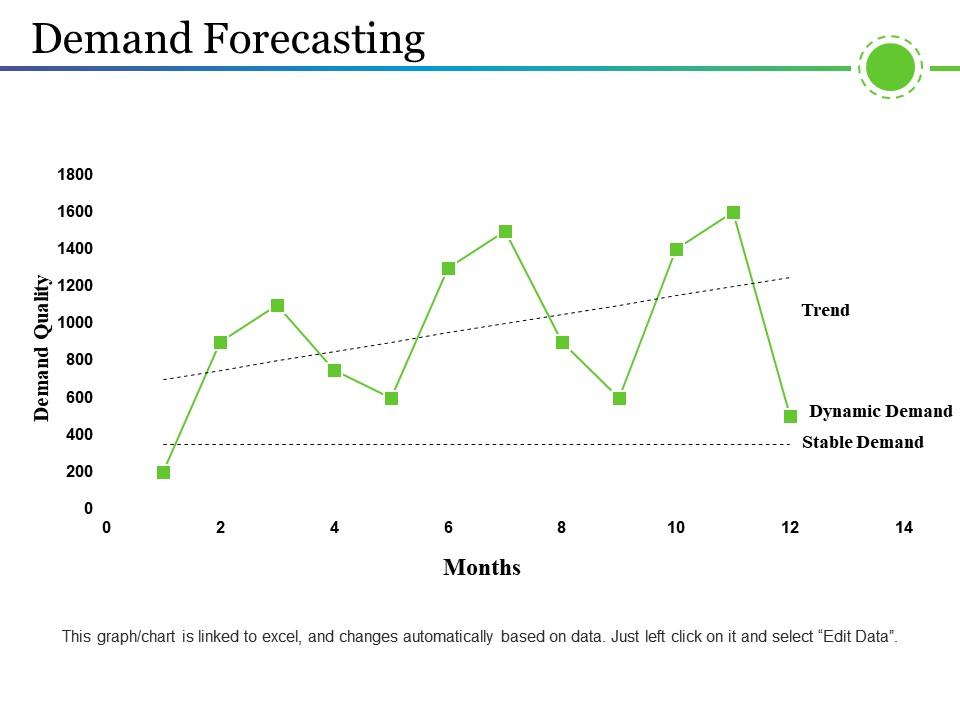
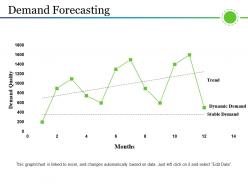
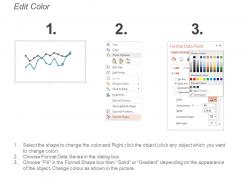
Presenting Demand Forecasting PowerPoint Images template. The layout is 100% customizable in PowerPoint and other related office suites. You are free to alter the font type, size, and slide colors and other attributes. The layout is also compatible with Google Slides and can be saved in common image or document formats such as JPG or PDF. High-quality graphics and icons ensure that picture quality remains the same even when the user enlarges their size.

FAQs for Demand

Key demand forecasting methods include time series analysis, causal modeling, machine learning algorithms, market research techniques, and collaborative planning approaches. These methodologies enhance accuracy by analyzing historical patterns, identifying market drivers, and incorporating real-time data, with retailers and manufacturers finding that strategic combinations ultimately deliver improved inventory management and competitive advantage.

Seasonality significantly impacts demand forecasting accuracy by creating predictable cyclical patterns that, while identifiable, require sophisticated modeling to capture nuances like shifting peak periods and intensity variations. Retail, hospitality, and consumer goods companies increasingly leverage advanced seasonal adjustment algorithms combined with machine learning to account for these fluctuations, ultimately achieving more precise predictions and optimized inventory management.

Historical data serves as the foundation for effective demand forecasting, providing baseline trends, seasonal patterns, customer behavior insights, and market cycle information that algorithms analyze to predict future demand. Through advanced analytics platforms, organizations across retail, manufacturing, and logistics leverage this data to identify consumption patterns, optimize inventory levels, and enhance supply chain efficiency, ultimately delivering improved customer satisfaction and reduced operational costs.

Machine learning algorithms enhance demand forecasting precision by analyzing vast datasets, identifying complex patterns, and adapting to changing market conditions in real-time. These technologies enable retailers, manufacturers, and supply chain managers to reduce inventory costs, minimize stockouts, and optimize resource allocation, with many organizations finding that automated forecasting delivers significantly more accurate predictions than traditional methods.

Demand forecasting in volatile markets faces challenges including unpredictable consumer behavior, supply chain disruptions, economic fluctuations, seasonal variations, and rapidly changing market conditions. These uncertainties complicate traditional forecasting models, with many retailers and manufacturers finding that enhanced analytics, real-time data integration, and scenario planning ultimately deliver improved accuracy and strategic agility.

Economic indicators influence demand forecasting by providing critical data on consumer spending power, market trends, and industry health through GDP growth, unemployment rates, and inflation metrics. These indicators enable businesses to anticipate demand shifts across sectors like retail and manufacturing, ultimately delivering more accurate inventory planning and resource allocation in increasingly volatile market conditions.

Businesses should analyze historical sales data, seasonal patterns, market trends, customer behavior metrics, and economic indicators for accurate demand forecasting. These data sources enable organizations to identify consumption patterns, anticipate market shifts, and optimize inventory levels, with retailers and manufacturers finding that comprehensive data analysis significantly enhances forecasting precision and reduces stockout risks.

Supplier collaboration enhances demand forecasting accuracy by providing real-time inventory data, early visibility into supply constraints, and insights into market trends from multiple touchpoints. This strategic partnership enables manufacturers and retailers to adjust forecasts proactively, reduce stockouts and excess inventory, while improving overall supply chain responsiveness and customer satisfaction.

Qualitative demand forecasting relies on expert judgment, market research, and customer surveys, while quantitative techniques use historical data, statistical models, and mathematical algorithms. Qualitative methods excel in new product launches or volatile markets where data is limited, whereas quantitative approaches deliver greater accuracy for established products, with many retailers and manufacturers combining both methods to enhance forecasting precision and minimize inventory costs.

Consumer behavior analysis significantly enhances demand forecasting by identifying purchasing patterns, seasonal trends, price sensitivity, and demographic preferences that directly influence future demand. Through advanced analytics and machine learning, retailers and manufacturers can predict shifts in consumer preferences, optimize inventory levels, and adjust production schedules, ultimately reducing costs while improving customer satisfaction and competitive positioning.

Recommended demand forecasting tools include SAP Integrated Business Planning, Oracle Demand Management, Microsoft Power BI, Tableau, and specialized solutions like Forecast Pro and GMDH Streamline. These platforms enhance accuracy by combining historical data analysis, machine learning algorithms, and real-time market insights, with many organizations finding that automated forecasting reduces planning time while improving inventory optimization and customer satisfaction.

Businesses mitigate inaccurate demand forecast risks through diversified forecasting methods, real-time data integration, scenario planning, and flexible supply chain strategies. Companies increasingly combine statistical models with machine learning algorithms while maintaining buffer inventory and agile supplier relationships, ultimately delivering enhanced responsiveness to market fluctuations and minimizing stockout or overstock costs.

Organizations should track forecast accuracy metrics like Mean Absolute Percentage Error (MAPE), bias measurements, and forecast value-added analysis, alongside operational indicators such as inventory turnover rates and stockout frequencies. These comprehensive metrics enable businesses to identify forecasting gaps, optimize inventory management, and enhance customer satisfaction, with many retailers and manufacturers finding that regular accuracy monitoring ultimately delivers significant cost reductions and improved service levels.

Staff training is crucial for successful demand forecasting implementation, as it ensures teams understand forecasting methodologies, data interpretation, and technology platforms effectively. Well-trained staff can identify demand patterns, adjust for market variables, and collaborate across departments seamlessly, with many organizations finding that comprehensive training programs ultimately deliver more accurate forecasts and improved operational efficiency.

Companies should establish regular forecast accuracy reviews, integrate real-time market data, collaborate cross-functionally between sales and operations teams, and leverage advanced analytics with machine learning algorithms. These practices enable organizations to adapt quickly to market changes, reduce inventory costs, and enhance customer satisfaction, with many retail and manufacturing companies finding that continuous model refinement delivers significantly improved forecasting precision and competitive advantage.

Ratings and Reviews

90% of 100
Review Form
Write a review
Most Relevant Reviews
  1. 80%

    by Cristobal West

    Design layout is very impressive.
  2. 100%

    by Darrel Burns

    Awesome presentation, really professional and easy to edit.

2 Item(s)

per page: