

Demand Planning Powerpoint Presentation Slides




Try Before you Buy Download Free Sample Product
 Impress Your
 Audience
 100%
100% Editable
 Save Hours
 of Time


Demand plays a crucial role in the management of every business. Use our Demand Planning PowerPoint Presentation Slides to drive awareness among your potential buyers. The demand modeling PowerPoint complete deck has slides on a wide range of topics highlighting the core areas of business needs such as demand creation process and strategy, demand acceleration framework, elements of demand creation campaign, demand generation from a sales perspective, to name a few. It has professionally designed templates with relevant visuals and subject driven content. Utilize demand chain ppt visuals to explain demand creation steps and process. Demand generation marketing strategy PPT templates are designed by our team of experts after complete research and analysis of the subject. Using demand chain presentation design, you can focus on target markets. Download the demand creation plan PPT slides in just a few seconds. Deliver an effective presentation and explain your points more efficiently.
Presenting this set of slides with name - Demand Planning Powerpoint Presentation Slides. This complete presentation has PPT slides on wide range of topics highlighting the core areas of your business needs. It has professionally designed templates with relevant visuals and subject driven content. This presentation deck has total of twenty five slides. Get access to the customizable templates. Our designers have created editable templates for your convenience. You can edit the colour, text and font size as per your need. You can add or delete the content if required. You are just a click to away to have this ready-made presentation. Click the download button now.
People who downloaded this PowerPoint presentation also viewed the following :
Content of this Powerpoint Presentation
Slide 1: This slide introduces Demand Planning. State Your Company Name and begin.
Slide 2: This is an Agenda slide. State your agendas here.
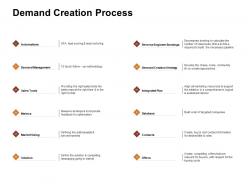
Slide 3: This slide shows Demand Creation Process with related icons.
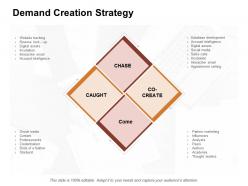
Slide 4: This slide presents Demand Creation Strategy describing- CHASE, CO-CREATE, COME, CAUGHT.
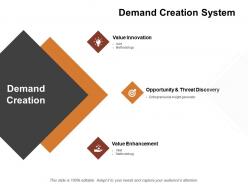
Slide 5: This slide showcases Demand Creation System. We have categorized in to three most common categories as Value Innovation, Opportunity & Threat Discovery, and Value Enhancement, just to give a basic idea on classification which can be altered by you as per your requirement.
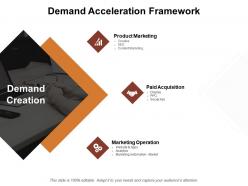
Slide 6: This slide shows Demand Acceleration Framework with three basic stages and those are- Product Marketing, Paid Acquisition, Marketing Operation.
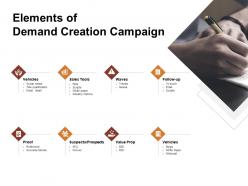
Slide 7: This slide presents Elements of Demand Creation Campaign . Also this include several elements you can use as per your requirement.
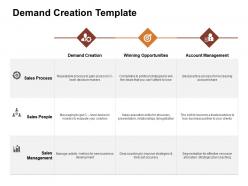
Slide 8: This slide presents Demand Creation template. This table can give you the idea about how to manage demand with sales.
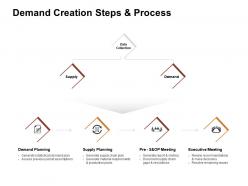
Slide 9: This slide talks about Demand Creation Steps & Process. We have shown some of the steps- Demand Planning, Supply Planning, Pre - S&OP Meeting, Executive Meeting.
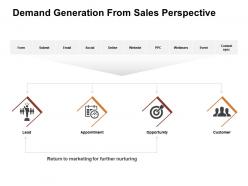
Slide 10: This slide presents Demand Generation From Sales Perspective. We have categorized in to four most common categories just to give a basic idea on classification which can be altered by you as per your requirement. Lead, Appointment, Opportunity, Customer.
Slide 11: This slide displays Demand Creation Icons.
Slide 12: This slide is titled as Additional Slides for moving forward.
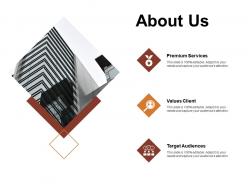
Slide 13: This is About Us slide to show company specifications etc.
Slide 14: This is Our Team slide with names and designation.
Slide 15: This is Our target slide with text boxes.
Slide 16: This is Our Mission slide with related imagery and text boxes.
Slide 17: This is Bulb or Idea slide to state a new idea or highlight specifications/information etc.
Slide 18: This is Quotes slide to convey message, beliefs etc.
Slide 19: This is a Puzzle slide with text boxes.
Slide 20: This is a Timeline slide. Show information related with time period here.
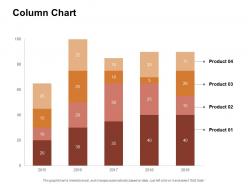
Slide 21: This slide represents Column Chart with four products comparison.
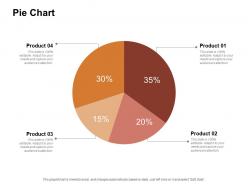
Slide 22: This slide shows Pie chart with data in percentage.
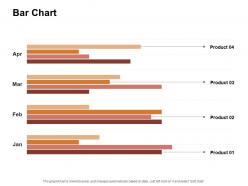
Slide 23: This slide displays Bar chart with four products comparison.
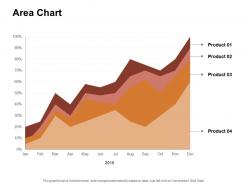
Slide 24: This slide represents Area chart with four products comparison.
Slide 25: This is a THANK YOU slide with address, contact numbers and email address.
Demand Planning Powerpoint Presentation Slides with all 25 slides:
Enable folks to cater for inflation with our Demand Planning Powerpoint Presentation Slides. Identify factors that generate it.



FAQs for Demand Planning
You'll want to start with your sales history and look at external stuff - seasonality, economic trends, whatever affects your business. But here's where everyone screws up: they let the planning team do everything alone. Get sales, marketing, and operations involved from the start. Monthly reviews are huge - compare what actually happened vs what you predicted and tweak your approach. Oh, and demand sensing helps when random stuff throws you off course (and it will). Honestly? Keep it simple at first. Don't jump straight into fancy AI tools until you've nailed the basics.
Hey! Demand forecasting is basically just predicting what customers will want - you know, the numbers part. Planning though? That's where you actually take those predictions and figure out what to do with them. Like if your forecast says you'll sell 1000 units, then planning kicks in to sort out inventory, production schedules, when to order materials - all the messy operational stuff. Forecasting tells you the "what," planning handles the "how and when." Honestly, I'd focus on getting your forecasts right first since everything else depends on that. No point having amazing plans if your predictions are garbage.
Honestly, you can't do demand planning well anymore without decent tech. AI and machine learning handle way more data than we ever could - finding customer patterns and seasonal trends that would take us forever to spot. Cloud platforms are a game changer too since your team can actually work together instead of emailing Excel files back and forth (which was such a nightmare). The forecasting gets so much more accurate with good software, it's wild. I'd start by figuring out what data you're missing, then find something that pulls it all together. Worth the investment for sure.
So basically you need to dump your sales data into whatever demand planning tool you're using - that's your starting point. Clean it up first though, there's always random garbage in there that'll mess things up. I'd grab like 12-24 months of history minimum. The cool thing is you can see actual buying patterns and seasonal stuff your customers do. Don't just use sales numbers though - throw in promotions, market changes, new product launches, all that context. Oh and definitely set up auto feeds so you're not manually updating everything constantly. Statistical models work way better when they have clean, complete data to work with.
Honestly, the biggest pain points are gonna be your messy data and departments that won't talk to each other. Your historical data's probably a nightmare - incomplete, inconsistent, you name it. Makes forecasting feel like throwing darts blindfolded. Then there's crazy demand swings nobody sees coming (remember the toilet paper madness?). Market shifts happen overnight too. Start by fixing your data first - clean it up, audit it regularly. Get sales, marketing, and ops in the same room for planning sessions. Those demand sensing tools are pretty solid for catching early signals from social media and sales data. Foundation first though.
You'll want to dig into 2-3 years of past data to spot the real patterns. Seasonal spikes and dips become pretty obvious when you look at that timeframe. Most planning software does the heavy lifting automatically, which is nice. But here's the thing - don't just copy last year's numbers. That's where people mess up constantly. Weather shifts, economic stuff, your promo schedule... all that changes how seasonal trends actually play out. I'd start building those forecasts now and tweak them monthly when you see how reality compares to what you predicted.
MAPE is your best friend here - it gives you that clean percentage like "we're 15% off" that's super easy to explain to your boss. Also track forecast bias so you can see if you're always predicting too high or low. MAD is useful too for the actual dollar impact (honestly took me forever to remember what that one stood for). Break it down by product category since some stuff is just impossible to predict accurately. Start with MAPE as your main metric, then add the others once you get the hang of it.
Honestly, getting other departments involved totally changes your forecasting game. Sales can give you their pipeline info, marketing tells you what campaigns are coming up, and finance keeps you grounded with budget reality. Operations spots capacity problems early too - which saves your butt later. Way better than just staring at last year's numbers and hoping for the best (been there!). The trick is meeting monthly, not just when everything's on fire. Each team brings their crystal ball insights and suddenly you're not guessing anymore. Trust me, it's worth the extra coordination headache.
So basically, the longer your lead times, the further out you're trying to predict demand - which honestly is just educated guessing at that point. You'll need way more safety stock to cover when your forecasts inevitably go sideways. Short lead times are your friend because you can actually respond to what's happening instead of what you think might happen. Try to squeeze your suppliers on lead times if you can. Then just adjust your safety stock math based on each product's actual timeline. The whole forecasting game gets so much easier when you're not shooting blind three months out.
Look back at your last 2-3 years of sales data - that's where the gold is. Seasonal patterns and demand spikes will jump out once you clean up the numbers first. I used to hate digging through spreadsheets, but honestly? The trends are way more obvious than you'd think. Check when promotions moved the needle and what outside stuff affected sales. Don't just go with your gut feeling here. Statistical models or decent demand planning software will catch the recurring patterns you'll miss otherwise. Focus on timeframes that actually matter for your business cycle - some short-term, others longer term.
Build in flexibility right from the start - that's honestly the biggest thing. Keep buffer stock for your unpredictable items and set up supplier deals that let you scale fast when needed. Real-time monitoring helps you spot shifts before they wreck everything. The smartest companies? They're always expecting curveballs. Run those "what if" scenarios regularly so you're not panicking when demand suddenly tanks or explodes. Oh, and definitely get cross-functional teams ready to make quick calls. I've seen too many places freeze up because they can't decide who's in charge when forecasts go sideways.
Dude, online is totally different from physical stores. Your data needs to be way more real-time because people's buying habits shift by the hour - like when something goes viral or there's a flash sale. Brick-and-mortar is more predictable with seasonal stuff and local customer patterns. Returns are gonna be higher online (just accept it now), and you're juggling inventory across warehouses instead of single locations. The upside? You get insane customer data that physical stores dream about. Set up alerts for demand spikes first - online shoppers bounce if stuff's not available immediately.
So advanced analytics basically makes your demand forecasting way more accurate by catching patterns you'd miss otherwise. It crunches tons of data - seasonality, promos, weather, economic stuff. The algorithms actually get smarter over time from your historical data, which is honestly pretty neat. You can run "what if" scenarios too before making changes. Oh, and it really helps cut down stockouts and overstock issues, which saves you money. I'd say start with whatever's causing you the biggest headaches in forecasting right now. That's probably where you'll see the fastest results anyway.
Honestly, get both teams looking at the same damn data - forecasts, inventory, capacity limits, all of it. Weekly meetings between demand and supply folks are clutch (even though everyone will probably groan about another meeting). Your demand planners need to actually understand production constraints and lead times. Supply team should know what's happening with customers and market trends too. Integrated software is ideal but even shared spreadsheets work better than everyone doing their own thing. Pick one metric both sides will obsess over together - that's your starting point.
External factors can totally make or break your demand planning - honestly, I learned this the hard way. Economic shifts hit customer buying patterns hard. Competitor moves? They'll steal your sales overnight. COVID showed us how fast everything can change (still wild thinking about that). Weather affects demand way more than people realize, plus holidays and social media trends throw curveballs constantly. You've got to watch these signals and actually build them into your models. Even supply chain issues hitting your competitors can boost your numbers unexpectedly. Set up some kind of early warning system so you're not always reacting after the fact.
No Reviews