Value Creation Plan Powerpoint Presentation Slides

Value Creation Plan Powerpoint Presentation Slides
Slide 1 of 26
Favourites Favourites

Try Before you Buy Download Free Sample Product

Audience Impress Your
Audience
Editable 100%
Editable
Time Save Hours
of Time
The Biggest Sale is ending soon in
0
0
:
0
0
:
0
0
Presenting this set of slides with name - Value Creation Plan Powerpoint Presentation Slides. We bring to you to the point topic specific slides with apt research and understanding. Putting forth our PPT deck comprises of twenty-six slides. Our tailor-made Value Creation Plan Powerpoint Presentation Slides editable presentation deck assists planners to segment and expound the topic with brevity. We have created customizable templates keeping your convenience in mind. Edit the color, text, font style at your ease. Add or delete content if needed. Download PowerPoint templates in both widescreen and standard screen. The presentation is fully supported by Google Slides. It can be easily converted into JPG or PDF format.

Content of this Powerpoint Presentation


Slide 1: This slide introduces Value Creation Plan. State Your Company Name and begin.
Slide 2: This is an Agenda slide. State your agendas here.
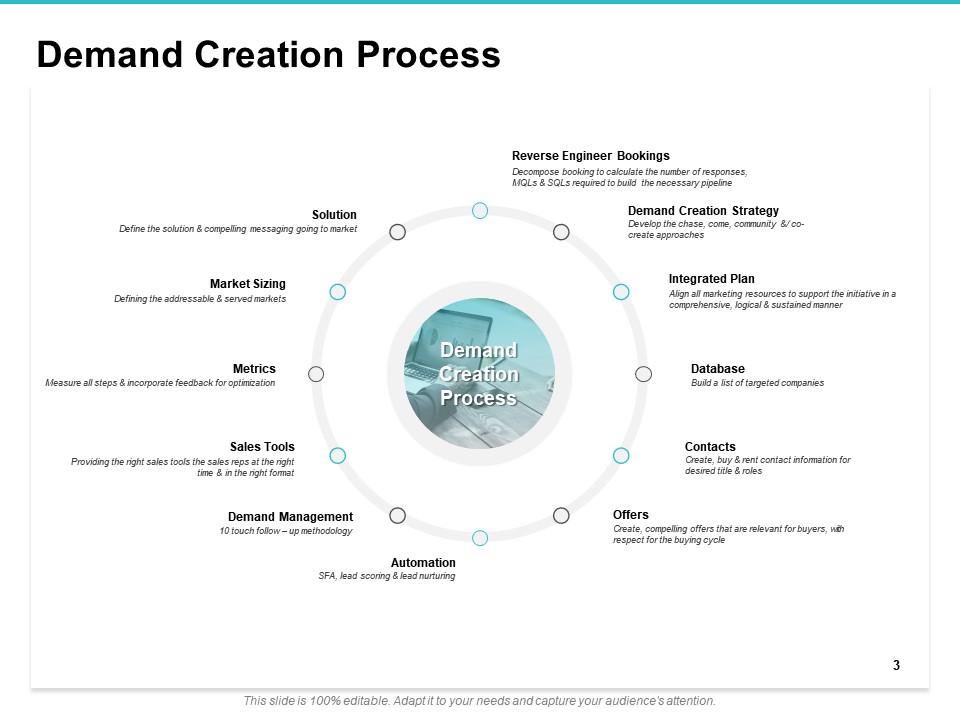
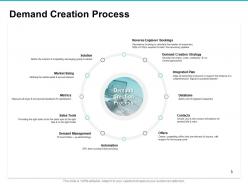
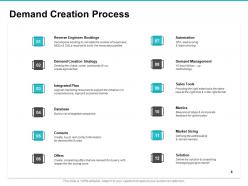
Slide 3: This slide shows Demand Creation Process with related icons.
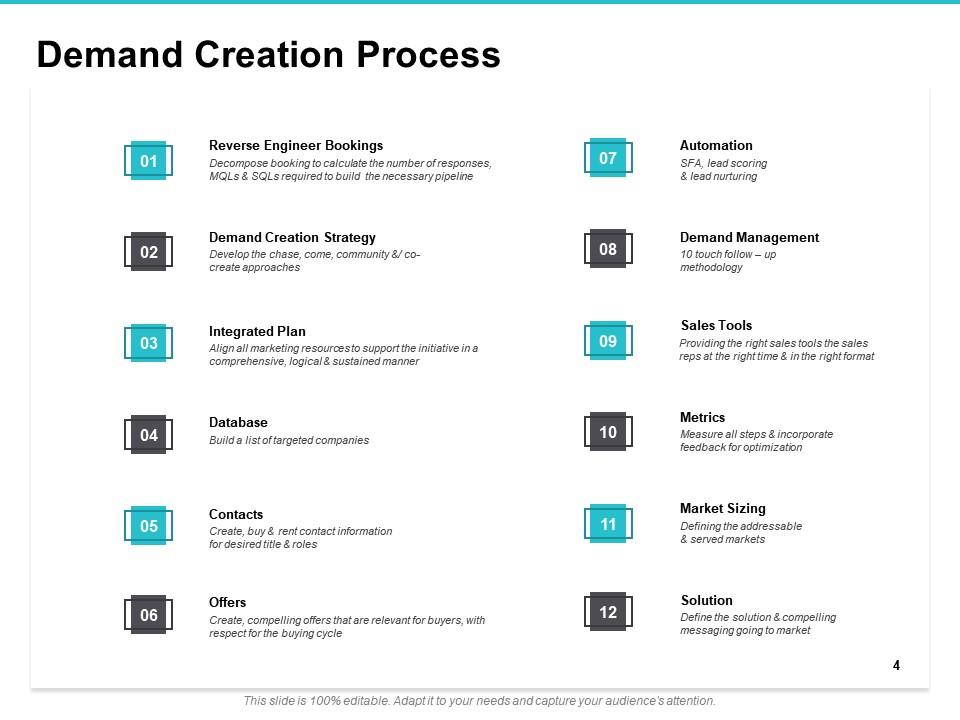
Slide 4: This is an optional slide for Demand Creation Process.
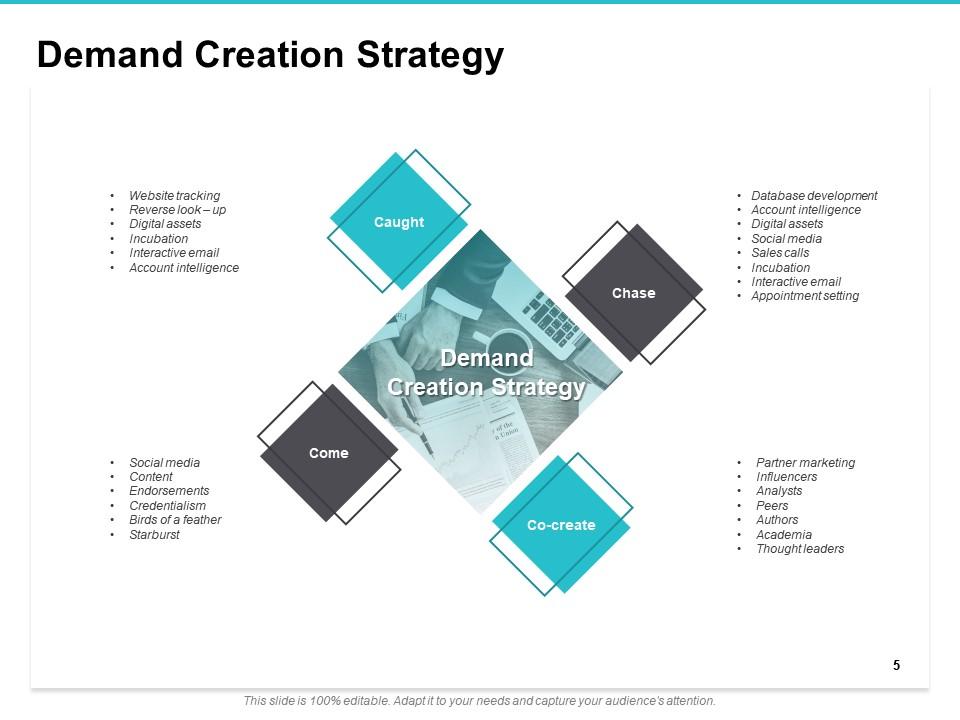
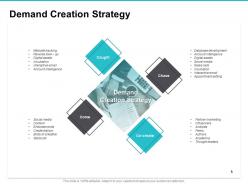
Slide 5: This slide presents Demand Creation Strategy describing- CHASE, CO-CREATE, COME, CAUGHT.
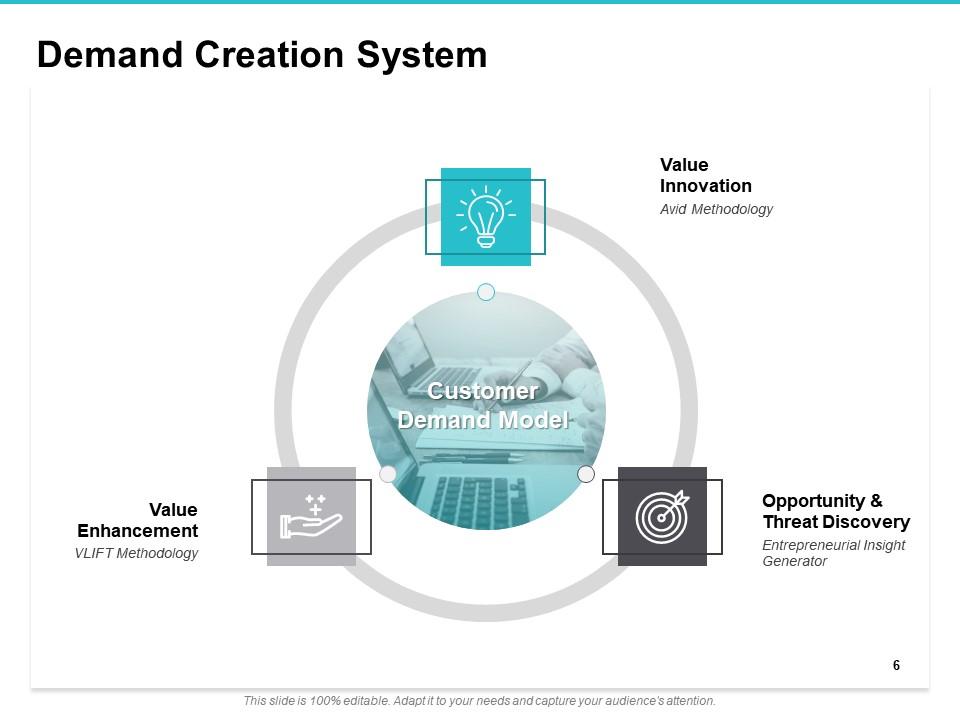
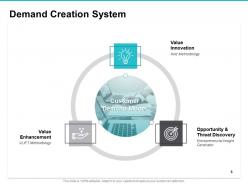
Slide 6: This slide showcases Demand Creation System. We have categorized in to three most common categories as Value Innovation, Opportunity & Threat Discovery, and Value Enhancement, just to give a basic idea on classification which can be altered by you as per your requirement.
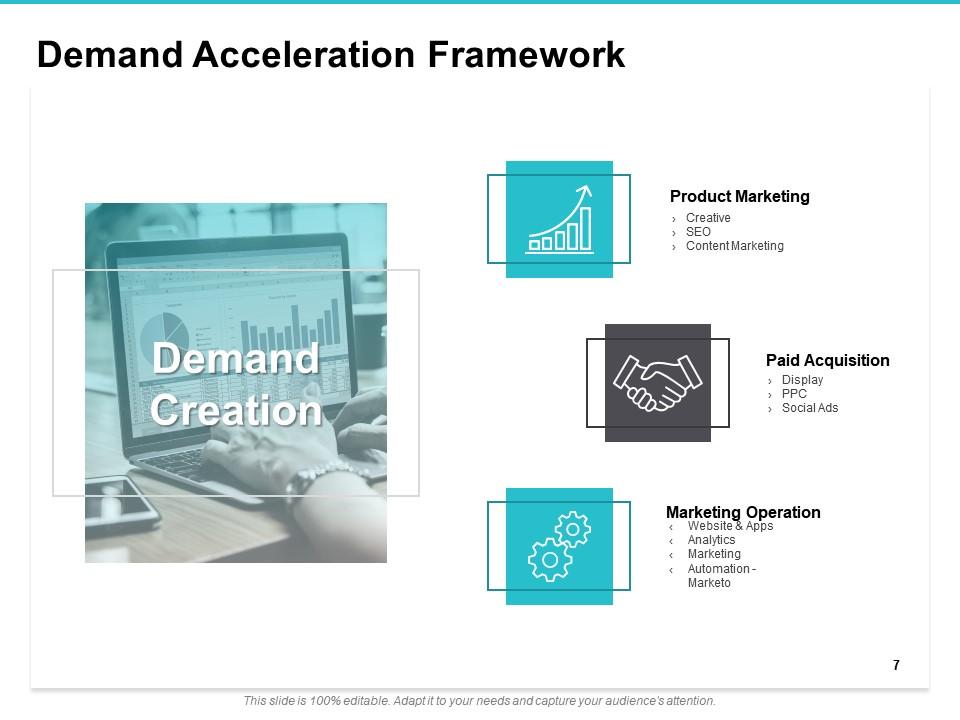
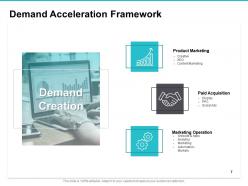
Slide 7: This slide shows Demand Acceleration Framework with three basic stages and those are- Product Marketing, Paid Acquisition, Marketing Operation.
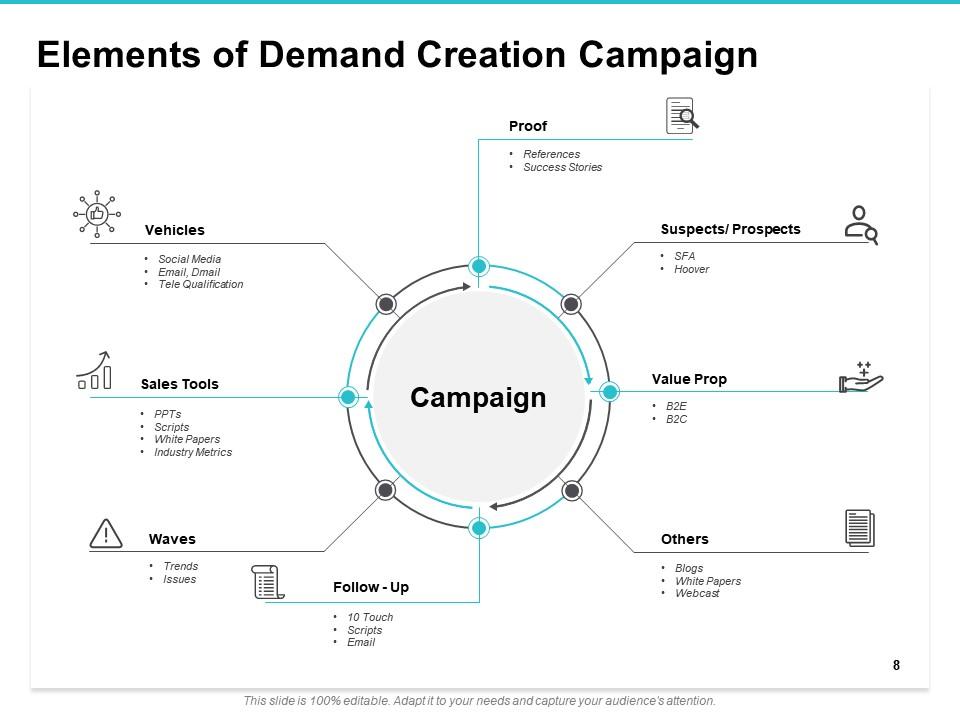
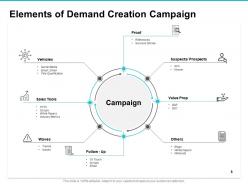
Slide 8: This slide presents Elements of Demand Creation Campaign . Also this include several elements you can use as per your requirement.
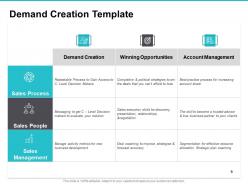
Slide 9: This slide presents Demand Creation template. This table can give you the idea about how to manage demand with sales.
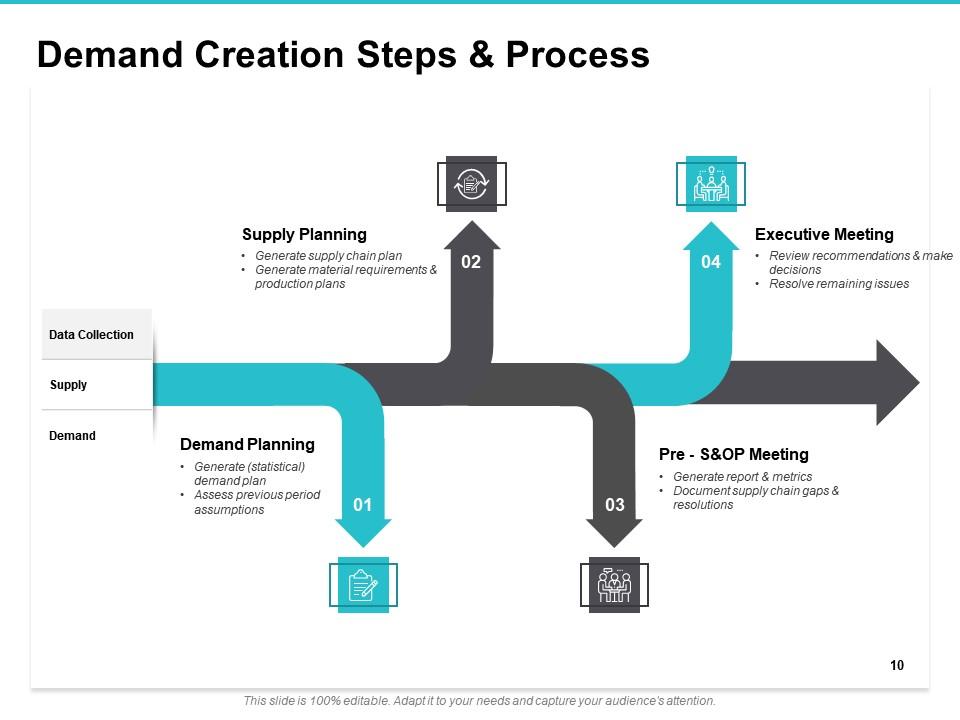
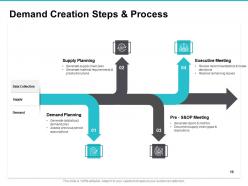
Slide 10: This slide talks about Demand Creation Steps & Process. We have shown some of the steps- Demand Planning, Supply Planning, Pre - S&OP Meeting, Executive Meeting.
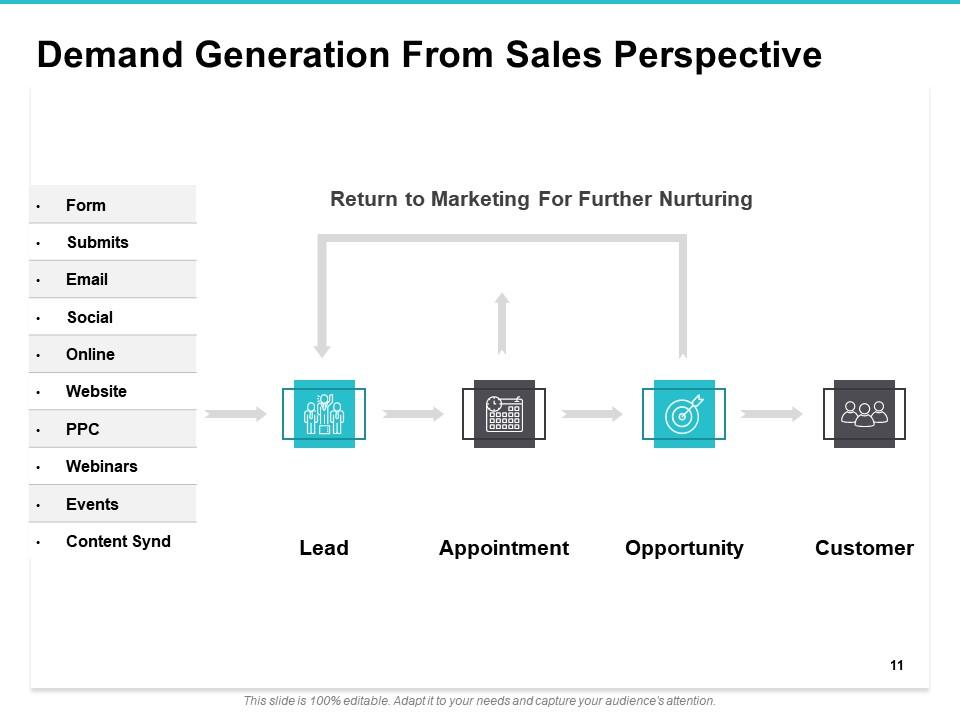
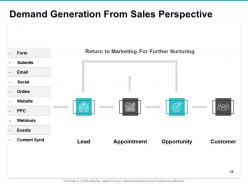
Slide 11: This slide presents Demand Generation From Sales Perspective. We have categorized in to four most common categories just to give a basic idea on classification which can be altered by you as per your requirement. Lead, Appointment, Opportunity, Customer.
Slide 12: This slide displays Value Creation Plan Icons.
Slide 13: This slide reminds about a 15 minutes coffee break.
Slide 14: This slide is titled as Additional Slides for moving forward.
Slide 15: This is Our Mission slide with related imagery and text.
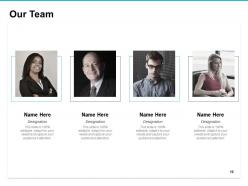
Slide 16: This is Our Team slide with names and designation.
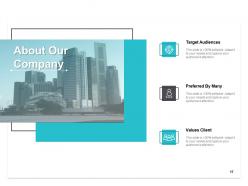
Slide 17: This is About Our Company slide to show company specifications etc.
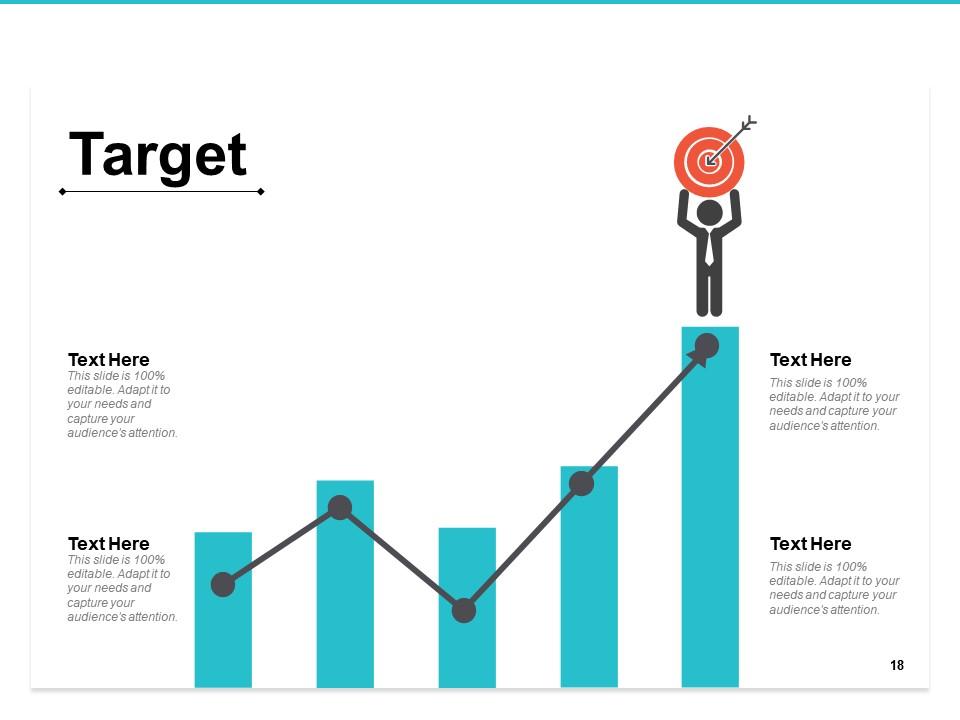
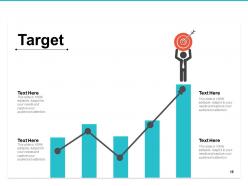
Slide 18: This is a Target slide. State your targets here.
Slide 19: This is bulb or idea slide to state a new idea or highlight specifications/information etc.
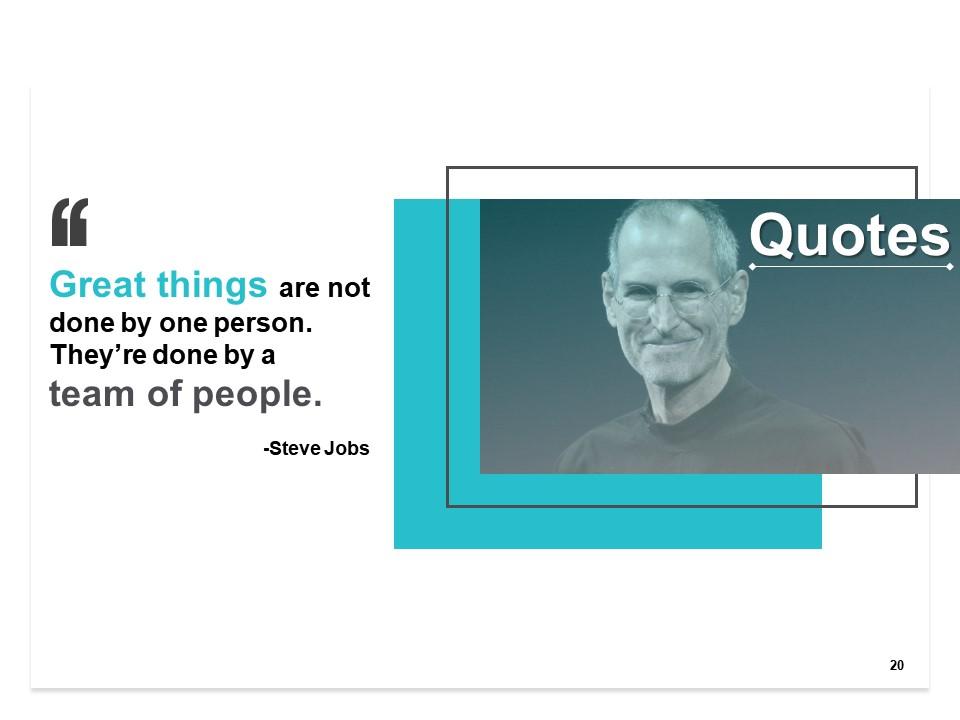
Slide 20: This is a Quotes slide to convey message, beliefs etc.
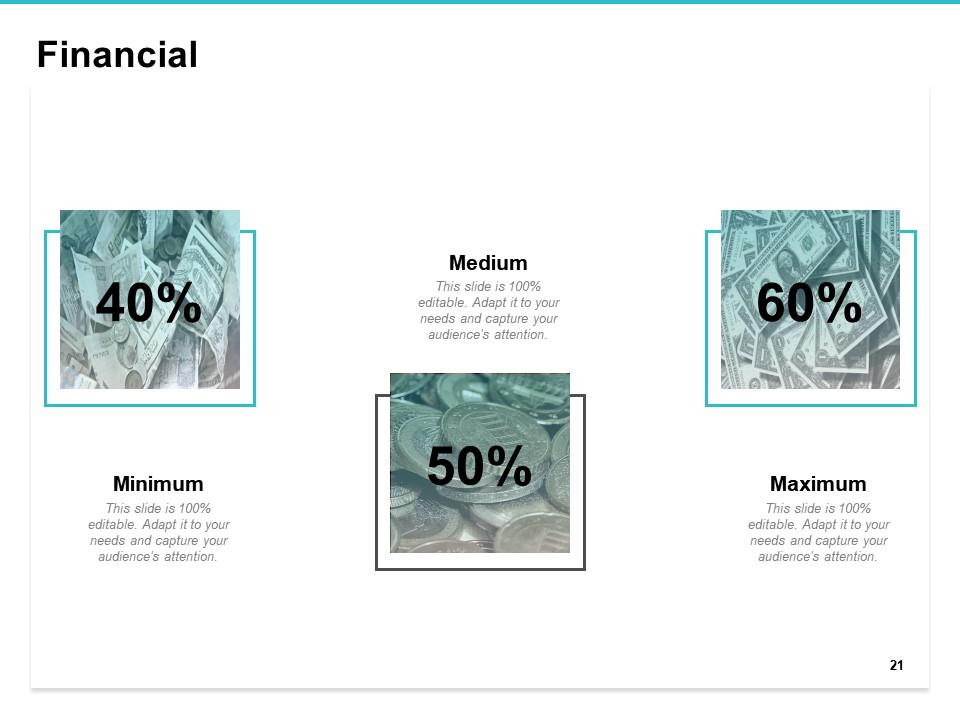
Slide 21: This is a Financial slide. Show your finance related stuff here.
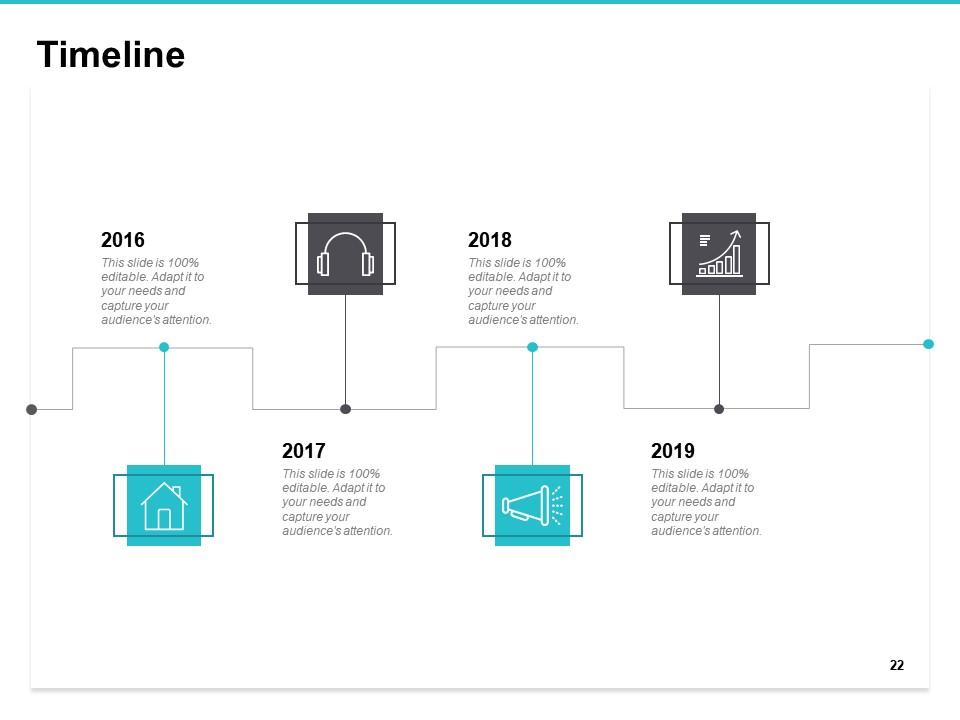
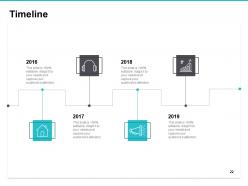
Slide 22: This is a Timeline slide. Show information related with time period here.
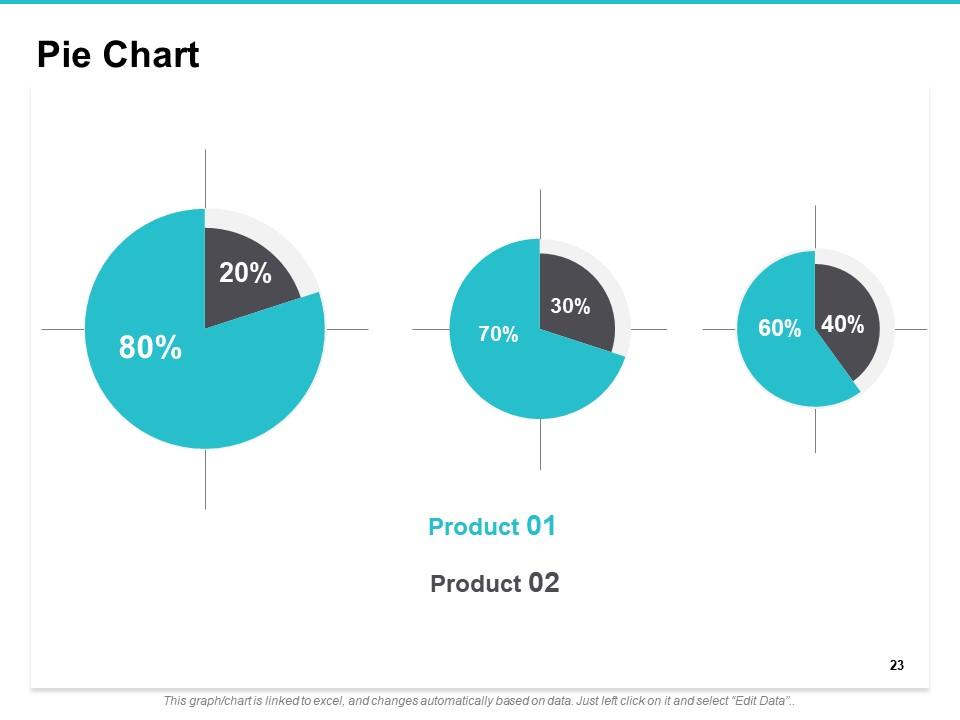
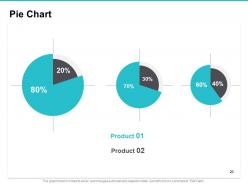
Slide 23: This slide displays Pie Chart with data in percentage.
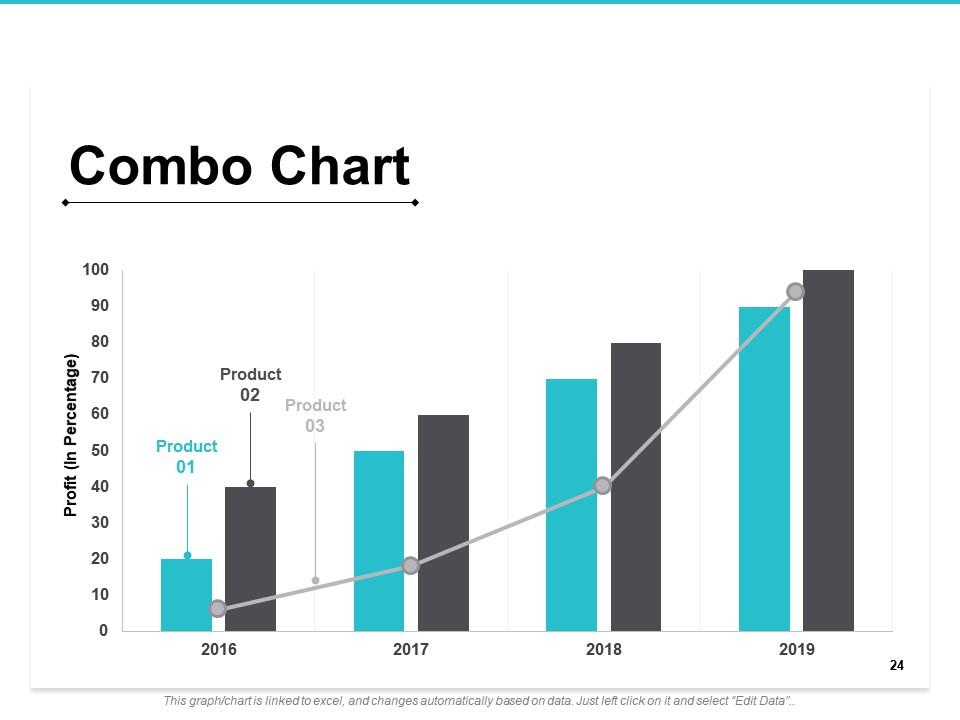
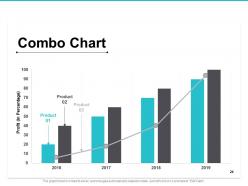
Slide 24: This slide shows Combo Chart with three products comparison.
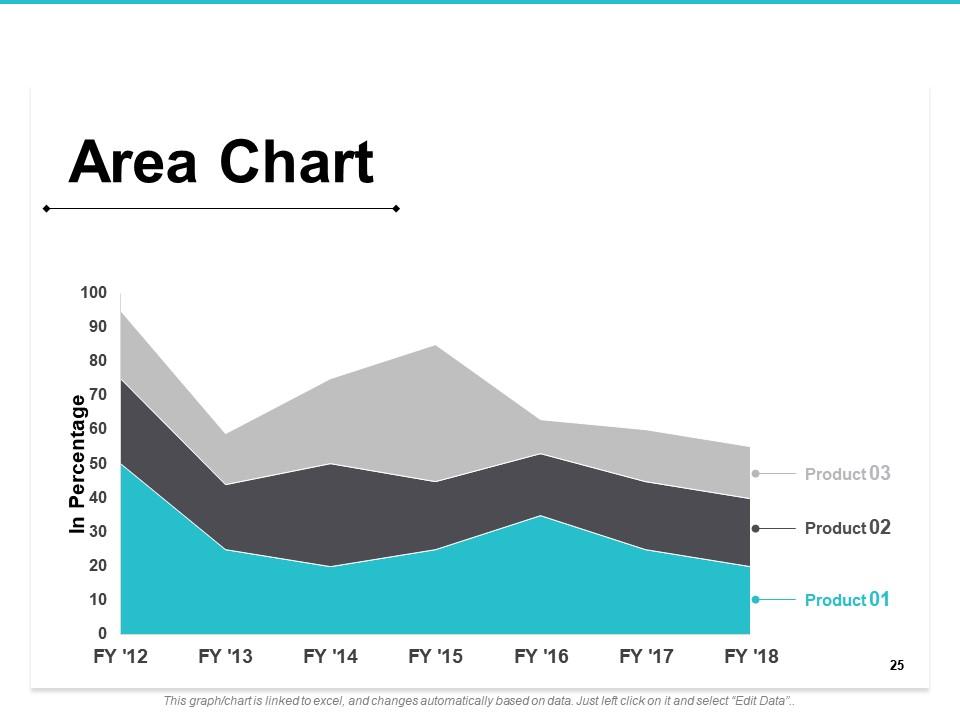
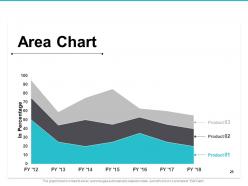
Slide 25: This slide presents Area Chart with three products comparison.
Slide 26: This is a Thank You slide with address, contact numbers and email address.

FAQs for Value Creation Plan

You basically need three things: know what drives value, track the right numbers, and set realistic deadlines. Figure out what actually moves your business forward - maybe it's cutting costs, boosting revenue, whatever works for your situation. Map out the projects that'll get you there and make sure someone owns each piece (seriously, this matters more than people think). Set up regular check-ins so things don't fall through the cracks. Start simple though - pick maybe 3-5 big value drivers so you're not drowning in complexity. Each thing should tie back to something you can actually measure. Otherwise you'll just be planning forever instead of doing.

Honestly, you gotta track both the money stuff and the softer metrics. Revenue growth and profit margins are obvious - but customer satisfaction and how engaged your employees are? That's equally important. Set your baselines first (learned this the hard way), then check progress every quarter. Build a simple dashboard with maybe 5-6 key numbers max. Trust me, more than that and you'll get overwhelmed by data. Pick things that actually connect to what you're trying to achieve. Oh, and review them regularly with your team - numbers sitting in a spreadsheet don't help anyone.

Think of stakeholder analysis as figuring out who you actually need to keep happy - and what makes them tick. Start with your big groups: customers, employees, investors, suppliers, maybe some regulatory folks too. Then map out what each group considers a win. Honestly, it's kind of like planning a party where everyone has different expectations. Your customers want quality, investors want returns, employees want good culture... you get the idea. Once you know what matters to each group, you can prioritize where to focus your energy. I'd say pick your top 5-7 groups and write down their must-haves.

Honestly, just map everything against impact vs how doable it actually is. High-impact stuff you can actually pull off? That's your goldmine. Most teams mess up by chasing every cool idea that pops up - total mistake. Pick things that genuinely help customers and build what you're good at. Maybe throw together a quick scoring thing and get your team to weigh in. Oh, and seriously stick to like 2-3 things max at first. Master those, then you can get ambitious. I've seen too many people spread themselves thin trying to do everything at once.

Honestly, I'd start with Porter's Value Chain or McKinsey's Three Horizons - both are rock solid. Business Model Canvas works great for mapping how you deliver value to customers. Value Network Analysis is pretty powerful too, but fair warning, it gets messy with lots of stakeholders. Oh and don't ignore basic SWOT analysis! I know it sounds boring but sometimes the most obvious opportunities are sitting right there. My advice? Pick whichever framework clicks with your situation first, then add others if you need them. No point overcomplicating things from the start.

Honestly, just connect everything you're doing to what the executives actually care about - revenue, growth, cutting costs, whatever keeps them up at night. I've watched so many brilliant projects get ignored because nobody could see how they helped the bottom line. Pick KPIs that roll up to the big company numbers. Your boss needs to easily explain why your work matters when someone asks. Review your progress regularly too - like monthly, not whenever you remember. Short version: make it painfully obvious how your value creation stuff drives real business results, or prepare for crickets.

So market research is like your GPS for figuring out what customers actually want and will pay for. Skip it and you're basically throwing stuff at the wall hoping it sticks. I've watched way too many teams do this - it never ends well. Good research tells you which features to prioritize first, saves you from building the wrong thing, and gives you solid data when you need to make your case to leadership. Oh, and start with your current customers before doing fancy surveys. They'll give you the real tea about what's broken or missing.

Honestly, you've gotta bake in those review cycles right from day one. I'd say quarterly check-ins where you actually look at your assumptions - most people just skip this part then act shocked when everything goes sideways. Your metrics need to be flexible enough that you can tweak them without scrapping the whole thing. Budget some wiggle room for pivots too. Oh, and treat the plan like it's alive, not set in concrete. My old boss used to say plans are just educated guesses anyway. Schedule that first review now and think through 2-3 backup scenarios you might need to jump to.

Honestly, the biggest mistake is being way too vague about what "success" actually looks like. Like saying "we need better efficiency" - okay, but how are you gonna measure that? Also don't try to fix everything at once, that's a recipe for burnout. Timeline-wise, stuff always takes longer than you think it will (learned that the hard way). Oh and definitely get the important people on board early - nothing kills momentum like having your boss suddenly hate the project halfway through. Start small with maybe 2-3 concrete goals that you can actually track.

Tech speeds up your whole value creation game - better data, faster execution, all that good stuff. Analytics tools catch opportunities you'd totally miss doing things manually. Automate the boring processes so your team can focus on what actually matters. Real-time tracking beats waiting around for quarterly reports (obviously). AI can predict which initiatives will work instead of just throwing stuff at the wall and hoping. Honestly, half of this used to be straight guesswork. Don't overcomplicate it though - pick tools that fit what you're already doing. I'd start with automating analysis for data you're collecting anyway.

So you've got a few ways to tackle this. Executive presentations work best - keep them visual with dashboards and key metrics. Most execs eat that stuff up, honestly. Written reports are good for the detail-oriented people who want to dive into numbers. I'd also do regular update meetings, but make them interactive or people will zone out. Coffee chats between formal meetings help too - sometimes the casual conversations matter more than the big presentations. Oh, and quick email updates work if people are swamped. Really depends on how your stakeholders like getting info. Half the battle is just picking the right format and timing it well.

Honestly, customer feedback is everything when it comes to figuring out what actually creates value. It shows you what's really working vs. what you *think* is working. I've watched teams spend months building stuff nobody even wanted because they didn't bother asking first - such a waste. When customers tell you what they love or what's driving them crazy, you can focus your energy on the stuff that actually matters. Skip the guesswork. Use their complaints and praise to figure out which ideas deserve your time and which ones you should just kill. Whatever method works - surveys, quick calls, doesn't matter. Just start collecting it systematically.

Okay so short-term stuff is basically your quick wins - cutting costs, boosting efficiency, anything that shows results in like 6-12 months. Long-term is more about building things that'll actually last and compound over years. R&D investments, developing your people, brand building, that kind of thing. Here's the annoying part though: they usually fight each other. Slash your training budget and boom - better quarterly numbers but you're screwing your future capabilities. Before making any move, I'd honestly just sketch out whether it's helping or hurting your bigger strategy. Sounds obvious but you'd be surprised how often people skip this step.

Look, cross-functional teams are honestly a game changer because you get all these different viewpoints spotting stuff you'd totally miss otherwise. Marketing sees one thing, finance sees another - suddenly you're finding inefficiencies everywhere. The buy-in thing is huge too. People actually want to execute plans they helped build instead of fighting whatever got dumped on them. You'll get way more realistic timelines since everyone knows their own constraints. I'd start by just mapping out your current processes with someone from each team - seriously, the blind spots that come up will shock you. Oh, and the risk assessment gets so much better when you have multiple brains on it.

Honestly, you gotta look at both the money stuff and the operational side. Revenue growth, profit margins, cash flow - those are your bread and butter. But here's the thing everyone screws up: they ignore customer satisfaction scores and employee engagement. I've watched so many businesses tank because they only cared about the financials. Process efficiency matters too. Compare everything against your original baseline from when you made the plan. Pick maybe 5-7 metrics that actually connect to your goals - any more and you'll go crazy. Check them monthly, and when things start looking weird, pivot fast.

Ratings and Reviews

0% of 100
Review Form
Write a review
Most Relevant Reviews

No Reviews