

Devops implementation plan it powerpoint presentation slides




Try Before you Buy Download Free Sample Product
 Impress Your
 Audience
 100%
100% Editable
 Save Hours
 of Time


Here is a professionally designed DevOps Implementation Plan IT template that will aid your team in becoming more flexible. This proposal plans to execute the DevOps process for application development. It focuses on the successful implementation of DevOps for application development to reduce overall IT costs, product failures, and product delays. The template incorporates slides about DevOps market scenario assessment and various trends associated with DevOps implementation. It includes different phases of the DevOps lifecycle, main stages related to DevOps, and considerations essential for DevOps implementation. Talk about the crucial strategies for effective DevOps adoption and transformation associated with DevOps implementation, taking this module's assistance. Additionally, it covers the slides highlighting the roles and responsibilities of the DevOps team, essential elements involved in the DevOps implementation roadmap, and core activities involved in the DevOps process. Not only this, the template will walk you through the value proposition associated with DevOps, an environment reference model for DevOps implementation, a final product statement, and a user persona for better client understanding. This module employs slides about various metrics to measure the effectiveness of the DevOps system. Also, it can be of great use for cost assessment associated with DevOps implementation in terms of team training, DevOps management solutions, and DevOps system implementation and management. It also covers slides about impact assessment of successful DevOps implementation and dashboard for tracking essential DevOps activities. Understand your client better with the DevOps Implementation Plan IT template. Get access and download it now.
People who downloaded this PowerPoint presentation also viewed the following :
Content of this Powerpoint Presentation
Slide 1: The slide displays the tile i.e. 'DevOps Implementation Plan (IT)' and your company name.
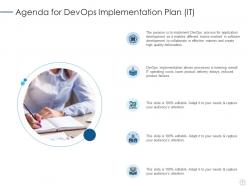
Slide 2: This slide explains the agenda for DevOps Implementation Plan (IT).
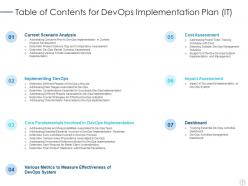
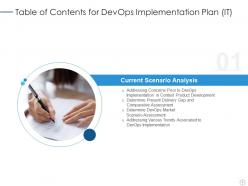
Slide 3: This slide exhibits the table of contents for the DevOps Implementation Plan (IT).
Slide 4: This slide showcases the title for current scenario analysis.
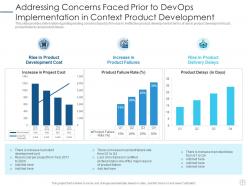
Slide 5: This slide provides information regarding existing concerns faced by firm due to ineffective product development in terms of rise in product development cost, product failures and product delays.
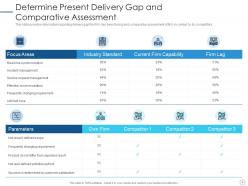
Slide 6: This slide provides glimpse regarding delivery gap the firm has been facing and comparative assessment of firm in context to its competitors.
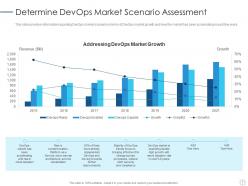
Slide 7: This slide demonstrates regarding DevOps market scenario in terms of DevOps market growth and how the market has been accelerating in past few years.
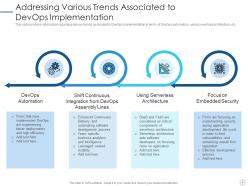
Slide 8: This slide explains regarding various trends associated to DevOps implementation in terms of DevOps automation, using serverless architecture, etc.
Slide 9: This slide displays the title for Implementing DevOps.
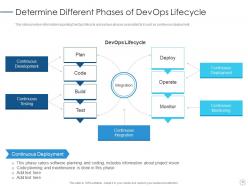
Slide 10: This slide presents information regarding DevOps lifecycle and various phases associated to it such as continuous deployment.
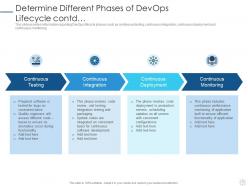
Slide 11: This slide showcases regarding DevOps lifecycle phases such as continuous testing, continuous integration, continuous deployment and continuous monitoring.
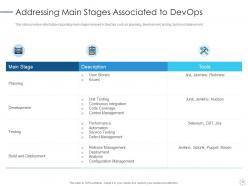
Slide 12: This slide provides glimpse regarding main stages involved in DevOps such as planning, development, testing, build and deployment.
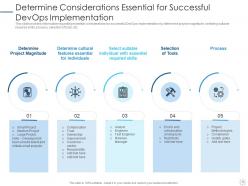
Slide 13: This slide explains regarding essential considerations for successful DevOps implementation by determine project magnitude, selecting suitable required skills, process, selection of tools, etc.
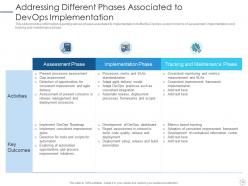
Slide 14: This slide sets out information regarding various phases associated to implementation of effective DevOps system in terms of assessment, implementation and tracking and maintenance phase.
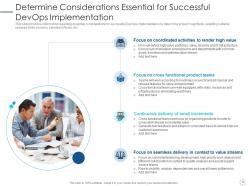
Slide 15: This slide demonstrates information regarding essential considerations for successful DevOps implementation by determine project magnitude, selecting suitable required skills, process, selection of tools, etc.
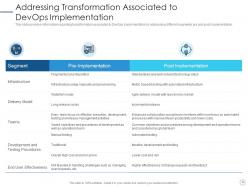
Slide 16: This slide provides glimpse regarding transformation associated to DevOps implementation by addressing different segments pre and post implementation.
Slide 17: This slide displays the title for core fundamentals involved in DevOps Implementation.
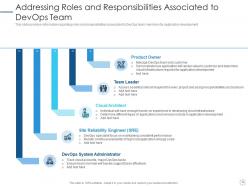
Slide 18: This slide explains regarding roles and responsibilities associated to DevOps team members for application development.
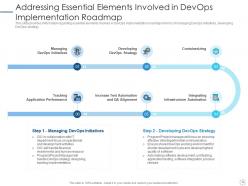
Slide 19: This slide provides information regarding essential elements involves in DevOps implementation roadmap in terms of managing DevOps initiatives, developing DevOps strategy.
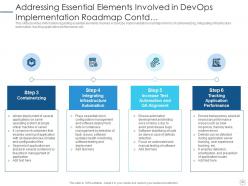
Slide 20: This slide showcases regarding essential elements involves in DevOps implementation roadmap in terms of containerizing, integrating infrastructure automation, tracking application performance, etc.
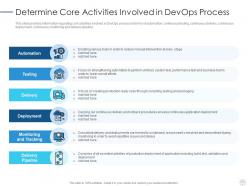
Slide 21: This slide demonstrates regarding core activities involved in DevOps process in terms of automation, continuous testing, continuous delivery, continuous deployment, continuous monitoring and delivery pipeline.
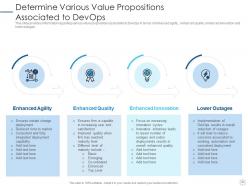
Slide 22: This slide presents various value propositions associated to DevOps in terms of enhanced agility , enhanced quality, enhanced innovation & lower outages.
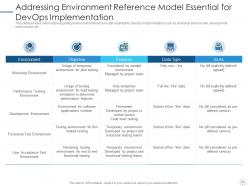
Slide 23: This slide exhibits environment reference model essential for DevOps implementation such as workshop environment, development environment, etc.
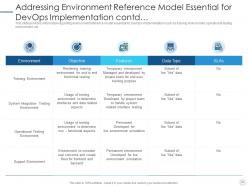
Slide 24: This slide provides glimpse on environment reference model essential for DevOps implementation such as training environment, operational testing environment, etc.
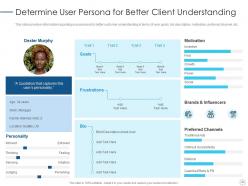
Slide 25: This slide explains user persona for better customer understanding in terms of user goals, bio description, motivation, preferred channel, etc.
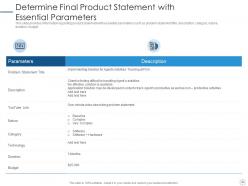
Slide 26: This slide sets out product statement with essential parameters such as problem statement title, description, category, nature, duration, budget.
Slide 27: The displays the title for various metrics to measure effectiveness of DevOps Systems.
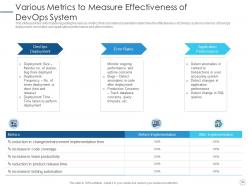
Slide 28: This slide showcases various metrics that considered essential in determining the effectiveness of DevOps systems in terms of application performance & other metrics.
Slide 29: This slide presents the title for cost assessment.
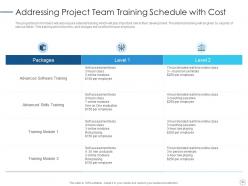
Slide 30: This slide explains in detail about the project team training schedule addressing and cost per employee for the firm.
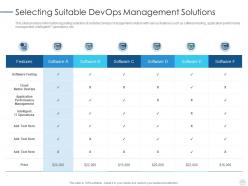
Slide 31: This slide provides information on selection of suitable DevOps management solution with various features such as software testing, application performance, etc.
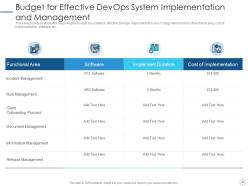
Slide 32: This slide showcases the budget associated to effective DevOps implementation and management in terms of functional area, cost of implementation, software, etc.
Slide 33: This slide exhibits the title for impact assessment.
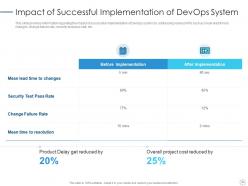
Slide 34: This slide demonstrates the impact of successful implementation of DevOps system by addressing various KPIs like mean lead time to changes, change failure rate, etc.
Slide 35: This slide displays the title for dashboards.
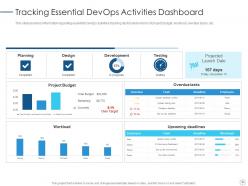
Slide 36: This slide provides essential DevOps activities tracking dashboard in terms of project budget, workload, etc. The graphs are linked to Excel.
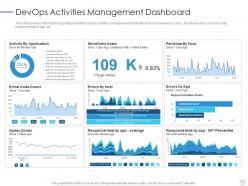
Slide 37: This slide explains essential DevOps activities management dashboard in terms of revenue by hour, storefront users, etc. The charts are linked to Excel.
Slide 38: This is Icons slide for DevOps Implementation Plan (IT).
Slide 39: This slide presents title for additional slides.
Slide 40: The slide showcases about the company, its client's values and premium services provided.
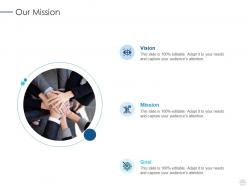
Slide 41: This slide displays the vision, mission and goals of the company.
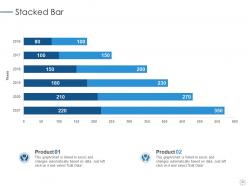
Slide 42: This slide demonstrates the yearly stacked bars for different products. The graphs are linked to Excel.
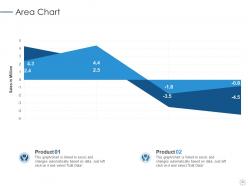
Slide 43: The slide presents area charts of sales for different products. The charts are linked to Excel.
Slide 44: This slide explains the variant goals in detail of the company. The slide is adaptable according to needs.
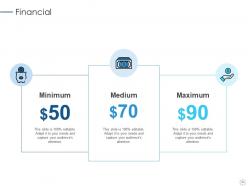
Slide 45: This slide exhibits the financials of the company based on minimum, medium and maximum elements.
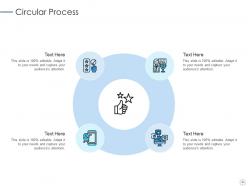
Slide 46: This slide showcases the circular process of the company.
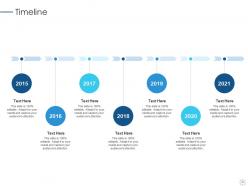
Slide 47: This slide explains the year wise timeline for the company and its success.
Slide 48: The slide displays the puzzle related to the company.
Slide 49: This slide presents the venn diagram of the company and its projects.
Slide 50: This is the thank you slide and showcases the contact details of the company including address, phone number, email address, etc.
Devops implementation plan it powerpoint presentation slides with all 50 slides:
Use our DevOps Implementation Plan IT Powerpoint Presentation Slides to effectively help you save your valuable time. They are readymade to fit into any presentation structure.




FAQs for Devops implementation plan it
You need three main things: culture shift, automation tools, and ways to measure progress. First get leadership on board and tear down those dev/ops silos - seriously, I've seen too many companies skip this step and wonder why nothing works. CI/CD pipelines come next, plus infrastructure as code and solid monitoring. Set up metrics for deployment frequency, lead times, failure recovery times. Don't try to transform your entire org at once though. Pick one team or app as your pilot project and show the value there first. Way easier to scale success than fix a massive failure.
Honestly, you've gotta map out what you're working with first before diving in. How long does it actually take to push code from dev to prod right now? Look at your team dynamics too - are devs and ops actually talking to each other or just throwing stuff over the wall? Survey people about their daily headaches, trust me on this one. Also audit your toolchain to see what's automated versus what's still manual (probably more manual than you think). Once you know where the biggest pain points are, you can figure out what to tackle first instead of just randomly picking tools.
Focus on the DORA metrics first - deployment frequency, lead time, recovery time, and failure rates. Those actually tell you if things are working. Build success rates and test coverage matter too, but honestly? Don't sleep on team happiness scores. Miserable devs will tank your best automation efforts, trust me. Track infrastructure costs while you're at it. The sweet spot is deploying faster with fewer screwups and keeping people sane. I'd check these weekly - you'll spot problems way quicker that way.
Culture shift? That's literally everything. I've watched companies dump money into fancy tools while their dev and ops teams still hate each other - total waste. The magic happens when people stop throwing stuff "over the wall" and actually start caring about the whole pipeline together. You need psychological safety too, where failing fast doesn't get you fired. Honestly, most orgs obsess over the tech stuff and ignore the human side, then act shocked when nothing changes. Find your culture champions first - they'll do the heavy lifting for you.
Oh man, the cultural stuff will kill you every time. Dev and ops teams get super territorial about their processes - can't blame them though, change is terrifying. Leadership usually doesn't get why you need to spend money upfront before seeing results. Security teams lose their minds over faster deployments (understandable I guess). Then there's the whole toolchain mess and finding people who actually know automation. Honestly? Pick one small team first. Get some quick wins to show it actually works, then slowly bring others in. Don't go crazy trying to flip everything at once - that's a recipe for disaster.
Honestly, just get both teams talking from day one. Joint planning sessions are a game changer - dev and ops can actually flag problems before they blow up later. Shared Slack channels help tons too. Cross-team retrospectives, some pair programming between devs and ops people (weird but it works). The trick is making it feel organic, not like some forced team-building exercise. Pick one small project to test this out. Once people see it actually works, they'll want to do it on everything else. Breaking down those old departmental walls takes time but it's so worth it.
Git's pretty much mandatory these days for version control. For CI/CD, Jenkins is solid but honestly GitHub Actions is way easier to set up if you're just starting out. Terraform or Ansible will handle your infrastructure stuff - trust me, you don't want to be clicking around AWS console manually forever. Monitoring's where Prometheus and Grafana shine, though the ELK stack works too. Docker and Kubernetes are basically required now. Oh, and when stuff breaks at 2am, you'll be thanking yourself for setting up proper logging early.
So CI/CD automates your entire pipeline from code commit all the way to production - it's honestly the backbone of any decent DevOps setup. What happens is you break down those annoying silos between dev and ops teams since everyone's using the same automated processes. The CI part catches bugs early by testing every single code change automatically. Then CD lets you push updates fast and reliably. I'd say start with just automating your build process first (don't try to do everything at once), then slowly add more pipeline stages. Once you get it dialed in, it's a total game-changer.
Start with pilot teams - they'll become your best advocates later. Focus on the technical stuff first: CI/CD tools, containers, infrastructure as code. But honestly, the cultural piece is just as critical. Dev and ops teams need workshops on collaboration and shared responsibility. Set up some internal wikis for documentation (trust me, future you will thank you). Get access to Pluralsight or similar platforms. Hands-on practice with real projects works way better than theoretical training. Oh, and don't skip soft skills training - communication between teams can make or break this whole thing. Maybe bring in consultants initially if budget allows.
Dude, automation is what actually makes DevOps work instead of being another buzzword your boss throws around. Start with one annoying thing your team does every day - maybe deployments or testing - and automate that first. CI/CD pipelines, infrastructure setup, monitoring alerts... all that stuff becomes way less painful when it runs itself. Honestly, the monitoring piece is huge because you'll spot problems before everyone's panicking at 2am. Your team gets to do interesting work instead of clicking the same buttons over and over. Just don't try to automate everything at once or you'll burn out.
Dude, you can't just slap security on at the end anymore - that ship has sailed. Start building it into your DevOps pipeline from the beginning. What you want is automated security scanning in your CI/CD, infrastructure as code with security baked right in, and security tests running with your regular sprints. I know it sounds like a lot, but honestly? Just pick your biggest security gaps and start automating checks there first. The whole "DevSecOps" thing is really just making security everyone's problem instead of dumping it all on one team. Trust me, your future self will thank you.
Honestly, you gotta get everyone together - doesn't matter if it's Zoom or a conference room - and hash out what "success" actually means. Leadership needs to set real metrics first, not vague stuff like "be more agile." Think deployment frequency, lead times, whatever makes sense. Then roll those goals down to your teams with regular check-ins. I can't tell you how many times I've seen engineering focused on speed while business just wants to cut costs - total disaster. Document it all and build a dashboard so everyone's looking at the same numbers. Oh, and don't make this a one-and-done thing. Keep talking about it.
Build in feedback loops everywhere - weekly retros, post-incident reviews, dashboards people actually check. Most teams collect tons of data but never look at it, which drives me nuts. Celebrate wins AND smart failures so people feel safe trying new stuff. Get your devs and ops talking regularly about what's bugging them. Oh, and don't make this feel like extra work on top of everything else. Start with simple team retros and expand from there. The whole point is making improvement feel natural, not forced.
Definitely set up regular retros with your team - I'd say weekly if you're moving fast, bi-weekly otherwise. Anonymous feedback tools are clutch because people actually tell you what's broken instead of just nodding along. Track the usual suspects: deployment frequency, lead time, failure rates. That way you can see if you're actually getting better or just spinning your wheels. Oh, and don't forget about the downstream teams who have to deal with your changes - their input is gold. Honestly, just treat your DevOps rollout like you would any product. Collect data, listen to feedback, iterate fast.
Yeah, Netflix and Amazon are the poster children for this stuff - everyone mentions them. Amazon's "two-pizza team" thing is pretty genius though. What's funny is people think these companies just magically transformed overnight, but they actually started super small. Netflix went from taking hours to deploy to just minutes by slowly breaking apart their monolith. The key thing they all did? Pick one process, nail the automation, then move to the next thing. Don't try to revolutionize everything at once - you'll just create chaos. Start with testing automation maybe?
-
Really like the color and design of the presentation.
-
Editable templates with innovative design and color combination.
-
Content of slide is easy to understand and edit.