


Digital ecosystem ppt infographic template





Try Before you Buy Download Free Sample Product
 Impress Your
 Audience
 100%
100% Editable
 Save Hours
 of Time


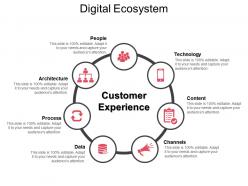
SlideTeam offers you its modern digital ecosystem PPT info graphic template. The PPT is perfect to display a distributed, adaptive and open socio technical system required for the business. You can discuss technologies for digital ecosystem with this powerful PowerPoint template. PPT is useful for a number of business areas related to the production and distribution of knowledge-intensive products and services, including educational products, higher education etc. Let your viewers understand the advantages of integrated digital marketing ecosystem with this effective PPT design. Business professionals, digital marketing experts use this PPT template to highlight methods and tools for building a digital ecosystem and to achieve a set of objectives of the system. Components of the digital ecosystem including people, technology, content, channels, data, process, architecture can easily be understood with this PPT design. Since technology has touched almost every domain, professional’s belongings to different sectors find this brand digital ecosystem PowerPoint template very much useful. So, download this intelligently designed PPT template and get started by presenting your ideas about the digital ecosystem. Influence further developments with our Digital Ecosystem Ppt Infographic Template. Guide folks on figuring out the course to follow.
People who downloaded this PowerPoint presentation also viewed the following :
Digital ecosystem ppt infographic template with all 5 slides:
Actions get bigger and better with our Digital Ecosystem Ppt Infographic Template. They begin a beneficial chain of events.

FAQs for Digital ecosystem
So you've got your databases, APIs, user interfaces - all that stuff. Analytics tools too. Think of it like a tech stack but everything's connected (well, when it actually works lol). Your users and devices are part of it since they're constantly feeding data back in. Third-party services get mixed in there as well. The whole point is making sure everything can talk to each other, which honestly is harder than it sounds. I'd start by just mapping what you already have, then figure out where things are breaking down or getting stuck.
So basically you're connecting everyone - suppliers, customers, partners - on the same digital platforms. Way better than playing phone tag all day (seriously, who has time for that?). Everyone can see what's happening in real-time: inventory levels, project updates, the works. Data flows between systems automatically instead of someone manually updating spreadsheets like it's 1995. Decisions get made faster, fewer screw-ups happen. My advice? Figure out who you work with most and where the biggest headaches are happening. Those friction points are where you'll want to start integrating digitally.
Look, data analytics basically gives you superpowers to see what's actually working across all your platforms. You'll spot where people are bailing out of your funnel and which touchpoints convert like crazy. Plus you can catch bottlenecks before they wreck your whole flow. Honestly, running digital stuff without analytics is like driving blindfolded - maybe you'll get there but probably not. Track your key metrics everywhere first, then you can make smart calls about where to throw your budget next. The patterns will surprise you, trust me.
So digital ecosystems tear down those old company barriers and let everyone share data and services freely. Startups team up with big corporations now, which makes everything move faster. Look at fintech apps - they work perfectly with traditional banks, something that seemed impossible before. The crazy part? These networks can change direction super quickly compared to companies trying to do everything solo. Honestly, if you're in a traditional industry, stop thinking about who your competitors are. Start figuring out who you could actually work with instead. That's where the real opportunities are hiding.
Honestly, data silos are gonna be your worst nightmare. Plus all your old systems probably hate talking to new stuff - I've watched so many projects crash because of this. Security gets tricky when you're opening everything up to outside platforms too. But the real pain? Getting people actually comfortable with new workflows. Half your team will resist anything that changes how they work. My advice: map out what data flows where first. Figure out which systems absolutely have to connect, then tackle those. Don't try to fix everything at once or you'll lose your mind.
Think of it like this - your business needs to live where your customers already are. Figure out their hangout spots first (social media, forums, Amazon, whatever). Having just a website is pretty useless nowadays, honestly. The real wins come from connecting multiple touchpoints together. Create stuff people actually want to see and jump into conversations authentically. Partner up with businesses that complement yours - that's where things get interesting. I'd start with maybe 2-3 platforms max and get really good at those before you spread yourself too thin. Way better than trying to be everywhere at once.
Dude, Apple's the obvious one - once you're in their world with an iPhone, MacBook, AirPods, it's basically impossible to leave. Amazon does this too but way more aggressively, connecting shopping to AWS to Alexa. PayPal merged payments with lending and crypto stuff. Tesla's got the whole car-solar-charging thing going. Oh and Netflix built theirs around content and that scary-good recommendation algorithm. Honestly, they all just make switching feel like such a pain that you don't bother. Pretty genius business model when you think about it.
Honestly, UX can totally make or break your whole digital setup. I've seen companies with amazing tech behind the scenes completely fail because users get annoyed trying to jump between their app, website, whatever. People just bail if it's too much work. The trick is making everything feel connected - like when someone goes from your mobile app to your desktop site, it should feel natural, not jarring. Bad UX kills engagement faster than almost anything else. You want users thinking they're in one smooth experience, not wrestling with a bunch of random tools that don't talk to each other.
Look, you've got three big things to nail down: data protection, access control, and vetting your partners. Encrypt everything - both when it's moving around and sitting still. Strong API authentication is non-negotiable. The audit trail thing? Do it religiously because someone will definitely ask later who can see what data. I learned that one the hard way. Your partners' security problems become your security problems, so don't skip the due diligence step. Map out how your data flows first - you'll spot the sketchy areas pretty quick.
So digital ecosystems are basically when all your customer touchpoints - apps, social media, website, whatever - actually talk to each other and share data. Customers get this consistent, personalized experience no matter where they interact with you. Pretty cool stuff, honestly. When people feel like you "get" them across all platforms, they'll stick around way longer and actually recommend you to others. Oh, and they stop getting annoyed by those weird disconnects between channels (you know what I mean). First step? Map out where you're currently dropping the ball between touchpoints.
Track the money stuff first - revenue from partners, how much you're spending to get users, API adoption rates. That gives you the real picture. But here's the thing - relationship metrics are equally important, maybe more so. Partner satisfaction, how often you're actually collaborating, speed of solving customer issues together. Time-to-market is massive when you're building features with partners. The coolest metric though? When partners start working together without you in the middle. That's your golden signal right there. Pick 3-4 metrics to start, don't overthink it.
So digital ecosystems basically connect all your suppliers and partners in real-time - game changer for supply chains. Instead of chasing down spreadsheets and making endless calls, data flows automatically between everyone. You'll see inventory, shipments, demand patterns all in one place. Honestly, the visibility alone is worth it. When disruptions happen (and they always do), you can spot them way earlier and adjust routes on the fly. Your suppliers can check forecasts directly too, so they're not guessing on production. Start by figuring out where you're still working in silos that could talk to each other.
Don't just throw posts into the void - think about how each platform connects to your bigger picture. Instagram's great for discovery, LinkedIn for establishing credibility, Twitter for quick customer responses. The magic happens when you track how people move between these spaces and your other tools. Most brands are terrible at this, honestly. Connect your CRM and email systems so you can actually see the full customer path. Oh and definitely audit what data you're collecting now - I bet there are huge gaps you didn't even realize existed.
Honestly, AI and IoT are what make all your devices actually work together instead of being a bunch of random gadgets. IoT connects everything - your phone, car, smart home stuff - so they can share data. Then AI takes all that information and figures out what to do with it. Like when your phone knows you're driving home and automatically adjusts your thermostat. Pretty cool when you think about it. The better these technologies get, the more your whole digital setup just... flows. I'd start by looking at what AI and IoT you're already using without realizing it.
Honestly, transparency is everything - share your data and decision-making process with partners right from the start. Those cross-company workshops are gold mines for real insights, especially the random side conversations during breaks. Share your failures too, not just wins. That's what actually builds trust. Set up solid communication channels and make sure your shared goals benefit everyone, not just you. Oh, and here's the thing - you've gotta actually listen when partners give feedback and then do something about it. Create spaces where people can contribute ideas openly. It's messier than keeping everything internal, but it works way better.
-
The Designed Graphic are very professional and classic.
-
Good research work and creative work done on every template.