


Digital Transformation Of Supply Chain Powerpoint Presentation Slides




Try Before you Buy Download Free Sample Product
 Impress Your
 Audience
 100%
100% Editable
 Save Hours
 of Time


Determine the steps to execute the business goals or targets digitally with the aid of our topic-specific Digital Transformation Of Supply Chain PowerPoint Presentation Slides. By using this interactive digital supply chain management presentation template, you can show the comparison between traditional supply chain model and integrated supply chain ecosystem. With the help of a digital supply chain roadmap PPT layout, you can highlight the key elements of digital supply chain such as visualization, analytics, storage, data ingestion, and cloud. Take the assistance of inventory management PowerPoint graphic and explain how to digitize the procurement function. Talk about the different stages of supply chain maturity with the aid of this professionally designed transformation roadmap PPT theme. Employ a digital transformation tools presentation complete deck and mention the ways to successfully implement the digital SCM. Hence, explain the end-to-end supply and demand planning process by downloading our ready-to-use digital transformation of SCM presentation deck.
People who downloaded this PowerPoint presentation also viewed the following :
Content of this Powerpoint Presentation
Slide 1: This slide introduces Digital Transformation of Supply Chain. State Your Company Name and begin.
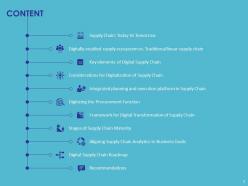
Slide 2: This slide displays the Content of the presentation.
Slide 3: This slide depicts Supply chain: Today vs Tomorrow.
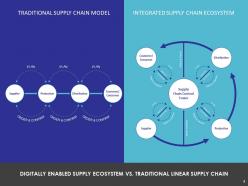
Slide 4: This slide displays Digitaly enabled Supply ecosytem vs. Traditional Linear Supply chain.
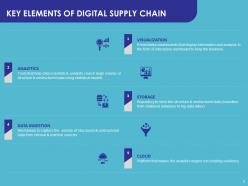
Slide 5: This slide depicts digital elements of key supply chain.
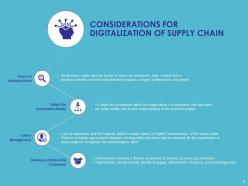
Slide 6: This slide showcases Considerations for digitilization of supply chain.
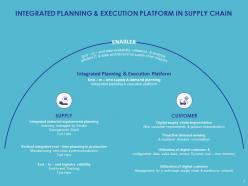
Slide 7: This slide depicts Integrated planning and execution platform in supply chain.
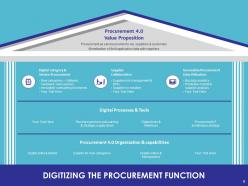
Slide 8: This slide showcases Digitizing the Procurement Function.
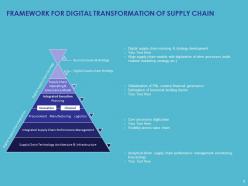
Slide 9: This slide showcases Framework for digital Transformation of supply chain.
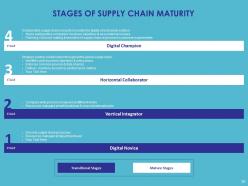
Slide 10: This slide showcases the Stages of Supply chain maturity.
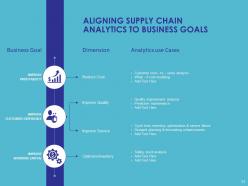
Slide 11: This slide displays Aligning supply chain analytics to business goals.
Slide 12: This slide presents Digital Supply Chain Roadmap.
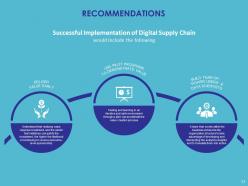
Slide 13: This slide depicts the Recommendations.
Slide 14: This is Digital Transformation of Supply Chain Icons Slide.
Slide 15: This slide is titled as Additional Slides for moving forward.
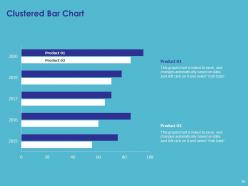
Slide 16: This slide displays Clustered Bar Chart with different product comparison.
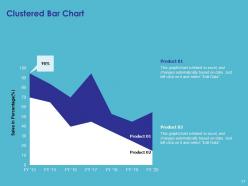
Slide 17: This slide displays Clustered Bar Chart with comparison of products in percentage.
Slide 18: This is Our Mission slide with Vision, Goal and Mission.
Slide 19: This is Meet Our Team slide with names and designation.
Slide 20: This is Mind Map slide for representing entities.
Slide 21: This is five years Timeline slide.
Slide 22: This is Venn slide.
Slide 23: This is Puzzle slide with icons and text boxes.
Slide 24: This is Financial slide. Showcase your finance related stuff here.
Slide 25: This is Thank You slide with address, email address and contact number.
Digital Transformation Of Supply Chain Powerpoint Presentation Slides with all 25 slides:
Use our Digital Transformation Of Supply Chain Powerpoint Presentation Slides to effectively help you save your valuable time. They are readymade to fit into any presentation structure.




FAQs for Digital Transformation Of Supply Chain
So IoT sensors give you real-time tracking, which is honestly a game changer. AI and machine learning handle demand forecasting - way better than spreadsheets, trust me. Cloud platforms tie everything together, plus you've got blockchain for transparency and robotics handling warehouse stuff. RPA automates those boring repetitive tasks your team probably hates anyway. Advanced analytics dashboards show you what's actually happening. Don't try to do it all at once though. Most companies pick their worst problem first - like inventory visibility or demand planning - then expand. What's driving you crazy right now? Start there.
Honestly, you need both operational and financial metrics or you're flying blind. Start with the basics - order fulfillment speed, inventory turnover, delivery accuracy, cost per shipment. Those show immediate wins. Here's the thing though - get your baseline numbers first before changing anything. Otherwise you're just guessing if stuff actually worked. Customer satisfaction and supplier metrics matter too since this affects everyone in the chain. Track consistently over time, not just random snapshots. Oh, and set up automated dashboards so you're not stuck pulling reports manually every month. That gets old fast.
So data analytics is like having a crystal ball for your supply chain - it takes all that chaotic operational mess and turns it into insights you can actually work with. You'll get real-time tracking of inventory, shipments, and spot bottlenecks before they blow up. We've all dealt with those mystery delays that come out of nowhere, right? Analytics catches patterns you'd miss otherwise - seasonal spikes, supplier issues, that kind of stuff. Honestly, half the battle is just setting up dashboards that actually show what matters for your specific setup. Then you can get ahead of problems instead of constantly putting out fires.
Honestly, these IoT sensors are pretty sweet - you get live updates on exactly where your stuff is and how it's doing. Temperature monitoring for anything sensitive, automatic alerts when you're running low, tracking shipments in real-time. No more hunting through spreadsheets or doing manual counts all the time. I'd probably start with just one product line that's giving you headaches or costs a lot, then expand from there once you see the results. My buddy at a food distributor swears by it now, but he was skeptical at first too.
Honestly, AI is a game-changer for demand forecasting. It can crunch through tons of data - sales history, weather patterns, social media buzz, economic stuff - way more than you could ever handle manually. The really cool thing? It gets smarter over time and catches seasonal trends or weird shifts that would totally fly under your radar. You'll end up with way fewer stockouts and less inventory just sitting there collecting dust (which is such a waste of cash, right?). My advice? Start small - pick your biggest forecasting headaches and test AI on just those products first. Don't try to boil the ocean.
Honestly, the biggest pain is getting your old systems to actually work with new digital stuff - it's like trying to connect a flip phone to your Tesla. Your team will probably hate the changes at first, even if they make sense. Data's another headache since garbage in equals garbage out, you know? Finding people who get both supply chain AND tech is weirdly hard too. Oh, and budget way more time for integration than you think. I'd definitely test it out small first - pick one area, prove it works, then expand from there.
So digital transformation basically flips supplier relationships on their head. You get real-time data sharing instead of that endless email back-and-forth we all hate. Everyone can see inventory, production schedules, issues - everything's live. It's honestly night and day compared to the old way. Suppliers can jump into your planning processes, you collaborate on forecasting together, problems get solved way faster. The tricky part? Finding platforms that actually play nice with your suppliers' systems, not just your own internal stuff. Makes such a difference though.
Start with multi-factor authentication on everything and encrypt your data - both when it's moving around and just sitting there. Most companies mess this up right from the start, which is honestly pretty crazy. Run security audits regularly, especially on third-party stuff since that's where problems love to hide. Your team needs training on phishing because people are still the weakest link here. Oh, and definitely have an incident response plan ready for when supply chains get hit. Cybersecurity isn't something you set up once and forget about - it's ongoing maintenance work.
So basically, cloud computing lets everyone see the same info at the same time - your suppliers, distributors, whoever. No more of those awkward "wait, which version are we looking at?" situations. Real-time inventory, shipment updates, demand forecasts - it's all right there. Honestly, the email chains alone will drive you crazy otherwise. I'd start with whatever data you share most often and get that moved over first. Your partners can log in from anywhere and boom - everyone's on the same page. Makes decisions way faster since nobody's working off old spreadsheets.
So digital twins are basically virtual copies of your whole supply chain - lets you test stuff without breaking anything real. Run scenarios like "what if this supplier crashes?" or demand goes crazy. Way better than guessing with old data, honestly. You can optimize inventory, spot bottlenecks coming, fix logistics routes. The what-if testing happens instantly which is nuts. I'd start small though - maybe just model one warehouse first? Prove it works before going all-in. It's like having a crystal ball but actually useful.
Blockchain creates this unalterable record of every step in your supply chain - raw materials all the way to delivery. Nothing can be changed once it's logged, so you get total visibility. Pretty neat seeing it work, honestly. Customers can scan QR codes to see their product's full journey, which they love. My buddy's company tried it and saw way better customer trust. Don't go crazy though - test it with just one product line first. Way easier than overhauling everything at once.
So basically, all that tedious stuff your team's drowning in? Inventory tracking, order processing, demand forecasting - you can automate most of it. People stop doing mindless data entry and actually focus on strategy instead. Plus you'll cut way down on those stupid human errors that mess everything up. Your supply chain gets way more responsive too, which honestly makes a huge difference. My advice though - don't go crazy right away. Just pick whatever process is driving you most insane right now and start there.
Start with something simple - track one thing like transportation emissions with IoT sensors and see what happens. The ROI is actually getting decent these days, which surprised me. AI can help you spot waste patterns across your supply chain that you'd never catch manually. Digital twins are cool for testing scenarios before you commit to changes. Honestly, most companies overthink this stuff. Pick one pilot program, get some real data on carbon or energy usage, then expand from there. The visibility alone will show you where to optimize routes and cut waste.
Honestly, start with data analytics - you'll need to read metrics and catch trends to make decent calls. Tech literacy is non-negotiable too, otherwise you're just sitting there while everyone else uses the new tools. Change management is probably the hardest part (I still struggle with it tbh) since everything's constantly shifting. Oh, and collaboration skills matter way more now because digital stuff breaks down all those old department walls. My advice? Get cozy with whatever dashboards you have now, maybe grab a basic analytics course. Those basics will help when fancier tools show up later.
Don't try to fix everything at once - that's a recipe for disaster. Pick your biggest headache first, maybe inventory tracking or dealing with suppliers. Cloud-based tools are honestly your best bet since you can start small without breaking the bank. I see way too many small businesses thinking they need some massive enterprise system right off the bat, but that's just throwing money away. Find simple SaaS solutions that play nice with whatever you're already using. Get your team used to one thing at a time. Run a small test first, see how it goes, then roll it out wider.
-
Unique research projects to present in meeting.
-
Easily Editable.
-
Excellent template with unique design.
-
Appreciate the research and its presentable format.
-
Very well designed and informative templates.