


Dmaic Model For Operational Process Improvement




Try Before you Buy Download Free Sample Product
 Impress Your
 Audience
 100%
100% Editable
 Save Hours
 of Time


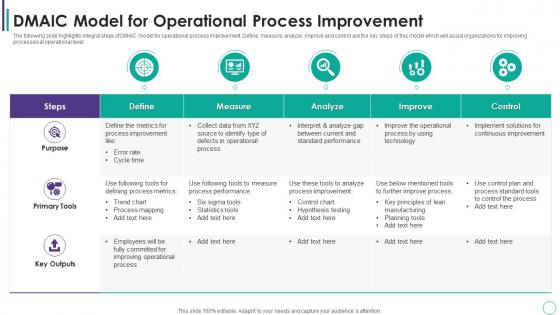
The following slide highlights integral steps of DMAIC model for operational process improvement. Define, measure, analyze, improve and control are the key steps of this model which will assist organizations for improving processes at operational level.
People who downloaded this PowerPoint presentation also viewed the following :
Dmaic Model For Operational Process Improvement with all 6 slides:
Use our Dmaic Model For Operational Process Improvement to effectively help you save your valuable time. They are readymade to fit into any presentation structure.





FAQs for Dmaic Model For
DMAIC breaks down into five steps that build on each other. You start with Define - nail down exactly what problem you're solving. Then Measure to get your baseline data (no guessing allowed). Analyze comes next to dig into root causes. After that, Improve lets you test actual solutions. Control wraps it up by keeping things from sliding backward. Honestly, most teams want to jump straight to solutions, but that Define phase is everything. If you mess up there, you'll be chasing your tail later. Each step feeds the next one - kinda like dominoes but in reverse.
DMAIC basically just adapts to whatever industry you're in. Manufacturing folks track defect rates and cycle times - the usual suspects. Service companies? They're more about customer satisfaction and wait times. The trick is figuring out what counts as a "defect" in your specific situation. Pick something that's actually bleeding money or losing customers first. Then just work through those five steps systematically. Honestly, the biggest mistake people make is overcomplicating their data collection. Keep it simple and make sure your team stays involved throughout the whole process.
So for DMAIC, you'll want different tools at each stage. Define uses project charters and SIPOC diagrams - voice of customer stuff too. Then Measure is all about process maps, data collection plans, and getting your baseline metrics straight. Root cause analysis and fishbone diagrams come in handy during Analyze, plus Pareto charts if you're into that. Improve phase? That's where brainstorming and pilot testing shine. Control wraps things up with control charts and SOPs. Honestly though, don't get hung up on using every single tool - I've seen people go overboard with this. Pick maybe 2-3 per phase that actually make sense for what you're dealing with.
So DMAIC is basically like having a roadmap that doesn't let you give up halfway through. You start by defining what's actually broken, then measure how bad it really is. After that, you dig into why it's happening and fix the root cause. The control phase is where most people mess up though - you can't just walk away and hope it sticks. You've got to keep checking that your fix is still working. Honestly, each time you finish the whole cycle, you'll probably spot three more things that need fixing. Pick something small that drives everyone crazy and just work through all five steps.
Yeah, totally! DMAIC works great for small stuff too. You don't need some huge team or expensive software - just scale the approach to what you've got. Maybe your "Measure" step is just collecting basic data instead of running complex analytics. For "Analyze," brainstorming might work better than heavy stats anyway. I've actually seen solo consultants nail tiny process fixes with it. The framework's honestly perfect for staying focused instead of trying to solve every problem at once (we've all been there). Just pick something small and work through those five steps however deep makes sense.
Data analysis matters in both phases but does different things. Measure is about collecting your baseline numbers and making sure your metrics actually work - like, are you even measuring the right stuff reliably? Then Analyze gets way more interesting. You're hunting for root causes with regression analysis, hypothesis testing, all that good stuff. Most teams honestly get stuck here forever though. The whole point is shifting from "yeah we've got problems" to "here's exactly what's broken and why." Once you nail that down, you can actually fix the right things instead of guessing.
Honestly, bring people in from the very beginning - don't just loop them in later. Figure out who's actually dealing with this problem and get them involved in defining what you're even trying to solve. That way they feel like it's their project too. I always do quick 15-minute check-ins weekly (works way better than long meetings). Show them the data you're collecting during Measure and Analyze phases. But here's the key part - when you get to solutions, make it collaborative. Let them help brainstorm fixes instead of just presenting your findings. People will actually support changes when they helped create them.
Ugh, the worst thing teams do is skip straight to fixing stuff without actually figuring out what's broken first. I've watched so many projects crash and burn because of this. Also? Get your leadership on board early or you'll hit roadblocks later. My advice: spend way more time than you think defining the actual problem. Keep it focused - don't try to solve world hunger on your first go. Get real baseline data before you start analyzing anything. Oh, and that Control phase everyone wants to skip because they're pumped about results? Yeah, don't. Set up your monitoring from the beginning.
Here's what works really well - start with value stream mapping in your Define phase to figure out what customers actually want. Then during Measure/Analyze, hunt down those 8 wastes (transportation waste is seriously everywhere, I swear). When you hit Improve, that's where lean tools like 5S and poka-yoke really shine alongside your statistical fixes. Visual management from lean makes the Control phase so much easier since people can actually see what's happening. Don't go crazy though - just pick one lean tool per DMAIC phase. You'll get better results without overwhelming everyone.
First figure out what metrics actually matter for your specific problem - defect rates, customer complaints, whatever you're trying to fix. Then grab a few supporting ones like cycle time or satisfaction scores to round out the picture. Honestly, don't get too crazy with this part. I've seen teams pick like 15 different metrics and then spend more time measuring than actually solving anything. Stick to 3-5 good ones that'll clearly show if you're making progress. The key thing is getting your team aligned on how you'll collect the data consistently. You need clean comparisons later, so nail down the process upfront.
Honestly, DMAIC is a lifesaver for keeping everyone on track. Instead of jumping straight to fixes (which I'm totally guilty of), it walks your team through Define, Measure, Analyze, Improve, and Control step by step. The data focus cuts down on those endless debates about what's really broken. Each phase has clear goals, so nobody's wondering what they should be doing. Plus you document everything, which is clutch when you need to repeat the process later or - God forbid - explain it to your boss. Pro tip though: spend extra time on that problem statement upfront. Trust me, it'll save you from going in circles later.
So digital tools are honestly game-changers for DMAIC. In Define and Measure, stuff like Tableau or Power BI helps you spot patterns way faster than staring at spreadsheets. Minitab's your best friend for Analyze - handles all the regression and hypothesis testing without making your brain hurt. Simulation tools are clutch in Improve because you can test ideas without breaking anything real. Then Control phase gets easier with automated dashboards tracking your metrics. The time you'll save is crazy. Start with whatever your company already pays for though - I've seen people work magic with just Excel if they're creative enough.
Yeah, totally! Just swap "Improve" for "Innovate" and DMAIC works great. Define the customer problem and your success metrics first. Then measure current market gaps through research. Analyze why existing solutions suck. Your "innovate" phase is where you actually design the product. Control comes last - set up processes to maintain quality. Honestly, it keeps you from building random features that sound cool but nobody actually needs. The Define phase is clutch though - I can't stress this enough. Get super clear on what problem you're solving or you'll waste months going in circles later.
Motorola basically invented Six Sigma using DMAIC and saved billions fixing manufacturing defects. GE went crazy with it under Jack Welch - applied it to everything from jet engines to regular light bulbs. Amazon's doing it now in their warehouses to speed up deliveries, and Mayo Clinic cut down patient wait times plus medication errors. Honestly, the hospital stuff is probably the most impressive to me. But here's the thing - start small with just one process in your department. Don't try to overhaul everything at once, you'll just burn out.
Dude, DMAIC training is totally worth it. Your success rates jump like 40-60% when everyone's on the same page with that Define-Measure-Analyze-Improve-Control thing. No more random project tangents or scope creep nightmares. Teams start catching actual root problems instead of slapping band-aids on everything (which honestly just creates more work later). The whole data collection process gets so much cleaner too. And here's the thing - your improvements actually last because people know how to keep them going. Yeah, it costs money upfront, but you'll see the payoff pretty quick.
-
Impressive templates. Designing a presentation is fun now!
-
Such amazing slides with easy editable options. A perfect time-saver.