


Dos And Donts Of Workplace Etiquette Training Ppt




Try Before you Buy Download Free Sample Product
 Impress Your
 Audience
 100%
100% Editable
 Save Hours
 of Time


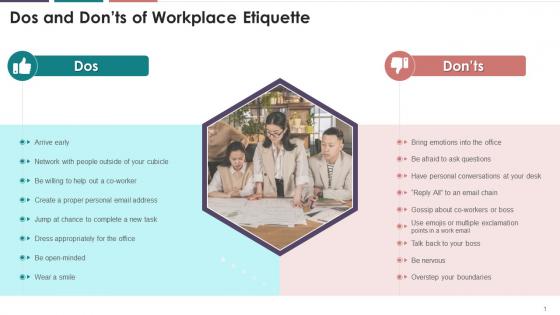
This slide explains various things that should be performed Dos and avoided Donts at a workplace.
People who downloaded this PowerPoint presentation also viewed the following :
Dos And Donts Of Workplace Etiquette Training Ppt with all 17 slides:
Use our Dos And Donts Of Workplace Etiquette Training Ppt to effectively help you save your valuable time. They are readymade to fit into any presentation structure.







FAQs for Dos And Donts Of Workplace
Honestly, it comes down to three big things: being clear, actually listening, and picking your moments right. Don't just wait for your turn to talk - that's such a waste. Be direct about what you need without being a total ass about it. Also, match your method to the message - sending a five-paragraph essay on Slack when you could just call? Annoying. Your tone shows up everywhere, even in emails. Body language obviously matters face-to-face. I've learned to watch how different people react to my communication style and switch it up. Some people need the bullet points, others want the full story first.
Dude, active listening is honestly such a cheat code for work stuff. People rarely feel actually heard in meetings, so when you really focus on what they're saying instead of planning your response, they notice. You catch way more details too. I always try to repeat back what I heard before jumping in with my own thoughts - sounds weird but it works. Trust builds faster when people feel understood. Brainstorming gets better because ideas actually connect instead of everyone just throwing random stuff out there. Conflicts resolve quicker too since nobody feels ignored or dismissed.
Body language is honestly way more important than most people realize - like 55% of communication or something crazy like that. I bombed a presentation once because my posture was terrible even though my content was solid. Eye contact makes a huge difference, and don't cross your arms during meetings (makes you look defensive). Also, watch other people's faces - you can totally tell when someone's lost or disagrees even if they're nodding. Your tone matters just as much as your actual words. Start paying attention to this stuff in your next few meetings and you'll see what I mean.
Talk to them directly first - don't let it build up or drag other people into it right away. I'd go with "I felt confused when..." instead of pointing fingers. Wait for a quiet moment though, not when you're both already annoyed (trust me on that one lol). Honestly, most of this stuff is just people talking past each other anyway. If that conversation doesn't work, then yeah - take it to your manager. But bring actual examples, not just "Sarah's being difficult." Frame it around how it's messing with the work, not personality stuff. You'll have better luck that way.
Test your mic and camera before the meeting starts - trust me on this one. Mute when you're not talking, obviously. Join a couple minutes early and make sure there's decent light on your face. Your background should look professional (or just use a virtual one because nobody wants to see your laundry pile). Look at the camera when you talk, not the screen - it's weird but makes a difference. Oh, and close other tabs so you're not tempted to check Instagram. If you can't hear someone clearly, just speak up instead of nodding along pretending you caught it.
Just be genuinely curious about people! Ask questions when it feels natural - most folks actually love talking about their culture if you're not being weird about it. Don't assume stuff based on how someone looks or their name (I've definitely made that mistake before). Pay attention to how people communicate too - some are super direct, others hint at things more. Oh and food sharing is clutch. Honestly? Start small. Grab coffee with someone and just ask about their background. It's way less scary than it sounds, and you'll learn cool stuff.
Okay so email etiquette - biggest thing is your subject line needs to be clear. Keep messages short and sweet. Start with a normal greeting, end professionally. Proofread everything! Typos make you look careless even when your ideas are solid. Please don't hit reply-all unless literally everyone needs your response - we've all been victims of the endless "thanks!" chain. Skip emojis in formal stuff. Try to respond within a day or two if you can. Oh, and read your email out loud before sending. I know it sounds weird but you'll catch tone problems way easier that way. Trust me on this one.
Okay so first - be super specific when you're giving feedback. Like don't say "you're messy," say "the report was missing those three data points we talked about." Do it privately and pretty soon after whatever happened. When you're getting feedback? Ugh, this is the hard part - try not to get all defensive right away. Ask stuff like "can you give me an example?" instead of jumping in to explain yourself. Oh and that whole sandwich thing actually works - say something nice, then the real feedback, then end positive. Sounds cheesy but it really does make tough conversations way less awkward.
Dude, being on time is seriously underrated. It shows you actually respect people and aren't just winging it through life. I learned this the hard way after awkwardly sneaking into way too many meetings late - trust me, everyone notices and it's mortifying. Your boss will definitely see you as more reliable when you nail deadlines consistently. Plus it just makes everything run smoother for the whole team. I'm terrible at mornings though, so I literally set like three alarms now. It's annoying but works! Bottom line: punctuality = people trust you with bigger stuff.
Okay so personal space - stick to arm's length when you're talking to people. Don't hover over their desk either, it's weird. Always knock before going into someone's office or cubicle (trust me, I've scared so many coworkers by just walking in lol). Keep your voice down during calls - nobody wants to hear your entire conversation. Oh and headphones are basically the universal "leave me alone" signal. When someone's wearing them, they're in focus mode. If you're not sure about timing, just ask "good time to chat?" before diving into whatever you need to discuss.
Honestly? Just don't engage with gossip at all. When someone starts sharing rumors, redirect the conversation or say you'd rather not discuss it. If you hear something about yourself, go straight to your manager or HR instead of trying to fight back with more drama. I made this mistake once and got dragged into mess that had nothing to do with me originally! Build real relationships with coworkers based on actual work stuff, not bonding over complaints about other people. You'll save yourself so much stress and your reputation stays clean. Trust me on this one.
Okay so first things first - dress right for wherever you're going and actually show up on time. Talk to people you don't usually chat with at work, that's like the whole point. But seriously, don't bring up politics or start gossiping about Karen from accounting, trust me on this one. If there's alcohol, pace yourself because nobody wants to be *that* person. Oh and here's something people forget - definitely follow up! Send those LinkedIn requests or just a quick "nice meeting you" text within a couple days. Everything you say might get back to your boss anyway, so just be cool about it.
Honestly, just clean up after yourself and don't be that person who hogs everything. Wipe down surfaces when you're done, keep phone calls quiet, and actually return stuff you borrow - seems obvious but you'd be surprised. Coffee area gets weird fast so don't leave a mess there. Conference rooms aren't your personal office, so don't camp out all day. Oh and definitely give people a heads up if you'll be using equipment for hours. Saves everyone from those super awkward "um, are you done yet?" conversations. Communication fixes like 90% of office drama.
Yeah, dress codes totally affect how people see you at work - it's annoying but true. People judge your competence based on clothes, which is kinda dumb if you ask me. Match what successful people at your level are wearing. Don't overdress (makes you look clueless) or underdress (seems like you don't care). I learned this the hard way when I showed up way too casual to a client meeting once - awkward. Just blend in with the office vibe, then focus on doing good work. That's what actually matters in the end.
Honestly, recognizing your coworkers when they do well is one of the easiest ways to build actual relationships at work. People notice when you're paying attention to their stuff - it makes them feel valued. A quick "great job on that deck" in Slack or giving them props in a meeting? Way more powerful than you'd expect. It creates this whole thing where they'll start doing the same for you. I mean, everyone wants to feel appreciated, right? Even something small and genuine can totally shift the vibe. Just don't make it weird or over-the-top.
-
Informative design.
-
Placing an order on SlideTeam is very simple and convenient, saves you a lot of your time.