


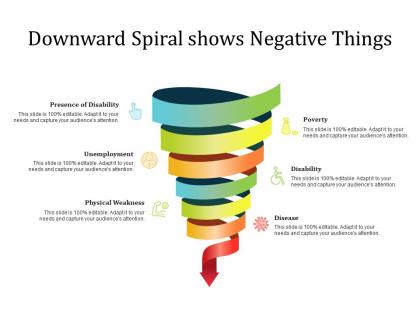
Downward spiral shows negative things




Try Before you Buy Download Free Sample Product
 Impress Your
 Audience
 100%
100% Editable
 Save Hours
 of Time


Our Downward Spiral Shows Negative Things are explicit and effective. They combine clarity and concise expression.
People who downloaded this PowerPoint presentation also viewed the following :
Downward spiral shows negative things with all 2 slides:
Give your audience a fulfilling experience. They will find our Downward Spiral Shows Negative Things elevating.

FAQs for Downward spiral
Revenue starts dropping and people keep quitting - that's usually your first clue. Deadlines get missed constantly, customer complaints blow up, and everyone stops talking to each other (except to blame someone else). Cash flow gets messy pretty fast after that. Honestly, the worst part is how meetings turn into these awful blame sessions where nobody wants to make decisions. Your best people bail, which makes everything worse. Oh, and you're always scrambling to fix problems instead of preventing them. When you see like three of these happening together, that's when you know you're screwed.
Look for shifts in how your team communicates - that's where problems show up first. Missing deadlines from usually reliable people? Red flag. People suddenly dodging meetings or getting weird and tense during collaboration? Another red flag. I've noticed complaints about processes that used to run smooth are also a dead giveaway. Plus if your top performers seem checked out, that's bad news. Honestly, just trust your instincts - when team dynamics feel off, they probably are. Do regular one-on-ones and straight up ask about workload and how they're feeling before things get worse.
So there's a bunch of stuff that feeds these downward spirals. Negative thinking patterns are huge - like when you catastrophize everything or see things as totally black and white. Your brain gets stuck thinking everything's a threat. Then you start pulling away from people, which honestly makes everything so much worse because you lose that outside perspective. I've seen this happen where someone isolates themselves and that's when things get really bad. Depression and anxiety obviously don't help either. Each little setback feels massive when you're already in that headspace. The social withdrawal thing is probably what I'd watch for most.
Honestly, you've gotta build psychological safety first or people will just keep faking it through meetings. I'd start with weekly 15-minute pulse checks where you actually ask stuff like "what's working?" and "what's driving you crazy?" Sounds basic but teams always ditch this when they're swamped. Also - and this might feel weird at first - admit when you mess up or don't know something. Shows everyone it's safe to be real. Oh, and focus on the problem itself, not whoever caused it. That separation makes a huge difference in how people respond.
Look, it really comes down to your company culture. When people are scared to speak up or different departments don't talk to each other, problems just get buried until they explode. But if you've got psychological safety? People actually flag issues early instead of hiding them. Quick fixes happen because teams aren't afraid to collaborate. Honestly, I've seen places where leadership goes after root causes instead of just slapping band-aids on everything. The whole thing hinges on rewarding honesty over making everything look perfect - even when the truth sucks to hear.
Honestly, stop and figure out what's actually broken before you do anything else. I've watched too many PMs just throw people at problems without understanding why stuff keeps failing. Check if your team's overloaded, deadlines are nuts, or communication sucks. After you know what's wrong, grab some easy wins first - builds confidence back up. Don't do some huge process overhaul... that usually makes things worse. Oh, and tell your stakeholders what you're fixing and why. They'd rather hear the truth than another "we'll do better" speech.
Honestly, just pick one thing and start there - don't try to fix everything at once. I'd probably go with transparency first because people can tell when you're being fake, and that makes everything worse. Have real conversations about what's actually going wrong. Recognition helps too, even for small stuff when everyone's feeling crappy about work. Oh, and give them more say in how they do their projects. When people feel like they have zero control, they just check out mentally. Maybe let them weigh in on decisions that affect their day-to-day. Start with whichever feels most doable this week.
Dude, a financial downward spiral will absolutely wreck your business. Revenue drops, so you slash costs everywhere. But then your quality tanks and customers bail - which just makes revenue drop even more. It's this nightmare cycle that's impossible to break once it starts. Your credit score goes to hell, banks won't touch you, and suddenly you're making these panicked short-term moves that screw your future. I've seen it happen to way too many good businesses. Honestly? Watch your cash flow like a hawk and have backup plans ready before things get ugly.
Look, you gotta celebrate the small stuff first - even tiny wins matter when everyone's miserable. Let people actually speak up without getting shut down, and be real about what's going wrong. Those regular check-ins? They'll save you from bigger disasters later. Here's the thing though - stop micromanaging and let your team come up with fixes themselves. People recover way faster when they feel like they have some say in things. Maybe try a weekly "wins and worries" thing to get started. Honestly, just giving people back some control makes a huge difference.
Honestly, looking at data beats trying to figure stuff out by gut feeling alone. You'll catch patterns you'd never notice otherwise - like maybe customer satisfaction tanked months before your revenue dropped, or your team's morale went downhill way before the productivity issues started showing up. Check if there are seasonal trends or outside factors messing with things too. The real benefit? You get a clear timeline of what happened when, instead of just guessing which problem caused which. I'd start by tracking your main metrics and hunt for those early red flags that showed up before everything went sideways.
Honestly? Speed is everything in a turnaround. Look at IBM and Marvel - they basically nuked everything except what they were actually good at, then rebuilt. Don't try fixing everything simultaneously (learned that one the hard way lol). Pick one or two critical things first. Fresh leadership helps too, or at least giving your current team real authority to make hard calls without corporate BS slowing them down. Figure out what you're genuinely better at than competitors. Then cut ruthlessly until you're making money again. Sounds brutal but it works.
Honestly, EQ is like having a sixth sense for drama before it hits. You start picking up on your own stress cues and can actually read people instead of just assuming everyone's out to get you. That coworker who seems pissy? Maybe they're just overwhelmed, not plotting against you lol. I've learned to pause before firing back angry emails - sounds basic but it's saved me so many headaches. Active listening helps too, though I'll admit I'm still working on that one. The whole thing comes down to not taking everything personally and double-checking your assumptions first.
Honestly, feedback is a lifesaver when you're spiraling. Your brain starts catastrophizing everything and you lose all perspective - but friends or mentors can actually show you what's real vs. what your stressed mind is making up. It's like having someone be your eyes when you can't see straight. I've learned you have to actively ask for it though, not just wait around. Stay open even when it challenges whatever story you're telling yourself. Oh and set up regular check-ins with people who'll give it to you straight.
Look, start with what's actually working right now - figure out your best customers, products that still sell, whatever processes aren't broken. Don't try fixing everything because you'll just burn through cash faster. Pick your strongest stuff and go all-in on that instead. Maybe it's focusing on one product line or doubling down on your best markets. I know it sounds obvious, but most companies panic and scatter their attention everywhere. Be picky about where you spend money and energy. Build back from what's already solid rather than starting from scratch.
Honestly, keep an eye on your project velocity first - late deliverables and scope creep are huge red flags. Check in with your team regularly too because stressed people mess up more (trust me on this one). I'd set up those milestone reviews every few weeks to look at budget, how happy stakeholders are, and whether you're building up technical debt. The real trick? Making sure people feel safe calling out problems early instead of crossing their fingers and hoping things fix themselves. Oh, and don't wait - do your first risk check this week while you're thinking about it.
-
great graphics