


Drop Shipping Business Model Canvas




Try Before you Buy Download Free Sample Product
 Impress Your
 Audience
 100%
100% Editable
 Save Hours
 of Time


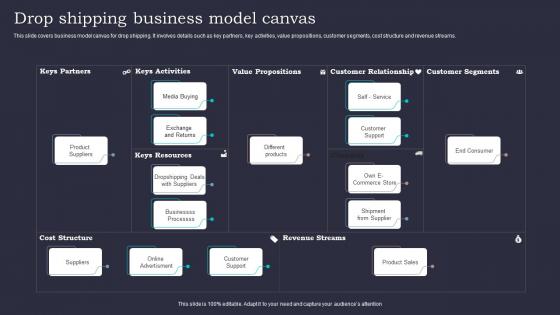
This slide covers business model canvas for drop shipping. It involves details such as key partners, key activities, value propositions, customer segments, cost structure and revenue streams.
People who downloaded this PowerPoint presentation also viewed the following :
Drop Shipping Business Model Canvas with all 6 slides:
Use our Drop Shipping Business Model Canvas to effectively help you save your valuable time. They are readymade to fit into any presentation structure.





FAQs for Drop Shipping
Honestly, the best part is you don't have to buy anything upfront - zero inventory risk. Your supplier ships everything after customers order, so no warehouse headaches or shipping stress. Testing new products is super easy since you're not stuck with bulk orders that might flop. Low startup costs are amazing too. You can switch your entire product line overnight if something isn't working - that flexibility is unreal. Oh, and you'll spend most of your time on marketing instead of packing boxes, which is way better. Just pick your suppliers carefully because when they mess up, you're the one dealing with angry customers.
Honestly, I'd start with AliExpress or Oberlo to scope out suppliers. Look for 95%+ positive ratings and see how fast they respond to messages - if they're taking forever to answer basic questions, that's sketchy. Order samples first! Can't stress this enough. You need to actually see the quality and test shipping times before you dive in. Ask them directly about their dropshipping setup too. The experienced ones will have tracking systems and clear return policies already figured out. Oh, and make sure they can actually handle the volume you're planning - learned that one the hard way.
Honestly, the worst parts are when suppliers flake out and your profit margins are already super tight. Customer service becomes a nightmare if anything goes wrong. Quality control is rough since you can't actually touch the products before they ship - I definitely screwed that up early on! Sample orders are your best friend for vetting suppliers. Don't go for the cheapest option either, even if it costs a bit more upfront. Build in extra shipping time because delays happen constantly. Oh, and start small with maybe 2-3 solid suppliers instead of trying to juggle like 20 different ones right away.
Dude, shipping times will literally destroy your dropshipping business if you're not careful. People expect Amazon-level speed now, which is honestly kind of annoying but whatever. When orders take forever, you'll get bombarded with angry emails and bad reviews. My advice? Be upfront about realistic delivery times from the start - like really hammer it home on your product pages. Pay extra for suppliers with faster shipping if you can swing it. Also, shoot customers updates if anything gets delayed. I learned this the hard way after getting roasted in reviews early on. Setting proper expectations saves you so many headaches later.
Honestly, pricing is trickier than people think. First thing - add up ALL your costs: supplier fees, shipping, whatever platform you're using (Shopify takes their cut), plus payment processing. Returns will kill your margins if you don't account for them upfront. I learned that one the hard way lol. Check what competitors charge so you're not way off. Aim for 30-40% markup minimum - sounds like a lot but it disappears quick once you factor everything in. Start with your total expenses, then see what people will actually pay. If there's not enough cushion, it's probably not worth it.
So with dropshipping, you don't actually hold any inventory - your supplier does all that. The thing is, you're basically tracking their stock levels and updating your listings constantly. Super annoying when they run out of something without telling you first. I've watched so many people get screwed over by this exact scenario, honestly. You'll want decent sync software that talks to your supplier's system. Also - and this is huge - always have backup suppliers for your top products. Trust me on that one. Otherwise you'll be scrambling when your main guy runs out of stock.
Dude, you absolutely need digital marketing for dropshipping - there's no way around it. Facebook and Google ads are where most people start, but don't sleep on SEO and social media either. Email marketing's honestly underrated for getting repeat customers. I've watched people with pretty average products make bank just because they knew how to market. Pick one platform first though - like maybe Facebook ads since they're pretty beginner-friendly? Get decent at that before jumping around to everything else. Otherwise you're basically waiting for people to magically find your store, which... yeah, good luck with that.
Pick one specific thing and become *the* person for it - don't try competing everywhere. Build real connections by actually helping people solve problems, not just selling stuff. Customer service matters way more than people think. Also grab every review and testimonial you can get your hands on, that social proof is everything. Honestly, most businesses just phone it in with generic approaches. Find whatever you can do better than everyone else and go all-in on that. It's about adding real value, not being another random middleman nobody remembers.
So first thing - get your business registered and grab whatever licenses you need. Sales tax is honestly the biggest headache because you might have to deal with multiple states depending where people buy from. Make sure your supplier contracts are tight too, and definitely don't accidentally end up selling knockoffs (learned that one the hard way from a friend). Oh, and write up clear return policies for your site. I know it sounds boring, but talking to a business lawyer upfront will save you so much money vs dealing with issues later. Trust me on that one.
Returns are honestly a pain with dropshipping. Your customer wants to send stuff back to you, but the product actually needs to go to your supplier. So you're stuck playing phone tag between both sides. Some suppliers are amazing about handling returns quickly, others will ghost you for weeks (learned that the hard way). You'll process the refund request and talk to your customer, while your supplier deals with the actual product. Just nail down return policies with suppliers beforehand - who covers shipping costs, how long they take, all that stuff. Then give your customers realistic timelines since you can't control your supplier's speed.
Honestly, Shopify's your best bet for the storefront - everyone uses it for good reason. Source products through AliExpress or Oberlo. AutoDS and Dropified are solid for automating orders so you're not doing everything manually (trust me, you'll hate that fast). DSers or Spocket work great for inventory stuff and play nice with most platforms. Oh, and definitely set up Google Analytics plus Facebook Ads Manager to track how things are going. I'd start with just Shopify and one automation tool to keep costs reasonable, then add more as you make money.
Stop spamming "buy my stuff" posts - that's honestly the fastest way to lose followers. Instagram and TikTok work best when you're showing your products in real situations. Behind-the-scenes content does really well too. Get some micro-influencers involved if you can swing it, and actually reply to comments (crazy concept, right?). Hashtags help but don't go overboard. User reviews are pure gold. Pick one platform first - don't spread yourself thin. Post daily for a month and see what sticks. The whole thing's about building real connections, not just pushing sales constantly.
Dude, drop shipping is changing fast right now. Automation is huge - AI handles inventory and orders automatically, which is a lifesaver honestly. Customers want their stuff yesterday though, like Amazon Prime speeds, so you need suppliers with solid shipping networks. The smart money isn't trying to sell everything anymore. Pick a tiny niche and own it. I swear, finding one specific audience beats casting a wide net every time. Oh, and build actual relationships with suppliers who won't leave you hanging - that's where people are making bank these days.
Dude, customer service will make or break your dropshipping business. You're basically the middleman when stuff goes sideways - and it will. Shipping delays, crappy products, returns... your customers don't give a damn that some supplier in China screwed up. They bought from YOU. Quick responses are huge. I'd honestly rather deal with a slow shipper who communicates well than someone who ghosts me for days. Get your complaint processes figured out early because you're competing against Amazon's spoiled-customer expectations. Most dropshippers fail at this part, which is actually good news for you if you nail it.
Honestly, just track the stuff that actually moves the needle. Your conversion rate and customer acquisition cost will tell you if you're bleeding money on ads. Average order value matters too - gotta make those orders count. Margins are everything in dropshipping since they're already pretty tight. Oh, and definitely keep an eye on your supplier's shipping times and how often stuff arrives broken. Nothing kills your business faster than pissed off customers leaving 1-star reviews everywhere. Website traffic looks nice but doesn't pay the bills. Start with a basic spreadsheet to track this stuff.
-
The visual appeal of the templates is just unparalleled! I was so worried about the design of my presentation but SlideTeam made it all so easy.
-
Definitely a time saver! Predesigned and easy-to-use templates just helped me put together an amazing presentation.