


Effective Strategies for Preventing and Addressing Sexual Harassment Training Ppt




Try Before you Buy Download Free Sample Product
 Impress Your
 Audience
 100%
100% Editable
 Save Hours
 of Time


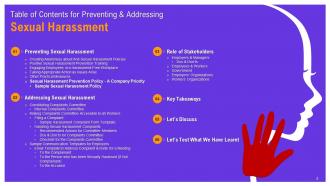
The PPT Training Module Effective Strategies for Preventing and Addressing Sexual Harassment offers the necessary knowledge and tools to create safer, more respectful, and inclusive workplaces. It begins with Preventing Sexual Harassment, delving into practical strategies like creating awareness about anti-sexual harassment policies, fostering positive sexual harassment prevention training, and encouraging employees to contribute to a make the harassment-free workplace. It also emphasizes swift action as issues arise and discusses other pragmatic measures for prevention. The PowerPoint Deck includes a Sample Sexual Harassment Policy to exemplify how making this prevention policy a company priority can help shape a more secure workplace. The Addressing Sexual Harassment, section provides comprehensive details on setting up a Complaints Committee. It elaborates on the formation of an Internal Complaints Committee, how to make this committee accessible to all workers, and the process for Filing a Complaint. Furthermore, it offers a Sample Harassment Complaint Form Template and provides insights into handling sexual harassment complaints effectively. A recommended actions list, Dos and Do nots, and a checklist for the Complaints Committee enhance their efficacy in resolving reported issues. Sample Communication Templates for Employers offers exemplary responses for handling delicate situations, such as addressing the complaint and inviting involved parties for a meeting, thereby equipping management with the sensitivity and tact needed in these circumstances. The Presentation Resource also details the Role of Stakeholders in curbing sexual harassment. It provides practical guidance for employers and managers, employees and workers, government bodies, employers organizations, and workers organizations, emphasizing their shared responsibility in creating a safe environment. It also has Key Takeaways and Discussion Questions related to the topic to make the training session more interactive. The Deck also contains PPT slides on About Us, Vision, Mission, Goal, 30-60-90 Days Plan, Timeline, Roadmap, Training Completion Certificate, Energizer Activities, Client Proposal, and Assessment Form.
People who downloaded this PowerPoint presentation also viewed the following :
Content of this Powerpoint Presentation
Slide 4
This slide talks about the importance of raising awareness in an organization to prevent sexual harassment. Once an anti-sexual harassment policy has been established, employers must educate staff members about its provisions, including what sexual harassment is, what to do if you encounter it, and the consequences of violating it.
Slide 5
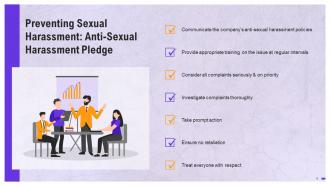
This slide displays an anti-sexual harassment pledge that organizations must take and display prominently on premises.
Slide 6
This slide discusses the impact of positive sexual harassment training at the workplace. Employees may not respond well to insinuations or outright statements that they’re doing something wrong, can’t be trusted, or are presumed guilty of engaging in unwanted behavior.
Slide 7
This slide talks about engaging employees in promoting and ensuring a harassment-free workplace. Managers, supervisors, or HR reps cannot monitor harassment. Companies can, however, increase the likelihood that incidents of harassment are noticed, reported, dealt with, and even prevented as employees are willing to assist in this worthy goal.
Slide 8
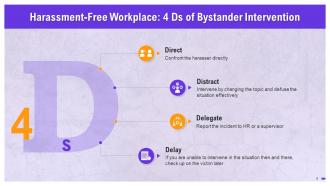
This slide depicts the four Ds of bystander intervention. These are Direct, Distract, Delegate, and Delay.
Slide 9
This slide discusses the importance of taking swift and appropriate actions in case issues arise in terms of sexual harassment. Employees won't report sexual harassment incidents if they believe nothing will be done. This could encourage harassers to continue acting inappropriately.
Slide 10
This slide discusses other practical measures that can an organization can take to prevent sexual harassment. Employers can take additional measures such as conducting anonymous surveys to determine the circumstances and factors feeding sexual harassment.
Slide 12
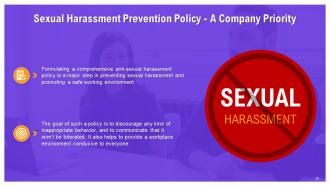
This slide discusses the importance of developing a sexual harassment policy for your organization. Formulating a comprehensive anti-sexual harassment policy is a major step in preventing sexual harassment and promoting a safe working environment.
Slide 13
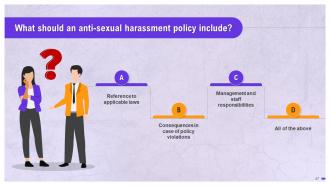
This slide lists key points that must be included in an Anti-Sexual Harassment Policy of an organization.
Slide 14
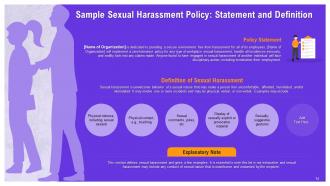
This slide depicts the first section of a sample sexual harassment policy for an organization. This section gives the company’s policy statement, defines sexual harassment and gives a few examples of it.
Slide 15
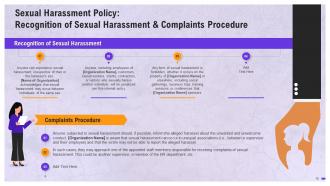
This slide shows the second section of a sample sexual harassment policy. It depicts additional items included in the definition of sexual harassment along with information on the complaints procedure.
Slide 16
This slide shows the third section of a sample sexual harassment policy. This includes the tasks a designated person has to perform after they receive a sexual harassment complaint.
Slide 17
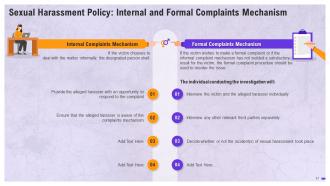
This slide shows the fourth section of a sample sexual harassment policy. This includes information about the internal and formal complaints mechanism.
Slide 18
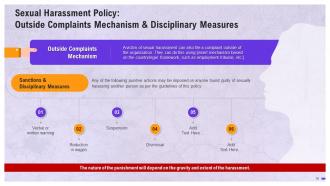
This slide displays the fifth section of a sample sexual harassment policy. This includes information about outside complaints mechanism along with information on the punitive and disciplinary measures.
Slide 19
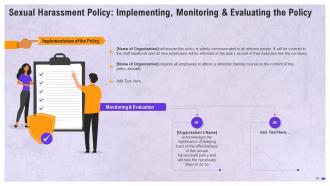
This slide shows the last section of a sample sexual harassment policy for an organization. This entails that the organization continuously evaluates the implementation of the policy.
Slide 20
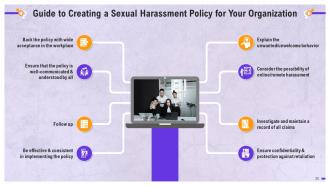
This slide depicts a practical guide to creating an anti-sexual harassment policy for your company.
Slide 22
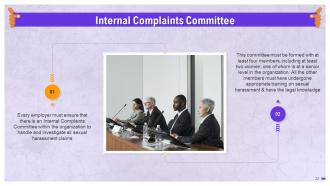
This slide gives an overview of the composition of the internal complaints committee in an organization. Every employer must ensure that there is an Internal Complaints Committee within the organization to handle and investigate all sexual harassment claims
Slide 23
This slide lists ways to file a sexual harassment complaint. These include filing a complaint via an informal mechanism, with an Internal Complaints Committee within the organization, or directly in a court of law.
Instructor’s Notes:
- Informal Mechanism: Some victims might find it difficult to report an incident of sexual harassment. In such cases, they can approach a supervisor, a member of the HR department, or any other senior member of the organization, who can assist and encourage them to take necessary actions
- Internal Complaints Committee: Victims of sexual harassment can file a complaint with the complaints committee within the organization to resolve the issue
- Court of Law: Complainants can directly approach a court of law to address an incident of sexual harassment
Slide 24
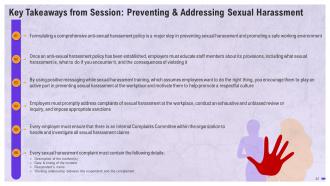
This slide gives an overview of the contents of a sexual harassment complaint. Every sexual harassment complaint must contain the following details; description of the incident(s), date & timing of the incident, respondent’s name, and the working relationship between the respondent and the complainant.
Slide 25 to 26
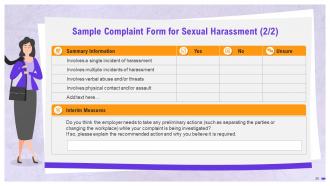
These slides provide a sample complaint form for sexual harassment.
Slide 27
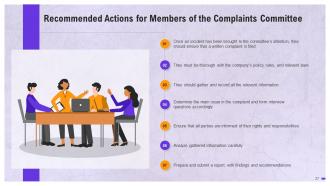
This slide lists recommended actions for members of the complaints committee handling sexual harassment cases. It recommends that they should ensure that a written complaint is filed, that they are completely familiar with the company’s policy, rules, and relevant laws.
Slide 28
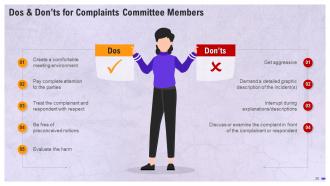
This slide lists dos and don’ts for members of complaints committee during a sexual harassment investigation.
Slide 29
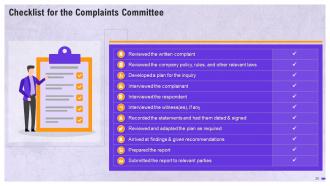
This slide provides a checklist for the Internal Complaints Committee.
Slide 31
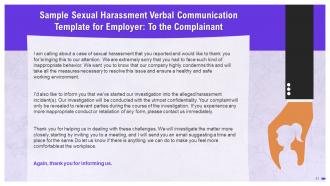
This slide features a sample communication phone call template from the employer to the complainant to address the issue of sexual harassment, discuss further steps, and invite the complainant for a meeting.
Slide 32
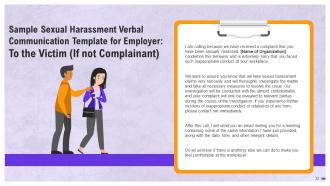
This slide features a sample communication phone call template from the employer to the victim to address the issue of sexual harassment, discuss further steps, and invite for a meeting.
Slide 33
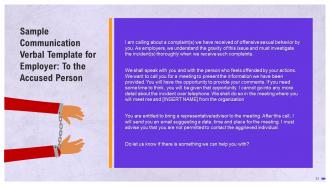
This slide features a sample communication phone call template from the employer to the accused person to address the issue of sexual harassment, discuss further steps, and invite for a meeting.
Slide 34
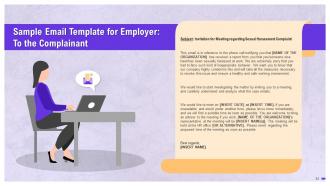
This slide features a sample email template from the employer to the complainant to address the issue of sexual harassment, discuss further steps, and finalize the date and time for a meeting.
Slide 35
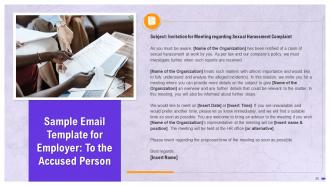
This slide features a sample email template from the employer to the accused person to address the issue of sexual harassment, discuss further steps, and finalize the date and time for a meeting.
Slide 37
This slide lists important stakeholders and their roles in sexual harassment incidents.
Slide 38
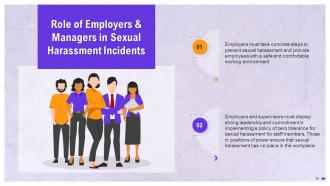
This slide discusses the role of employers and managers in sexual harassment incidents. Employers must take steps to prevent sexual harassment and to provide employees with a safe and comfortable working environment.
Slide 39
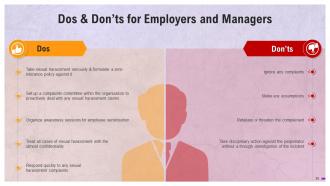
This slide lists Dos and Don’ts for employers and managers when a sexual harassment incident is reported.
Slide 40
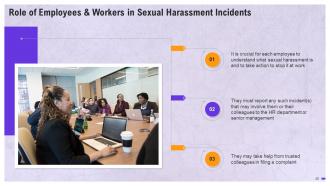
This slide discusses the role of employees and workers in sexual harassment incidents. It is crucial for each employee to understand what sexual harassment is and to take action to stop it at work.
Slide 41
This slide discusses the role of government in sexual harassment incidents. Governments are responsible for ensuring that appropriate protection against sexual harassment is guaranteed in national laws and policies.
Slide 42
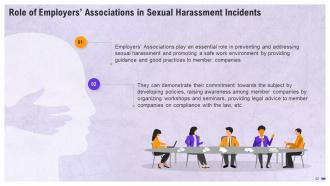
This slide discusses the role of employers’ associations in sexual harassment incidents. Employers’ associations play an essential role in preventing and addressing sexual harassment and promoting a safe work environment by providing guidance. Over time, this association can also evolve and spread the word on best-practices against sexual harassment that all member companies may adopt.
Slide 43
This slide discusses the role of workers’ Associations in sexual harassment incidents. They play a vital role in preventing and addressing sexual harassment at the workplace. They raise awareness on the issue among workers and assist member workers in responding appropriately to sexual harassment cases.
Slide 60 to 75
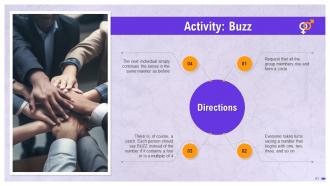
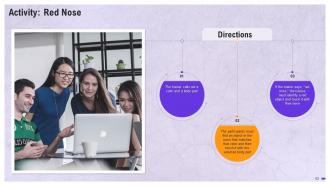
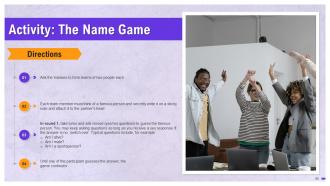
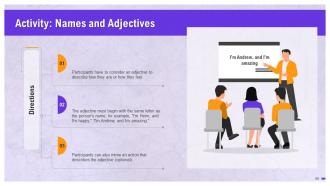
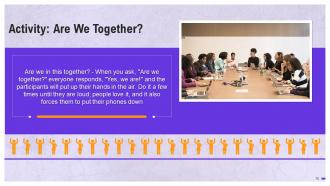
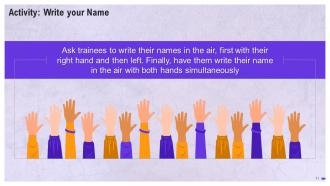
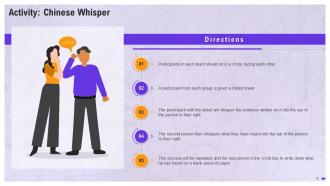
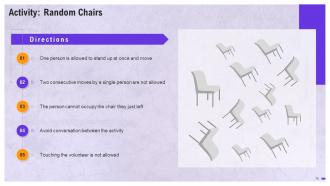
These slides contain energizer activities to engage the audience of the training session.
Slide 76 to 103
These slides contain a training proposal covering what the company providing corporate training can accomplish for the client.
Slide 104 to 106
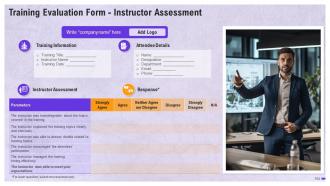
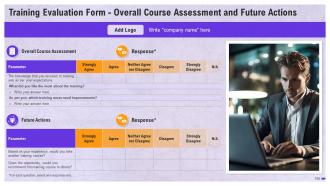
These slides include a training evaluation form for instructor, content and course assessment.
Effective Strategies for Preventing and Addressing Sexual Harassment Training Ppt with all 111 slides:
Use our Effective Strategies for Preventing and Addressing Sexual Harassment Training Ppt to effectively help you save your valuable time. They are readymade to fit into any presentation structure.














































FAQs for Effective Strategies for Preventing and Addressing Sexual
Honestly, leadership has to walk the walk first - can't just talk about respect in meetings then act like jerks the rest of the time. Get your policies super clear about what crosses the line. Training helps too (make it actually engaging though, nobody wants another boring PowerPoint). Set up different ways for people to report stuff so they're not scared to speak up. Here's the big one - when someone screws up, call it out every single time. Don't care if they're your top seller or whatever. The whole thing only works if respect becomes automatic, not some HR thing you check off once a year. Maybe start by taking a hard look at how things really are right now?
Honestly, skip those awful annual videos everyone clicks through. Interactive stuff works way better - like role-playing scenarios where people actually discuss real workplace situations. Bystander intervention training is pretty popular now, teaching folks how to safely speak up when they see sketchy behavior. Make sure it covers the weird gray areas, not just obvious harassment. Oh, and definitely get manager-specific modules since they need totally different skills than regular employees. The programs that really work get people talking through uncomfortable situations instead of just lecturing at them.
Honestly, bystander intervention works way better than people think. Instead of putting everything on the victim, everyone becomes responsible for calling out bad behavior. You don't have to be confrontational either - just redirect the convo, check on whoever's being targeted, or report it afterward. Harassers usually act up when they think nobody cares or is paying attention, so having people actually step up completely flips that script. The tricky part is most people freeze up because they don't know how to intervene safely. Just start by actually noticing what's happening around you - that's honestly half the battle right there.
Honestly, I'd start with online forms and maybe a third-party hotline - gives people options since some folks hate calling while others don't trust digital stuff. Suggestion boxes work too if you put them somewhere actually private. The tricky part is getting people to trust it won't blow back on them, which takes forever to build up. Be super transparent about who handles reports and what happens next. Oh, and you've got to keep reminding people these things exist - I've seen so many companies set up great systems that nobody uses because they forgot to advertise them.
Dude, companies that ignore sexual harassment get absolutely wrecked. EEOC slaps them with massive fines, then victims sue for millions in damages and back pay. I've literally watched businesses crumble from this stuff - it's wild how fast things spiral. Criminal charges can even happen in really bad cases. Your reputation? Completely toast. Look, proper training costs maybe a few thousand upfront. Compare that to a seven-figure lawsuit destroying everything you've built. It's honestly a no-brainer - just get the reporting systems and training sorted now before you're screwed later.
Honestly, leadership can't just fire off one company-wide email and think they're done. They need to show up to the actual training sessions instead of pawning it off on HR. When someone crosses a line - even with the whole "I'm just kidding" excuse - leaders have to call it out right then. Oh, and create different ways for people to report stuff safely, then actually investigate without screwing over whoever spoke up. I've seen too many places where the policies look great on paper but management does nothing when real problems happen. Actions speak louder than whatever's in your employee handbook.
Honestly, it all comes down to actually following through - training can't just be a one-time thing for new people. Everyone needs annual refresher training on what harassment looks like and how to report it. Oh, and make sure there are different ways to report stuff because what if your manager is the problem? That's a nightmare scenario. The biggest thing though is enforcement. People watch to see if you'll actually do something when reports come in. Document everything, investigate properly, and don't just give serious offenders a talking-to. The second employees realize policies aren't enforced, you might as well throw them in the trash.
Honestly, you can't fix harassment issues without hearing from your actual employees. I learned this the hard way at my last job - management thought everything was fine while people were miserable. Surveys and focus groups give you the real story, not just what your policies claim is happening. Plus, feedback helps you catch problem managers early and figure out if people actually feel comfortable reporting stuff. The key is collecting it regularly and then doing something about it. Otherwise people just stop telling you anything, which defeats the whole purpose.
Honestly, good communication makes a huge difference in preventing harassment at work. People need to feel safe speaking up without getting in trouble. Multiple reporting options help too - not everyone's comfortable going to their direct boss, you know? I've seen workplaces where they actually check in regularly about culture stuff, and it works way better than just having policies gathering dust somewhere. The trick is talking about expectations upfront instead of scrambling after something bad happens. Clear boundaries from day one, plus making sure everyone knows they can call out sketchy behavior when they spot it.
Honestly, I'd start with anonymous surveys - ask people straight up about harassment and whether they'd actually feel safe reporting stuff. Then dig into your complaint data. Sometimes zero complaints just means your system sucks, not that everything's peachy. Focus groups work too if people will talk openly. Also, take a hard look at leadership - are they actually modeling good behavior or just talking about it? The tricky part is creating different ways for people to speak up since surveys aren't everyone's thing. But yeah, definitely begin with the survey to get some baseline numbers first.
Definitely set up multiple reporting options - HR, anonymous hotlines, maybe an ombudsperson if you've got one. EAPs are clutch for confidential counseling, though honestly most people don't even know they exist. Legal stuff matters too - help them understand EEOC complaints or connect with employment lawyers. Internal support is huge: paid leave for court, workplace transfers, accommodations if they need distance from someone. Oh, and put all this in your handbook upfront. You don't want people scrambling to find resources when they're already dealing with enough stress. Make it visible before anyone needs it.
Look, harassment hits people differently depending on who they are - race, gender, age, all that stuff combines. Like someone might deal with both racist AND sexist crap at once. Your training needs real scenarios, not just bland "be nice" talks. Make reporting feel actually safe for everyone (easier said than done, I know). The biggest thing? Listen when people tell you what's happening to them. Different backgrounds = different experiences. Oh and ditch the one-size-fits-all approach - it doesn't work.
Here's the thing - good D&I work actually prevents harassment before it starts. You're creating an environment where people respect each other instead of having those toxic power dynamics. Diverse teams are also better at calling out bad behavior (probably because they're already comfortable speaking up about stuff). But honestly, half-baked diversity efforts won't cut it. The programs need to actually change how people interact daily, not just exist on paper. I'd start by checking if your current initiatives are building real accountability and respect.
Honestly, you've got to measure the stuff that actually matters - not just who clicked through the modules. Check your complaint numbers and retention rates, especially for people who usually deal with more BS at work. Anonymous surveys are clutch here because that's when people tell you the real deal about whether they feel safe speaking up. Also sounds basic but test if anyone even remembers what they learned after like 3 months lol. Employee survey responses about workplace vibe are huge too. The whole point is seeing if behavior actually shifted, not celebrating completion percentages. Do regular check-ins so you catch problems before they blow up.
So you'll definitely want clear definitions of harassment with actual examples - vague stuff doesn't help anyone. Set up multiple reporting options because some people won't go to HR directly. Map out your investigation process and what consequences look like. Training is non-negotiable (policies just gather dust otherwise). Anti-retaliation protections are huge - people need to feel safe reporting. Don't forget confidentiality measures and assign someone specific to enforce everything. Oh, and review it regularly because workplace dynamics change. Make it thorough but actually readable, then get it in front of everyone properly.
-
Top Quality presentations that are easily editable.
-
They had the topic I was looking for in a readymade presentation…helped me meet my deadline.