


Embedding Vendor Performance Improvement Plan Powerpoint Presentation Slides




Try Before you Buy Download Free Sample Product
 Impress Your
 Audience
 100%
100% Editable
 Save Hours
 of Time


Our Embedding Vendor Performance Improvement Plan Powerpoint Presentation Slides are topically designed to provide an attractive backdrop to any subject. Use them to look like a presentation pro.
People who downloaded this PowerPoint presentation also viewed the following :
Content of this Powerpoint Presentation
Slide 1: This slide introduces Embedding Vendor Performance Improvement Plan. State Your Company Name and begin.
Slide 2: This slide shows Agenda of Embedding Vendor Performance Improvement Plan.
Slide 3: This slide presents Table of Content for the presentation.
Slide 4: This slide shows Table of Content for the presentation.
Slide 5: This slide displays Year over Year Revenue Generation Stats.
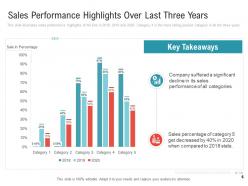
Slide 6: This slide represents Sales Performance Highlights Over Last Three Years.
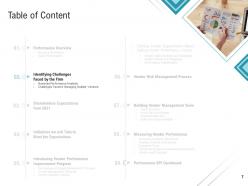
Slide 7: This slide shows Table of Content for the presentation.
Slide 8: This slide presents current performance analysis of the firm.
Slide 9: This slide shows Key Challenges Faced in Vendor Management.
Slide 10: This slide displays Table of Content for the presentation.
Slide 11: This slide represents firm's expectation from the financial year 2021.
Slide 12: This slide shows vendor performance improvement program in order to meet the shareholders expectation..
Slide 13: This slide presents Table of Content for the presentation.
Slide 14: This slide shows Strategic Purchasing and Supply Management Process.
Slide 15: This slide displays vendor management lifecycle of the firm.
Slide 16: This slide represents Vendors Selection Factors and KPIs.
Slide 17: This slide shows Defining Vendors Segmentation Model.
Slide 18: This slide presents target value of criteria and weightage set by the firm to measure vendor performance.
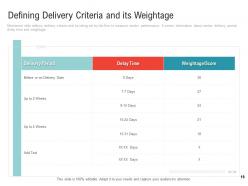
Slide 19: This slide shows Defining Delivery Criteria and its Weightage.
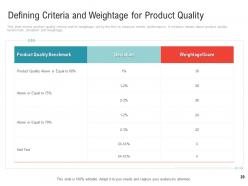
Slide 20: This slide displays Defining Criteria and Weightage for Product Quality.
Slide 21: This slide represents Classification of Supplier Based on Performance.
Slide 22: This slide shows Table of Content for the presentation.
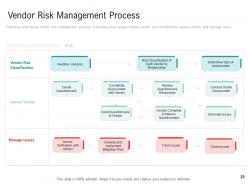
Slide 23: This slide presents vendor risk management process.
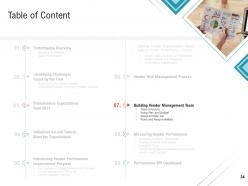
Slide 24: This slide shows Table of Content for the presentation.
Slide 25: This slide displays Team Structure for Vendor Management.
Slide 26: This slide represents Hiring Plan and Budget for Vendor Management Team.
Slide 27: This slide shows Required Vendor Management Team Skills Set.
Slide 28: This slide presents Roles and Responsibilities of Vendor Management Team.
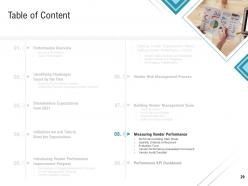
Slide 29: This slide shows Table of Content for the presentation.
Slide 30: This slide displays Performance Rating Data Sheet.
Slide 31: This slide represents summary about total quantity order to the supplier versus actual order received by the firm.
Slide 32: This slide shows Vendor Performance Evaluation Form.
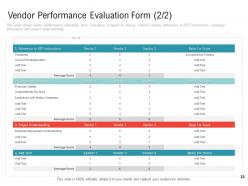
Slide 33: This slide presents Vendor Performance Evaluation Form.
Slide 34: This slide shows Vendor Performance Assessment Scorecard.
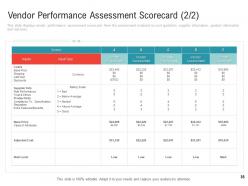
Slide 35: This slide displays vendor performance assessment scorecard.
Slide 36: This slide represents information about vendor name, total number of staff members and area of evaluation.
Slide 37: This slide shows Table of Content for the presentation.
Slide 38: This slide presents Vendor Compliance Monitoring Dashboard.
Slide 39: This slide shows KPIs such as defect rate, on time supplies, supplier availability and lead time..
Slide 40: This slide displays Inventory Turnover Tracking Dashboard.
Slide 41: This slide is titled as Additional Slides for moving forward.
Slide 42: This slide shows Embedding Vendor Performance Improvement Plan Icons.
Slide 43: This is Our Mission slide with related imagery and text.
Slide 44: This is About Us slide to show company specifications etc.
Slide 45: This is Our Team slide with names and designation.
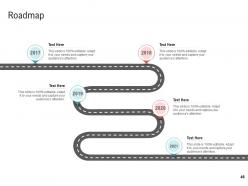
Slide 46: This slide shows Roadmap with additional textboxes.
Slide 47: This slide shows Post It Notes. Post your important notes here.
Slide 48: This is an Idea Generation slide to state a new idea or highlight information, specifications etc.
Slide 49: This slide shows Puzzle with related icons and text.
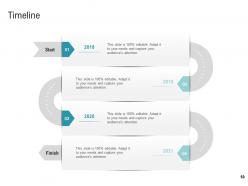
Slide 50: This is a Timeline slide. Show data related to time intervals here.
Slide 51: This slide shows 30 60 90 Days Plan with text boxes.
Slide 52: This is a Thank You slide with address, contact numbers and email address.
Embedding Vendor Performance Improvement Plan Powerpoint Presentation Slides with all 52 slides:
Use our Embedding Vendor Performance Improvement Plan Powerpoint Presentation Slides to effectively help you save your valuable time. They are readymade to fit into any presentation structure.




















FAQs for Embedding Vendor Performance Improvement Plan
Pick metrics that actually connect to whatever's broken. Quality stuff is obvious - defect rates, on-time delivery, customer satisfaction scores. Don't forget the money side though: cost per unit, invoice accuracy, penalty costs they're racking up. Here's what most people miss - response time when shit hits the fan. How fast do they get back to you during crises? That tells you everything. Compliance metrics too if your industry cares about that stuff. But honestly, stick to 4-6 max or you'll go crazy trying to track everything instead of fixing anything.
First thing - grab all your delivery data, SLA reports, and any incident logs you've got sitting around. Your internal teams are pure gold here since they deal with these vendors daily (seriously, they'll have the real tea). Compare everything against what's actually in your contracts and see how they stack up industry-wide. Check how fast they respond when stuff goes sideways too. Build yourself a scorecard covering quality, timing, costs, and the relationship stuff. Oh, and make this quarterly instead of just once - vendors get complacent otherwise.
Honestly, the worst part is when nobody knows what "good" even looks like - vendors are confused, and half the time we haven't defined it clearly either. Communication breaks down fast. Set specific KPIs right from the start, then do regular check-ins (weekly for big contracts, monthly for smaller ones). Scorecards help tons since everyone's tracking the same stuff. Oh, and set up alerts for critical metrics! Trust me, you don't want to find out something's broken when your boss is already mad. Catch problems early before they snowball into disasters.
Quarterly works for most vendors, but honestly it depends on how much they matter to your business. Critical ones? Maybe monthly check-ins. Low-impact vendors can probably wait six months between reviews. I made the mistake of trying monthly reviews for everyone once - completely burned out my team, would not recommend. Pick whatever schedule makes sense and actually stick to it. Vendors tend to perform way better when they know reviews are coming regularly, so consistency beats perfection here. Calendar reminders are your friend. Start quarterly and ramp up frequency if problems pop up.
Honestly, communication makes or breaks the whole thing. You've gotta be super clear about expectations and timelines from day one - like, what does "improvement" actually look like? I learned this the hard way once. Check in regularly so you can fix issues early instead of discovering everything's sideways at the end. Too many plans crash because everyone thinks they're on the same page when they're not. Your vendor should feel comfortable asking questions without getting in trouble. Create that open vibe where problems get flagged right away, not buried until it's a disaster.
So there's a few ways you could tackle this. If you've got the budget, dedicated platforms like Vendorful or Ariba are pretty sweet - they're literally made for vendor tracking and the dashboards look super clean. But honestly? You can get surprisingly far with just a smart Excel setup or Google Sheets if you build in some automated formulas. Monday.com works too if you're already using it for other projects (kill two birds, you know?). I'd probably start by figuring out which metrics actually matter to your business first. Then just pick whatever tool your team will consistently use - the fanciest platform won't help if nobody touches it.
Look, first thing you gotta do is connect your actual business goals to what you're asking vendors to deliver. Customer satisfaction matters to you? Then track their response times and quality scores - not some random metrics that sound good on paper. Honestly, most companies mess this up by setting these cookie-cutter targets that don't actually improve anything important. Your vendors need to see how their work ties directly to your wins. Put that connection right in the contract and bring it up in every review meeting. Once they get that they're helping you succeed (not just checking boxes), that's when things really click.
Honestly, weekly check-ins are a game changer - just pick up the phone and actually talk to them. Set up shared goals so you're not working against each other (happens more than you'd think). When problems come up, tackle them together instead of pointing fingers. I'd throw some collaboration stuff right into the contract too, maybe even tie bonuses to joint wins. The whole thing works better when you stop seeing them as just another vendor and more like... well, actual partners. Start small with one relationship first - see what clicks before you go crazy and change everything at once.
So here's the thing - your stakeholders see vendor interactions you totally miss. Different teams catch different problems, you know? Like end users might hate the interface while your IT team loves the backend stuff. Vendors also pay way more attention when multiple people are giving feedback (weird but true). I'd set up quick monthly check-ins or quarterly surveys - nothing fancy. Then you can actually fix the stuff that's bugging people daily instead of just looking at contract numbers. Makes those vendor conversations way more productive too.
Dude, when your vendors screw up, guess who gets blamed? You do. Customers don't care if it was your supplier's fault - they just know their order was late or broken. It's honestly frustrating how that works. Bad vendors create this whole mess: quality problems, delayed shipments, service issues. All of it makes YOU look incompetent even though you weren't the one who messed up. Good vendors though? They make everything run smoother. Your customers stay happy, operations flow better, and you actually make more money. Just keep a close eye on vendor performance and have backup plans ready before small problems turn into disasters.
So first thing - map out which regulations actually hit your vendors. Most people weirdly skip this obvious step. Then bake compliance checks right into your monitoring setup. Run regular audits tracking the metrics that matter - data protection, certs, financial stuff, whatever's relevant. Document absolutely everything because auditors are obsessed with paper trails (learned this the hard way). Don't just check compliance at onboarding though. Make it ongoing with dashboards that'll flag gaps before they blow up into actual violations. Honestly, real-time monitoring saves so much headache down the road.
Honestly, I'd start with being super clear about what you actually want from them - metrics, deadlines, the whole thing. Monthly check-ins help catch problems early. Money talks too, so throw in some performance bonuses or promise them more work if they nail it. Don't underestimate just picking up the phone and saying you appreciate working with them. Sounds cheesy but it works. That said, you gotta have consequences for when they mess up. Miss deadlines? There's a penalty. Crappy quality? Same deal. Just be upfront about it all from day one so nobody's surprised later.
Track stuff like delivery times, quality scores, and cost changes to spot patterns with your vendors. Most companies already have this data in their procurement systems and invoices - they just never bother looking at it (which is honestly pretty dumb). Watch for red flags like late deliveries or more defects creeping up. Monthly dashboards help you visualize what's happening. Don't go crazy though - pick your top 3-5 vendors first and track maybe 2-3 metrics each. You'll catch problems before they blow up into bigger headaches.
Look at their past performance first - what can they actually deliver? Don't be like us and set crazy unrealistic deadlines (total disaster). Your targets need real numbers, not fluffy "better quality" nonsense. Give them 10-15% wiggle room above what they normally do. Short milestones work better than just one big goal at the end. Here's the thing though - you've gotta get their input when you're setting this stuff. They know their own limitations way better than you do, and if they help create the targets, they'll actually try to hit them instead of just shrugging when they miss.
Honestly, don't treat cost savings and performance like they're two different things. Pick quality metrics that actually matter to your wallet - stuff like on-time delivery or defect rates. Then set targets that hit both at once. I've watched way too many teams slash costs first and then act shocked when everything falls apart. Work with your vendors to find wins where their efficiency gains actually boost your quality too - better processes, smoother communication, whatever works. Oh, and always tie performance bonuses to those cost reductions. Keeps everyone rowing in the same direction instead of playing weird games.
-
Wonderful templates design to use in business meetings.
-
Out of the box and creative design.
-
Easily Editable.
-
Easy to edit slides with easy to understand instructions.
-
Out of the box and creative design.
-
Very unique and reliable designs.
-
Content of slide is easy to understand and edit.
-
Perfect template with attractive color combination.
-
Unique design & color.
-
Enough space for editing and adding your own content.
-
Page:
- You're currently reading page 1
- Page 2
-
