


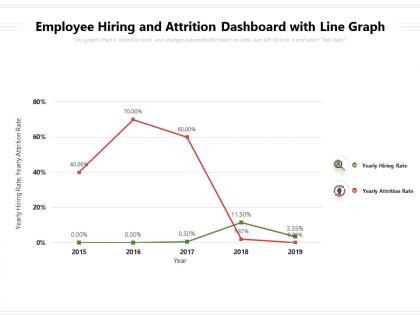
Employee hiring and attrition dashboard with line graph




Try Before you Buy Download Free Sample Product
 Impress Your
 Audience
 100%
100% Editable
 Save Hours
 of Time


Our Employee Hiring And Attrition Dashboard With Line Graph are topically designed to provide an attractive backdrop to any subject. Use them to look like a presentation pro.
People who downloaded this PowerPoint presentation also viewed the following :
Employee hiring and attrition dashboard with line graph with all 2 slides:
Use our Employee Hiring And Attrition Dashboard With Line Graph to effectively help you save your valuable time. They are readymade to fit into any presentation structure.
FAQs for Employee hiring and attrition dashboard
Honestly, just pick like 5-7 metrics that actually matter for your business goals. Employee turnover and time-to-hire are obvious ones. Engagement scores too - though sometimes those surveys feel like a joke, they do give you something to work with. Track productivity stuff that makes sense for your industry. Oh, and don't sleep on absenteeism rates and internal promotions. Those really show you what's going on culture-wise. I've watched teams get totally overwhelmed trying to measure everything, so start simple. Get good at tracking the basics first, then you can always add more later.
So basically, employee analytics lets you actually see what's going on with your team instead of just winging it. You can track engagement surveys, how productive people are, who's collaborating well - even figure out who might quit soon (which is honestly kind of wild when you think about it). The real value is catching problems early. Like if one team's engagement suddenly tanks or a manager keeps losing people. Then you can jump in with specific fixes - maybe redistribute work, get that manager some coaching, or tackle whatever's bugging everyone before it gets worse.
So predictive analytics is basically like having a crystal ball for spotting who's about to quit. Look at engagement scores, performance reviews, how much PTO they're burning, even meeting attendance - weird how telling that last one is, honestly. The data will show you patterns 6-12 months out before people actually bail. Focus on your top performers first since losing them sucks the most. Once you've got those red flags, jump on it fast. Have real conversations about what's bugging them or maybe lighten their workload. Don't wait until they're already planning their exit strategy.
Start with getting explicit consent from employees - don't just assume you can track everything. Anonymize personal info and only let essential people access the data. I've seen too many companies mess this up by collecting way more than they actually need. Encrypt everything and set clear policies about how long you'll keep data around. You really don't want to be that company hoarding old employee info forever. Regular audits help catch issues early. Oh, and be upfront about what you're tracking - nobody likes feeling spied on at work.
Honestly, you're gonna hit three major walls. Data silos are brutal - your HR systems hate talking to each other, so you'll be manually stitching together payroll, performance reviews, all that stuff. Privacy issues will pop up too because people get weird (understandably) about being tracked at work. Oh, and data quality? Total mess. Everyone enters things differently or just... doesn't. I'd say pick one simple project first, get your team on board early so they don't freak out, and set up decent data rules from the start. Otherwise you'll just be drowning in garbage data.
Look, employee analytics basically shows you what's actually working in your hiring instead of what you think is working. Track your best people - where'd they come from? What do they have in common? Then go find more like them. You'll probably discover those pricey job boards aren't worth it and your best hires come from somewhere totally unexpected. It also helps you catch bias creeping into your process and fix whatever's scaring good candidates away. Honestly, just start simple - figure out where your top performers originated and build from there.
Honestly, just go with Tableau or Power BI for employee analytics. Power BI's probably your best bet if you're just starting out - way more intuitive and plays nice with whatever Microsoft stuff you're already stuck with. Tableau does fancier visualizations but costs more (and let's be real, most stakeholders just want simple dashboards anyway). Both crush Excel for this kind of thing. You can track turnover, engagement, performance metrics in real-time instead of wrestling with pivot tables like it's 2010. I'd start with Power BI first, then maybe upgrade later if you need something more complex.
Honestly, sentiment analysis is perfect for this. Set up regular pulse surveys and let AI scan through all the feedback automatically - saves you from drowning in hundreds of comments. It'll categorize stuff as positive, negative, or neutral and flag any red flags like burnout or management drama before things get messy. The trick is connecting that data to specific teams and timeframes so you actually know where problems are brewing. I'd start with just one feedback source first though - maybe Slack messages or your existing surveys. You can always add more later once you get the hang of it.
Look at your hiring and promotion data first - you'll spot bias patterns pretty quickly. Track diversity across departments, check for pay gaps, see if certain groups hit career walls. Honestly, the numbers don't sugarcoat things like people do, which is why I love this approach. Pull engagement scores before and after your D&I programs to see what's actually working. Start with your current demographic breakdown - any obvious disparities? That's where you focus. Also track retention rates by group. Short sentences mixed with longer ones help you see the full picture without getting overwhelmed by spreadsheets.
So here's the deal with employee analytics - it cuts through all the training BS and shows you what's actually working. Track which programs are boosting performance vs. which ones people just click through (because honestly, we've all done that). You'll start seeing patterns too, like your whole sales team getting stuck on the same stuff or certain formats working way better for different roles. Oh, and it helps spot skill gaps you didn't even know existed. Use that data to customize development paths instead of throwing money at generic programs that don't do anything.
Honestly, start with engagement scores and turnover rates - those two will tell you everything. Absenteeism patterns are huge too. I'd also watch internal mobility (are people actually growing?) and manager effectiveness scores because bad bosses kill morale faster than anything. Overtime hours show you if work-life balance is trash. Exit interviews are gold though - people leaving will be brutally honest about stuff current employees won't touch. Oh, and do pulse surveys instead of those yearly ones nobody takes seriously. But seriously, pick like 3-4 metrics tops or you'll get overwhelmed by all the numbers.
Honestly, your employee data is probably sitting on a goldmine of patterns you haven't noticed yet. Pull turnover numbers by department first - that's the easiest starting point. Look back 2-3 years at exits, promotions, seasonal hiring spikes, engagement scores, all that stuff. Most companies are shocked at how predictable their patterns actually are once they map it out. You'll start seeing which departments hemorrhage people, when hiring ramps up, performance dips, whatever. Then you can either build actual predictive models or just eyeball the trends (both work, tbh). Super helpful for getting ahead of staffing issues before they bite you.
Your company culture is honestly everything when it comes to employee analytics. Trust and openness? People will actually pay attention to the data and use it to get better. But throw in fear or that whole "we're watching you" vibe and employees will either mess with the numbers or completely tune out. I've seen this happen so many times it's not even funny. You want people to see analytics as something that helps them grow, not some creepy monitoring system. Be upfront about what you're tracking and - this is huge - show them what they get out of it.
Honestly, skip the generic training stuff and jump straight into workshops with your actual dashboards. Let them mess around with real data they'll be seeing every day. Pattern recognition comes first - then you can teach decision frameworks. The tricky part? Getting managers past just saying "oh that's interesting" and actually doing something about it. Role-playing helps tons here - throw them a retention crisis or engagement nosedive and work through it together. Oh, and definitely pair newbies with managers who already get analytics. Having that mentor for a few months makes a huge difference.
Honestly, just be upfront about what you're collecting and why. People hate feeling watched without knowing it. Only grab the data you actually need - don't go overboard. Get consent when you can, and watch out for any bias that might screw over certain employees unfairly. Security is huge too, obviously. Oh and definitely loop in HR and legal from the start. I learned that one the hard way on a project last year - saves you tons of drama later. The whole thing's really about not being sketchy with people's info, you know?
-
Awesome use of colors and designs in product templates.
-
Great designs, Easily Editable.
-
Best way of representation of the topic.
-
Best Representation of topics, really appreciable.