


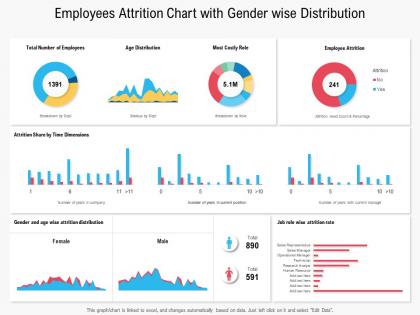
Employees attrition chart with gender wise distribution




Try Before you Buy Download Free Sample Product
 Impress Your
 Audience
 100%
100% Editable
 Save Hours
 of Time


Our Employees Attrition Chart With Gender Wise Distribution are topically designed to provide an attractive backdrop to any subject. Use them to look like a presentation pro.
People who downloaded this PowerPoint presentation also viewed the following :
Employees attrition chart with gender wise distribution with all 2 slides:
Use our Employees Attrition Chart With Gender Wise Distribution to effectively help you save your valuable time. They are readymade to fit into any presentation structure.
FAQs for Employees attrition chart with
Honestly? It's usually crappy managers and dead-end career paths. Pay that hasn't budged while everything else costs more is huge too. People also bail when they feel like nobody appreciates them or when work completely takes over their life. COVID changed everything there - everyone wants flexibility now. Oh, and toxic company culture will drive people out fast. I've seen it happen so many times. If you're dealing with turnover, just ask your people what's actually bothering them instead of guessing. Nine times out of ten, it's not really about the job itself - it's about their boss being awful.
Honestly, quarterly pulse surveys work best - ask about satisfaction, workload, career stuff, manager relationships. Keep them anonymous or people won't tell you the truth. Exit interviews are gold too, look for patterns there. But here's the thing - casual one-on-ones where managers actually shut up and listen? That's where you get the real dirt. Companies mess up by only surveying once a year, way too long between check-ins. Oh, and don't be that company that surveys people to death then does nothing about it. People hate that. Maybe start with monthly team chats if formal surveys feel like overkill.
Dude, culture is HUGE for retention. I've watched people leave decent-paying gigs just because the vibe was awful. When employees actually connect with your workplace values - growth ops, work-life balance, feeling respected - they'll stick around. Toxic environments? People run fast. Here's what I'd do: survey your team about what's broken culturally. Their honest feedback shows you exactly where retention problems start. Oh, and culture touches everything - daily happiness, career growth, the whole thing. If turnover's killing you, start there.
Honestly, exit interviews are so underrated. When people are leaving, they'll finally tell you the truth about what sucks - bad managers, crappy pay, zero growth opportunities, whatever. Companies that skip these are literally throwing away free intel, which makes no sense to me. Just ask open questions and write down what they say. Then look for patterns every few months. Are multiple people complaining about the same boss? Did half your engineering team quit after that policy change? That stuff adds up. Fix the real problems before you lose more good people. Takes like 30 minutes but saves you tons of turnover headaches later.
Honestly, regular check-ins are huge - but make them actually structured, not just awkward "how's going?" conversations. Week one, month one, three months. Catches problems before people mentally quit, you know? Also assign them ONE specific person for questions instead of that useless "ask anyone" thing. I've watched so many new hires bail because they felt completely lost those first few weeks. Oh, and give them real work early on! Nobody wants to spend their first month doing pointless busy tasks. Having clear role expectations from day one makes a massive difference too.
Yeah, there's definitely a connection - when people are engaged, they stick around more. Tech and healthcare see the biggest swings though, probably because those fields are already burnout central. Retail and hospitality? Not so much, since they're dealing with crappy pay and weird schedules that engagement surveys can't really fix. Manufacturing and finance land somewhere in between. Honestly, I think career growth matters way more than ping pong tables in those industries. The trick is figuring out what actually bugs people in your specific field instead of just throwing generic perks at everyone.
Pay them well - seriously, if they're underpaid compared to market rate, recruiters will poach them in a heartbeat. Give them real growth opportunities, not just empty promises about "future potential." Training, stretch projects, clear promotion paths - that stuff matters. Don't forget recognition either, both formal awards and just saying "hey, great job on that project." The biggest trap? Thinking they'll stick around just because they're crushing it. I learned this the hard way at my last job. Have regular check-ins to actually understand what drives each person individually.
So here's what we do at my company - track stuff like engagement scores, performance dips, overtime patterns, even how much people actually use their benefits. Weird detail but event participation is surprisingly telling too. Machine learning flags employees who look like previous people who left, and honestly? It's creepy how spot-on it gets. But here's the thing - you can't just collect this data and sit on it. Set up alerts for high-risk folks and have their managers do proactive check-ins with personalized retention plans. Way better than scrambling during exit interviews when it's already too late.
Honestly, pay and benefits are probably your biggest retention tools. Competitive packages stop people from bolting for a 15% raise somewhere else. But it's not just base salary - health insurance, PTO, 401k matching, flexible work stuff all matter too. I've literally watched people turn down higher-paying jobs because they didn't want to give up remote work. My advice? Survey your market yearly and actually ask your team what they value most. Sometimes it's weird stuff you wouldn't expect, like mental health days or gym memberships.
Honestly, your leadership style makes or breaks retention. People flee from micromanagers and toxic bosses like crazy. But when you trust your team and give them real autonomy? They'll actually want to stay. Recognition matters too - way more than most leaders realize. I've seen absent or overly controlling managers create these insane revolving doors where nobody lasts six months. The flip side is leaders who listen to concerns and invest in growth. Those teams stick together. My advice? Check in regularly about how supported people feel, then actually adjust based on what they tell you.
Honestly, people bail when they feel stuck - it's like the
-
Colors used are bright and distinctive.