

Employee Separation Dashboard Snapshot With Attrition Rate




Try Before you Buy Download Free Sample Product
 Impress Your
 Audience
 100%
100% Editable
 Save Hours
 of Time


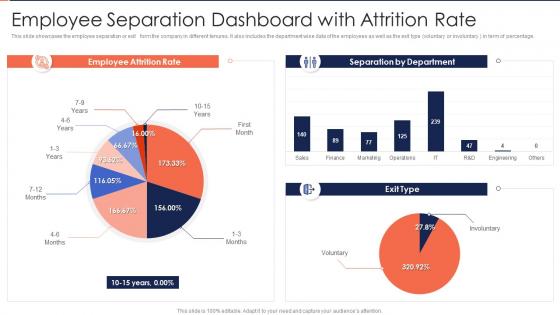
This slide showcases the employee separation or exit form the company in different tenures. It also includes the department wise data of the employees as well as the exit type voluntary or involuntary in term of percentage.
People who downloaded this PowerPoint presentation also viewed the following :
Employee Separation Dashboard Snapshot With Attrition Rate with all 7 slides:
Use our Employee Separation Dashboard Snapshot With Attrition Rate to effectively help you save your valuable time. They are readymade to fit into any presentation structure.





FAQs for Employee Separation Dashboard Snapshot
Honestly? Bad managers are like 90% of it - I swear terrible bosses make people quit more than anything else. Money's obviously huge too, plus work-life balance stuff. People also bail when they can't see any path forward career-wise or when the company culture just sucks. Oh and feeling undervalued is a big one. Different industries have their own things though - tech people chase stock options, healthcare workers get completely burned out, retail folks will jump ship for even a tiny pay bump. If turnover's killing you, just ask your team what's wrong. Most won't sugarcoat it.
Skip those awful annual surveys nobody wants to fill out. Do quick monthly check-ins instead - maybe 5 questions tops about their manager, workload, growth stuff. That's what actually tells you who's about to bolt. Also try "stay interviews" with your top performers. Just straight up ask what would make them leave. Sounds weird but it works. Here's the thing though - you've gotta move fast on whatever they tell you. Someone mentions burnout in March? Don't wait until summer to do something about it. They're already updating their LinkedIn by then. I'd say quarterly action plans based on the feedback, otherwise what's the point?
Look, culture really does make or break retention. When people feel valued and connected to their work, they'll stick around even if the pay's just okay. But toxic workplaces? Yeah, those are basically employee shredders. I've seen good people leave decent jobs just because management was awful. Your team needs to actually believe in what they're doing and like their coworkers. Survey them about what sucks culturally - then fix it. Don't just collect feedback and let it sit there. People can smell fake "we care" BS from a mile away.
Honestly, exit interviews can be super revealing because people basically have zero filter when they're already gone. They'll tell you straight up about awful managers or dead-end career paths they'd never mention otherwise. After a few interviews, you'll notice the same complaints keep coming up - maybe everyone's complaining about the same supervisor being a nightmare. The trick is actually doing something with what you learn instead of just shoving those notes in a drawer somewhere. Track the patterns and fix the real problems people are pointing out.
Oh dude, management style is HUGE for keeping people around. Bad managers who micromanage or can't communicate? Your team will bounce so fast. I literally watched an entire department quit because of one toxic boss - it was wild. But good managers who actually trust you and give decent feedback? People stick around for years. Career development stuff matters too, though honestly the trust thing is probably bigger. If your boss treats you like you're five, you're gonna start job hunting. Just don't be controlling and you're already ahead of most managers out there.
Honestly, investing in your people's growth is huge for keeping them around. Nobody wants to feel trapped in a job that's going nowhere - I'd bounce too if I felt stuck. Development programs show employees you actually care about their future, not just what they can do for you right now. The trick is asking what THEY want to learn, not assuming you know best. When people can build new skills or see a clear path forward, they get way more invested in staying. Short-sighted companies skip this and wonder why everyone leaves after two years.
Yeah, there's definitely a connection there. Engaged employees are way less likely to bail - like 87% less likely than the disengaged ones. Makes sense, right? When people feel valued and connected to what they're doing, they're not constantly browsing job boards. Here's the thing though - it's not just about throwing money or free snacks at people. Growth opportunities matter more than you'd think. So does feeling like their voice actually counts for something. I'd say start with some quick pulse surveys to see where you stand. That way you can catch the warning signs before someone's already mentally checked out and updating their LinkedIn.
Honestly, start with quick pulse surveys and those "stay interviews" - they catch warning signs before people mentally check out. Watch for patterns like dropping engagement scores or sudden performance changes. Monthly one-on-ones where you actually listen? Game changer. I've watched so many managers completely miss these red flags because they weren't paying attention. Yeah, predictive analytics are nice if you've got the budget, but sometimes the simple stuff works best. Just don't ignore what people tell you - if someone mentions workload stress or wanting growth, fix it fast before they're secretly job hunting.
Yeah, remote work can totally help with retention - people love having that flexibility and not dealing with commuting every day. Teams I know with good remote setups definitely see less turnover. But honestly? It's gotta be done right or it backfires hard. Like if you're constantly checking up on people or your tech support sucks, workers just end up feeling cut off and frustrated. The sweet spot is when remote employees still feel part of the team and know what's expected of them. Oh, and having actual systems in place helps too, not just saying "work wherever."
Oof, high turnover is brutal on your budget. Between posting jobs, interviewing people, and getting new hires trained up, you're dropping thousands per person who leaves. What really sucks is your current team ends up covering extra work - hello overtime costs and burned out employees. But here's what kills me: all that company knowledge just walks out the door. Same with client relationships you've spent years building. I'd honestly start tracking these costs every quarter so you can see the real damage and maybe get budget approved for keeping people around longer.
Honestly, those first weeks shouldn't feel like getting hit by a truck. Give them a real timeline with expectations and culture stuff - not just boring paperwork. Find someone who's actually good with people to be their buddy (we all know who those are). Coffee chats work better than formal meetings, trust me. Include them in whatever weird team traditions you have and give them easy wins early on. Check in regularly those first 90 days because that's when you'll lose them if you're not careful. Oh, and actually listen when they tell you what's working or not.
Honestly, if your pay and benefits suck, people will bolt - it's that simple. Most employees shop around by comparing what you offer vs. other companies. But here's what's wild: it's not just about base salary anymore. People want the whole package - flexible time off, decent health insurance, 401k matching, remote work options. I'd definitely survey your team about what they actually care about instead of guessing. Then check what competitors are doing. Oh, and do this regularly because things change fast. You don't want to be the company that's behind the curve on this stuff.
Oh totally - good D&I stuff makes a huge difference for keeping people around. When employees actually see themselves in leadership and feel like they belong, they're not browsing LinkedIn every lunch break, you know? Diverse teams just seem happier too. Underrepresented folks especially will stay longer when they don't feel like outsiders anymore. But here's the thing - it can't be fake corporate BS. You need real psychological safety and actual opportunities to move up. Otherwise people see right through it. I've watched companies nail this and their retention numbers get so much better, particularly with groups who used to leave constantly.
Workday and BambooHR are solid choices for HR analytics - they'll break down turnover by department, tenure, all that stuff. Tableau's great too if you're into data viz. Honestly though? Excel works fine when you're starting out, assuming your data isn't a complete disaster. Set up dashboards that pull straight from your HRIS so you can catch things like losing all your engineers at the 18-month mark. Some platforms even do predictive stuff now - they'll actually tell you who might quit next, which is kinda wild. Just pick one tool and stick with it rather than jumping around.
Honestly, mentoring programs are pretty genius for keeping people around. You're basically giving new hires someone who actually cares about their success - that alone makes them feel way less disposable. The mentor thing works both ways too, since senior people get energized helping others grow. I've seen it happen where mentors become these internal advocates, which is huge. Start with just a few informal pairs on your team (don't overthink it) and see how they do compared to everyone else. It's one of those things that sounds simple but actually moves the needle on retention.
-
Colors used are bright and distinctive.
-
The quality of PowerPoint templates I found here is unique and unbeatable. Keep up the good work and continue providing us with the best slides!