

Formulário de avaliação de desempenho do funcionário com classificações




Try Before you Buy Download Free Sample Product
 Impress Your
Audience
 100%
Editable
 Save Hours
of Time


Nosso Formulário de Avaliação de Desempenho de Funcionários com Classificações é explícito e eficaz. Eles combinam clareza e expressão concisa.
Avaliação de Desempenho do Funcionário com Formulário de Avaliação e Classificações
Tomada de Decisão, Confiabilidade, Pontualidade
Apresentação editável em PowerPoint disponível para download imediato. Baixe agora e impressione sua audiência.
People who downloaded this PowerPoint presentation also viewed the following :
Conteúdo desta apresentação em PowerPoint
Medir o sucesso é fundamental para liderar uma equipe eficaz. Afinal, você não pode melhorar a menos que saiba quais habilidades precisa desenvolver.
Uma avaliação de desempenho de funcionário é uma das maneiras mais eficazes de identificar o que funciona e o que precisa ser melhorado. Esta é também uma excelente oportunidade para discutir como um membro da equipe está progredindo em direção ao alcance das metas organizacionais e objetivos pessoais.
O sucesso neste domínio pode ser medido de muitas maneiras, incluindo avaliações por pares, autoavaliações e outras avaliações de desempenho. Para ajudá-lo a selecionar o melhor estilo de revisão para sua equipe, criamos um Formulário de Avaliação de Revisão de Desempenho de Funcionário com Modelo de PPT de Classificações. Este modelo permite que você meça o desempenho no trabalho com facilidade. Antes de mergulhar na Apresentação do PowerPoint, vamos discutir mais sobre as revisões de desempenho.
O que é uma revisão de desempenho?
Um processo de revisão de desempenho de funcionário permite que gerentes, colegas ou outras partes interessadas avaliem o desempenho no trabalho de um membro da equipe durante um período específico. Embora o processo varie dependendo do período sendo avaliado e da pessoa que conduz a revisão, algumas pré-condições são necessárias para uma revisão de desempenho bem-sucedida.
Seu processo de revisão de desempenho deve incluir o seguinte:
Pontos fortes do funcionário: Sempre forneça feedback e elogios pelos pontos fortes dos membros da equipe, como habilidades eficazes de resolução de problemas e comunicação. Isso mostra que você tem percepção sobre o que o funcionário faz bem e está procurando o positivo.
Sistema de classificação: Para identificar áreas de melhoria, sua revisão de desempenho deve incluir uma escala de classificação que avalie o nível de habilidade de cada funcionário em categorias predeterminadas. Um exemplo comum é classificar os funcionários com base em critérios como: Consistentemente excede as expectativas, frequentemente excede as expectativas, atende consistentemente às expectativas e requer desenvolvimento. Essas classificações ajudam a avaliar um funcionário em competências, como mentalidade estratégica, habilidades de comunicação e colaboração em equipe.
Período de revisão: Durante o processo de revisão de desempenho, você deve avaliar o desempenho de um funcionário em relação a um período específico. Embora cada organização lide com isso em seus próprios termos, os intervalos típicos são trimestrais, semestrais e anuais.
Estabelecer objetivos: Com metas SMART bem definidas, os funcionários podem obter uma melhor compreensão de suas áreas de melhoria. A frase "específico, mensurável, alcançável, realista e temporal" é abreviada como "SMART". Isso ajuda a elaborar os padrões de desempenho para seus funcionários.
Toda revisão de desempenho incluirá os elementos listados acima, mas há fatores adicionais a serem considerados, como habilidades individuais, que não podem ser facilmente medidas. Essas habilidades poderiam incluir sua capacidade de gerar ideias em um ambiente de grupo ou de apoiar membros da equipe em benefício da organização.
Vamos explorar o PPT agora!
Modelo: Formulário de Avaliação de Revisão de Desempenho de Funcionário com Classificações
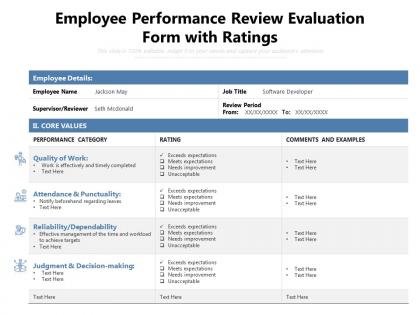
Este slide do PowerPoint contém um útil Formulário de Avaliação de Revisão de Desempenho de Funcionário, completo com classificações para avaliar valores fundamentais. Estes incluem qualidade do trabalho, frequência, confiabilidade e julgamento. Ele fornece feedback detalhado, incluindo seções para comentários e exemplos específicos para contextualizar cada classificação. Este formato estruturado é ideal para gerentes que buscam fornecer revisões abrangentes, promovendo uma comunicação clara e um desenvolvimento direcionado para os membros da equipe. O design do modelo garante que ele possa ser personalizado para diferentes funções de trabalho, agilizando o processo de avaliação e aprimorando sua eficácia.
Impulsione a Colaboração com Modelos de Revisão de Desempenho
Uma revisão de desempenho é uma excelente maneira de avaliar o desempenho de um colega de equipe. Promove transparência nas expectativas e permite que você se comunique abertamente com seus colegas de equipe. A SlideTeam pode ajudar com tudo, fornecendo PPTs ricos em contexto para agilizar a colaboração. Estes podem melhorar sua comunicação durante uma revisão de desempenho. Adquira-os hoje!
Avaliação de desempenho do funcionário Slide 1: Desempenho geral Excede as expectativas Atende às expectativas Abaixo das expectativas Slide 2: Habilidades técnicas Excede as expectativas Atende às expectativas Abaixo das expectativas Comunicação Excede as expectativas Atende às expectativas Abaixo das expectativas Trabalho em equipe Excede as expectativas Atende às expectativas Abaixo das expectativas
Proporcione a sua audiência uma experiência gratificante. Eles encontrarão nosso Formulário de Avaliação de Desempenho de Funcionários com Classificações elevadoras.
FAQs for Employee performance review evaluation
Okay so I'd hit the big stuff first - are they actually getting their work done on time and hitting targets? Then look at work quality and how they mesh with the team. Communication is huge too, honestly probably more important than people realize. Oh and don't forget professional growth stuff. The key thing is grabbing specific examples from this year instead of just vague feelings about them. Like did they nail that client presentation or totally save the day when everything went sideways in March? Document the concrete stuff as you go - trust me, it'll save you when you're staring at a blank review form later.
Try the SBI thing - Situation, Behavior, Impact. I used to give terrible feedback until someone taught me this. Pick the specific moment, say exactly what you saw happen, then explain why it mattered. Like "In yesterday's client meeting, you cut off the client three times, and they seemed pretty annoyed - ended up leaving early." Way better than vague stuff that doesn't help anyone. Then give them something concrete to work on next time. "Maybe let them finish before jumping in?" Always paint a picture of what good looks like going forward.
Look, self-assessment is your chance to control the narrative before your boss jumps in. Highlight your wins and own up to growth areas - shows you're actually paying attention to your work. Your manager gets to see how you view your own stuff, which is pretty valuable intel honestly. Don't be modest about your achievements (seriously, no one else will brag for you), but also don't pretend you're perfect. I always think of it as doing homework before the real conversation happens. Be honest but make sure you're advocating for yourself too.
Honestly, quarterly reviews work best for most teams I've seen. Annual ones are basically useless - way too much time passes if someone's either killing it or totally struggling. Here's what I'd do: quarterly formal sit-downs plus casual monthly check-ins. That way people aren't constantly feeling judged but they're not left hanging either. The monthly stuff can literally just be coffee chats or whatever feels natural. Short sentences work. Start quarterly and see how your team responds - some rock stars actually hate frequent reviews, which is fair. You'll figure out the sweet spot pretty quick.
So basically 360 feedback means you're getting input from everywhere - boss, coworkers, people they manage, sometimes even clients. Way better than just the usual manager review. Honestly, it's wild how differently people see the same person depending on their relationship with them. The cool thing is it catches blind spots that normal reviews totally miss. Plus people actually get to see how they come across to the whole team, which can be pretty enlightening. Oh and definitely test it with volunteers first - don't just spring it on everyone at once.
Start with standardized criteria so you're not just winging it based on gut feelings. Train managers on unconscious bias - honestly, we all have blind spots we don't even realize. Get multiple people reviewing the same person, or do calibration sessions where everyone compares notes. Document specific examples instead of vague stuff like "good team player." 360-degree feedback from peers helps too. Oh, and audit your current process first to see where things might be getting weird or subjective. The whole point is catching those assumptions before they mess with someone's review.
Definitely dig up concrete examples - both good stuff and things that need work. Don't just wing it from memory, you know? Check their old goals too and be real about where they're at. Honestly, I always book way more time than I think because these things drag on forever. Come up with some questions about where they want their career to go and how you can help. Oh, and write down your main points but don't just read off a list like a robot. The whole point is they should walk away feeling like you actually listened and knowing what's next.
Start with your company's top 3-5 priorities and work backwards. I literally draw this out sometimes - sounds nerdy but it works. Ask yourself: if this person crushes their goals, does it actually push the company forward? At least 60-70% of what they're doing should connect to those bigger initiatives. Don't be vague about it either. Have them write one sentence explaining how each goal supports the main strategy. The whole "how does my daily work matter" thing clicks way better when you're super specific about those connections. Makes everyone feel less like they're just spinning their wheels.
Development planning totally flips performance reviews on their head - instead of dwelling on mistakes, you're mapping out what's next. Way less brutal that way. Your manager actually shows they care about where you're going, not just what boxes to check off. I mean, it's such a game changer when you can point to specific goals you've crushed throughout the year. Makes arguing for yourself at review time actually doable. Oh, and don't be like me and forget to write stuff down - track those wins as they happen, not when you're scrambling before your review.
Honestly, get a performance management platform - it'll change your life. Track goals and feedback all year instead of that last-minute panic we've all been through. The data tracking is pretty solid too, helps you catch patterns you'd normally miss. 360 reviews become way less of a headache when the system handles most of it. I love having everything searchable in one place... no more digging through random email threads from months ago. Oh, and the automated reminders actually work - your team won't forget deadlines as much.
Honestly, you gotta flip the whole approach - track what people actually deliver instead of whether they're "present." I do way more frequent check-ins now (like quarterly) since the annual thing feels weird when you're not seeing someone daily. Video calls are clutch for the actual review conversation though. Document everything digitally obviously, and maybe survey the team about collaboration stuff since you can't just observe that anymore. Oh and be super upfront about expectations from the start. People need to know exactly how they're being judged when you can't see their work happening.
Honestly, the worst thing you can do is be vague - like saying "your communication needs work" without any real examples. That helps nobody. I always tell people to keep notes throughout the year because otherwise you'll just remember whatever drama happened last week, you know? Also don't turn it into a roast session. I've watched managers just tear people apart during reviews and wonder why everyone's miserable afterward. Mix in what they're actually good at too. The whole point is helping them get better, not just going through the motions because HR says you have to.
Follow up in 2-4 weeks, but don't make it this big formal thing. I usually do three things: check how their goals are going, tackle whatever's blocking them, and celebrate wins. Even tiny ones - trust me on this. People need that recognition more than they realize. Keep it short though, maybe 15-30 minutes tops. You don't want these turning into another long review session. The trick is making them feel casual, like you're just checking in because you care. Oh, and before you wrap up? Set the next date right then. Otherwise you'll both forget and momentum dies.
So the big thing right now is ditching those awful annual reviews for ongoing feedback throughout the year. AI analytics are getting really good at spotting performance patterns too. Companies are finally realizing team collaboration matters more than ranking individuals against each other - thank god, because that system was brutal. There's also this huge push toward developing people instead of just judging them. Oh, and mental health is becoming part of performance conversations now. You should definitely try more frequent check-ins and maybe look into those real-time feedback platforms. Way better than waiting a whole year to find out how you're doing.
Honestly, flip the whole thing on its head. Instead of those awful 1-10 ratings that make everyone miserable, turn reviews into actual career conversations. Ask what skills they want to build and where they see themselves going. Map out real advancement opportunities - not just vague "we'll see" promises. The key is making it about their growth, not just what the company needs. When people feel like you're genuinely investing in their future rather than just checking boxes, they'll want to stay. Oh, and ditch the formal corporate speak - nobody responds well to that anyway.
No Reviews