

Employing New Recruits At Workplace Powerpoint Presentation Slides





Try Before you Buy Download Free Sample Product
 Impress Your
Audience
 100%
Editable
 Save Hours
of Time


Improving the recruitment process helps in finding candidates quickly and effectively. Finding and retaining talented employees plays a vital role in any business growth. Replacing an existing salaried employee costs an average of 7 to 9 months salary to the firm. The purpose of the deck is to demonstrate the staff recruitment and selection process as an essential HRM operation to enhance employee strength. Here is a professionally designed Employing New Recruits at Workplace template that addresses various factors affecting staff recruitment, recruitment methods, recruitment interviews, and selection process. Firms can reduce employee turnover and the cost of replacing an employee through an effective recruitment process. The effective recruitment process involves consistent planning and evaluation. The deck covers details about enhancing the recruitment process with efficient recruitment planning to attract potential candidates, internal-external recruitment process, applicants resume screening, etc. It caters to slides about reducing recruitment cycle time through various initiatives, visual techniques in handling recruitment challenges, etc. Customize this 100 percent editable template based on your needs now.
People who downloaded this PowerPoint presentation also viewed the following :
Content of this Powerpoint Presentation
Slide 1: This slide introduces Employing New Recruits at Workplace. State Your Company Name and begin.
Slide 2: This slide states Agenda of the presentation.
Slide 3: This slide presents Table of Content for the presentation.
Slide 4: This slide highlights title for topics that are to be covered next in the template.
Slide 5: This slide shows Current Challenges Associated to Recruitment Process.
Slide 6: This slide presents Comparative Assessment of Hiring Process.
Slide 7: This slide displays Addressing Statistics Associated to Recruitment Process.
Slide 8: This slide represents title for topics that are to be covered next in the template.
Slide 9: This slide showcases Addressing Recruitment Team Involved in Hiring Process.
Slide 10: This slide shows Determining Internal Factors Affecting Staff Recruitment.
Slide 11: This slide presents Determining External Factors Affecting Staff Recruitment.
Slide 12: This slide displays title for topics that are to be covered next in the template.
Slide 13: This slide represents Efficient Recruitment Planning to Attract Potential Candidate.
Slide 14: This slide showcases recruitment planning in order to attract potential candidate in terms of job description.
Slide 15: This slide shows Addressing Various Effective Recruitment Strategies.
Slide 16: This slide presents Finding Suitable Candidates for Vacant Job Position.
Slide 17: This slide displays Internal Sources of Recruitment Process.
Slide 18: This slide represents External Sources of Recruitment Process.
Slide 19: This slide showcases Screening and Shortlisting of Suitable Candidate.
Slide 20: This slide shows Addressing Applicants Resume Screening Process.
Slide 21: This slide presents Addressing Applicants Resume Screening Process.
Slide 22: This slide displays title for topics that are to be covered next in the template.
Slide 23: This slide represents Addressing Interview Process at Organization.
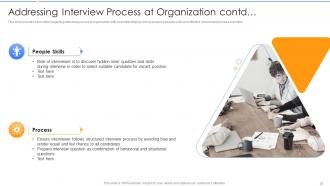
Slide 24: This slide showcases interview process at organization with essential steps.
Slide 25: This slide shows Addressing Various Kinds of Employee Interviews.
Slide 26: This slide presents various kinds of employee interviews conducted in terms of stress, individual, etc.
Slide 27: This slide displays title for topics that are to be covered next in the template.
Slide 28: This slide represents Addressing Steps Involved in Staff Selection Process.
Slide 29: This slide showcases enabling salary negotiations effectively at firm by determining strategies involved in good salary negotiation.
Slide 30: This slide shows rendering effective job offer to candidate in terms of consequences associated.
Slide 31: This slide presents development of formal job offer letter with essential elements involved.
Slide 32: This slide displays Important Steps to Consider after Job Acceptance by Candidate.
Slide 33: This slide represents title for topics that are to be covered next in the template.
Slide 34: This slide showcases steps involved in recruitment process with essential activities.
Slide 35: This slide shows Addressing Revised Recruitment Process with Waiting Time.
Slide 36: This slide presents title for topics that are to be covered next in the template.
Slide 37: This slide displays Using Process Map to Improve Hiring Procedure.
Slide 38: This slide represents Using Flowchart to Visualize Interview Process.
Slide 39: This slide showcases SWOT analysis for candidates in order to select suitable candidate by assessing them.
Slide 40: This slide shows Swimlane Flowchart to Improve Employee Onboarding Process.
Slide 41: This slide presents title for topics that are to be covered next in the template.
Slide 42: This slide displays Budget Assessment for Cost Associated to Recruitment Process.
Slide 43: This slide represents Selecting Suitable Recruitment Software Solutions.
Slide 44: This slide showcases Addressing Staff Training Schedule with Cost.
Slide 45: This slide shows title for topics that are to be covered next in the template.
Slide 46: This slide presents Impact of Improved Recruitment Process.
Slide 47: This slide displays title for topics that are to be covered next in the template.
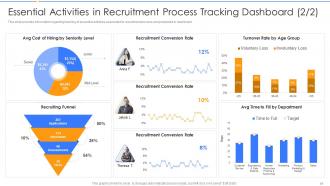
Slide 48: This slide represents Essential Activities in Recruitment Process Tracking Dashboard.
Slide 49: This slide showcases tracking of essential activities associated to recruitment process.
Slide 50: This slide displays Icons for Employing New Recruits at Workplace.
Slide 51: This slide is titled as Additional Slides for moving forward.
Slide 52: This slide provides 30 60 90 Days Plan with text boxes.
Slide 53: This slide represents Weekly Timeline with Task Name.
Slide 54: This slide showcases Roadmap for Process Flow.
Slide 55: This slide provides Clustered Bar chart with two products comparison.
Slide 56: This slide depicts Area chart with two products comparison.
Slide 57: This is Our Mission slide with related imagery and text.
Slide 58: This is a Comparison slide to state comparison between commodities, entities etc.
Slide 59: This slide shows Post It Notes. Post your important notes here.
Slide 60: This slide depicts Venn diagram with text boxes.
Slide 61: This is a Financial slide. Show your finance related stuff here.
Slide 62: This slide contains Puzzle with related icons and text.
Slide 63: This is a Timeline slide. Show data related to time intervals here.
Slide 64: This is a Thank You slide with address, contact numbers and email address.
Employing New Recruits At Workplace Powerpoint Presentation Slides with all 69 slides:
Use our Employing New Recruits At Workplace Powerpoint Presentation Slides to effectively help you save your valuable time. They are readymade to fit into any presentation structure.















FAQs for Employing New Recruits At Workplace
Effective hybrid onboarding strategies include structured virtual orientation programs, dedicated mentorship pairings, interactive digital training modules, regular check-in schedules, and collaborative project assignments that blend remote and in-person elements. These approaches streamline integration by fostering personal connections, ensuring consistent communication, and providing hands-on experience across both work environments, ultimately delivering faster productivity ramp-up and stronger employee engagement.
Companies assess cultural fit through behavioral interviews exploring values alignment, team-based exercises observing collaboration styles, cultural questionnaires measuring organizational compatibility, reference checks from previous colleagues, and informal interactions with potential teammates. These comprehensive evaluation methods enable hiring managers to identify candidates who embrace company values, work effectively within existing team dynamics, and contribute positively to organizational culture, ultimately reducing turnover and enhancing workplace cohesion.
Mentorship accelerates new hire integration by providing personalized guidance, cultural orientation, knowledge transfer, and ongoing feedback throughout the critical early months. Through structured mentoring programs, organizations streamline onboarding processes, reduce time-to-productivity, and enhance employee retention, with many companies finding that mentored employees demonstrate higher engagement levels and faster skill development.
Feedback loops can be established through regular one-on-one check-ins, structured 30-60-90 day reviews, peer mentorship programs, and anonymous pulse surveys that capture real-time concerns and progress. These mechanisms enable organizations to identify adjustment challenges early, address skill gaps proactively, and enhance retention rates, with many companies finding that systematic feedback ultimately accelerates productivity and builds stronger employee engagement.
Best practices for remote employee training include structured onboarding programs, interactive virtual sessions, mentorship assignments, regular check-ins, and comprehensive digital resource libraries. Technology facilitates this through video conferencing platforms, learning management systems, and collaboration tools, enabling organizations to deliver consistent training experiences, track progress effectively, and maintain engagement, ultimately ensuring new hires integrate successfully while reducing geographical barriers.
Team-building activities enhance new recruit experiences by accelerating relationship formation, improving communication skills, building trust among colleagues, and creating shared experiences that foster belonging. These activities enable faster integration into company culture, reduce onboarding anxiety, and strengthen collaborative capabilities, with many organizations finding that structured team interactions significantly improve retention rates and workplace satisfaction.
Diversity and inclusion initiatives can be integrated through bias-free job descriptions, diverse interview panels, structured evaluation criteria, and inclusive onboarding programs that celebrate different perspectives. These approaches streamline recruitment by expanding talent pools, enhancing decision-making quality, and improving retention rates, with many organizations finding that inclusive practices ultimately deliver stronger team performance and competitive advantage.
Key metrics for measuring new recruit integration include time-to-productivity, retention rates during probationary periods, performance against initial goals, manager and peer feedback scores, and completion rates of onboarding milestones. These indicators enable organizations to identify integration gaps, refine onboarding processes, and enhance employee satisfaction, with many companies finding that systematic tracking reduces turnover and accelerates workforce contribution.
Organizations tailor training programs by conducting role-specific needs assessments, creating modular content frameworks, and implementing personalized learning pathways that address distinct skill requirements across departments. Through adaptive learning technologies and mentorship pairings, companies like financial services firms and healthcare institutions deliver targeted development for sales teams, technical staff, and management roles, ultimately enhancing performance and reducing time-to-productivity.
Common pitfalls include unclear job expectations, inadequate background checks, rushed interview processes, poor cultural fit assessment, and insufficient onboarding programs. These oversights often result in higher turnover rates, reduced productivity, and cultural misalignment, with many organizations finding that investing in structured hiring processes and comprehensive orientation programs ultimately delivers better employee retention and faster integration into company operations.
Optimized communication strategies for new recruits include structured onboarding programs, multi-channel information delivery, regular check-ins, mentorship pairings, and interactive feedback systems. These approaches streamline knowledge transfer by combining digital platforms, face-to-face sessions, and documentation systems, with many organizations finding that strategic communication reduces training time while enhancing employee retention and productivity.
New recruits can be encouraged through structured brainstorming sessions, cross-departmental shadowing, mentorship programs with reverse feedback components, and dedicated innovation time for exploring process improvements. Organizations like tech startups and consulting firms increasingly create "fresh eyes" initiatives where new hires audit existing workflows and present recommendations within their first month, ultimately delivering enhanced operational efficiency and competitive insights that long-tenured employees might overlook.
A strong employer brand significantly impacts talent attraction and retention by showcasing company culture, values, growth opportunities, and employee experiences across multiple touchpoints. Organizations with compelling employer brands, particularly in competitive sectors like technology and healthcare, experience reduced recruitment costs, faster hiring cycles, and higher employee engagement rates, ultimately delivering sustainable competitive advantage in talent acquisition.
Organizations can engage new recruits through social media by sharing company culture content, connecting them with future teammates, providing behind-the-scenes workplace insights, and creating dedicated new hire groups for peer interaction. These strategies help reduce first-day anxiety, accelerate cultural integration, and build early loyalty, with many companies finding that pre-boarding social engagement significantly improves retention rates and faster productivity ramp-up.
Effective onboarding techniques include mentorship programs, structured orientation sessions, diversity and inclusion training, personalized welcome packages, and cross-departmental introductions. These approaches enhance integration by fostering connections, communicating company values, and providing comprehensive role preparation, with many organizations finding that inclusive onboarding significantly improves retention rates and accelerates productivity across diverse teams.
-
Superb! The innovative and inspiring template designs provide an edge to the presentation.
-
SlideTeam’s pool of 2Million+ PPTs has really benefited my team, everyone from the IT department to HR. We are lucky to have crossed ways with them.